
Canon EOS R7 Mark II & EOS R6 Mark III Announcement Delays?

Craig Blair
4 Min Read

When you purchase through links on our site, we may earn an affiliate commission. Here's how it works.

This is just a small update on two of the most anticipated cameras coming from Canon. There's not much here in the way of new information, but things keep hitting our inbox.

We have been told that a planned dealer presentation for new Cinema EOS and EOS products that was scheduled for later this month has been put on hold. These meetings usually happen before major product announcements.

We don't believe any delay is going to be related to the tariffs, it seems companies are moving forward with launcing new products at a normal rate.

It could be nothing, and things will just be rescheduled for around the same time.

Most out there think that the EOS R7 Mark II and EOS R6 Mark III will begin shipping sometime in early Q4, and that has been a longstanding rumor.

Last week, we received rumored specifications for the EOS R7 Mark II, though the source doesn't have much of a track record and we have been waiting for those that do to chime in.

We have been burned over the last 12-18 months by not publishing some things that turned out to be true, it's still not an exact science ignoring the wishes and truth.

Canon EOS R7 Mark II Rumored Specifications

  • 33MP APS-C Stacked CMOS
  • DIGIC X & DIGIC Accelerator
  • 8.5 Stops of In-body Stabilization
  • 2.36m-Dot OLED EVF
  • 40 FPS Electronic Shutter
  • Pre Continuous Shooting
  • In-Camera Upscaling
  • 4K120 10-Bit with CLog-3
  • Larger Form factor than the R7

The Canon EOS R6 Mark III is going to be a big release for Canon. The 6 series is the best-selling full-frame mirrorless camera in the lineup we have been told by a few retailers, though that may be a different story globally.

There haven't been a lot of substantiated specifications for the EOS R6 Mark III, but we do imagine Canon is going to keep things locked down the same way they did with the EOS R5 Mark II. While some things did come out ahead of the launch, it was core specifications.
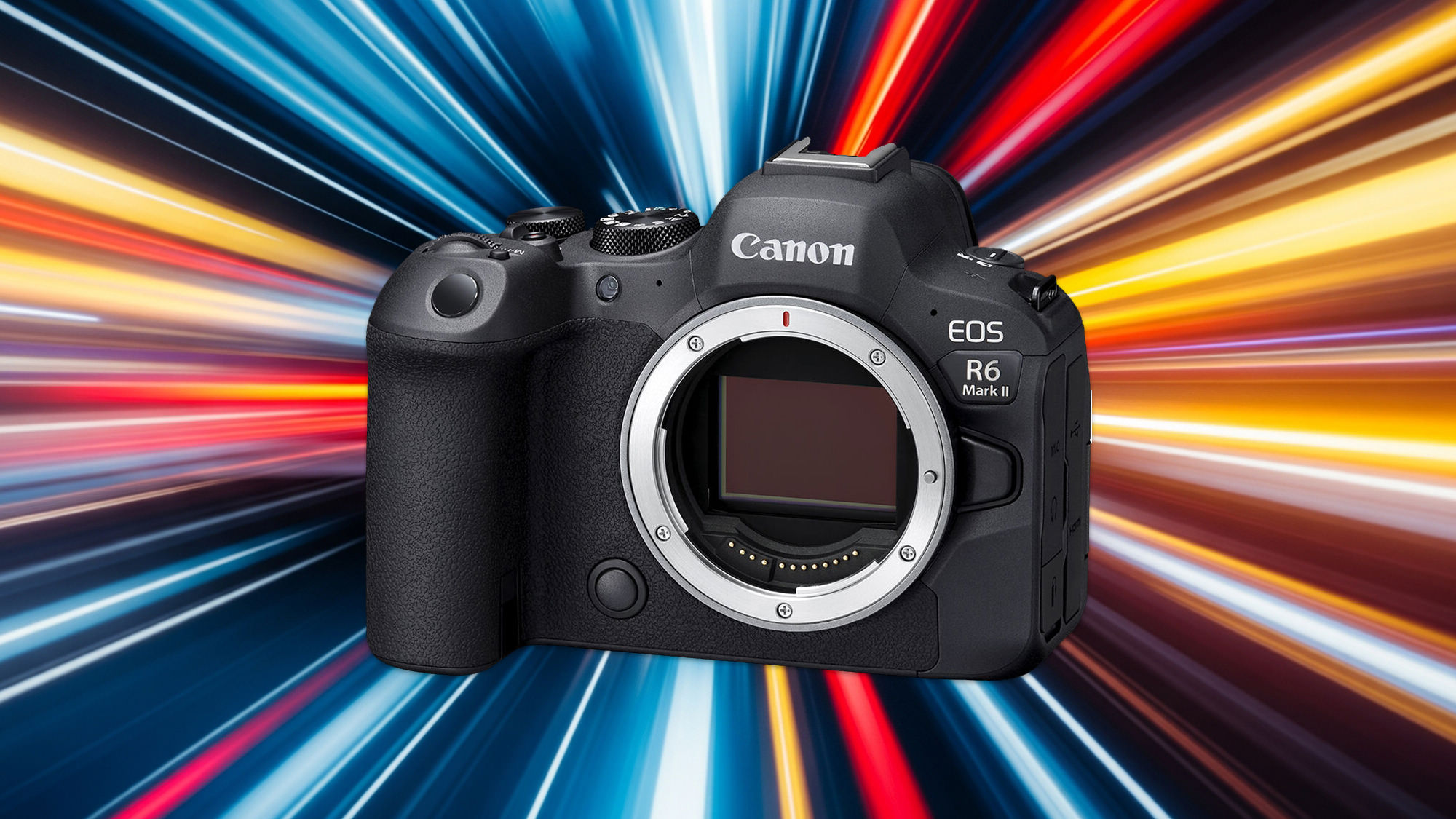
Canon EOS R6 Mark III Rumored Specifications

Lots of New Stuff is Coming

Multiple Announcements are coming during the rest of 2025, including new Cinema EOS products. The IBC show in Amsterdam is next month, and Canon does make major announcements ahead of that show from time to time.

Canon will be announcing between 4-6 lenses before the end of 2025. Hopefully they ship before the close of the year as well. There will probably be a couple of niche lenses announced alongside volume lenses.

We think it would be a surprise if the EOS R7 Mark II and EOS R6 Mark III were announced at the same time as has been mentioned in the past. We'd also be surprised if either of these camera announcements slipped into 2026.

We'll be hearing more on these two cameras in the next few weeks.

Go to discussion...

Share This Article
Craig is the founder and editorial director for Canon Rumors. He has been writing about all things Canon for more than 17 years. When he's not writing, you can find him shooting professional basketball and travelling the world looking for the next wildlife adventure. The Canon EOS R1 is his camera of choice.

65 comments

  1. There will be September announcements (Confirmed)
    Great timing 🙂 my vacation is over by then I'll plenty of time to read all about the new gear! 🙂
    I´m especially curious about the new flippy screen mechanism the R6mkiii will get according to rumors.
  2. If true, the R7's 2,36 million dots EVF sounds disappointing. 🙁
    What is the issue with the EVF resolution? Is it because it's not as high as others?

    I get it for landscape photography, or macro, or portraits, but the Canon 7 series have always been aimed at sports/action/wildlife photographers. When I'm out shooting handheld and following fast moving subjects (in my case, planes), all I'm thinking about is following the subject and framing it in the FOV. Looking at colors and details comes later in post.
  3. What is the issue with the EVF resolution? Is it because it's not as high as others?

    I get it for landscape photography, or macro, or portraits, but the Canon 7 series have always been aimed at sports/action/wildlife photographers. When I'm out shooting handheld and following fast moving subjects (in my case, planes), all I'm thinking about is following the subject and framing it in the FOV. Looking at colors and details comes later in post.
    There are uses such as distant landscapes only visible behind the small opening of forest trees. Is it common? Probably not, but why limit ourselves?
  4. If true, the R7's 2,36 million dots EVF sounds disappointing. 🙁
    I don't agree: When I got my R7, I tested the EVF with my EF 85/1.2 II attached, AF and all little focusing helpers in the EFV switched off. I found out that I could focus that lens wide open surprisingly well on an eye of someone sitting relatively still, of course. The simulated focusing screen worked very good, despite the mediocre resolution of the EVF, so this told me that its resolution is sufficient to work with in real life.

    One big advantage of less dots in the EVF is an extended battery life, and personally I prefer that when I am out and shoot thousands of images in nature. So I think it it would be smart by Canon to implement an EVF with about the same resolution in the MK II. But I fear that for marketing reasons they might pump it finally up to 4 mio. dots or so...
  5. Looks like I am going to invest a bit into two upgrades in Q4 - or whenever Canon will finally ship to Europe, which seems to be less important für Canon than in the decades before. I was making up my mind to trade my 5D4 in for an R6 II, but I guess I gonna wait now for the Mk III. An upgrade of my R7 is overdue anyway, and I do hope that Canon will return to the traditional body layout with the 7 line.
  6. I don't agree: When I got my R7, I tested the EVF with my EF 85/1.2 II attached, AF and all little focusing helpers in the EFV switched off. I found out that I could focus that lens wide open surprisingly well on an eye of someone sitting relatively still, of course. The simulated focusing screen worked very good, despite the mediocre resolution of the EVF, so this told me that the its resolution is sufficient to work with in real life.

    One big advantage of less dots in the EVF is an extended battery life, and personally I prefer that when I am out and shoot thousands of images in nature. So I think it it would be smart by Canon to implement an EVF with about the same resolution in the MK II. But I fear that for marketing reasons they might pump it finally up to 4 mio. dots or so...
    And yet, after having bought the EOS R, I noticed after a few weeks that, instead of using it as a main camera, which was my intention, I almost always took the 5 DIV.
    The quality of a viewfinder is one of the most important features for me, more than fps, MPs or video. (Maybe spoiled by Nikon F2's, Leicaflex SL2's and Leica R 6's excellent OVFs.)
    But my use is totally different from yours, since I'm only exceptionally photographing wildlife. My main focus is macro, landscape or architecture, camera set on single shot...
    Your arguments are convincing for wildlife, no doubt! 🙂
  7. There are uses such as distant landscapes only visible behind the small opening of forest trees. Is it common? Probably not, but why limit ourselves?
    I said, I get it for for landscape photography. But for fast moving subjects and action, I'd rather give up EVF resolution in favor of faster response and longer battery life.
  8. And yet, after having bought the EOS R, I noticed after a few weeks that, instead of using it as a main camera, which was my intention, I almost always took the 5 DIV.
    The quality of a viewfinder is one of the most important features for me, more than fps, MPs or video. (Maybe spoiled by Nikon F2's, Leicaflex SL2's and Leica R 6's excellent OVFs.)
    But my use is totally different from yours, since I'm only exceptionally photographing wildlife. My main focus is macro, landscape or architecture, camera set on single shot...
    Your arguments are convincing for wildlife, no doubt! 🙂
    Or maybe it's just because you're having a hard time of letting go what you're used to and embracing innovation. Your optical viewfinder only has disadvantages, try to shoot against bright sunlight and you get blinded, shoot in darkness and you see nothing, focus peaking or zebras are impossible, and you always have to chimp on the LCD screen to see the final image. EOS R's EVF has a higher magnification than 5D Mark IV and covers 100% of the image. While the resolution isn't extremely high, it's still like looking at a 1280x960 pixel screen which isn't too shabby (R5 has 1920x1080).
    To me, the EVF and the autofocus of the EOS R were already a gamechanger compared to my older 6D. Especially for portraits where you can concentrate on composition, because the camera will nail the AF every time.

Leave a comment

Please log in to your forum account to comment