


When you purchase through links on our site, we may earn an affiliate commission. Here's how it works. |
MELVILLE, N.Y., – March 26, 2025 — Canon U.S.A., Inc., a leader in digital imaging solutions, answers the needs of video creators with the new PowerShot V1 and EOS R50 V. Both cameras are part of Canon’s growing EOS/PowerShot V Series which seeks to help all creators, including cinema, livestreaming, vlogging, and VR, heighten their visual story telling.
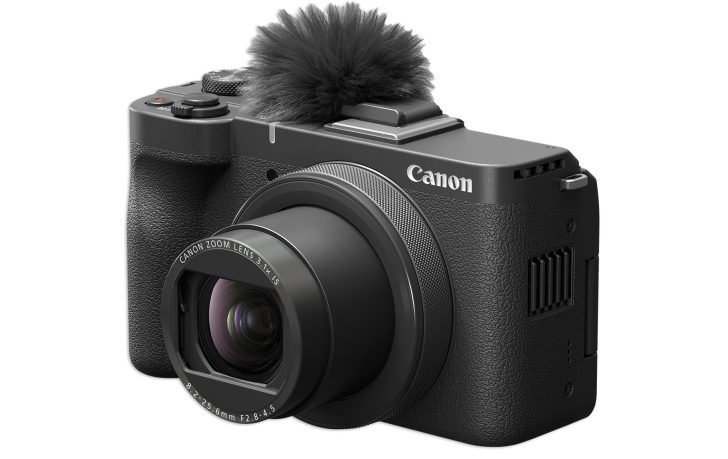
Canon Reinvigorates Point-and-Shoot
If you’re a creator, you want the ability to pursue your own visual expression without compromising quality. Something lightweight and compact that can be used anytime or anywhere to lift your vision forward—a camera that works with you. Designed with a smart and modern concept, the PowerShot V1 is a reliable partner boasting key features including:
- A newly designed grip created for both normal and selfie shooting.
- Ultra wide-angle zoom lens—approximately 17-52mm for movie recording and 16-50mm/F2.8-4.5 for still imagery.
- New 1.4 type sensor with approximately 22.3 megapixels for stills.
- Dual Pixel CMOS AF II for PowerShot for improved AF speed and subject detection tracking performance when compared to the PowerShot G7 X Mark III.
- A cooling fan inside the body to help enable longer video recording.
- A still image/movie shooting switch for quick and easy transition—the first in a PowerShot camera.
- Continuous still shooting at up to approximately 30 frames per second, a mechanical shutter with a maximum speed of 1/2000 seconds, and an electronic shutter with a maximum shutter speed of 1/16,000 seconds.
The Canon PowerShot V1 is also designed with workflow top of mind. Creators can leverage high quality video calls and livestream on a PC with a single USB cable, and the camera works intelligently with smartphones—both wired and wirelessly—via the Canon Camera Connect app.
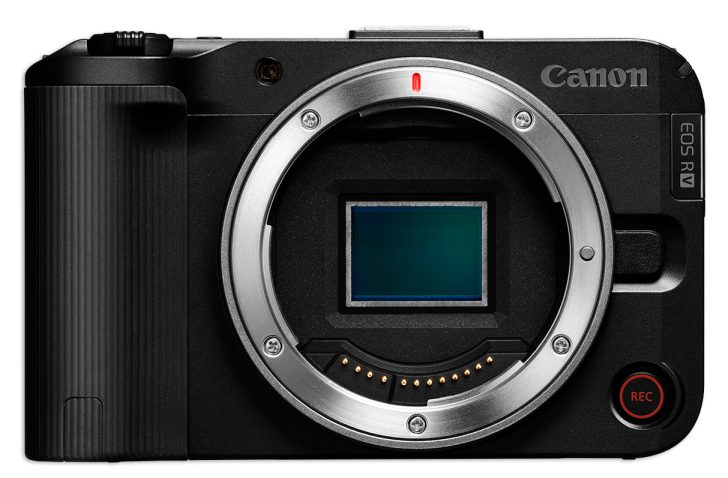
Cinema Quality in the Palm of Your Hand
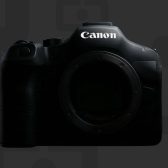
A movie-focused, high-performance camera that can fit in the palm of your hand? Yes—it does exist, with the EOS R50 V. The legacy of Cinema EOS technologies is splashed throughout, making EOS R50 V one for all creators who have high artistic ambitions to take to the next level. Key features include:
- Video-focused design elements such as a livestream button, movie recording button in the front of the camera, and a tripod screw hole for vertical shooting.
- Dual Pixel CMOS AF II for quiet and smooth AF.
- Ability to shoot 4K crop at 60fps and YCC 422 10bit.
- Compatibility with the newly launched RF-S14-30mm F4-6.3 IS STM PZ, the first RF-S lens with built-in power zoom.
- Four different methods of livestreaming: UVC/UAC, HDMI, Camera Connect, and Live Switcher Mobile multi-camera.
- APS-C sensor and DIGIC X image processor for rich bokeh.
- Image creation consistent with Cinema EOS with five presets for editing, such as Canon Log 3.
Creators are not one-size-fits-all, and EOS R50 V was built through creator feedback to make content creation easier. With modern design elements, customization options, and a new lens bundled together, the EOS R50 V is destined to be in your gear bag.
Pricing and Availability
The Canon PowerShot V1 is scheduled to be available in April 2025 for an estimated retail price of $899.99. * The Canon EOS R50 V is scheduled to be available in April 2025 for an estimated retail price of $649.99* for the body only and $849.99* with the RF-S14-30mm F4-6.3 IS STM PZ.
Canon PowerShot V1
- Midwest Photo $899 (Free 3-year CarePAK with CANONVIDEO Code)
- B&H Photo $899
- Adorama $899
- Canon USA $899
- Wex Photo £959
- Foto Koch €999
Canon EOS R50 V
- Midwest Photo $649 (Free 2-year CarePAK with CANONVIDEO Code)
- B&H Photo $649
- Adorama $649
- Canon USA $649
- Wex Photo £729
- Foto Koch €759



It's probably electronic for video.
If the sizing prediction is correct, it might be a nice replacement for my M6II, but I don't feel like spending R50V + sigma 10-18 + sigma 18-50 money on that idea 🙂
Only IBIS could make me change my mind. But I lives without it for decades. 😛
Thats really a relief! Not because I am personally interested in this camera, but because these three offer a lot of options. In the past, not all cameras had a headphone port, though it would have been good to have one. Yes, the HDMI might not be a full HDMI port, but rather micro or mini, but at least you can charge your camera while using an external monitor, if you want to.
Image stabilisation is porbably not IBIS, but digital IS. I would be genuinely surprised to see IBIS in this camera.
- Less resolution than an M6II (but probably superior image quality with more modern sensor)
- 4mm higher than an M6II (might be an issue for my use case but could still fit)
- same battery as the M6II
- AF highly likely superior to an M6II
- APS-C fine, I got the R5 for full frame, it's a good combination
Questions:I might be tempted to try it if there are good, compact replacements for the Canon M 32mm 1.4, Sigman M 56mm 1.4, Canon M 11-22mm, Canon EF-S 50-250mm (which I just could keep using with the RF Adapter instead of the M adapter).
But I need those compact portrait primes. How about an M - RF-S adapter?
Just replaced the EF 100-400 with the RF 100-500, going full R on both bodies would bring the dual use of this lens back.
With a few disadvantages: no burst mode, more prone to flickering light, no external flash..
Still odd, I would expect a lower res sensor to perform better.
There are lots of Sigma prime and zoom lenses for crop RF
Buy:
R50V
Canon RF‑S 10–18mm f/4.5-6.3 IS STM or Sigma RF-S 10-18mm f/2.8 DC DN (favoring the Sigma for obvious reasons)
Canon RF(-S) 20mm f/1.4L VCMCanon RF 28mm F2.8 STM Pancake (for keeping it small)
Sigma RF-S 30mm f/1.4 DC DN
Sigma RF-S 56mm f/1.4 DC DN
Keep:
Canon EF‑S 55–250mm f/4‑5.6 IS STM with RF Adapter
Sell:
M6 II
Canon EF-M Adapter
Canon M 11–22mm f/4.5-5.6
Canon M 22mm f/2.0
Canon M 32mm f/1.4 STM
Sigma M 56mm f/1.4 DC DN