


When you purchase through links on our site, we may earn an affiliate commission. Here's how it works. |
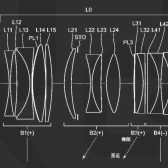
In this patent application (2024-039230), Canon is looking at methods of cooling a hybrid speedlite capable of both continuous and flash lighting.
As with most speedlites in the modern era, heat is the biggest problem facing speedlites. The flash tube that outputs the light usually runs quite hot; this heat must go somewhere. As we make more of our camera equipment waterproof, or water ingress proof – dealing with the heat is always a major challenge.
Canon has patented several different cooling designs over the years, so that's not what I found quite novel about this patent application. What I found interesting is that Canon clearly shows a circular flash head. Now that could just be the illustrator since it's not mentioned if the flash head is circular, but more flashes are going that way, so it stands the reason that Canon is looking at jumping into that market as well.
Not to mention but Canon needs something sexy to get rid of the stench from the disastrous EL-1 release.
This seems to indicate a hybrid flash to me, but again, this is language translated and Japanese is not the easiest in the world to understand context.
In particular, when shooting with a lighting device, there is a risk that the light source will stop emitting light due to an increase in temperature when using multi-flash, where the light source emits light repeatedly in a short period of time, or flat flash, where the light continues to emit light for a longer period of time than flash flash
Of particular note, it mentions two different distinct modes, one which is fast frames per second pulse flashing and the other is continuous. Both of these put an incredible strain on internal heat in the flash head.
It should be noted that this is a very conceptual patent application. There are no nitty-gritty details and exploded mechanical drawings showing the details of the flash. That is something I expect to see as an item gets further along in its development.
However, it could be that what Canon discusses here, they simply didn't need to show that much detail.
As with all patent applications, this is a look into Canon's research – it may or may not end up in an actual patent or product.
Japan Patent Application 2024-039230




Does this mean Canon will release even bigger Speedlites?
Or just a quick redesign of the EL-1?
🤔😉
My main complaint is the range of the wireless, 30 meters is so little and it should be increased!
That depends if it is a design flaw and not some firmware bug. If they need to change frequencies, modulation or protocol it won't be backward compatible. IF the only need to improve the radio/data handling without such changes it could be.
A building with a lot of APs filling each and every channel, blasting at full power, the interference can be far worse. Still, being the 2.4GHz band an unlicensed one, interference must be expected, and any design should account for them. Wireless flash has the issue it has to be a real-time signal, with strict tolerances, unlike WiFi which can stand far higher latency. Maybe today using a different band is not a bad idea, since most devices moved to WiFi, although many now uses the 5 GHz band.
Anyway, we don't know if it is a problem at the hardware level - the hardware enter a state when it loses the link and can't re-establish it until power cycled, or it's a software problem, the hardware still works correctly but the software is in a state when it cannot resume operations. The latter might be far simpler to fix than the former, although without software update capabilities Canon units can't be fixed that way.
I hope Canon is working on new, more powerful units and they might need to exchange more data - requiring a protocol overhaul.