

When you purchase through links on our site, we may earn an affiliate commission. Here's how it works. |
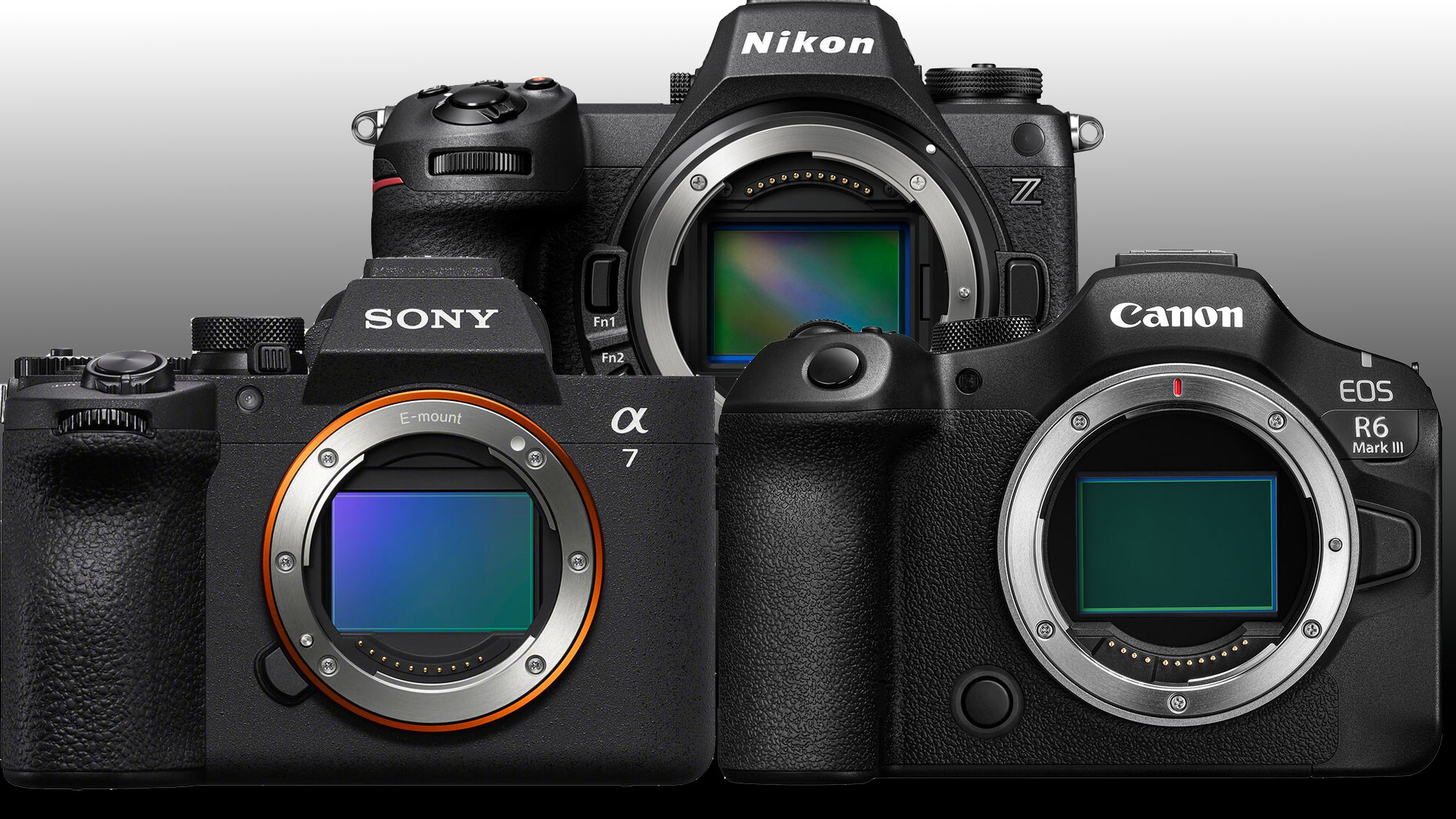
PhotonsToPhotos is back, and this time, they have finished up their analysis of the Canon EOS R6 Mark III sensor, so we have some actual numbers to quantify here with the sensor and how it measures up against the earlier versions of the Canon EOS R6 lineup and its competition.
The R6 Cameras Compared
If we compare all the Canon EOS R6 sensors, we can see that Canon has slightly changed the sensor design around the dual gain ISO stop, as it's now around ISO 800, but overall, the differences in low ISO dynamic range are minimal. This really should be the case, unless we go into other realms, as we will discuss further later, there's a limit to just how much light you can capture in a sensor and measure. Sooner or later, you are going to reach diminishing returns.

| Camera Model | Measured PDR |
|---|---|
| EOS R6 | 11.16 |
| EOS R6 Mark II | 11.52 |
| EOS R6 Mark III | 11.63 |
It should be noted, though, that even though the dynamic range is very similar across the three versions of the EOS R6, their speeds are not.
| Model | Sensor Lines | Sensor Columns | Readout Rate (ms) | Line Read Time (μs) | Pixel Read Time (ns) |
|---|---|---|---|---|---|
| R6 | 3648 | 5472 | 19.44 | 5.33 | 0.974 |
| R6 Mark II | 4000 | 6000 | 14.5 | 3.62 | 0.604 |
| R6 Mark III | 4640 | 6960 | 13.2 | 2.84 | 0.409 |
That makes it a bit clearer that even though Canon hasn't increased the overall dynamic range of the sensors, they have made the sensors much faster, with the EOS R6 Mark III able to read a pixel 2.38 times faster than the original EOS R6. For the most part, Canon has extracted all the dynamic range it can from front-side illuminated sensors and has also continued to advance the speed of these sensors dramatically.
The first thing that I noticed was that the results were a little different than what I expected from when dpreview did their dynamic range testing.

I would have expected the EOS R6 Mark III to be slightly under the results of the EOS R6 Mark II. This, I think, comes down to the fact that all these sensors are extremely close to each other, and the results may have been done at different sensor or ambient temperatures, the cameras may have slightly different noise characteristics, and there could be slight variations at the sensor level. So slight measurement variations in the overall noise could occur, and thus, the dynamic range can show slight changes as a result. But that doesn't explain the difference in electronic shutter results.
Even though the mechanical shutter results are similar dynamic range results in Bill's analysis, one thing that showed itself to be very improved was the dynamic range while using the electronic shutter, with the EOS R6 Mark III showing a near full stop increase in dynamic range, even though, when I looked at dpreview's results, it showed the EOS R6 Mark III as being at best 1/3 to 1/2 a stop better than the EOS R6 Mark II, and certainly not a full stop improved.

| Measured PDR | Measured PDR (ES) | |
|---|---|---|
| R6 | 11.16 | 9.75 |
| R6 Mark II | 11.52 | 9.59 |
| R6 Mark III | 11.63 | 10.5 |
I even went back to dpreview and double checked the results, just in case I made a mistake in looking at dpreview's results.

You have to consider that these two techniques use two different approaches to measuring sensor latitude or dynamic range.
When we delve into comparing the Canon EOS R6 Mark III camera against other brands, we have to be aware that how the cameras are measured, their temperatures, and the environment can all influence these results. Even the amount of time that these cameras were powered on can have a fairly dramatic effect at the extremes in which we are testing.
Canon EOS R6 Mark III against the Competition
The competition has changed with the advent of the Sony A7 V, which featured a new sensor design that we have previously seen with Canon's cinema cameras, which they called DGO. The Alexa was the first camera sensor to use DGO in practice. Essentially, what happens is that the sensor is effectively read twice as often. There are limits to this, but in effect, this produces a signal with different amplification levels when combined, which would reduce the noise in the signal, thus boosting the dynamic range. Of course, if the sensor's pixel well overflows because there's too much light reaching the pixel, then it is going to clip, and there's nothing you can do about it.

Why am I going into this? While Panasonic was the first to utilize this with their Panasonic S1 II for stills cameras, it appears as if Sony has caught up and implemented this with the A7 V. The Sony A7 V, measured also by photonstophotos, shows impressive mechanical shutter dynamic range improvements, showing a .84 stop dynamic range improvement over the R6 Mark III in mechanical shutter operation.

While DGO works well with stills and mechanical shutter, the mode is dropped for Sony A7 V's electronic shutter, making the benefit of 14-bit vs 12-bit between the A7 V and the EOS R6 Mark III electronic shutter modes rather moot, as the A7 V is less than a half stop improvement over the EOS R6 Mark III.

| Measured PDR | Measured PDR (ES) | |
|---|---|---|
| Nikon Z6 III | 10.46 | 10.46 |
| Sony A7 V | 12.47 | 10.99 |
| R6 Mark III | 11.63 | 10.5 |
Sony couldn't do DGO with the electronic shutter at this time because it takes much longer to read the sensor twice and finalize the results. With a mechanical shutter, the sensor has as much time as it needs to read the sensor. Soon, though, you can see where this is going, and the same DGO benefits will be present in electronic shutter as well once sensors get fast enough, or stacking becomes less expensive.
I'm sure those who were claiming they needed a high dynamic range electronic shutter are now in the forums today switching up and saying all they want is high dynamic range with a mechanical shutter. Because we know that's the way the forums roll.
Closing Thoughts
Outside of implementing Canon's DRO for stills photography in future cameras, Canon seems to have hit a dynamic range wall, but it is still competitive with the industry.
Canon still uses primarily front-side illuminated sensors, especially in this R6 lineup, where the competition is using back-side illuminated sensors and has now moved to partially stacked back-side illuminated sensors found in the Z6 III and the A7 V.
Logically, front-side illuminated sensors are not supposed to be as good as back-side illuminated sensors. With front-side illuminated sensors, the sensor wiring and transistor switches interfere with the maximum full well capacity of each pixel. Also, add in the fact that Canon splits each pixel in half, which would add even more inefficiency when you consider the wall surrounding the two wells storing the charge.
When you take all of that and realize that Canon is still competitive, you have to tip your hat to Canon's sensor researchers and engineers who make the most out of what they have been given to work with.
With all that, Sony has dropped the gauntlet and delivered exceptional dynamic range performance, and I'm certain that Canon will up its game even further. Competition spurs further innovation, and we all benefit from that.





Thanks, Richard, for sharing and the interpretation.
So we see that in base/low ISO the BSI sensors are noticeably better, while above that zigzag at about ISO800 everybody looks quite the same, with the A7 V slightly leading.
As I mostly shoot my wildlife at ISO 1600 and above, the R6m3 could be a useful tool instead of my R6m2, delivering same DR at higher MP count and faster readout.
Right now, I see no need to move 😉
Interesting future: What happens if Canon puts the learnings from great front side illuminated sensors into a new generation of back side illuminated sensors with some stacking!
absolutely 100%
how long the camera was turned on for, how many shots were taken before the test shots, ambient temperture, and even slight changes in sensor and camera performance. Also I didn't really allude to it, but I would imagine that canon sensors having to process twice the amount of photodiodes, probably have a disadvantage in terms of needing to run warmer.
Considering Canon pulls this all off with front side illumination, I think is pretty good - now the question is, why and when are they going to move to BSI? they obviously have it. "in theory".
We're back to 2018 again. If only Canon would use the dual data they already get with the dual pixel sensor. Cause each pixel captures a slightly different exposure. And there's software that can read both exposures and calculate a picture with higher dynamic range. Why this is not done in-camera is a mystery to me.
On the other hand, high ISO of the R6 III got worse than the R6II and now is much closer to the original R5 than R6 II or R6 OG according to the noise chart of photons-to-photos. Its up to you to decide whether worse low light capabilities of the R6 III can effect your work or not. Seemingly, increasing the MP count from 24 to 32 MP has some price.
Thanks for pointing that out. Could be an issue to me.
Here's the chart for others to find:
Read Noise in DNs versus ISO Setting
@Richard CR:
Maybe this should be included in the article.
Edit:
For noise charts, photonstophotos explicitly states under the plot "These raw values are not appropriate for comparing camera models because they are not adjusted for gain or area."
What I'd hope to see is an increase in DR overall, but what I'd like to see is probably not possible. There is only so much light energy in a given amount of pixel space.
It looks like a good improvement in usability. I hope they can do similar with a potential R7 replacement in the future.
So it seems that I will have to check the R6m3 IQ and s/n behavior directly hands on.
The article seems to dismiss this advantage as irrelevant given the DR findings discussed.
See: https://www.dpreview.com/news/57886...cmos-sensors-boost-dynamic-range-breakthrough