
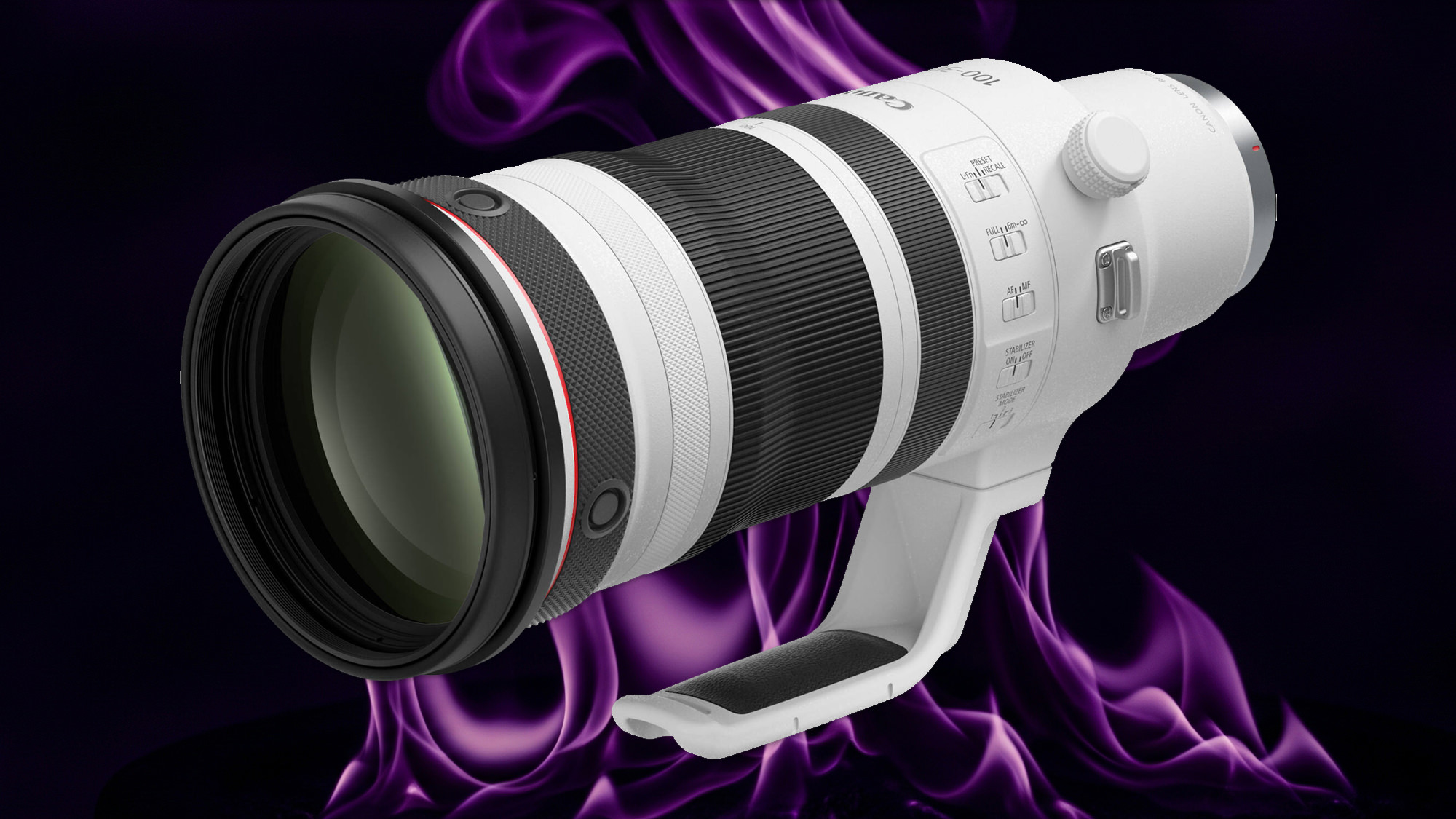
Canon RF 100-300mm f/2.8L IS USM $8549 (Reg $9499)

Craig Blair
6 Min Read

When you purchase through links on our site, we may earn an affiliate commission. Here's how it works.

If you're in the market for a Canon RF 100-300mm f/2.8L IS USM and you can order from teh Canon USA store, now is a good time to consider it. It's quite possible that refurbished prices will also increase eventually if things continue down the same path.

It may sound absurd, but $8500 is a steal for this lens. As always, all refurbished gear comes with a full 1-year Canon USA warranty and free standard shipping.

Purchase Options

Overview

Zoom Evolution

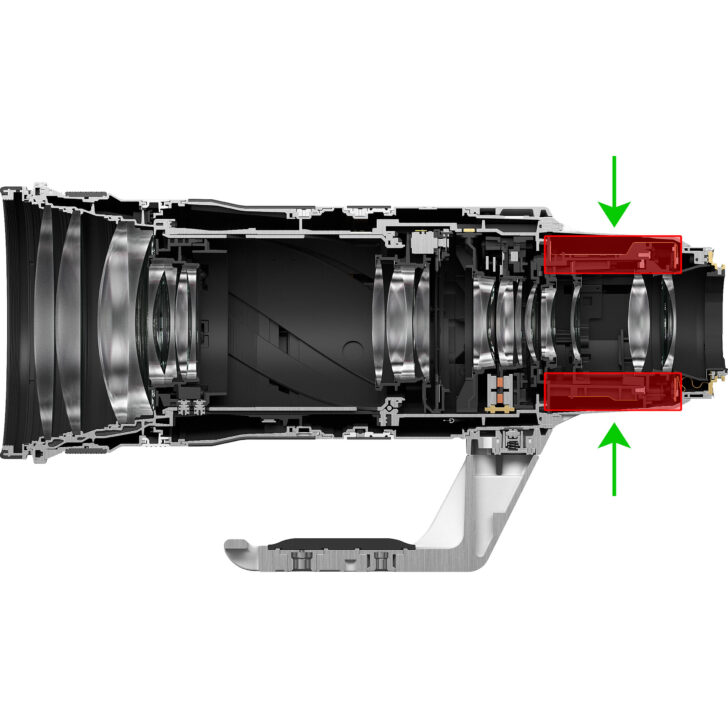
Building on the legacy of the popular EF 300mm f/2.8 prime lenses, this RF 100-300mm f/2.8 maintains the quality and speed 300mm f/2.8 shooters are looking for while adding the versatility of a zoom that widens up to 100mm.

  • The 100-300mm zoom design offers more versatility for tracking moving subjects, recording candid moments from a distance, and backing off from scenes a bit for a wider frame for more context.
  • Despite switching to a zoom design, this lens retains the a bright and constant f/2.8 maximum aperture that excels in available lighting conditions and helps to achieve a shallow depth of field to isolate subjects against a blurred background.
  • Wholly new optical design includes fluorite elements and ultra-low dispersion glass, plus one aspherical element, to achieve a higher degree of clarity and sharpness with virtually no distortion.
  • Canon's Air Sphere Coating (ASC) and Super Spectra Coating (SSC) minimizes ghosting and flare to better enable working in backlit conditions or when facing strong lighting situations.

Autofocus and Image Stabilization

As a lens designed for sports, events, and other moving subjects, AF and IS functions have been optimized for quick and precise performance along with the ability to work with the lens handheld or from a monopod if desired.

  • Dual Nano USM system uses both a ring type USM and an STM mechanism to realize quick and accurate focusing. The smooth and nearly silent focusing suits both photography and video applications and there is full-time manual focus control available.
  • Two separate focusing groups are independently actuated for greater maintained sharpness throughout the zoom range and at different focus positions.
  • Focus range limiter can be set to the full focusing range, from 5.9′ to infinity, or from a 19.7′ to infinity range for quicker performance if working exclusively with distant subjects.
  • Optical image stabilization compensates for up to 5.5 stops of camera shake; if paired with an EOS R camera featuring in-body image stabilization, this lens also supports Coordinated IS that offers up to 6 stops of shake correction.

L Series Design and Handling

The first lens of its kind designed specifically for mirrorless EOS R cameras, this RF 100-300mm f/2.8 zoom features the durability, weather sealing, and intuitive design professionals expect from an L Series lens.

  • Weather-sealed design enables working in harsh environments and prevents dust and moisture from reaching the interior of the lens. Also, there is a front fluorine coating that prevents water, oils, and other residue types from sticking to lens, making it easier to clean.
  • Impressively lightweight for its speed and zoom range, this lens weighs 5.8 lb and measures 12.7″ long.
  • Internal focusing and zooming design maintains the overall length of the lens during operations and promotes quicker operations and more robust weather sealing.
  • Built-in rotating tripod mount suits working with the lens atop a monopod or tripod and enables quick switching between vertical and horizontal shooting orientations.
  • For intuitive handling and focus control, there is a Focus Preset button near the rear of the lens, which can be triggered with your right hand during use. This function allows pre-focusing on a spot, storing this focus distance, and being able to instantly return to the memorized position at the push of this button. Alternatively, a side switch enables utilizing this buttons as an secondary Lens Function (L-Fn) button instead.
  • Four L-Fn buttons surround the front of the lens and these can be programmed to control a variety of lens or camera functions.
  • Programmable Control Ring can be used for lens-based adjustment of various exposure or camera settings and comes with a click-stop operation by default for tactile feedback.
  • Compatible with optional Extender RF 1.4x and 2x teleconverters for further extending the effective reach of this lens.

Purchase Options

Go to discussion...

Share This Article
Craig is the founder and editorial director for Canon Rumors. He has been writing about all things Canon for more than 17 years. When he's not writing, you can find him shooting professional basketball and travelling the world looking for the next wildlife adventure. The Canon EOS R1 is his camera of choice.

56 comments

  1. I guess that for the younger generations whose first encounter with photography is mostly from the mobile phone, the transition to a camera without mechanical shutter could well be more natural. For those of us old enough to start photography first with a camera, the shutter sound and feel would be a nostalgic throwback more than for usage reason. And yes, haptic feedback (@David-Sydney) would be good for me too.
  2. I guess that for the younger generations whose first encounter with photography is mostly from the mobile phone, the transition to a camera without mechanical shutter could well be more natural. For those of us old enough to start photography first with a camera, the shutter sound and feel would be a nostalgic throwback more than for usage reason. And yes, haptic feedback (@David-Sydney) would be good for me too.
    I believe that electronic shutters have the option to make a slight sound when they click. Either way, mechanical shutters will fade out...
  3. I believe that electronic shutters have the option to make a slight sound when they click. Either way, mechanical shutters will fade out...
    The R5ii and R1 allow you to choose simulated sounds for the ES.
  4. While the latest specs seem really encouraging, especially the R5Mkii size and layout for the body, if combined with a CF Express and decent Buffer, I really hope they don't drop the mechanical shutter on this generation.
    While I fully appreciate that this will come eventually, personally I'm not quite there yet on things like rolling shutter and the protection that the mechanical shutter provides when changing lenses.
    I know at least one Nikon shooter that moved to the R5mkii over the Z8/9 due to a combination of mechanical shutter and the lure of the RF100-500.
    I really hope the R7 Mkii finally delivers a worthy successor to the 7Dmkii and allows me to retire mine.
  5. Re: I do hope Canon doesn’t spend any time on coming up with a a fake mechanical shutter sound.
    To each their own, for me I am the exact opposite. I have the audible click enabled on my R6 Mark II as it's reassuring to hear it is shooting away when the machine gun is audible. Often I am too busy staring at the subject to check my peripheral vision can see the white border lines flashing in the EVF when the shutter is firing. One less place to look in the viewfinder when I am shooting is a plus for me. All electronic shutter mode cameras should have the option to enable sound when the shutter is fired. What would also be VERY useful is to have the option to leave the electronic level marks visible during electronic shutter firing. It annoys the crap out of me that the level disappears during shooting especially when panning.
  6. To each their own, for me I am the exact opposite. I have the audible click enabled on my R6 Mark II as it's reassuring to hear it is shooting away when the machine gun is audible. Often I am too busy staring at the subject to check my peripheral vision can see the white border lines flashing in the EVF when the shutter is firing. One less place to look in the viewfinder when I am shooting is a plus for me. All electronic shutter mode cameras should have the option to enable sound when the shutter is fired. What would also be VERY useful is to have the option to leave the electronic level marks visible during electronic shutter firing. It annoys the crap out of me that the level disappears during shooting especially when panning.
    Same here, I have it on the lowest volume setting. It is just the right amount of feedback for me, especially when I set down the camera and something pushes the shutter button. 30fps + CFe will full up your card really fast when that happens!
  7. If Canon drop the mechanical shutter on the R7mk2 then I hope they improve the sensor readout speed significantly. As a wildlife photographer who likes to shoot small song birds, the electronic shutter is often useless due to the rolling shutter causing bird wings to look deformed. ES is fine for me 95% of the time, but the other 5% of the time I either need an MS or an ES with faster readout.
  8. If Canon drop the mechanical shutter on the R7mk2 then I hope they improve the sensor readout speed significantly. As a wildlife photographer who likes to shoot small song birds, the electronic shutter is often useless due to the rolling shutter causing bird wings to look deformed. ES is fine for me 95% of the time, but the other 5% of the time I either need an MS or an ES with faster readout.

    Readout speed won't be an issue with Canon going forward. It's even easier to do than with full-frame cameras. Less heat and all that.

    I recently needed a mechanical shutter. There were weird halogen lights at a venue.... 4 or 5 of the lights were flickering at different rates. I had to switch to mechanical.

    Is there a way to solve that annoyance? I don't know.

    For wildlife.... there won't be an issue, not even with wing beats of birds.
  9. If Canon drop the mechanical shutter on the R7mk2 then I hope they improve the sensor readout speed significantly. As a wildlife photographer who likes to shoot small song birds, the electronic shutter is often useless due to the rolling shutter causing bird wings to look deformed. ES is fine for me 95% of the time, but the other 5% of the time I either need an MS or an ES with faster readout.
    Absolutely - that is the primary reason for using the mechanical shutter. But if the readout is much faster than the present R7, then it really isn't needed any more.
  10. Genuine question: If the rolling shutter of a CMOS sensor is faster than the mechanical shutter, is there still any benefit left to the latter?

    I don't mean things like sensor protection when one changes lenses, but photographic benefits.
  11. Absolutely - that is the primary reason for using the mechanical shutter. But if the readout is much faster than the present R7, then it really isn't needed any more.
    Oh 100% yes I agree, best case would be if they give the mk2 a faster readout and remove the mechanical shutter entirely. Another bonus with that would be for the raw burst mode (or pre-shot or whatever it's called). I would love to use it to get shots of birds taking off from a perch, but rolling shutter makes it useless to me as it currently stands.
  12. This is terrible news! Us R7 users have grown used to our machine gun like staccato of shutter noise and use it to communicate in the wild via Morse code.
    Just buy a used 1D X – the sound will carry much farther.
  13. Readout speed won't be an issue with Canon going forward. It's even easier to do than with full-frame cameras. Less heat and all that.

    I recently needed a mechanical shutter. There were weird halogen lights at a venue.... 4 or 5 of the lights were flickering at different rates. I had to switch to mechanical.

    Is there a way to solve that annoyance? I don't know.

    For wildlife.... there won't be an issue, not even with wing beats of birds.
    If the electronic shutter truly can’t handle this special case, then it’s perfectly fine to stick with the traditional mechanical shutter design—even if it’s just the same mechanical shutter from the R7M1.
  14. If they can get the readout time down to sub-5ms, get rid of the shutter, no problem. The only time I ever use mechanical shutter on my R5ii is for flash, and that's maybe 3-4% of usage for me. BUT, the R7 is not a portrait/flash kind of camera, so nobody is ever going to miss it.
  15. — even if it’s just the same mechanical shutter from the R7M1.
    Oh no. Please, not that shutter. It is very badly damped, both when it comes to sound and to vibrations. I rather take the shutter from 7DII if we are going to reuse a prior design. Even including the mirror swapping up and down, the 7DII felt and sounded much better damped than the R7.
    And I got my first full-day >500 shots with the R7 ruined because of shutter-shock.

Leave a comment

Please log in to your forum account to comment