

When you purchase through links on our site, we may earn an affiliate commission. Here's how it works. |
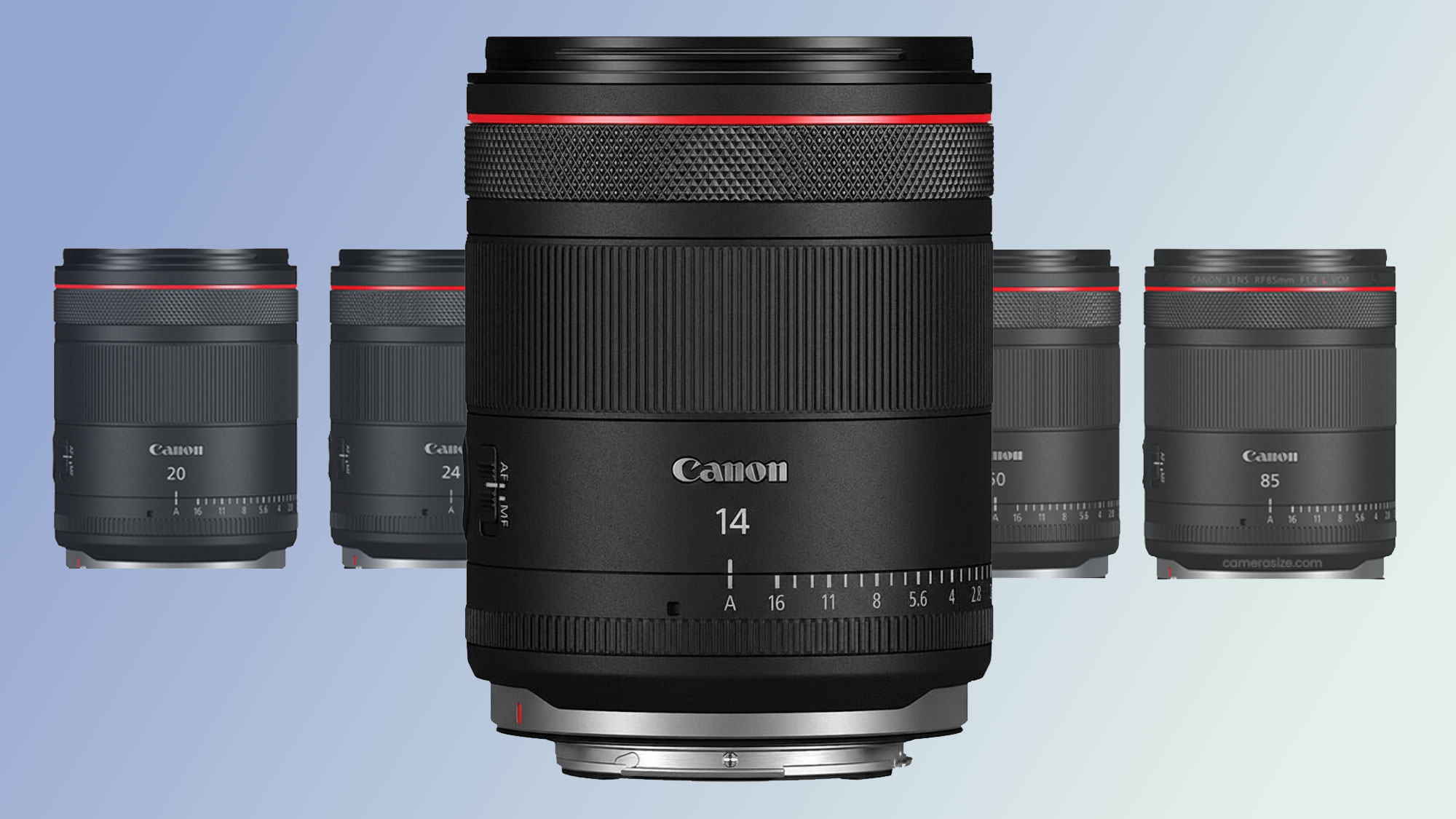
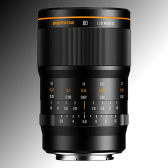
In this patent application (2026-003292), Canon showcases several fast primes, and it is likely the patent application for the Canon RF 20mm f/1.4 VCM. But with this patent application, two embodiments are very interesting for CanonRumors' viewers, which are the 14mm F1.4 embodiments.
These embodiments feature the optimal lens length of approximately 99mm, depending on packaging, ensuring they align with the standard form factor of the VCM lens family. Which is why the title of this article specifically mentions VCM.
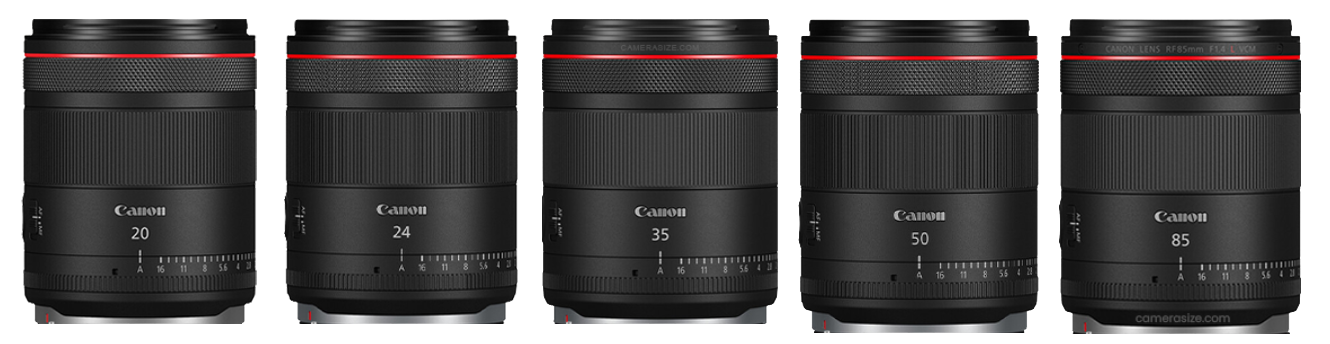
In this patent application, the 20mm f1.4L VCM is also shown in one of the embodiments, making it even more likely that the lens in question is part of the VCM family.
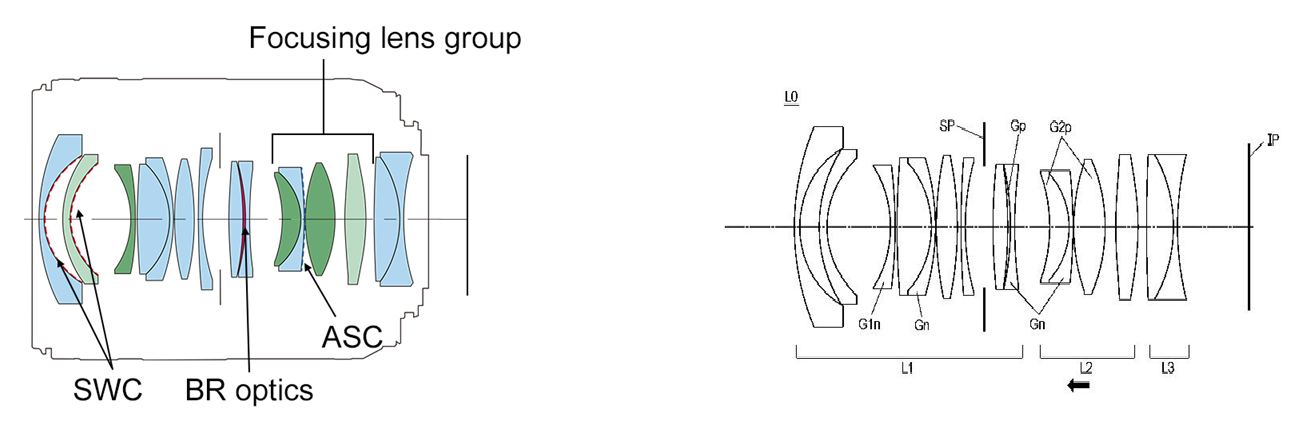
It's highly unusual for Canon to release a lens that is in a patent and then later on do another lens that is also in the patent. But this shows that there are credible designs out there for Canon to leverage to come out with a very fast 14mm lens.
I know those in the astrophotography landscape genre who would love to get this lens if coma aberrations were under control. Canon, in this patent application, was focusing on the minimum focus distance, but a macro lens, these 14mm lenses, are not. As they only have around a .1x magnification.
To provide an optical system that has high optical performance while shortening the object distance at which focusing is possible.
As well, the purists would take offense to the amount of stretching that has to occur for this lens to fill the entire image circle, having an image height (radius) of 18.68mm instead of the required 21.66mm for a full-frame sensor.
There is no image stabilization, and given the grouping, I'm not sure there would be enough room to include it if it were simply missed adding in the embodiment.
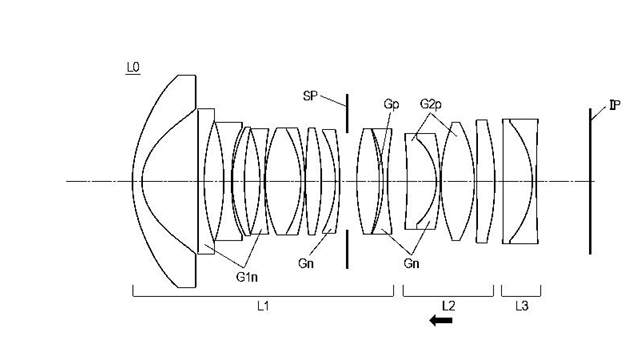
| Lens Length | 14.42 |
| F-Number | 1.46 |
| Half Angle Of View | 52.34 |
| Image Height | 18.68 |
| Total Optical Length | 118.50 |
| Back Focus Distance | 14.00 |
This embodiment is packed with elements, and would be extremely “solid” feeling in terms of weight for the size. Given the optical qualities of the VCM lenses to date, it wouldn't be a surprise to me if this lens were to carry on that tradition, given the optical complexity. Oh, and it goes without saying that this wouldn't be an inexpensive lens.
Closing Thoughts
Where there is smoke, sometimes there's fire. I would be very surprised if this ended up being the actual optical embodiment for an upcoming RF 14mm f/1.4L VCM. Simply because in all my years of reporting on patents, I've never seen that happen before, where one lens is released from a patent, and then later on, another lens is also released from the same patent. But what I wouldn't be surprised about is another patent application currently in the works for what would be the eventual RF 14mm f/1.4L if it does indeed come out.
Just a Reminder!
With all patents and patent applications, I have to stress constantly – this is simply a look into Canon’s research; the only thing we can quantify accurately is that Canon is researching this. A patent application doesn’t mean they are going to release this in the next month, or even year, or even at all.




Having a similar lens in price to the Sony 14/1.8 would suit everything I would need and some of the physical features of the sigma 14/1.4 (dew heater placement, focus lock etc) would round out the perfect lens 🙂
I am yet again see any discounts on the RF20/1.4 so I haven’t pulled the trigger for it although it would have better coma than the sigma EF20/1.4 that I currently use
Also, with a TS-R the purists won’t be able to complain about cutting the corners off the FF image circle.
I'm not sure a TS-R of 12mm is even possible, if it did, it'd probably look something like the Nikkor 7.5mm, which would be highly amusing to be honest.
Hah. i guessed around the correct number, it'd be 7.8mm, assuming a 10mm shift amount, or a full 66mm image circle diameter.
I hope it'll be good for Astro photography! It would probably also be an interesting choice for landscape timelapses.
I'm still using the Sigma EF 14mm f/1.8 with an adapter. Since I use it quite often, I’d gladly upgrade and get rid of the adapter.
If Canon releases a 14mm f/1.4 that’s sharp with minimal coma, I'm willing to splurge whatever it takes for that one 😅
I personally don’t miss OIS on this lens (the Sigma), and I wouldn’t mind if Canon released their version without it as well. To be honest, I’m also not too concerned about digital corrections or stretching. Hopefully it doesn’t vignette too much though, because I’m already shooting with these types of lenses at high ISO sometimes, and I don’t want to push corner brightness corrections too far due to noise.
depends, you'd have to restrict the movement, you couldn't, for instance, shift in different angles - you could only move up and down, and left and right from center.
What would be the point though? apart from price maybe?
But TS lenses are niche lenses so I'd assume not too price-sensitive... and they are not exactly walkaround lenses, they are meant to be used with tripod etc. So making them smaller and lighter should not be a priority
However, Richard's point is a good one that hadn't occurred to me, mainly because I do usually use shift only in the vertical or horizontal directions. I've been hoping a TS-R lens would have encoded movements mainly because it would enable DxO to develop correction profiles for a shifted lens...but doing so for all possible sensor positions in the image circle (assuming rotation is encoded) likely precludes development of such profiles. So I guess I can stop hoping for encoded movements, since it will add to the cost of the lens without significant benefit (I doubt Canon would offer DLO for those lenses, anyway, but if they do I may have to use DPP for part of my workflow, ugh).
I admit that I am not familiar with how profiles are created. If they are simply collections of discrete values that instruct the software which values to use for the geometric / vignetting corrections based on aperture and focal length (for zooms), then rotation would be an issue. If formulas can be encoded in profiles then I imagine it could be done. But if formula are not supported right now, then it would be a pretty major upheaval on the software side.
eh, I used DPP last time for a few days when I bought my R5 (it was on the first day and Adobe was not ready for its RAW files for a few days) and I do not miss it one bit 🤮
I see them as different beasts - both useful for me in different scenarios so would be tempted by both but unless I win the lottery....
I've seriously considered the move to Sony due to Canon's attitude towards rounding out their ecosystem & limiting third-party lenses, especially since gear like this is so helpful for the type of stuff I shoot.
That being said, the VCM primes are phenomenal from the perspective of a hybrid shooter. Extremely interested in this (and I hope they get a move on!)