

|
When you purchase through links on our site, we may earn an affiliate commission. Here’s how it works. |
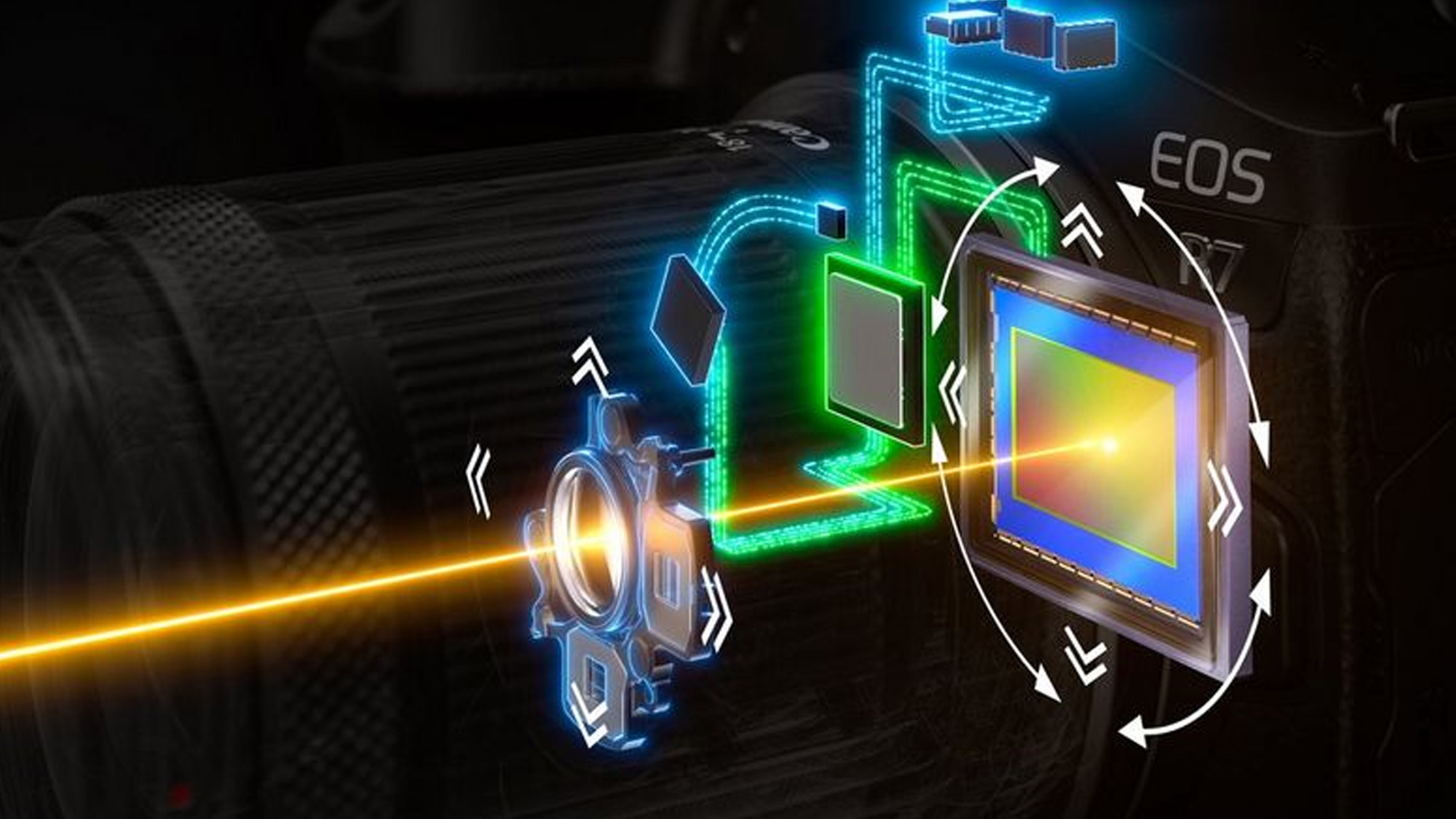
This article looks through Canon’s history and innovation in the realm of image stabilization. So sit down, grab a coffee, because this is a long article. Canon’s image stabilization (IS) systems have transformed photography and videography, delivering sharp images and smooth footage despite camera shake or motion.
From optical to digital solutions, Canon has crafted distinct IS modes and types, including a cost-effective variant for budget EF-S and EF-M lenses to the serious professional image stabilization systems in Canon’s premier L lenses.
We hope you enjoy a look into Canon’s Image Stabilization technology and we also encourage you to look at our other insights into Canon’s technology.


Image Stabilization Modes
Image Stabilization Mode 1 (Standard)
Optical IS Mode 1 provides pitch and yaw stabilization, countering vertical and horizontal shake for general photography. Gyroscopic sensors detect motion, shifting a lens group in real time to keep the image steady on the sensor. Ideal for static shots like landscapes or portraits, it excels in low light, where slow shutter speeds risk blur. Offering up to two stops of correction in early versions, it enables handheld shooting that might otherwise require a tripod.
However, Mode 1 doesn’t handle intentional panning well, as it corrects all directions, potentially causing artifacts during motion. Long exposures may show slight drift. Despite these limits, it remains a foundation for versatile shooting.
The EF 75-300mm f/4-5.6 IS USM, launched in September 1995, introduced Image Stabilization and mode 1 to the Canon EF mount.
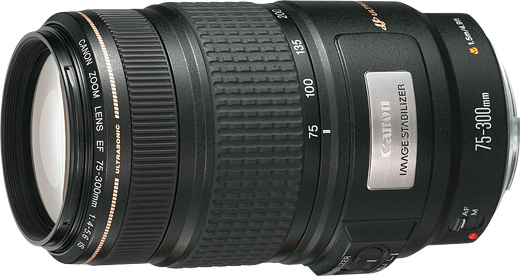
From Canon’s Museum, the Canon EF 75-300mm f/4-5.6 IS USM featured the world’s first image stabilization system in an interchangeable lens.
This telephoto IS (Image Stabilizer) zoom lens is the world’s first interchangeable lens for SLR cameras that incorporates an Image Stabilizer. It provides a camera-shake blur correction effect equal to an increase of two steps of shutter speed, greatly expanding the range of handheld photography even with slow speed film and under low light or other difficult conditions.
https://global.canon/en/c-museum/product/ef330.html
Image Stabilization Mode 2 (Panning)
Mode 2 is designed for dynamic scenarios, particularly panning to track moving subjects like birds or athletes. It stabilizes only the axis perpendicular to the camera’s motion, allowing smooth horizontal or vertical sweeps while reducing shake elsewhere. Gyroscopes detect the pan direction and only stabilize in the other axis. This mode extends usable shutter speeds for action photography and allows you to “drag the shutter” while maintaining some image stabilization. It is a favorite for sports and wildlife shooters. It requires practice to match subject speed, but the results are blur-free captures that retain the motion’s appearance of movement.
It’s less effective for static shots, where full-axis correction outperforms, so as a photographer, you have to choose which mode you want to use while you are shooting.
Mode 2 is the best setting to use when you’re panning the camera to follow a moving subject. It sets the lens to ignore the panning movement and compensate only for movement that is perpendicular to the panning direction. It also ensures a smoother image in the viewfinder.
The IS system automatically detects the direction of the pan, so there’s no need to worry about whether you are composing portrait-format or landscape-format images or which direction you are moving the camera.
https://www.canon-europe.com/pro/infobank/image-stabilisation-lenses/
Debuting with Mode 1 in the EF 75-300mm f/4-5.6 IS USM in September 1995, Mode 2 added versatility to this consumer zoom.
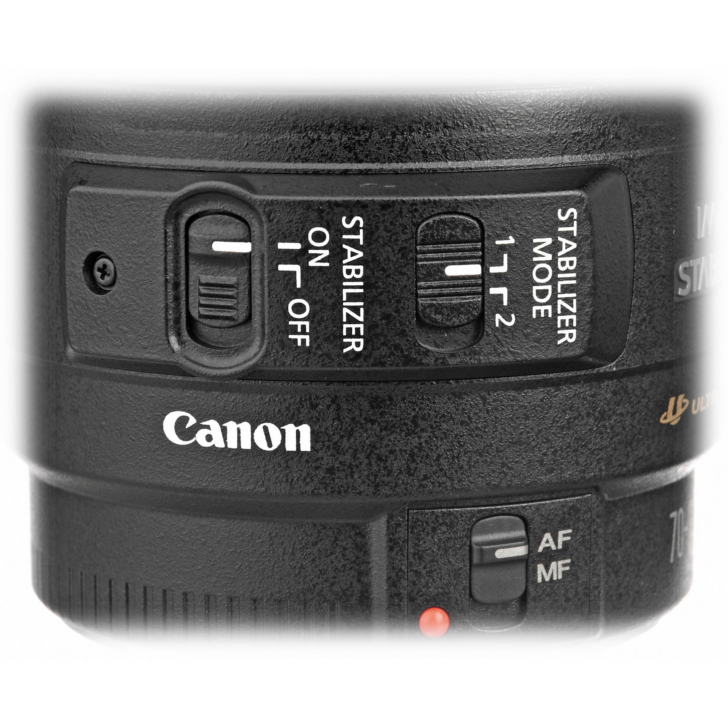
Image Stabilization Mode 3
Mode 3 optimizes still photography by activating stabilization only during exposure, ignoring pre-shot movements like framing adjustments. This prevents the image stabilization system from over-correcting as you move the lens. It is used when you have deliberate movements, such as macro or telephoto shots in dim light, where viewfinder stability is secondary to the image sharpness. The viewfinder experience feels quite different from mode 1, as your viewfinder only stabilizes at shutter release. It may take some getting used to, but it’s the best mode for times in which you don’t want to fight with the stabilization when you are doing erratic movement, attempting to keep your target framed.
It’s not suited for video or potentially even burst shooting, where continuous correction is more advantageous or even necessary. It also doesn’t support panning as it’s an extension of mode 1. Another benefit is the fact that battery efficiency is improved because the stabilization isn’t constantly active.
Canon notes;
This useful mode takes the benefits of standard IS (effective for both horizontal and vertical camera motion) but, instead of it being active all the time, it activates only when you fully press the shutter button to capture an image.
Mode 3 is especially useful for sports photography where you are likely to be moving between subjects quickly. In IS Mode 1 this can create a bump or jump within the viewfinder as the IS races to keep up with the lens movements. Instead, by not activating until the shutter button is fully pressed, it saves the system trying to compensate for random, rapid lens motion and compensates only at the point you are taking an image.
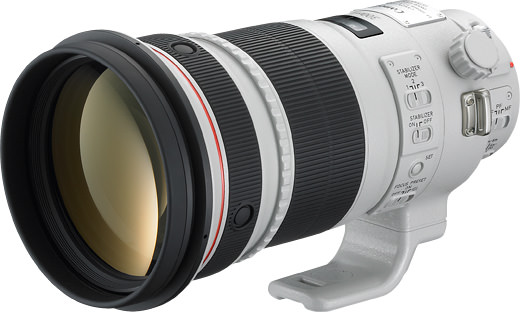
Introduced in the EF 300mm f/2.8L IS II USM and EF 400mm f/2.8L IS II USM lenses in August 2010, Mode 3 refined IS for professionals.
The Generations and Types of Image Stabilization
Now that we’ve discussed the various modes of image stabilization, next up is the actual different technologies in place to move the elements that stabilize the image for us.
First Generation Optical IS
First-generation Optical IS, introduced in the 1990s, uses gyroscopic sensors and voice coil motors to shift lens elements, countering angular shake (pitch and yaw). This in-lens system ensured compatibility across all of Canon’s EF mount camera bodies and delivered about two stops of correction.
It revolutionized telephoto shooting, and that, combined with USM, was one of the reasons the EF mount became popular among sports and other professional photographers. Normally quiet and low-power, it also fits in with consumer-grade lenses, making stabilization accessible to all photographers.
The initial system struggled with linear motion, like walking, and early budget lenses occasionally showed inconsistent correction.
Canon started development of IS (Image Stabilizer) technology in 1980s and introduced EF75-300mm f/4-5.6 IS USM in 1995, the world’s first interchangeable lens for 35mm SLR with a built-in image stabilizer. The vibration detecting gyro sensor detects the level of camera shake and the actuator moves a part of the optical system (IS lens group) vertically to the optical axis depending on the degree of camera shake, to stabilize the image on the film plane.
Second Generation – 4 Stop Image Stabilizer Optical IS
Second-generation Optical IS enhances the original design with improved actuators and algorithms. Upgraded gyroscopes detect a broader range of shake frequencies, while faster voice coils adjust lens elements with greater precision. Offering 3-4 stops of correction, it was a significant advancement to Canon’s image stabilization.
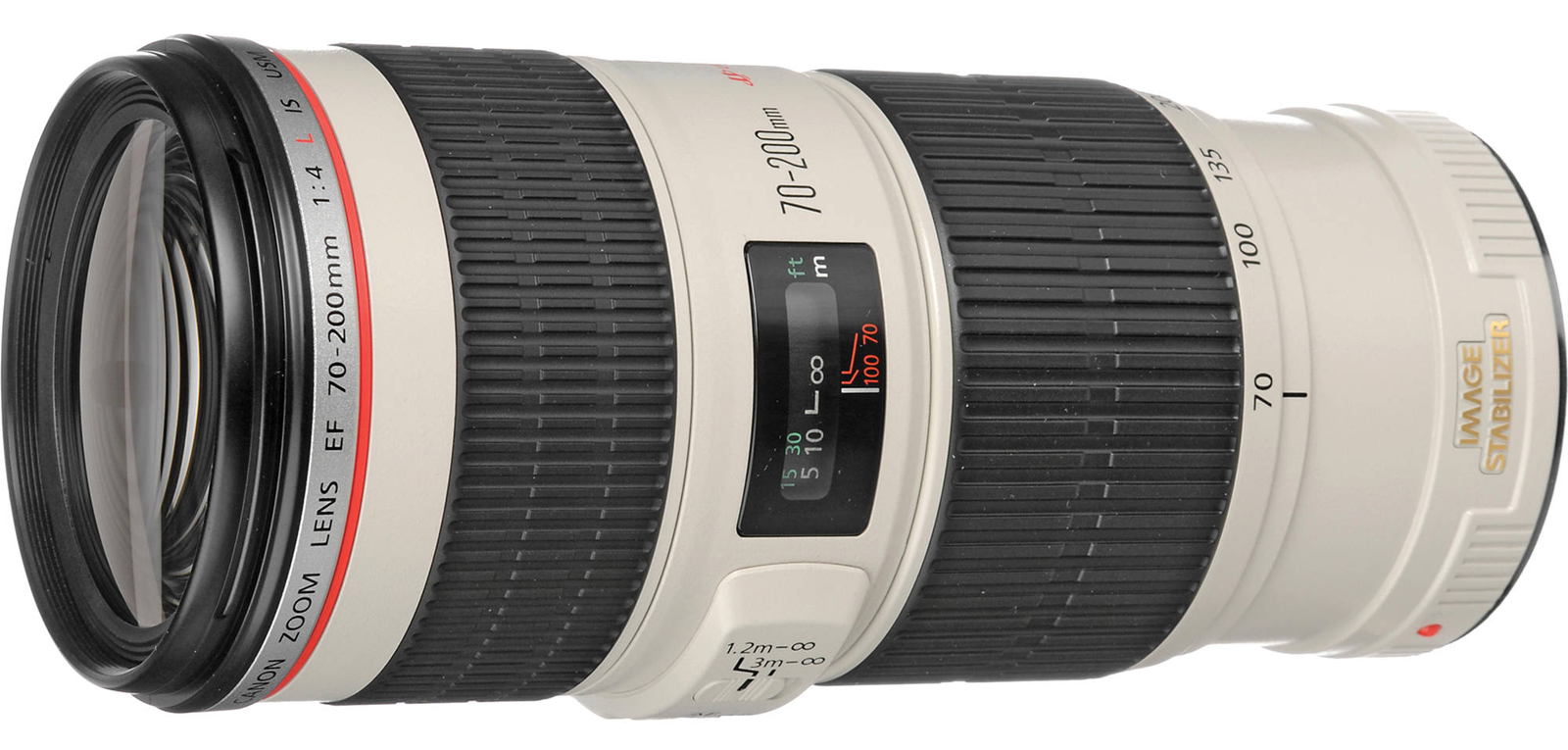
The EF 24-105mm f/4L IS USM had a 3-stop IS feature in 2005, making it the first Canon lens with a more advanced level of image stabilization. However, it wasn’t until the following year that Canon released the EF 70-200mm f/4L IS USM, which was launched in March 200,6 when Canon officially advertised 4 stops of stabilization.
“Basic” Optical IS
Canon featured a less expensive and less complicated Optical IS, for lack of a better term for it – we’ll call it “Basic” IS for this document, but Canon mentioned it as being a compact IS unit, or micro-IS. Take your pick on wording. This is Canon’s cost-effective stabilization for budget RF-S, EF-S, and EF-M lenses designed specifically for Canon’s low-cost APS-C systems. It uses simplified gyroscopic sensors and compact voice coil motors to counter angular shake, delivering up to 4 stops of correction. The system also used small springs to manage the movement and return the elements to the center.
This was specifically tailored for kit zooms and cheaper telephoto lenses, as it prioritized affordability without impacting functionality significantly. It was ideal for casual photography, as it stabilized handheld images for up to 2-3 stops of stabilization. The system also detected panning automatically and switched the stabilization to mode 2 automatically, and you had the ability to switch it in camera. The lenses did not have a mode 1 / 2 switch, and the implementation in EF-M and RF-S lenses also don’t have an IS off / on switch and has to be controlled from the camera body.
Compared to advanced IS variants, it lacked the precision in Canon’s larger and more expensive image stabilization units, but for low-cost lenses, this was really “good enough”. The EF-S 18-55mm f/3.5-5.6 IS, released in August 2007, introduced Optical IS (Basic). This lens came out for Canon’s APS-C DSLRs and was announced with the EOS 40D.
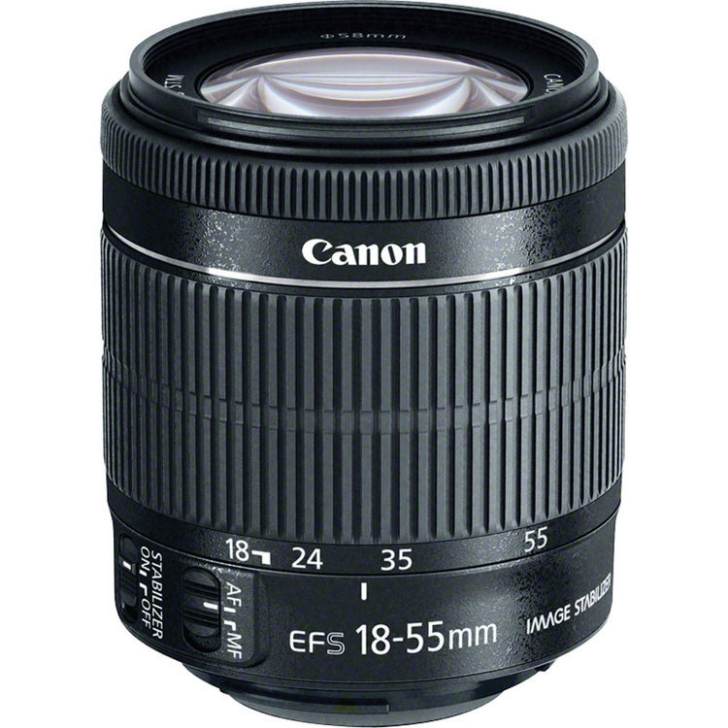
It targeted beginners needing reliable stabilization in a kit form, and actually performed pretty decently. The 18-55’s were renowned for being decent, if you stopped them down and didn’t expect too much from them.
Hybrid IS
Launched by Canon in July 22, 2009, Hybrid Image Stabilizer (Hybrid IS) was a revolutionary step in the field of optical image stabilization for interchangeable SLR lenses. The technology made Hybrid IS the world’s first system (for SLR lenses) to counteract two types of camera shake—angular shake and shift shake.
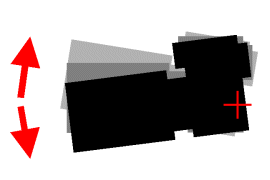
The normal shake correction is angular, in which the camera turns or tilts slightly (pitch and yaw). But at short focus distances, such as with macro photography, the problem of shifting camera shake (also referred to as linear/parallel shake) increases. In this scenario, the camera shakes from side to side or up and down along a plane that is parallel to the subject plane with no rotation involved, and as a result of high magnification, large displacements of the image result. The problem with gyro IS is that it can’t cope with this well since it can only sense angular movement.
 | 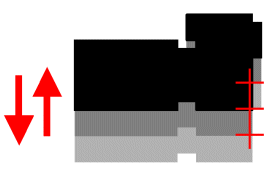 |
The problem posed by IS is overcome in the hybrid IS camera by the use of two sensors in the lens:
The conventional angular velocity sensor is able to detect rotational (angular) shake. There is also an acceleration sensor that can detect linear motion to determine shift shake. The data from these two sensors is then combined in real time by a specially developed algorithm. It computes exactly how these shakes will work together and moves the optical stabilizer group, or floating lens elements, to compensate for these motions.
Lens and Camera Joint Stabilization
Canon did some EF-based coordination between the EF lenses and the EF camera systems, but in general, this was limited due to the slow nature of the EF protocol. Once Canon redesigned the mount and made the RF mount with a much faster ability to send data back and forth between the camera and the lens, Canon advanced the coordination between lens and camera significantly in almost every single area of image stabilization.
Dual Sensing IS
Conventional lens-based IS relies exclusively on the gyro sensors within the lens for detecting the pitch/yaw rotation of the shake and compensates for the shake by moving the corrective lenses.
Dual Sensing IS helps to enhance this by incorporating another method for detecting shake, which is motion detected through the real-time analysis of the CMOS sensor in the camera’s imaging system. The DIGIC image processing engine in the camera (such as DIGIC 8 in the M50, for instance) analyzes the real-time imaging for minute blurring or low-frequency motion that gyro sensors could not detect or could detect less effectively.
The result of this “dual” input is that you get far more stable footage while using the camera handheld – and Canon tends to emphasize improved performance in these regards (especially in low-light photography with slower shutter speeds), with up to 4-5 stops of stabilization achieved with compatible IS lenses.
Hybrid IS with IBIS Coordination
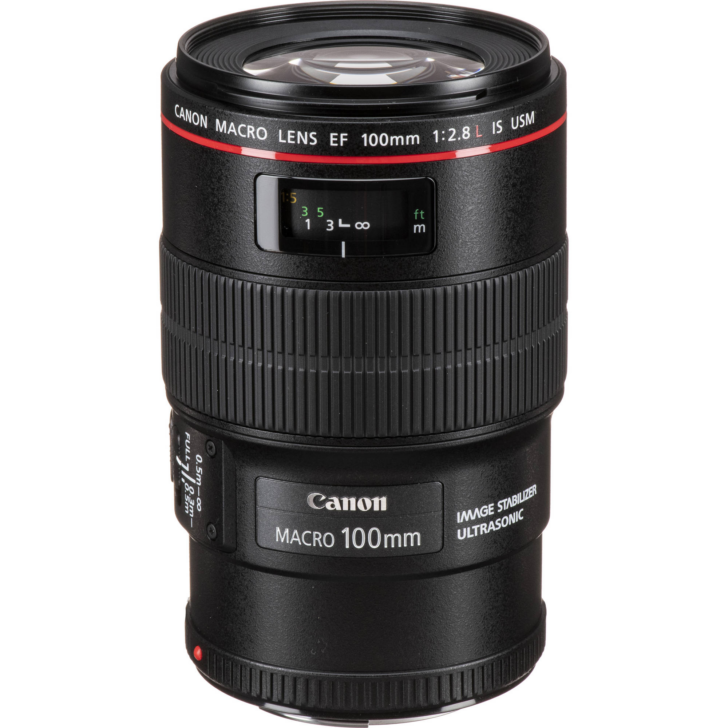
Hybrid IS, which was brought out in 2009 with lenses such as the EF 100mm f/2.8L Macro IS USM, employs two sensors in the lens, one for angular shake (pitch and yaw) and another for shift shake (linear X and Y movement), which is most effective in macro or close-ups, where shift shake is dominant.
When these Hybrid IS lenses are mounted on IBIS bodies (via adapter for EF lenses, or as in the case of the RF 100mm f/2.8L Macro IS USM or the RF 35mm f/1.8 Macro IS STM):
In the case of still photography, the lens provides the function of pitch/yaw + shift (X/Y), whereas the IBIS function is mostly focused on the roll (sometimes on the remaining axes as well). This is a case of a ‘division of labor’ scenario where there is real-time integration through the fast communication of the RF mount or the adapter for EF.
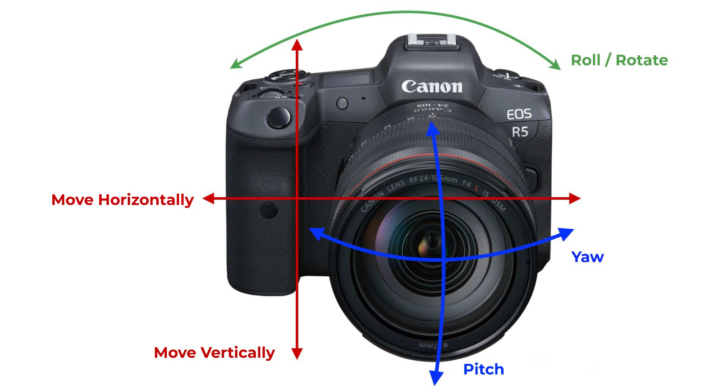
For video, there is a coordination shift – often, the lens is focused on pitch/yaw, and then IBIS is in charge of X/Y + roll. Even in macro ranges with Hybrid IS lenses, it can have sole control.
According to Canon, Hybrid IS lenses benefit from this dual operation, although the most extreme levels of compensation (e.g., 8 stops) occur in native RF-mount lenses that offer “full coordinated control.” EF-mount Hybrid IS lenses (such as the original 100mm macro lens) also benefit in this way, but less extensively than in the case of the RF-mount system. A “+” symbol next to the stabilization icon in the viewfinder often shows active coordination. This system is a huge improvement over the previous “Dual Sensing IS,” which provided only lens gyro + sensor data, without body gyro/sensor shift.
Peripheral Coordinated Control IS
This is a unique Canon image stabilization technology designed for ultra-wide-angle lenses in the RF mounts. The technology was first implemented in the RF 10-20mm f/4L IS STM in 2023. Firmware updates are required for the following IBIS models to support the technology: EOS R5 (firmware 1.9.0), R6 Mark II (firmware 1.5.0), and later models (R3, R1, R5 Mark II, etc.).
Wide-angle lenses, especially ultra-wide-angle ones in the 10-20mm range, have severe peripheral distortion and blur caused by shake. Such wide fields of view amplify even slight motions, so the corners of the image can wobble or appear soft/blurred while the in-focus area in the center appears sharp. Regular IS can effectively remove shake in the focal area, but it’s not effective in compensating for peripheral distortions caused by perspective and magnification differences.
Peripheral Coordinated Control IS relies on Canon’s current coordinated/collaborative IS system (Lens Optical IS + In-Body IBIS, working through fast RF communication), and it incorporates a new shake-detection algorithm that is more accurate at detecting shake. The algorithm coordinates with IBIS to compensate for residual distortions in the peripherals and vibrations, which conventional lens-based IS is unable to completely eliminate.
The lenses that support Peripheral Coordinated Control IS also moved the optical IS group of the lens and brought the elements closer to the image sensor for better peripheral correction.
This stabilization activates automatically (without the need for a menu toggle) when a compatible lens is attached to a compatible camera model. This leads to more sharp edges/corners in the frame, smoother video (less corner wobble), and improved handheld photography.
Dynamic IS
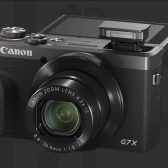
Canon Dynamic IS is a sophisticated variant of the video-centric image stabilization feature, initially featured in the Canon compact PowerShot series (G7 X series, SX series, ELPH/IXUS series) and a few camcorders/Vixia models. The feature was first seen in the market in 2011-2012 and became a standard in the mid-to-late 2010s PowerShot series.
While the Standard IS corrects the usual shake that occurs during photography using lens-based optical stabilization for tilts or rotations, the Dynamic IS corrects the low-frequency shake that occurs during walk-and-shoot photography. This shake can take the form of up-and-down bobbing.
This one combines optical image stabilization (moving lens elements) with advanced electronic/digital image processing, which analyzes shake motion patterns and applies more aggressive correction.
This will usually include a slight crop/zoom-in to the image (narrowing the field of view) to give the stabilization system “more room to move” to avoid cutting off edges. Result: Smoother handheld walking, panning, or run-and-gun camera operation at wide-angle angles, which may still exhibit some shakiness using conventional IS systems.
Software-Only Image Stabilization
Movie Digital IS
Canon Movie Digital IS is a type of electronic image stabilizing system, which is only used in video recording in certain Canon digital still cameras like all current EOS Mirrorless lines (e.g., R5, R6, R100, and EOS M50 Mark II), certain digital single lens reflex cameras (e.g., 90D, Rebel T7i/800D), and certain more recent consumer compact cameras (e.g., PowerShot V1).
Unlike other types of image stabilizers, which work by moving lens components or the image sensor itself, Movie Digital IS is purely a digital system. The system works by using gyro sensor information (when available) to analyze the movement between frames in order to shift each frame in real-time to eliminate unwanted movement, producing smoother video playback.
There will also be some level of choice available for the user, such as Disable (no correction), Enable or Standard (medium stabilization and a moderate crop of 10-15%), and Enhanced or Strong (more aggressive correction for heavy shake such as when walking or running, but at the expense of a much heavier crop of 20-30+% and some potential for slight image softening or edge effects in extreme cases). Although it provides gimbal-like stabilization without the need for purchasing additional gear, the downside will be the reduced field of view because of the crop factor effect (e.g., 50mm focal length will effectively become 60-70mm).
Movie Digital IS is most effective when used in conjunction with optical or body stabilization and layers a digital correction for optimal performance in run and gun or vlogging applications. It only affects video recording and does not affect photo taking in any way.
At its heart, Movie Digital IS is a digital functionality provided by Canon that allows amateur handheld video to be professional and stable, although a crop is required to maintain your composition of choice.
Closing Thoughts
When I originally sat down to do this article, I figured it would be a fairly easy one and quick to write. Oh, how I was wrong. Canon has done so much in the advancement of image stabilization since the beginning in 1995, and I’m sure they are not resting on their laurels and will continue to research and develop new technologies for us to use.






Anyone out there has IS issues when mounted on a tripod?
Way back, the white L telephoto lenses with IS, when mounted on a tripod with IS enabled, ‘oscillated’ as the IS sensor would be in a ‘dead zone’ with no movement detected. This was fixed in latter versions of these lenses.
Recently, on an indoor existing light tripod setup, I had an issue with IS on with my EF 100mm f/2.8 L Macro lens. I used mirror lock and self-timer on my 1DX II. Stopping down several stops from wide open (with correspondingly longer exposure times) yielded decidedly increased blur – way more than diffraction effects. I thought perhaps some minor vibration in my floor was causing the increased blur with longer exposure times. I always walk away from the tripod during the 10-second self-timer countdown. Experimenting with turning off the mirror lock, self-timer and IS determined IS was the culprit.
Perhaps the EF L Macro lens’ ‘hybrid’ IS does not like to be mounted on a tripod?
As a general rule, IS should be turned off when on a tripod. The exception is with Canon’s supertele lenses depending on the model, e.g. the IS system of the 300/400/500/600 MkII and the MkIIIs of the 400/600 lenses can mitigate mirror slap on a DSLR.
For me, experience through mistakes speeds up the ‘muscle memory’ process.
I recently purchased a new car and wanted to archive its window sticker. It was too large for my flatbed scanner, so I decided to take a photo of it taped to a wall with my macro lens.
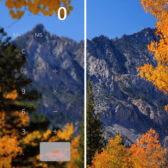
I want to state that 4-stops IS improvement is real. I am a senior citizen, don’t have Parkinson’s, but my hand-holding is not as steady as in my younger years.
The attached image is handheld 1/6 second at 105mm (full frame.) This is 4 stops down from the old general 1/focal length (35mm) rule for minimum hand-held shutter speed: 1/100, 50, 25, 12, 6.
My general rule getting more and more important with these complex (and great) camera-lens systems is trying out different things to understand the interwoven functions of these systems.
8-stops Image Stabilization - Canon Europe
https://youtu.be/B6HW8nKz5P8?si=njnTx6_eFlnY8uEW