


When you purchase through links on our site, we may earn an affiliate commission. Here’s how it works. |
I usually complain about Canon quite a bit in this regard, but I’m going to set my sights on someone else as well this time. But first, we need to complain about Canon.
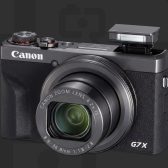
The PowerShot G7X Series
The G7X series was a beautiful compact camera and the last of its kind from Canon. Canon now has far more mirrorless and sensor chops than it did back when the G7X Mark III was released. This camera line, and a G7X Mark IV, could really help spur Canon’s lagging compact camera sales in Japan, where people are desperate for Compact Cameras from Canon.
As an example, in my area of the world, over here in Asia, a G7X Mark III new in box sells for $1300, and used G7X Mark III’s for $1000 to $1160. This is for a camera that came out on November 19, 2019. It’s a little crazy that it sells for over 50% more than its retail price 6 years ago. If that’s not indicative of a pent up market demand, I’m not sure what would demonstrate that this is a camera that clearly people want to have still and use.
At least the G7X Mark III has made it back into production, but seriously, it’s a 6-year-old camera. If it’s a photographer’s camera, we should get an update.
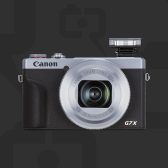
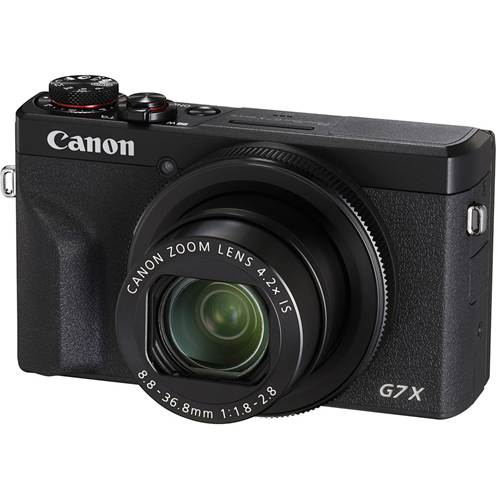
I personally think that the G7x line was the best-looking Canon compact camera line, with a very distinct finish and look at them. That may play a factor in how well they are still selling on the markets today.
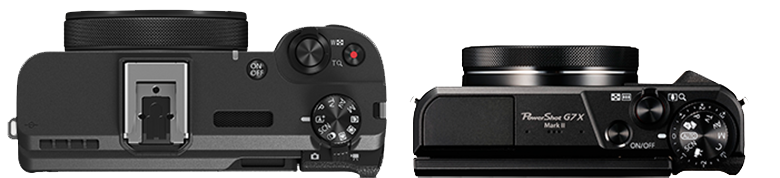
Yes, I know Canon just came out with the Powershot V1, but the V1 wasn’t a small and compact camera like the G7x series was. It’s a different model with a decidedly different focus. One of them nicely fits into your pocket inconspicuously; the other, your date wonders how happy you are to see them.
PowerShot Rumors
Now we have heard rumors that there are 1 or 2 more PowerShot models coming this year, and one of them is rumored to be a G-series PowerShot. I hope these rumors don’t turn into unicorns and that we actually do get to see a new PowerShot still this year, but the time is running out to see any more PowerShots before the holiday season.
The market is certainly ready for it, though some very bad things will happen to those who have speculated heavily on the older Powershots, but that’s a story for another day. I personally would lose little sleep over them losing money.
The Series that Never Was – The Nikon DL
This is the series that never was. A combination of engineering problems, either with the sensors or optics, forced Nikon to shelve the three compact cameras in this series.
Inspired by the Nikon professional photographer community, the “D” in the Nikon DL series, draws on Nikon’s DSLR heritage, while “L” calls out the premium NIKKOR lens technology which serves as the focal point for the range. The series comprises three new models, the DL18-50 f/1.8-2.8, DL24-85 f/1.8-2.8, and the DL24-500 f/2.8-5.6, each equipped with different NIKKOR lens groups and crafted for different photography styles. The first is a 18-50 mm equivalent*1 ultra-wide-angle zoom lens that boasts the fastest and brightest maximum aperture in NIKKOR history, the second a fast, 24-85 mm equivalent*1 normal zoom lens offering beautiful blur (bokeh), and super macro performance, while the last is an ultra high-power zoom lens that exhibits superior resolution over a broad range of focal lengths, up to an super-telephoto 500 mm*1 equivalent.
https://www.nikon.com/company/news/2016/0223_premium_01.htmlNikon had made a development announcement on February 23, 2016, and I was in awe. I was going to hop all over these cameras and get at least one, if not two, of these as soon as they were going to be released. Yes, I was going to go to the dark side.
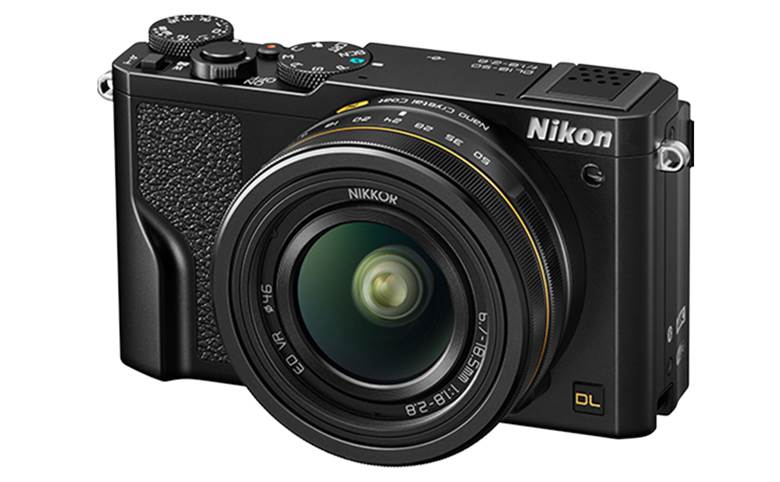
The DL line was going to include
- Nikon DL18-50 f/1.8-2.8
- Nikon DL24-85 f/1.8-2.8
- Nikon DL24-500 f/2.8-5.6
For me, the Nikon DL18-50 f/1.8-2.8 and Nikon DL24-85 f/1.8-2.8 were just fantastic. The DL 18-50 would have been the only ultra-wide compact camera at that time, and it took Canon until this year to come up with one similar. Nikon expected them to be fast, with 20fps and shooting up to 4k30p video. At the time, Nikon’s one small camera lineup showed that they could make small cameras with impressively fast frame rates and ultra-fast auto focus, so these cameras seemed to be right in Nikon’s wheelhouse.
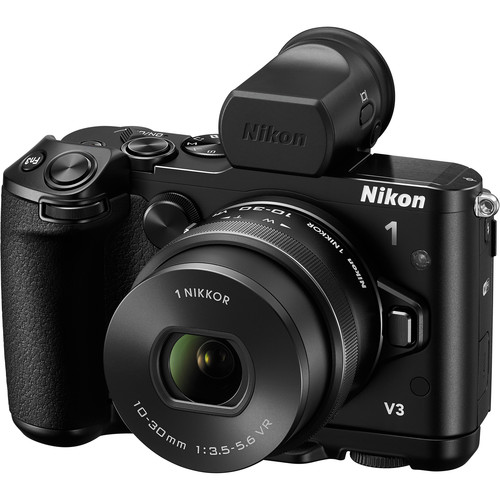
Sadly, almost exactly 1 year later, Nikon gave up on the project on Feb 13, 2017, stating high development costs.
Since then, everyone involved has worked very hard to develop products with which our customers will be satisfied. However, it has been decided that sales of the DL series will be canceled due to concerns regarding their profitability considering the increase in development costs, and the drop in the number of expected sales due to the slow-down of the market.
But this was back in 2017. It’s not hard to fathom that these cameras would do well, and that the technology for both the sensor and the optics would be far easier to do nine years later, with advances in both sensor design and optics since 2016. Who knows, some uber compacts from Nikon may help get its mojo back, as they seem to be struggling in distant third place in the camera industry.
The Rangefinders
Of course, there are two standouts – Fujifilm with their X100V series cameras, and, of course, the street shooting darling, the Ricoh GR. However, both of these cameras are now north of $1500 with much larger sensors, and much larger cameras – not something I’d consider calling a compact, versus a built-in lens camera, or even calling them rangefinder style. However, both Ricoh and Fujifilm have kept up the development of these cameras and have both just recently released new versions of their products.
This was a market that Canon, Nikon, and Sony have never quite explored, but I think a small camera the size of an EOS-M with a similarly attached 22mm F2.0 would make an interesting camera, if not entirely compact.
If the Big Japanese Manufacturers Don’t – Someone Else May
The problem facing the big manufacturers is that they are stuck with legacy research and development timelines and less agile development. Canon has experimented with breaking that mold with crowdfunding the IVY REC, PowerShot Zoom, and PICK cameras.
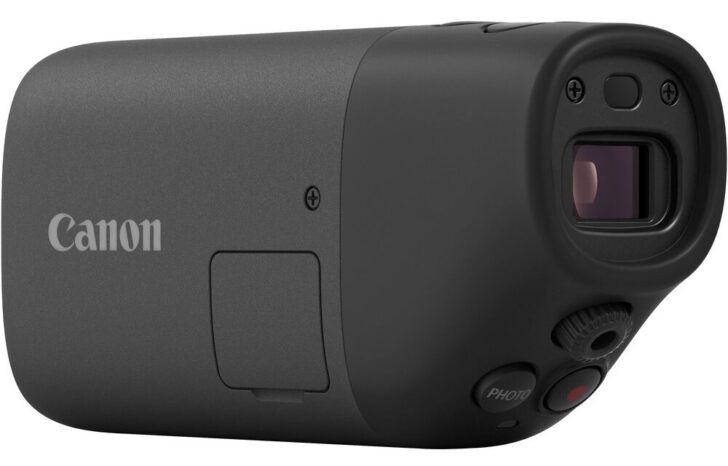
However, Canon seems to have forgotten this model. There have been other manufacturers’ attempts at rediscovering their camera DNA, such as Kodak, which, for a while, was actually the top camera company in Japan for a period of time in 2024, based on the performance of its cheap compact cameras.
More Read
But most recent efforts are simply rehashing old formulas and not bringing anything new to the market. Even Sony, whose lineup of RX100 cameras was one of the most technologically adept compact camera lines, hasn’t created a new one since 2019.
This could, unfortunately, open up the market to other, more disruptive companies, such as the Chinese manufacturers, who are already experimenting with the fusion between smartphones and compact or ILCs.
While this gets mentioned too much, it really sounds like the larger Japanese camera companies are worried about cannibalizing their higher-end ILC systems instead of providing compact, high-image-quality cameras anymore. Of course, the quote to live on famously, from the late Steve Jobs, rings a bell here.
If you don’t cannibalize yourself, someone else will.




Why "unfortunately" though? These are not system cameras: buying one does not mean you have to necessarily add a new system or migrate to it. If innovative manufacturers jump on this it will mean more new choices
Same thought here. Give people a Mark IV with today tech.
That's it. If I want a compact camera it has to beas compact to fit in my pocket, inconspicuously and comfortable.
I am also a well assorted EOS EF, RF and EF-M user and have a now 17 years old Ixus 870 IS that I have been eager to upgrade for years. Almost got the G7Xm3 years ago, but decided to wait for the G7Xm4 with digic X. So Canon - where is it??
Examples being the Panasonic DMC-TZ99 which in reality is just a TZ95 from 2019 with some meaningless new features such as an USB-C port etc. Canon's latest IXUS was just a remake as well where they removed features from the previous model released close to a decade ago.
The absolute worst example though is Leica which last year released the D-LUX 8 which is priced at $2k and is just another D-Lux 7 with better EVF and screen resolution and a new button layout. The real crime in all of this is that the D-LUX 8 just like the D-Lux 7 before it are rebadged Panasonic LX100MK2s which can be found for substantially less.. a camera released all the way back in 2018. Heck Leica even jacked up the price at one point due to tariff speculations making it even more costly.
Furthermore all the compact micro four thirds cameras are discontinued making some models fetch high prices on the used market. It is not like the manufacturers are not aware of this. If they could they would have made them already, the problem lies in what consumers expect from such a camera and from a technological standpoint it is impossible. The only thing they can do at this point is do remakes.
The way I see it for anything new and exciting to happen in the compact camera space we will need either new battery technology or more efficient sensors both of which seems like pipe dreams at this point in time.
I too am waiting for a cute little Canon with a VF !!! (I'd accept an adaptable one).
And replace every cheap Panasonic plastic part with German-engineered carbon reinforced zero tolerance NASA certified titanium elements? Eventually, they sell the D-LUX (name is program!) at a huge loss just to make the world's most demanding customers happy. How dare you criticise such a selfless behaviour? 😡
It's true, I saw and heard it on FOX News.
I do not believe there's much you can't change in a camera form factor - even if the need to move film between spools has gone away. People needs to be able to handle a camera properly, reach controls, and keep it steady. The spotting scope design doesn't look much comfortable to use - a "pistol" like design with the LCD screen mounted on top of a handle and a triger to shoot, it would be a steadier single-hand design, but also uncomfotable to carry around (and it might be misunderstood).
A hybrid phone-camera would have the disadavantages of both (less pocketable, clumsier virtual, on-screen controls, shorter life, less practical storage) and none of the advantages. We might see them, IMHO they will be a flop. If the actual compact camera resugence is not a fad, it's because people interested in photography understood the phone is not the right tool - whatever they put into it, and especially because they will manipulate photos heavily for the "average taste" - so photos will look all the same.
But I don't believe Canon will release compelling compacts but in the lower end market segment. That's why my sister who doesn't lilke ILCs unless they are rangefinder-like switched to Fuji.
A good sensor 1 inch or bigger and with an evf.
I have now a Panasonic lx10 and i absolutely adore this little compact camera, the only thing i hate so far is the lack of an evf and not much zoom 24-72mm
I absolutely hope that canon listens to its buyers and will bring some new awesome compact camera's for photographers
Canon has really dropped the ball on this...this being a truly pocketable full-featured (rather small sensor) modern camera.
It is as if the company has lost its courage.
I have a Nikon J5 with the 6.7-13mm (18-35mm equivalent) and I really like it for its wide angle range and small size. I picked it up before I got my a6700 with Sigma 10-18mm or my RX100 VII, both or which are much better cameras, but I'm keeping the J5 because it goes wider than the RX100 and it's way smaller than the a6700. I read about the DL line only recently, and lament that the line was never realized. Those would have been awesome, and if they had been made would probably be reselling for a massive premium these days. Sucks that Nikon killed the N1 line too, but I understand why. I wish they produced the V4 first though, although the 70-300mm has definite durability issues.
Cell phones killed the compact camera, but I think the revival of interest in them isn't just because of fads from tiktok or whatever. I think people are remembering (and dusting off, if they still have them) the digicams because they were more versatile and more fun to use than the 2 or 3 fixed-focus lenses on their phones. I'm hoping the few revived cameras do well, but I'm not particularly optimistic. For one, they're too expensive. The RX100 VII was already very expensive before the price increases, and now it's way too expensive. It seems almost like the G7X III's best selling point is that it's not as expensive as the RX100. They're also old. I can understand the companies not wanting to spend the money to develop new cameras at the risk of them not selling well, with it being much cheaper just to produce old ones. But that means that they also won't sell as well as new models would, leaving the companies with a false sense of the potential market.
Unlike all compact cameras, it would use multiple FIXED lenses or some combination of a zoom and fixed. Compact cameras rarely have anything wide because it is hard to make a small zoom that goes from ultra-wide to tele. But a combination of a zoom and fixed ~16mm would work or an array of fixed lenses. Digital zoom between them.
Why I don't use a phone as a camera:
1) Limited physical controls
-> the screen can be smaller that the ones on a phone so there is some room for a dial or at least some buttons next/underneath. The camera can be thicker so there is a room for a shutter button or even a dial.
2) No articulated screen, this is huge for me
–> I know articulated screen adds quite some bulk to it but.. it doesn't need to be iPhone Air 🙂
3) Using my phone as a camera drains the battery
-> a dedicated camera would solve that
4) The lenses are always dirty
-> a lens cap or "shutter" mechanism or a sliding lid or anything like that
I don't mind whether it uses internal battery and memory or not. It's fine if the screen resolution is not as high as the one on a phone. I don't need cellular data in etc. Just something that fits my pocket but can do ultra wide to tele (at least 50mm)
www.youtube.com/watch?v=oY7h6Z95syA
There's been a handful of "cameras with phones attached", notably from Samsung and Nokia. The Samsungs were Galaxy Androids. There's also been a number of phones that were designed to have camera modules attached that provide grip, shutter buttons, etc. The Xiaomi 15 Ultra is a current phone that was designed this way (and with Leica branding). There's been some kickstarter doohickeys and other kludged grips for existing phones, but these aren't quite that same idea.
But that's the realm of bridge cameras or something alike. It may require a larger camera and it does appeal to a different market segment. They usuallyn have small sensors to avoid large lens and the quality suffers. Good for the current revival of "old digital look" - less for a modern compact.
I agree - but probably most people looking for compact cameras now comes from phone, and are used to the lack of an EVF. But they might learn the advantages of an EVF if the camera has one. Still removing it decreases production costs though (and increases profits). I woid like to see a Canon compact with an EVF without the bulge, though, a more range finder-like design, keeping it more pocketable.
Because that's a bad design only acceptable on phones, becaus they need keep the lens very small (and the sensors too). Very small lenses and sensors come with their own disadvantages.