

When you purchase through links on our site, we may earn an affiliate commission. Here's how it works. |
The Cinema world has the attention of the industry with NAB 2026 starting tomorrow, but we all expect some fireworks from Canon and others in May. It's historically a time of the year that we see new gear announced.
The EOS R7 Mark II is one of the most anticipated products of 2026, and for good reason.
While there isn't much going on behind the scenes as far as gearing up for the announcement, there is still a fair bit of chatter. Some of it is logical, some of it is interesting and some of it is wishful thinking.
DIGIC Accelerator Coming to the R7 Mark II?
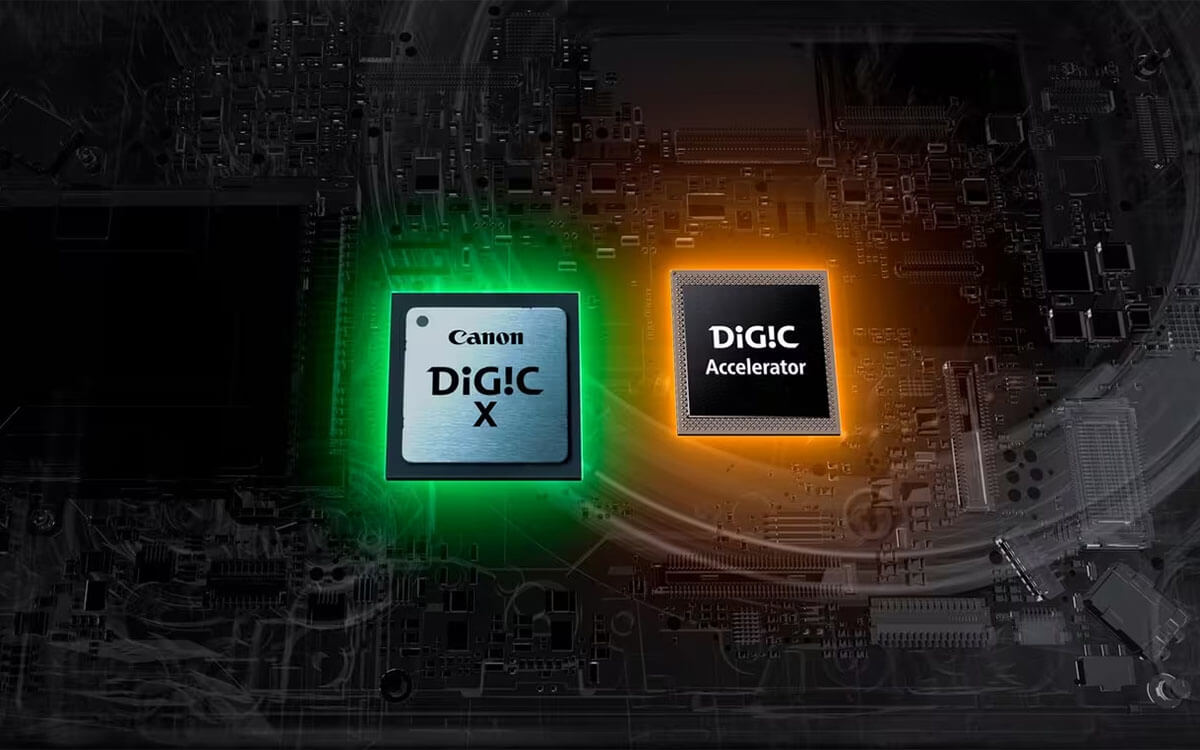
An interesting bit of information that I have been told twice anonymously in different ways is that we're going to see what amounts to a “DIGIC Accelerator Lite” coming to the EOS R7 Mark II.
As you know, this second processor came to market in the EOS R1 and EOS R5 Mark II and has had a huge impact on the performance of those cameras, especially when it comes to readout speed and autofocus performance.
What is the DIGIC Accelerator?
Both the EOS R1 and EOS R5 Mark II are also equipped with a DIGIC Accelerator, which boosts the volume of data that the camera is capable of processing. In combination with the high-speed back-illuminated stacked sensor, the DIGIC Accelerator unlocks a host of features, including faster electronic shutter speeds, simultaneous recording of stills and video, and a significant reduction in rolling shutter distortion compared to earlier cameras.
The EOS R6 Mark III didn't get the DIGIC Accelerator, and other than cost of doing so being part of the equation, I think it has more to do with the sensor that the camera is equipped with. It is a frontside-illuminated or FSI non-stacked sensor.
The readout speed is fine for a lot of things, but it is noticeably slower than the cameras above it. The autofocus performance is great, until you put it through its paces alongside the R5 Mark II and R1 in certain scenarios.
Both the EOS R1 and EOS R5 Mark II have backside-illuminated or BSI stacked sensors, which is one of the big reasons for their fast readout speeds. The R1 is currently equipped with the fastest rolling shutter CMOS sensor on the market. The Sony isn't far behind, but I enjoy a little fanboy “We're #1!” nonsense.
The EOS R7 Mark II Sensor Matters
It has been rumoured for a while now that the EOS R7 Mark II will be the first Canon APS-C EOS R mirrorless camera to get a backside-illuminated stacked image sensor. If that turns out to be the case, the camera will need to have more processing power to keep up with the fast readout speed and maximize autofocus performance.
There are also all of the other things the DIGIC Accelerator does to consider. It is a big part of the “AI” features and dealing with the enormous amounts of data that comes with everything being about speed.
DIGIC Accelerator Lite?
Some of you may or may not know that Canon has different versions of their DIGIC X processors. The DIGIC processors in the R1 and R52 are higher performing than the one you'd find in say the EOS R6 Mark III or EOS R8. It's still something that confuses people when they see the DIGIC X name, but it's starting to catch on.
It would make sense that Canon would do the same thing with the Accelerator processor. A smaller sensor isn't reading as much data, so it wouldn't need as much processing power to keep performance close to the professional EOS R cameras.
I also don't think there is any reason for Canon to “cripple” the speed and performance of the R7 Mark II. I think it makes more sense to have an APS-C camera that can keep up with the R5 Mark II than thinking it will somehow cannibalize sales of the R5 Mark II. The sensor size is already the market segmentation. If Canon gets the R7 Mark II right, I can see a lot of R1 and R5 Mark II shooters picking it as a second body or for specific uses. Continuitity in performance is a big deal for a lot of shooters.
This sounds plausible
Since this information comes from anonymous tips, we can't confirm this to any degree of certainty, but the consensus is that we don't have too long to wait to find out. We all expect to hear something in the next 6-8 weeks.
Once everyone is over their NAB 2026 hangover, We expect to start feeling the hype machine building if we're indeed going to see the EOS R7 Mark II announcement in late May as predicted.




The R72 won't get close to the readout speed of the R1. The R1 also has a lot more going on with the autofocus and sensor tech than the R72 will. The larger the sensor, the more juice needed to clear it for the next image, and throw in the additional AF instructions. The data handling requirements are far more than simply resolution these days