Canon Shows off RF 500mm F5.6 L IS in Latest Patent

The lens released in the 1990s as the other half of the choice set with the 400 f/5.6 was the 300mm f/4. Both lenses were amateur-oriented products. Both were designed without solid compatibility to 1.4x and 2x teleconverters [...]
I own the 300mm f/4 IS and both the 1.4 II and 2.0 II extenders. I use them on my R6, and my kid uses them on her 80D. I can state plainly that the performance of both combinations is perfectly fine for detailed viewing and printing when shooting close to the subject and avoiding many atmospheric issues. Add in DLO and the performance is practically modern in terms of image.

I can't speak for the original 300 f/4.

For those who don't own copies, but are interested in a comparison by someone who dealt with both:
 
Upvote 0
I own the 300mm f/4 IS and both the 1.4 II and 2.0 II extenders. … I can state plainly that the performance of both combinations is perfectly fine for detailed viewing and printing when shooting close to the subject and avoiding many atmospheric issues.
Many years ago, I met Lillian Stokes on top of a mountain in southern New Hampshire (well, what they call a mountain here in New England…I grew up in California so I’d call it a hill). It was during the fall hawk migration – hundreds of kettling hawks is a cool sight.

She and her husband author a popular series of birding guides, and she told me that her usual setup was the EF 300/4L IS with the 2x TC, mounted on whatever the current 1D was (IIRC, it was the 1DIV at that time). She said most on the images in the Guides were taken with that setup. Clearly, it’s capable of producing excellent images.
 
  • Like
Reactions: 1 users
Upvote 0
Many years ago, I met Lillian Stokes on top of a mountain in southern New Hampshire (well, what they call a mountain here in New England…I grew up in California so I’d call it a hill). It was during the fall hawk migration – hundreds of kettling hawks is a cool sight.

She and her husband author a popular series of birding guides, and she told me that her usual setup was the EF 300/4L IS with the 2x TC, mounted on whatever the current 1D was (IIRC, it was the 1DIV at that time). She said most on the images in the Guides were taken with that setup. Clearly, it’s capable of producing excellent images.
Very cool.

I'd love a 500 5.6 and a TC for similar, although I'm more about deer, bears, and standing herons where I am:

With my 300 + 2x combo for birds, it's pretty good for casual shots of kingfishers, sparrows, junkos, etc. as those you can get close enough to when they're sitting on posts or fiddling about in the grass. All very printable. Alas, my R6 blackout in the EVF sucks for rapid bird movement tracking with this lens and tc combo. It's funny, because it felt great years ago before mirrorless. 😝

But all that stated, my general photography tends to capture people, large animals, and still life anyhow so I haven't been too eager to drop real money on the extra reach with other life interests at hand. Yet. The itch is growing.

I'm hoping a 500 5.6 at a price competitive with the industry (e.g., Sigma's edition) would give me the excuse — I might even plan a trip around it. IQ's never an issue for me when I do things right, but I find the 300 + 1.4 is solid for animals in terms of servo drive, etc whereas the 2x on a gripped R6 lags a little more than I'd like (blackout, lack of power for the lens drive, etc.). I know I could flip to an R3 or R1 and get way better lens drive (tested with a friend) but I'd rather spend on glass as in most respects the R6 still serves me well.

In the modern sense I find little issue with the IQ of the combinations — it's more lens performance around AF, weather sealing (no mount gasket), and the like. Of course, newer lenses at the same or better tiers have that much better IQ — and I'll take better over good — but for relative prices the options don't seem so much better that IQ's the only thing needed to drive my justification. And since I like using primes more than zooms, I've held off on the EF 100-400 II and RF 100-500.

For now, I'll live vicariously through you guys while waiting. 😉
 
Upvote 0
But all that stated, my general photography tends to capture people, large animals, and still life anyhow so I haven't been too eager to drop real money on the extra reach with other life interests at hand. Yet. The itch is growing.
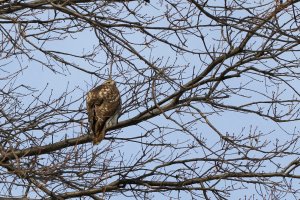
It's a slippery slope. This was my first DSLR bird picture, with a T1i and EF 100/2.8L Macro, after looking up while walking around shooting flowers.

Red Tail T1i+100.JPG

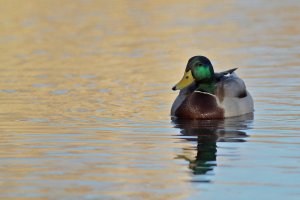
Clearly not enough focal length, but then I came across a used EF 300/4L IS for sale and bought that.

Mallard T1i+300.JPG

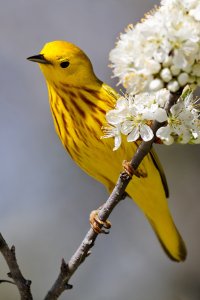
I sold the 300/4L IS (for a bit more than I paid) after getting the EF 100-400L, then I upgraded the T1i to the 7D and that was my birding combo for several years.

Warbler 7D+100-400.jpg

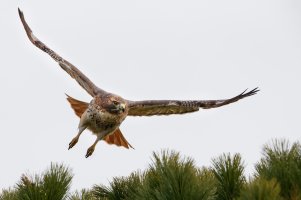
But then I bought the 1D X and needed more reach, so I got the just-released EF 600/4L IS II and the MkIII TCs to go with it. Full circle on the red tail.

Red Tail 1DX+840.jpg
 
  • Like
  • Love
Reactions: 6 users
Upvote 0
The RF 100-500mm is an order of magnitude or more better than the EF 400/5.6. It is sharper at 500 than the prime at 400, has excellent IS against its absence, faster AF, will focus close and had all the advantages of zoom for framing as well as longer with little extra weight. I’ve used both extensively and the zoom is indeed not close, it is miles ahead.
I used to have the EF 400mm f/5.6 and regretted selling so much I bought another one I it was very nice but the huge MFD is a major drawback and then I bought the RF 70-200mm f/2.8 Z and it's noticeably sharper with the RF 2x for 140-400mm f/5.6 and a MFD of 68cm so I've sole my EF400 again😜
A new RF 500mm f/5.6 would be nice but I'd rather have a zoom
 
  • Like
Reactions: 1 users
Upvote 0
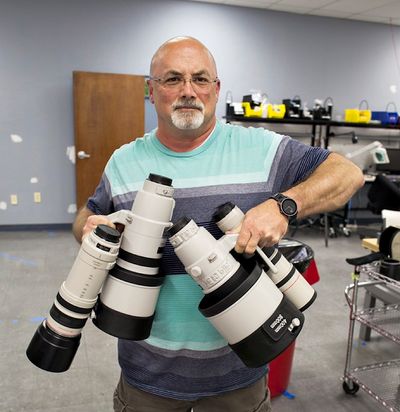
Well, I carry my EF 600/4 III in a backpack (Lowepro 600 AW III) with two additional quivers for additional gear, and I shoot it mostly hand-held. But my back is well trained, but I do understand well that this isn't a solution for everybody. But you're right, if you need to carry an additional tent, sleeping bag etc., this is really too much for one person. You'd need an artificial exoskeleton and always very solid ground in rugged terrain ;)

I see people carrying broadcast-quality video gear including a massive tripod, and honestly wonder how they do it. They must be much fitter than me.
 
  • Haha
Reactions: 1 user
Upvote 0
The RF 100-500mm is an order of magnitude or more better than the EF 400/5.6. It is sharper at 500 than the prime at 400, has excellent IS against its absence, faster AF, will focus close and had all the advantages of zoom for framing as well as longer with little extra weight. I’ve used both extensively and the zoom is indeed not close, it is miles ahead.
Even the EF 100-400 II was better than the prime. Sharper at 400mm and much more flexible. I owned both.
 
Last edited:
  • Like
Reactions: 4 users
Upvote 0
Even the EF 100-400 II was better than the prime. Sharper at 400mm and much more flexible. I owned both.
There was still a cult of the EF 400 f/5.6 L when the EF 100-400 II came out. I suppose the built-in lens hood and kudos of owning a prime. made up for the 3.5m close focus, lack of IS and being less sharp even on Canon's own MTF charts.
 
  • Like
Reactions: 1 user
Upvote 0
There was still a cult of the EF 400 f/5.6 L when the EF 100-400 II came out. I suppose the built-in lens hood and kudos of owning a prime. made up for the 3.5m close focus, lack of IS and being less sharp even on Canon's own MTF charts.
I was a bit disappointed about the 400 prime when i got it first time many years ago. Everyone was raving about it and i never found it tack sharp. It was just good, not amazing.
 
  • Like
Reactions: 2 users
Upvote 0
It's a slippery slope. [...]
So true! Once I stopped being a grad student I first built out my zoom trinity, and then worked on my people prime trinity, and then some esoteric stuff; plus there's a few things I inherited. But even in the mid-range there's always something else to narrow in on a case. (I don't have a 35mm, but I want one...)

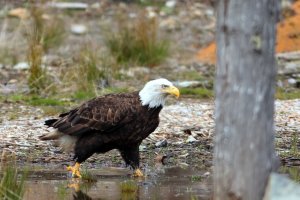
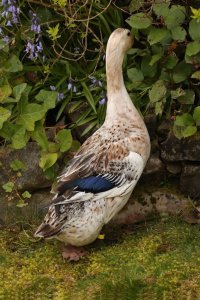
My bird shots are all casual and so usually opportunistic and therefore not my top captures by any stretch — but they are fun! Our acreage includes a few ponds in conifer forests at some height in the mountains, and thus eagles frequent them. Plus we have animals like ducks, and eagles like ducks. The ducks are safe in large ranges with netting, but the eagles do like to watch the live show. Anyhow, I was headed across a fallow field and saw this young eagle splashing about in a puddle following the rain. 300mm f4 IS + 2x II at ISO 1600, f/8 (so lens DOF at f/4 magnified x2), 1/2000s — taken as hastily as I could quietly yank the parts from my backpack, assemble, then shoot. Probably at a range of 200 feet. I think the focus ended up on the wing. Still, it makes a nice print for the barn.

farm_eagle.jpg

I think I'll always keep the 300, and it works very well with the 1.4. If I had a 500 5.6 and an RF 1.4 to go with it I'd make some regular excuses to travel up and down the coast with this kind of photography in mind.

Edit: P.S. — I love your bird shots! That hawk, wow!
 
Last edited:
  • Like
Reactions: 1 user
Upvote 0
Honestly, if the 300-600 f/5.6 L is either never happening or $12,000 USD, I would be happy to have this lens instead. Does anyone have an expected price? I'd imagine at least $5-6k, but that's a lot more forgiving than $11k+
The Sigma L and E 500mm 5.6 lists for $4,400 CAD and is often on sale for $3,999 CAD. Canon would probably add a premium if the lens were an L, but if the lens is a silver ring like the 200-800 I think they could be very competitive.
 
Last edited:
Upvote 0
There was still a cult of the EF 400 f/5.6 L when the EF 100-400 II came out. I suppose the built-in lens hood and kudos of owning a prime. made up for the 3.5m close focus, lack of IS and being less sharp even on Canon's own MTF charts.
It was a fraction of the price, so for kids and bird curious folk it was a palatable entry. Canon had long since clawed back the R&D costs and it didn't kill them to keep this one on tap as a gateway drug to more serious L products.
 
Last edited:
Upvote 0
This would have to be considerably smaller with higher IQ than a 200-600 f/6.3 to make sense. Still would prefer a zoom at this range for wildlife. Currently shooting with the 200-800 and the reach is great.

What I'd really want to see is a 100-300 f/4L that would shave off most of the 2.8's weight and price.
 
  • Like
Reactions: 2 users
Upvote 0
But it took the version II to beat it, as I recall. And that came out years later, right? So for the era, it was top notch for amateurs.
It was a fraction of the price, so for kids and bird curious folk it was a palatable entry. Canon had long since clawed back the R&D costs and it didn't kill them to keep this one on tap as a gateway drug to more serious L products.
The first version of the EF 100-400mm came out in 1998, 5 years after the prime, with 2 stops of IS. It was just as sharp in the centre - which is what you mainly use for bird photography - and weaker at the edges (see https://photozone.de/canon_eos_ff/612-canon400f56ff and https://photozone.de/canon_eos_ff/896-canon100400f4556is2 the opticallimits original site and its earlier reviews). In the 2000s, the prime was about $1200 and the zoom about $1400. The zoom with all its advantages had won by then, and was hardly more expensive. However, Art Morris's website, birdsasart, was very influential and he was a staunch proponent of the 400 prime, and he initially ran down the zoom. But, eventually he changed his mind and went over to the original zoom. Mind you, he was one of the first to go to Nikon and then Sony. So, you are not right! The first version bettered it, and the magnificent EF 100-400mm II rendered it totally obsolete. The 500/4.6 was OK for BIF when you are at 1/3200s and don't need IS. But for hand held shooting in other than good light, a tripod or support was essential, and if you have ever tried to focus a hand held 400mm lens without IS, it is very difficult as the image darts all over the view finder.
 
Upvote 0
However, Art Morris's website, birdsasart, was very influential and he was a staunch proponent of the 400 prime, and he initially ran down the zoom. But, eventually he changed his mind and went over to the original zoom.
I think a lot of people do jump to zooms when the differences in cost and comforts converge appropriately. I think even the modern 100-300 2.8 pretty much well splashes writing on the wall for any similar prime, right? Like for the same cash, more or less, why buy a 100, 200, 300 2.8 prime when all can be had for prime like quality and zoom convenience? This ever has been Canon's long term direction, I think. For good reason.

But I also have you, in my mind, as a Formula 1 for BiF kinda guy with the cash and experience. Of course you're right on how much better some options are, but does that apply to the people driving Hondas? Only while they're in the stands cheering, not once they leave the parking lot.

Mind you, he was one of the first to go to Nikon and then Sony. So, you are not right!
Haha! For the love of life, Art — WHY?

But ya got me: Art jumped so all of those lens sales of the 400mm f/5.6 where bogus and I'm wrong. ;) I mean, Canon just kept pumping them out from 1992 through 2022 because they were bored and stuff. :sneaky:

The first version bettered it
But so marginally in terms of the mark I, and who shoots animals or people in the lens corner? Kind of like maybe this truck tows more than that truck in the same class, but then one might also consider sway control. Even with the zooms available and evolving rapidly. And even when the II came out big names still talked-up the prime for beginners. Some examples:

The Digital Picture maintains this statement:
The Canon EF 400mm f/5.6L USM Lens is popular for bird photography and especially birds in flight as it offers lots of reach for a reasonable cost in a relatively light package. Good vignetting performance helps keep even blue skies as they should be - evenly blue. Other uses include general wildlife photography and well-lit field sports.

Honestly, if you're just dipping your toe into animals (maybe birds, could also be deer or mountain climbers) then these lingering endorsements of yesteryear are more than enough to justify a minimal investment at the time (new) or now (used). If people like what they see, then they know spending the cash on the DO, or zoom, or a new RF lens would probably give them smiles.

the magnificent EF 100-400mm II rendered it totally obsolete.
Well, yes — but that didn't stop people from promoting the prime for beginners. Let's consider:

The 400 f/5.6L has been in the Canon lineup for 5 years longer than the original 100-400 L IS, yet it is a good performing lens with image quality essentially equivalent to the 100-400 L II and less distortion (compared at 400mm). The 400 f/5.6L is lighter, longer and considerably less expensive [...] I find the zoom to be a far more useful lens.
Bold emphasis is mine.

This lens fits in even my smallest and lightest travel kit, and I have confidence when using it wide open that it’s going to give me excellent performance. Sure, I’d like it to be an f/4, but the extra weight and bulk wouldn’t be welcome. [...] I definitely miss Image Stabilization, and wish that Canon would re-issue this lens with IS, but since I will be using it tripod mounted 90% of the time it’s no real hardship.

And just because I wanted to know, we tested the old, but excellent Canon 400mm f/5.6 L prime lens, for comparison. Few people shoot it anymore, but there’s a reason it’s remained in production for decades. It’s not quite as good as the 100-400 IS L, but still, an excellent performer considering how old the design is.

The 500/4.6 was OK for BIF when you are at 1/3200s and don't need IS. But for hand held shooting in other than good light, a tripod or support was essential, and if you have ever tried to focus a hand held 400mm lens without IS, it is very difficult as the image darts all over the view finder.
I 100% agree with you about the hassle and comforts. And cash being no issue your argument wins every time.

But if you put the two lenses on the table in front of my kid, or someone still in university, or someone buget limited and they read all of those reviews I bet they'll buy the cheaper lens each time. Or, at least 95% of the time. Sure, eventually they'll buy a 600mm f/4 if they get the bug for shooting tiny skittish things, but probably not up-front.

And I think this gets back to the point of what a 500mm 5.6 represents: an affordable way to get quality images of "distant" things that need to be magnified to fill enough of the frame in a daylight situation. Most people will be happy with that. Some will realize f/4 or f/2.8 matters and spend the extra cash — but only after being really sure about that. Sigma showed this option is not just viable, but pragmatic. A silver ring edition from Canon will probably make a relative killing over decades.

And let's not forget: yes, the lack of IS (or useful IS) and need for daylight can be a hassle, but that never stops a determined person.
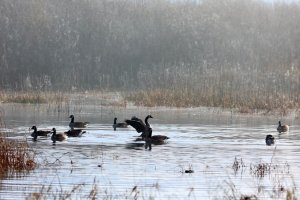
pond_geese.jpgpuddleduck.jpg
 
Upvote 0