EOS Monchrome

Is there any rumor that Canon is going to create a dedicated Monochrome camera like the Leica M10 Monochrome?
Best go with the Leica, mate.

EDIT: Ok, I was flip. This topic comes up pretty often. From my own perspective, selling a separate body that only takes B&W is a gimmick, and at this point a waste of resources for most surviving camera companies.

First, we have well over 100 years of masterful B&W images taken with cameras that did not use the artifice of showing the world in B&W. I suppose an argument can now be made that having such a camera could help more photographers understand B&W, and even help very good, experienced photographers take better B&W images. I don't think the argument would be convincing.

But a good art critic can persuade the art community that tomato soup haphazardly splashed onto a piece of plywood speaks to our times, so a good marketing department could persuade gullible types that great B&W photography can best be achieved by a more WYSIWYG EVF.

Personally, I believe looking at B&W image, learning what makes them compelling to YOU, can inspire and instruct. A little reading about composition and contrast would be also helpful.

Editing software today can do wonders with B&W conversion--EVEN with images captured on color sensors.

Finally, the EOS R can be set so its EVF displays monochrome. And I believe other models with EVF's can too.

My wife grew up in another country. Not long after coming to the USA, seeing the gadgets sold in malls and supermarkets, she asked, "Why do Americans spend money on things that are only good for one specific purpose when a common tool could do just as well?"

I had no answer for her.

1602348481606.png

1602348793713.png

PS I really admire how the butter-slicer photographer captured that pad as it is dropping!
 
Last edited:
  • Like
Reactions: 1 users
Upvote 0
If someone is really into B/W, a momochrome sensor is better than the Bayer sensor. It got better definietion and gradiant. The color picture is reconstructed from the Bayer R, 2G and B. Now you convert the color picture to B/W. That is two convertions. Something will get lost. That is why Leica comes up with M10 Monochrome,
 
Upvote 0
If someone is really into B/W, a momochrome sensor is better than the Bayer sensor. It got better definietion and gradiant. The color picture is reconstructed from the Bayer R, 2G and B. Now you convert the color picture to B/W. That is two convertions. Something will get lost. That is why Leica comes up with M10 Monochrome,

I hear marketing speak here. Loud and clear.

As is often the case, the cost of that tiny, 1% improvement, if even that, is tremendously expensive.
 
Upvote 0
I hear marketing speak here. Loud and clear.

As is often the case, the cost of that tiny, 1% improvement, if even that, is tremendously expensive.
It is reality and techical, not maketing. When you try to improve from 99% to 100%, ( even from 98% to 99%)the price is exremely high. Diamond is 10 times more expensive than moisanite. More than 99% of people cannot tell them apart. Even diamond tester cannot tell them apart. Then why should people buy diamond?
same as audio system. Why people spend tens of thousand on an extremely good system?
 
Upvote 0
If someone is really into B/W, a momochrome sensor is better than the Bayer sensor. It got better definietion and gradiant. The color picture is reconstructed from the Bayer R, 2G and B. Now you convert the color picture to B/W. That is two convertions. Something will get lost. That is why Leica comes up with M10 Monochrome,
In all honesty I think the only genuine 'benefit' is being able to use physical coloured filters rather than simulations in software.

But when you know you have a monochrome only camera it does help you to view scenes in a different, monochrome way. At least it does for me when I've a film camera loaded with black and white film.

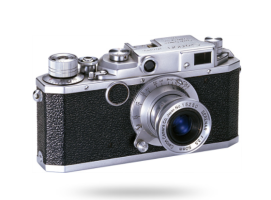
Of course you can still pick up a Canon monochrome camera used ;)
 
Last edited:
  • Like
Reactions: 1 users
Upvote 0
Best go with the Leica, mate.

EDIT: Ok, I was flip. This topic comes up pretty often. From my own perspective, selling a separate body that only takes B&W is a gimmick, and at this point a waste of resources for most surviving camera companies.

First, we have well over 100 years of masterful B&W images taken with cameras that did not use the artifice of showing the world in B&W. I suppose an argument can now be made that having such a camera could help more photographers understand B&W, and even help very good, experienced photographers take better B&W images. I don't think the argument would be convincing.

But a good art critic can persuade the art community that tomato soup haphazardly splashed onto a piece of plywood speaks to our times, so a good marketing department could persuade gullible types that great B&W photography can best be achieved by a more WYSIWYG EVF.

Personally, I believe looking at B&W image, learning what makes them compelling to YOU, can inspire and instruct. A little reading about composition and contrast would be also helpful.

Editing software today can do wonders with B&W conversion--EVEN with images captured on color sensors.

Finally, the EOS R can be set so its EVF displays monochrome. And I believe other models with EVF's can too.

My wife grew up in another country. Not long after coming to the USA, seeing the gadgets sold in malls and supermarkets, she asked, "Why do Americans spend money on things that are only good for one specific purpose when a common tool could do just as well?"

I had no answer for her.


View attachment 193264

I could see the butter slicer working well for when the butter is REALLY cold. A lot more consistent than I can cut it. Of course spreading it is going to be dicey on most breads. (Someone coined a word for it: Wondracide.)
 
  • Haha
  • Like
Reactions: 1 users
Upvote 0
It is reality and techical, not maketing. When you try to improve from 99% to 100%, ( even from 98% to 99%)the price is exremely high. Diamond is 10 times more expensive than moisanite. More than 99% of people cannot tell them apart. Even diamond tester cannot tell them apart. Then why should people buy diamond?
same as audio system. Why people spend tens of thousand on an extremely good system?
Processing and printing the photo are involved. If we are speaking of the finished product, what people look at (not the camera), and if even experts "cannot tell them apart," then there is no intrinsically higher value to the print captured originally in an EOS R5 or a Leica M10 Mono.

So, I don't believe your diamond analog is on point, but I agree audiophiles are in a world of their own. But a key difference! Audiophiles rarely make music--they listen to what others have played, recorded, and put to vinyl or some other medium which affects the final output quality.
 
Upvote 0
"Processing and printing the photo are involved. If we are speaking of the finished product, what people look at (not the camera), and if even experts "cannot tell them apart," then there is no intrinsically higher value to the print captured originally in an EOS R5 or a Leica M10 Mono."

"You just cannot tell a summer frog what snow looks like"
 
Upvote 0
There is a tiny amount of degradation introduced by the Bayer filters, it is like a hi-fi purist, they can detect things that others can't. Remember the expensive audio cables in the 1990's. The company that manufactured the actual cable was in Connecticut and they also made some exotic cables for the aerospace company that I worked at. I visited them about issues with some failed cables and also had a tour. I saw the premium audio cables being made. The owner of the company that put their name on them would come to the plant and listen to signals from each cable then indicate which side would be marked as ground or signal. Then, the reel had the stripe put on the indicated conductor and it went to his company where they cut them to length and terminated them. They sold for a crazy high price. I could never tell the difference between cheap and expensive but some will swear that they can and will pay. Its a small market though.

Its the same with a sensor with no bayer filter attached. The market is very small so the price is high. Canon specializes in mass production and usually stays away from specialized products. However, they have produced the Ra series of cameras with no UV filter so it is possible.
 
  • Like
Reactions: 1 user
Upvote 0
I really like the way the B&W picture style gives a live view of the scene in B&W. But also that even though it displays the image in B&W in most applications natively you can change it to color or use the various color sliders to adjust the tones within the image.
 
  • Like
Reactions: 1 user
Upvote 0
I used red, orange, and yellow filters with film. Maybe I had more than one strength of the yellow. Of course I had to make the filter decision before I shot the pictures.

I like shooting Raw and in effect choosing my color filters after the fact.
 
  • Like
Reactions: 1 user
Upvote 0