If you consistently shoot at F8 or so the AFMA adjustment may not be noticeable as most lenses will AF within the DOF range at smaller apertures. AFMA adjustments shine when shooting wide open or close to wide open or when the lens or camera are terribly out of spec with each other.
Some lenses are soft anyway wide open so results may vary on consumer grade glass. Focal allows high quality lenses to work as designed. Even so, the affects of uncalibrated focus and diffraction will compound so getting the focus right in the first place may help even a consumer lens appear sharper.
Where I'm not 100% totally sold on it is that the software bases it's results on repeatability at different AFMA settings. Honestly if your lens focus varies at one AFMA setting, it should vary just as much statistically at any other AFMA setting. So say if AFMA 4 gave you 100% repeatability but AFMA 2 maybe 25% but 2 resulted in some shots with a higher IQ, AFMA 4 would be favored.
I am struggling with an instance with my 300mm where it recommends AFMA 4 but visually the image resolves the test target at AFMA 2 much better. The nice thing is that the software charts the results as shown by another user here. You can decide which AFMA value to use based on the results.
I'm leaning toward using the AFMA that produced the highest IQ on the test chart. If my combo seems to have a higher repeatability with a soft image it's not really giving me anything.
CanonCollector said:
There is some great information here. What I am not reading is that these adjustments have made a noticeable difference in IQ. Is that just implied?

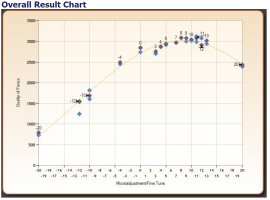
 Since the 1D X isn't supported by FoCal yet, I took all the shots manually, then loaded the images into FoCal for analysis in Manual Mode.

