
i am wondering what are the best methods to photograph my sons track meets? i use a canon 1dx and 5d mark 3, most of the pics are blurry and i can't seem to get them sharp, i have read a lot on this but what i read docent make sense to me…..i usually take still images,(portraits/families/kids etc) please help me or tell me what are the best settings to set my camera on…thank you
You are using an out of date browser. It may not display this or other websites correctly.
You should upgrade or use an alternative browser.
You should upgrade or use an alternative browser.
track and field photography
- Thread starter AmbrojaP
- Start date

Forum help will be limited, I'd suggest reaching out to a local camera club or shop for a hour or two of personal hands on tutoring, you will learn a lot more and it will be very specific for your situation.
Alternatively post some pictures to illustrate your frustration and list full EXIF, that will be a basis for specific help.
Alternatively post some pictures to illustrate your frustration and list full EXIF, that will be a basis for specific help.
Upvote
0
Oh I don't mean to belittle the user base here. It is just without very good outline of your specific shooting situation useful advice will be mixed in with a lot of sidetracking not so helpful stuff.
If I were you I'd look on the "Anything Shot With A 1DX" thread http://www.canonrumors.com/forum/index.php?topic=8079.0 , there are a couple of track and field/sports shooters there, private message them. Neuroanatomist, probably the number one single source of info here, is a 1DX shooter and though I don't think sports is his forte he will certainly know what settings to start out with. But all of these people will need as much info as possible, like I said if possible, post some pictures with the EXIF.
THE resource for sports shooters is http://www.sportsshooters.com they have some very helpful people over there.
Canon has many white papers giving advice on all aspects of their equipment use. Here is a good starting point http://cpn.canon-europe.com/search/search.do I used 1DX AF settings as a search term.
But please post some pictures with the EXIF, tell us what you are not happy about with them and we can start.
Hope this helps.
If I were you I'd look on the "Anything Shot With A 1DX" thread http://www.canonrumors.com/forum/index.php?topic=8079.0 , there are a couple of track and field/sports shooters there, private message them. Neuroanatomist, probably the number one single source of info here, is a 1DX shooter and though I don't think sports is his forte he will certainly know what settings to start out with. But all of these people will need as much info as possible, like I said if possible, post some pictures with the EXIF.
THE resource for sports shooters is http://www.sportsshooters.com they have some very helpful people over there.
Canon has many white papers giving advice on all aspects of their equipment use. Here is a good starting point http://cpn.canon-europe.com/search/search.do I used 1DX AF settings as a search term.
But please post some pictures with the EXIF, tell us what you are not happy about with them and we can start.
Hope this helps.
Upvote
0
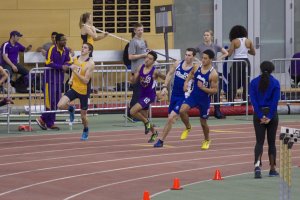
Tracking and shooting a moving subject is more technique and experience than settings. Off hand, you'll want f4, 1/500th and what ever ISO it takes to get that. The AF settings are a book by themselves, so really read up on your camera and it's tracking ability. When shooting, are you zooming the lens as well (you shouldn't unless it creates the look you want)? Indoor stuff is really hard due to the limited lighting, how has your success been shooting outside?
Upvote
0
Ok, we need to know all the AF settings, what Case Setting are you using, AF point/zone and expansion etc etc?
Now you have to understand the 1DX AF is the Bugatti Veyron of AF. A lot depends on how you "drive" the camera, for instance how good you are at keeping the AF point on the actual subject, etc.
That simple shot should work well with Case 1, but if you find you are constantly getting the the background in focus and the runner out of focus then Case 2 might suit you better. If you struggle with that and only occasionally get the subject actually under a selected AF point then Case 3 would be better.
As for AF point selection, if you are pre-composing (in your head) select a suitable AF point and use 8 point expansion, or choose a suitable zone and let the AF do its thing. If you are just using the center point then again use 8 point expansion.
This is a good starter http://cpn.canon-europe.com/files/education/technical/eos_1d_x_explained/AF_guide_EOS-1DX_eng.pdf
P.S. What was the shutter speed of the posted image and is it a crop or the full image? If it is a crop show us the full image.
Now you have to understand the 1DX AF is the Bugatti Veyron of AF. A lot depends on how you "drive" the camera, for instance how good you are at keeping the AF point on the actual subject, etc.
That simple shot should work well with Case 1, but if you find you are constantly getting the the background in focus and the runner out of focus then Case 2 might suit you better. If you struggle with that and only occasionally get the subject actually under a selected AF point then Case 3 would be better.
As for AF point selection, if you are pre-composing (in your head) select a suitable AF point and use 8 point expansion, or choose a suitable zone and let the AF do its thing. If you are just using the center point then again use 8 point expansion.
This is a good starter http://cpn.canon-europe.com/files/education/technical/eos_1d_x_explained/AF_guide_EOS-1DX_eng.pdf
P.S. What was the shutter speed of the posted image and is it a crop or the full image? If it is a crop show us the full image.
Upvote
0

Make sure the camera is in AI Servo mode, and AF will be updates for moving subjects. Use a high shutter speed, and stop down enough to get extra depth of field.
The image from the side is not difficult to capture, if you are trying to capture something coming straight at you at high speed, then it gets tougher.
You don't need such a high powered camera for the image you were showing, all of the DSLR's will work fine, just use the settings I showed and forget all the case stuff, that's for difficult shots with special requirements.
The image from the side is not difficult to capture, if you are trying to capture something coming straight at you at high speed, then it gets tougher.
You don't need such a high powered camera for the image you were showing, all of the DSLR's will work fine, just use the settings I showed and forget all the case stuff, that's for difficult shots with special requirements.
Upvote
0
AmbrojaP said:this is one taken with the canon 1dx, and yes it is horrible but that's why i am here, not used to inside. exposure 1/40 f23 iso 2500, aperture evaluative metering. i ended up setting the 1dx down and just using the other. and lens was at 70 number 6 is who i was focus on.
Woah. What shooting mode are you in? There is no way you should be at f23 unless you want the motion blur, personally I like it. But this is not an AF issue it is basic camera use, I am not belittling you, just getting the information out there.
Where are you? I'd seriously consider my first thought, find somebody who can mentor you for a few hours, you will learn tons and rather than bombard you with possibly distracting info they will point out the stuff you need to know.
Alternatively there are many books and videos out there that will cover all you need to know to get a good foundation. Kelby training has a great reputation, I like Creative Live, Adorama has a fantastic selection of videos on YouTube with Marc Wallace that covers everything. Bryan Peterson has a long running series of books covering the basics but I find him a bit simplistic. I'd highly recommend a trip to the local book store to look over the photography instruction books.
Hope this helps.
Upvote
0
@privatebydesign all of this helps, i understand everything that you are saying and i do not take offense to it at all.. thank you fro all the suggestions and in sites. it helps a lot. and ido like the motion blur but i want the main subject more focused and it was single shot i believe, or evaluative. like i said i do great with reg photos, portraits, and outside.
Upvote
0
Aperture really was my first thought too. At an indoor venue, I'd never want anything narrower than 2.8. Granted, I read this thread on my phone while walking, so may have missed previous discussion of this, but I usually prefer my 85 1.8 @f/2 to my 70-200 @2.8 if I'm indoors. Opening up more will give you better background blur and a faster, action-stopping shutter speed. I know everyone always says "a stop isn't that much", but in terms of stopping action, 1/1000 is much better than 1/500. So I'd go as wide as reasonably possible, and definitely recommend at least 2.8 if not faster.
Upvote
0
At an indoor track meet here is what I do to set up my camera:
1. Set white balance (optional--if you are not experienced doing this, then leave your camera on AWB, because nothing can improve or ruin pictures more than a good or bad white balance reading).
* ISO 100, f/5.6-f/8 (depending on the indoor lighting strength), 1/6th to 1/8th of a second (depending on lighting strength again). The reason for the slow shutter speed when taking a white balance reading indoors is to ensure that strobing effects (very common in indoor light sources) do not ruin the white balance reading.
* Photograph a gray card or a non-glossy white surface (like paper) with no shadows on it, that is equally reflecting light from the surroundings as well as from the light source.
* Look at the RGB histogram if you want to see what is going on here and to compare one white balance test photo to another.
* Set the camera's white balance and then reset exposure values back to normal shooting (high ISO, high shutter speed, wide open apertures) and take some test photos.
* If you arrive 30 minutes early and take time to set a quality white balance, you can get the majority of your photos to turn out at the quality level of studio lighting, except for a few shots where the strobing effects of some indoor lighting will result in an unavoidable color cast.
* It is well worth the time to set custom white balance in an controlled indoor lighting environment, and simply setting Kelvin color temperature is not as good due to the difference at every track including reflectivity of walls, color of the track, and lots of other factors.
2. Use camera and lens settings that work better in lower light.
* On the 1D X I use most often a 135mm f/2 lens for indoor track with aperture values from f/2.0 to f/2.8. I also use a 400mm f/2.8, 100mm f/2.0, 85mm f/1.8, and several lenses in between which I believe are too expensive to recommend based on the percentage of use that I get out of them at a typical indoor track meet. My only reason for not using the 135mm f/2.0 is if I am limited by space constraints, such as if a high jump is crammed into the corner of the facility. There is always opportunity to use the 400mm lens for its unique photos, but it doesn't have much use in photographing the peak action except portraits of individual hurdlers or runners coming out of the blocks. So 90% of my photos are with the 135mm f/2.0. The 200mm f/2.0 is very nice as well.
* I use ISO values between 1600 to 6400, depending on the track and direction athletes are facing into the lighting.
* Everything is full manual exposure, and especially no auto ISO. Auto ISO simply trashes a great exposure as the background changes.
* Perhaps most importantly, whatever equipment you use, make sure you set the AF to Servo and only use the center 5 points in a cross configuration (center plus four surrounding), or perhaps all of the center 9 points. (Occasionally, the center 1 point alone.) I have found that even on the 1D X, in lower light, using fewer points will improve AF performance. This is true even with the 2.0.3 version of the 1D X firmware.
* Focus on the person's head or, depending on the uniform, the printing on their jersey if it is high contrast and on their chest. Some uniforms simply make it all but impossible to focus except on the head, and in long jump especially this can be quite a challenge, because it takes considerable photographer skill to track the head from head on during a long jump.
Results: sports photo of the year award in my state, Gatorade National player of the year coverage in the Chicago Tribune, etc.
1. Set white balance (optional--if you are not experienced doing this, then leave your camera on AWB, because nothing can improve or ruin pictures more than a good or bad white balance reading).
* ISO 100, f/5.6-f/8 (depending on the indoor lighting strength), 1/6th to 1/8th of a second (depending on lighting strength again). The reason for the slow shutter speed when taking a white balance reading indoors is to ensure that strobing effects (very common in indoor light sources) do not ruin the white balance reading.
* Photograph a gray card or a non-glossy white surface (like paper) with no shadows on it, that is equally reflecting light from the surroundings as well as from the light source.
* Look at the RGB histogram if you want to see what is going on here and to compare one white balance test photo to another.
* Set the camera's white balance and then reset exposure values back to normal shooting (high ISO, high shutter speed, wide open apertures) and take some test photos.
* If you arrive 30 minutes early and take time to set a quality white balance, you can get the majority of your photos to turn out at the quality level of studio lighting, except for a few shots where the strobing effects of some indoor lighting will result in an unavoidable color cast.
* It is well worth the time to set custom white balance in an controlled indoor lighting environment, and simply setting Kelvin color temperature is not as good due to the difference at every track including reflectivity of walls, color of the track, and lots of other factors.
2. Use camera and lens settings that work better in lower light.
* On the 1D X I use most often a 135mm f/2 lens for indoor track with aperture values from f/2.0 to f/2.8. I also use a 400mm f/2.8, 100mm f/2.0, 85mm f/1.8, and several lenses in between which I believe are too expensive to recommend based on the percentage of use that I get out of them at a typical indoor track meet. My only reason for not using the 135mm f/2.0 is if I am limited by space constraints, such as if a high jump is crammed into the corner of the facility. There is always opportunity to use the 400mm lens for its unique photos, but it doesn't have much use in photographing the peak action except portraits of individual hurdlers or runners coming out of the blocks. So 90% of my photos are with the 135mm f/2.0. The 200mm f/2.0 is very nice as well.
* I use ISO values between 1600 to 6400, depending on the track and direction athletes are facing into the lighting.
* Everything is full manual exposure, and especially no auto ISO. Auto ISO simply trashes a great exposure as the background changes.
* Perhaps most importantly, whatever equipment you use, make sure you set the AF to Servo and only use the center 5 points in a cross configuration (center plus four surrounding), or perhaps all of the center 9 points. (Occasionally, the center 1 point alone.) I have found that even on the 1D X, in lower light, using fewer points will improve AF performance. This is true even with the 2.0.3 version of the 1D X firmware.
* Focus on the person's head or, depending on the uniform, the printing on their jersey if it is high contrast and on their chest. Some uniforms simply make it all but impossible to focus except on the head, and in long jump especially this can be quite a challenge, because it takes considerable photographer skill to track the head from head on during a long jump.
Results: sports photo of the year award in my state, Gatorade National player of the year coverage in the Chicago Tribune, etc.
Upvote
0
BLFPhoto
Canon EOS user since '91...
I shoot T&F, running, triathlon, cycling, etc. With a 1Dx, 5D Mk III and the 70-200 f/2.8 IS, you have more than enough equipment to produce great T&F photos. With the 70-200 Mk II you can shoot all day at f/2.8 and not have issues with blur unless you're talking about situations where you don't have enough DOF for the subject (multiple runners stacked around the corner).
You want a MINIMUM shutter speed of 1/500 unless you're specifically doing panning or other induced motion blur shots. At 1/1000 and above you should never have a problem with blurred T&F photos with respect to motion blur.
So then we're talking about focusing. Either the 1Dx or the 5D Mk III have fantastic AF systems that should allow you to get good focus while tracking moving subjects. My typical setup for T&F type events is Ai Servo, Single Point w/4 pt. expansion, and high speed shooting mode. In some situations I may change to single AF point only, or to AF w/8 expansion points. The cases for those may be counter intuitive if you don't understand the AF system and what you're trying to achieve. What I mean by that is that the instance that I go down to a single point is when I'm shooting a single runner in a group. In that instance, using expansion of either 4 or 8 points, or zone or all 63 pts can confuse the AF system. It's going to find focus on whatever makes the most sense to it, not necessarily the runner I am trying to get sharp focus. So I change it to single point and track the runner with that point. This is important for things like you've posted where you really want the lead runner in focus for sure. The rest can fall out of focus, if that is your intent. If you want them all in focus, you need more DOF (smaller aperture) and more ISO to compensate for the loss of light.
With the 70-200 IS II, properly calibrated on either a full or crop frame, you can track a single runner with the primary AF point high on the chest or head, at f/2.8 and have them come out sharp. The 1Dx will get VERY slightly more of a burst of, say, 8-10 in focus than the 5D Mk III. But the 5D Mk III will shoot most in focus up to filling the buffer.
Very few moving sports lend themselves to single shot AF in my book, unless you are using the back AF button and only shooting a single shot. The problem with that is often that you'll miss the peak moment with your single frame. I get far better take by shooting a burst of 3-5 shots of a runner, using AI Servo AF. Using single shot AF with burst shooting is a non-starter. The AF may hit on the first shot, but will never catch up after that, particularly if the subject is moving toward or away from you.
I shoot these sports with a 1D Mk IV, 5D Mk III, and 7D. The main lenses I use are the 300 f/4 IS, 70-200 f/2.8 IS Mk II, and the 135 f/2. Occasionally I'll use the 100-400 zoom, but only when I can't be down at the field. The 300 f/4 IS can be marginal on the 5D and 7D in anything less than good light and when tracking subjects coming directly at me. In good light on the 1D Mk IV, it is a pretty great piece of gear, though the resulting photographs are just "good event photos" rather than the great images that the f/2.8 version gets when I rent it.
I also heavily use wide angles of 17mm on up to 35mm, either zoom or prime, to shoot these sports. The key is to use them from low angles so that the athletes rise well above the horizon. I call them my "superhero" shots. You can see lots of those in my sports galleries.
My favorite shots come from using either the wide angle superhero lenses or the 135 f/2...ALWAYS at f/2. Head to toe runner shots with the 135 L, with the athlete filling the frame are awesome. I use this lens all the time in tight trail confines in the forest when I'm shooting ultra running. Far better than the 70-200 IS II.
The best things you can do to get great shots, though, have little to do with gear and all to do with your framing and composition. Shoot often from low angles, even with long lenses. For instance, shoot the long jump laying flat on the ground from off the end of the pit, at least 135mm and 200mm is better. Aim up and fill the frame with the athlete, while keeping the board in the frame. The perspective will heighten the affect of the athlete's jumping height. If you shoot the same shot, standing, the athlete will not look heroic and your shot will be boring and stiff.
If you have High Speed Sync capability (or Hypersync w/Pocket Wizards), add counter-lighting to your shots. Put the sun over the athletes' shoulders and light their front (not usually possible during T&F, but it can sometimes be used).
Get as close to the action as you can. I'll say it again...get as close to the action as you can! At some meets I have access to place my camera directly alongside the rail on the homestretch. I place the camera as low as I can, often directly on the deck. I use a wide angle lens, prefocused on manual focus to the point I want to capture, and set the exposure settings to manual. As the athletes run by I rip off bursts of 3-5 for each athlete. I use f/5.6 or even f/8 to ensure adequate DOF as the athletes move through the focus zone. That gives me a margin for error to ensure I get the peak action with the both of the athlete's feet off the ground. Those make awesome, "superhero" shots that the athletes and parents love.
Shoot hurdles from many angles, but especially with your longest lens, straight down the track with the athletes running into your frame. Rip off burst of 3-5 as they clear each hurdle. The best shots have the athletes hands straight to the side while both legs clear the hurdle, with visible distance between the lowest point of the athlete's shoe and the hurdle. That is a micro-instant that very few can get right with a single shot. With a 1Dx and 12fps, better to rip of a burst at each hurdle. For those shots I use single point AF, and hold it directly on the athlete's face. Most experienced hurdlers are fairly fluid and don't bob their heads much.
From the shots you posted, your post processing can use quite a bit of work too. The panning shot isn't too badly executed, but it lacks any punch at all. Better post processing and perhaps a judicious crop would turn that into a fairly passable shot.
There is a lot to learn and apply to get great athletic shots, but it can be done. Number one rule is NEVER, EVER, EVER shoot standing. No matter how well you execute the technical aspects of operating the camera, your image is going to be boring and common. Think ALWAYS about simplifying and cleaning up the background. Sometimes it can't be avoided, but still...when you have to break the rule make sure you have no alternative. If you must have something in the background because of the venue, try to find an angle to put the scoreboard timer behind or next to the athletes. Give some context.
Group shots (running packs around the corner for instance) rarely work well when executed with DOF to have all runners sharp. Make a decision to focus on a single runner and drop your DOF as thin as you can. The image will still tell the story of the runner running in a pack, but it reinforces the image to make it about THAT runner. Too much DOF usually leaves the image subject-less, at least in telephoto type shots. I rarely shoot such shots with deeper DOF that I am happy with, and almost never when the athletes are in motion.
You want a MINIMUM shutter speed of 1/500 unless you're specifically doing panning or other induced motion blur shots. At 1/1000 and above you should never have a problem with blurred T&F photos with respect to motion blur.
So then we're talking about focusing. Either the 1Dx or the 5D Mk III have fantastic AF systems that should allow you to get good focus while tracking moving subjects. My typical setup for T&F type events is Ai Servo, Single Point w/4 pt. expansion, and high speed shooting mode. In some situations I may change to single AF point only, or to AF w/8 expansion points. The cases for those may be counter intuitive if you don't understand the AF system and what you're trying to achieve. What I mean by that is that the instance that I go down to a single point is when I'm shooting a single runner in a group. In that instance, using expansion of either 4 or 8 points, or zone or all 63 pts can confuse the AF system. It's going to find focus on whatever makes the most sense to it, not necessarily the runner I am trying to get sharp focus. So I change it to single point and track the runner with that point. This is important for things like you've posted where you really want the lead runner in focus for sure. The rest can fall out of focus, if that is your intent. If you want them all in focus, you need more DOF (smaller aperture) and more ISO to compensate for the loss of light.
With the 70-200 IS II, properly calibrated on either a full or crop frame, you can track a single runner with the primary AF point high on the chest or head, at f/2.8 and have them come out sharp. The 1Dx will get VERY slightly more of a burst of, say, 8-10 in focus than the 5D Mk III. But the 5D Mk III will shoot most in focus up to filling the buffer.
Very few moving sports lend themselves to single shot AF in my book, unless you are using the back AF button and only shooting a single shot. The problem with that is often that you'll miss the peak moment with your single frame. I get far better take by shooting a burst of 3-5 shots of a runner, using AI Servo AF. Using single shot AF with burst shooting is a non-starter. The AF may hit on the first shot, but will never catch up after that, particularly if the subject is moving toward or away from you.
I shoot these sports with a 1D Mk IV, 5D Mk III, and 7D. The main lenses I use are the 300 f/4 IS, 70-200 f/2.8 IS Mk II, and the 135 f/2. Occasionally I'll use the 100-400 zoom, but only when I can't be down at the field. The 300 f/4 IS can be marginal on the 5D and 7D in anything less than good light and when tracking subjects coming directly at me. In good light on the 1D Mk IV, it is a pretty great piece of gear, though the resulting photographs are just "good event photos" rather than the great images that the f/2.8 version gets when I rent it.
I also heavily use wide angles of 17mm on up to 35mm, either zoom or prime, to shoot these sports. The key is to use them from low angles so that the athletes rise well above the horizon. I call them my "superhero" shots. You can see lots of those in my sports galleries.
My favorite shots come from using either the wide angle superhero lenses or the 135 f/2...ALWAYS at f/2. Head to toe runner shots with the 135 L, with the athlete filling the frame are awesome. I use this lens all the time in tight trail confines in the forest when I'm shooting ultra running. Far better than the 70-200 IS II.
The best things you can do to get great shots, though, have little to do with gear and all to do with your framing and composition. Shoot often from low angles, even with long lenses. For instance, shoot the long jump laying flat on the ground from off the end of the pit, at least 135mm and 200mm is better. Aim up and fill the frame with the athlete, while keeping the board in the frame. The perspective will heighten the affect of the athlete's jumping height. If you shoot the same shot, standing, the athlete will not look heroic and your shot will be boring and stiff.
If you have High Speed Sync capability (or Hypersync w/Pocket Wizards), add counter-lighting to your shots. Put the sun over the athletes' shoulders and light their front (not usually possible during T&F, but it can sometimes be used).
Get as close to the action as you can. I'll say it again...get as close to the action as you can! At some meets I have access to place my camera directly alongside the rail on the homestretch. I place the camera as low as I can, often directly on the deck. I use a wide angle lens, prefocused on manual focus to the point I want to capture, and set the exposure settings to manual. As the athletes run by I rip off bursts of 3-5 for each athlete. I use f/5.6 or even f/8 to ensure adequate DOF as the athletes move through the focus zone. That gives me a margin for error to ensure I get the peak action with the both of the athlete's feet off the ground. Those make awesome, "superhero" shots that the athletes and parents love.
Shoot hurdles from many angles, but especially with your longest lens, straight down the track with the athletes running into your frame. Rip off burst of 3-5 as they clear each hurdle. The best shots have the athletes hands straight to the side while both legs clear the hurdle, with visible distance between the lowest point of the athlete's shoe and the hurdle. That is a micro-instant that very few can get right with a single shot. With a 1Dx and 12fps, better to rip of a burst at each hurdle. For those shots I use single point AF, and hold it directly on the athlete's face. Most experienced hurdlers are fairly fluid and don't bob their heads much.
From the shots you posted, your post processing can use quite a bit of work too. The panning shot isn't too badly executed, but it lacks any punch at all. Better post processing and perhaps a judicious crop would turn that into a fairly passable shot.
There is a lot to learn and apply to get great athletic shots, but it can be done. Number one rule is NEVER, EVER, EVER shoot standing. No matter how well you execute the technical aspects of operating the camera, your image is going to be boring and common. Think ALWAYS about simplifying and cleaning up the background. Sometimes it can't be avoided, but still...when you have to break the rule make sure you have no alternative. If you must have something in the background because of the venue, try to find an angle to put the scoreboard timer behind or next to the athletes. Give some context.
Group shots (running packs around the corner for instance) rarely work well when executed with DOF to have all runners sharp. Make a decision to focus on a single runner and drop your DOF as thin as you can. The image will still tell the story of the runner running in a pack, but it reinforces the image to make it about THAT runner. Too much DOF usually leaves the image subject-less, at least in telephoto type shots. I rarely shoot such shots with deeper DOF that I am happy with, and almost never when the athletes are in motion.
Upvote
0
BLFPhoto
Canon EOS user since '91...
"Woah. What shooting mode are you in? There is no way you should be at f23 unless you want the motion blur, personally I like it. But this is not an AF issue it is basic camera use, I am not belittling you, just getting the information out there. "
This was similar to what I thought on this one. You're panning and want a low shutter speed like the 1/40th that you shot. In that case, drop your ISO down to 100 and you'll get a lower f/stop which will help separate your subject. You could have shot that at f/4, ISO 200 and around your 1/30th-1/60th shutter speed. The shot would have been better and you'd have had better color than the somewhat duller high ISO gave you.
So keep the shutter speed on that one, but drop your ISO down to 100 or 200 and you'll get the advantage of a thin DOF to help the shot. The idea of this shot seems to be focused on the runner in purple. Do everything you can to place the viewer's focus on him.
The other shot you posted is a boring shot at a boring angle, with far too much DOF. The viewer has a hard time separating the runners from the background. Look for angles to put as much distance between the runner(s) and the background as possible. Unless there is nothing outside the track at the angle you shot from, shooting from the inside like you did just clutters up the image with too many distracting spectators, etc. Better to shoot from the outside on that one, perhaps shooting across from the runner in yellow in a straight line across the field. Depends on what is on the infield behind that angle. Again, for athletic photos should be as much isolation of the athlete as possible in the frame.
This was similar to what I thought on this one. You're panning and want a low shutter speed like the 1/40th that you shot. In that case, drop your ISO down to 100 and you'll get a lower f/stop which will help separate your subject. You could have shot that at f/4, ISO 200 and around your 1/30th-1/60th shutter speed. The shot would have been better and you'd have had better color than the somewhat duller high ISO gave you.
So keep the shutter speed on that one, but drop your ISO down to 100 or 200 and you'll get the advantage of a thin DOF to help the shot. The idea of this shot seems to be focused on the runner in purple. Do everything you can to place the viewer's focus on him.
The other shot you posted is a boring shot at a boring angle, with far too much DOF. The viewer has a hard time separating the runners from the background. Look for angles to put as much distance between the runner(s) and the background as possible. Unless there is nothing outside the track at the angle you shot from, shooting from the inside like you did just clutters up the image with too many distracting spectators, etc. Better to shoot from the outside on that one, perhaps shooting across from the runner in yellow in a straight line across the field. Depends on what is on the infield behind that angle. Again, for athletic photos should be as much isolation of the athlete as possible in the frame.
Upvote
0
Similar threads
- Replies
- 5
- Views
- 1K


- Replies
- 6
- Views
- 2K

- Replies
- 14
- Views
- 1K

- Replies
- 10
- Views
- 8K