[COMMUNITY PROJECT] Deriving comprehensive guidelines for shooting the sun without sensor damage

EOSR7MkII

EOS R7 MkII <3
Sep 1, 2025
14
5
3
Hello everyone! I have recently spotted two small patches of "white pixels" on my R7, and have been wondering if accidental exposure to the sun could have caused that during a recent shoot where I walked around with my mounted Nifty Fifty at f/1.8 without a lens cap (and focusing continuously). During that time, the sun definitely entered the frame a few times, but wasn’t stationary for more than ~10 seconds, so I am unsure if that caused it.

By doing some research, I had hoped to find a comprehensive guide on where the "danger zone" begins and which configurations are safe, but could not find anything concrete. Thus, I am hoping that some more experienced photographers could share their experiences to determine in an empirical way what is safe and what isn’t.

From what I understand, there are two distinct scenarios that are dangerous:
  1. Thermally overwhelming single photosites: Focusing the sun with a low focal length and wide open aperture onto single photosites (sun covers very small area on sensor), overheating and damaging them, causing them to permanently malfunction, while adjacent photosites remain (mostly) intact.
  2. Thermally overwhelming the sensor cooling capability: With a telephoto lens, project a larger image of the sun onto the sensor (lower intensity/photosite, but much more energy deposited on sensor overall), causing large portions of or the entire sensor to overheat, melt, and potentially cause a fire.
For the purpose of this thread (to make values comparable), I would like to mostly focus on the first scenario, although hearing about instances of the second will be insightful as well. I will also assume that the photosites are always the same size, also ignoring technicalities such as dual pixels and wiring for now. Let us also assume that we take a picture of the bright midday sun that emits a fixed (maximum) light intensity. Let us further assume that the camera is focused at "infinity" (or, you know, the distance of the sun) to produce the smallest-possible spot on the sensor.

It is my understanding (please correct me if I am wrong, though!) that the f-number and the duration of the exposure are the only relevant variables, with other things like focal length actually not (strongly) affecting the intensity of light at a single photosite (and instead mostly the total thermal load on the sensor).
If I have a 200mm lens with f/1.8 compared to an 18mm lens with f/1.8, it is my understanding (based on this this formula) that the light intensity hitting each photosite is identical, only the image of the sun is much larger on the sensor in the former case (risking damage to many more photosites at the same time, and requiring larger turns of the camera to get the photosites out of the sun projection, and producing a much higher thermal load on the sensor as a whole). A wide-angle lens simply projects the same-intensity sun because of the same f-number, but onto much less photosites. This is correct, right?

I am aware that I am ignoring the fact that in case of telephoto lenses, there is a greatly reduced heat dissipation to neighboring photosites if they are also illuminated by the sun, since a whole section of the sensor then heats up as a whole. This may well introduce a (weak) dependence of the formula also on focal length, however, its impact should be lower (at most linear) compared to the f-number, which has a squared relationship according to this formula. For the sake of simplicity, I will thus ignore focal length.

ISO should not have any impact whatsoever, because it doesn't impact the intensity of light that shines onto the photosite.

Thus, I think it would be most useful to derive an approximation formula for maximum safe exposure time of a single photosite to the sun as a function of f-number ("N"). I created a simple prototype below:
t₀/N² < t_max(N²) < t₁/N²,
where t₀ is the largest reported time where you observed no sensor damage when using a lens of f-number "N", and t₁ is the smallest reported (by you, below!) time where you observed sensor damage when using a lens with f-number "N". t_max then is the f-number-dependent threshold exposure time, where sensor damage is starting to be expected.

As mentioned, I would like to derive upper time limits of what is safe and the lower time limits of when sensor damage can be expected (probably differing by a factor >2).

Therefore, I would like to ask YOU, if you ever photographed the sun without an ND filter for a certain amount of time and experience no damage, as well as if you ever photographed the sun and experienced sensor damage (with or without ND filter), to report the duration and f-number of the lens that you used, as well as approximate time and sun intensity/weather (all of which is conveniently stored within images if you didn't use ND filters). It is important to note that the camera must have remained steady for this shot for wide angle lenses (less important for telephoto lenses, because the sun covers a large area of the sensor!).

As this is essentially two formulas in one, not only those who damaged their sensors are asked to comment their exposure times, f-numbers and lighting conditions, but also everyone who pointed at the sun and DIDN'T damage their sensor. This will allow everyone reading this thread to get a feeling for what is generally safe, and what is generally destructive.

Based on this thread, we already have a first reported exposure duration of around 5 minutes that did not cause damage, although the f-number is missing. @Kit Lens Jockey if you are seeing this, do you by chance still have the picture and can report on the f-number and a rough approximation of the density of the solar-blocking filter on the window?

As discussed in the replies, this little project does not aim to produce exact threshold values. They will have a large uncertainty and may even be off by a factor of 2, 5, or even more. But it would be immensely helpful to have at least some rough guidelines, such as "When using f/1.8, it is safe to point your camera at the sun for 1-2 seconds" versus "[...] 10-20 seconds" versus "[...] 2-3 minutes". As in, understanding the rough order of magnitude, without having to go through a potentially very expensive trial-and-error experiment of "just risking it".

Thank you all for your help! Once some of you reported your experiences and concrete values, I will update this post to derive lower and upper limits (t₀ and t₁).
 
Last edited:
Sun damage will vary as the strength of the sunlight and other variables that vary from user to user, including the camera in particular. You would have to standardise conditions otherwise a community project would give random data and you would need a very large number of users to provide data to fit to an equation. So, the best way to satisfy your curiosity would be to do a time course on your R7 under controlled conditions. Then do it on an R5ii or R1 to see the effects of stacking and FSI vs BSI for example.
 
Upvote 0
Hello everyone! I have recently spotted two small patches of "white pixels" on my R7, and have been wondering if accidental exposure to the sun could have caused that during a recent shoot where I walked around with my mounted Nifty Fifty at f/1.8 without a lens cap (and focusing continuously). During that time, the sun definitely entered the frame a few times, but wasn’t stationary for more than ~10 seconds, so I am unsure if that caused it.

By doing some research, I had hoped to find a comprehensive guide on where the "danger zone" begins and which configurations are safe, but could not find anything concrete. Thus, I am hoping that some more experienced photographers could share their experiences to determine in an empirical way what is safe and what isn’t.

From what I understand, there are two distinct scenarios that are dangerous:
  1. Thermally overwhelming single photosites: Focusing the sun with a low focal length and wide open aperture onto single photosites (sun covers very small area on sensor), overheating and damaging them, causing them to permanently malfunction, while adjacent photosites remain (mostly) intact.
  2. Thermally overwhelming the sensor cooling capability: With a telephoto lens, project a larger image of the sun onto the sensor (lower intensity/photosite, but much more energy deposited on sensor overall), causing large portions of or the entire sensor to overheat, melt, and potentially cause a fire.
For the purpose of this thread (to make values comparable), I would like to mostly focus on the first scenario, although hearing about instances of the second will be insightful as well. I will also assume that the photosites are always the same size, also ignoring technicalities such as dual pixels and wiring for now. Let us also assume that we take a picture of the bright midday sun that emits a fixed (maximum) light intensity. Let us further assume that the camera is focused at "infinity" (or, you know, the distance of the sun) to produce the smallest-possible spot on the sensor.

It is my understanding (please correct me if I am wrong, though!) that the f-number and the duration of the exposure are the only relevant variables, with other things like focal length actually not (strongly) affecting the intensity of light at a single photosite (and instead mostly the total thermal load on the sensor).
If I have a 200mm lens with f/1.8 compared to an 18mm lens with f/1.8, it is my understanding (based on this this formula) that the light intensity hitting each photosite is identical, only the image of the sun is much larger on the sensor in the former case (risking damage to many more photosites at the same time, and requiring larger turns of the camera to get the photosites out of the sun projection, and producing a much higher thermal load on the sensor as a whole). A wide-angle lens simply projects the same-intensity sun because of the same f-number, but onto much less photosites. This is correct, right?

I am aware that I am ignoring the fact that in case of telephoto lenses, there is a greatly reduced heat dissipation to neighboring photosites if they are also illuminated by the sun, since a whole section of the sensor then heats up as a whole. This may well introduce a (weak) dependence of the formula also on focal length, however, its impact should be lower (at most linear) compared to the f-number, which has a squared relationship according to this formula. For the sake of simplicity, I will thus ignore focal length.

ISO should not have any impact whatsoever, because it doesn't impact the intensity of light that shines onto the photosite.

Thus, I think it would be most useful to derive an approximation formula for maximum safe exposure time of a single photosite to the sun as a function of f-number ("N"). I created a simple prototype below:
t₀/N² < t_max(N²) < t₁/N²,
where t₀ is the largest reported time where you observed no sensor damage when using a lens of f-number "N", and t₁ is the smallest reported (by you, below!) time where you observed sensor damage when using a lens with f-number "N". t_max then is the f-number-dependent threshold exposure time, where sensor damage is starting to be expected.

As mentioned, I would like to derive upper time limits of what is safe and the lower time limits of when sensor damage can be expected (probably differing by a factor >2).

Therefore, I would like to ask YOU, if you ever photographed the sun without an ND filter for a certain amount of time and experience no damage, as well as if you ever photographed the sun and experienced sensor damage (with or without ND filter), to report the duration and f-number of the lens that you used (both of which is conveniently stored within images if you didn't use ND filters). It is important to note that the camera must have remained steady for this shot for wide angle lenses (less important for telephoto lenses, because the sun covers a large area of the sensor!).

As this is essentially two formulas in one, not only those who damaged their sensors are asked to comment their exposure times and f-numbers, but also everyone who pointed at the sun and DIDN'T damage their sensor. This will allow everyone reading this thread to get a feeling for what is generally safe, and what is generally destructive.

Based on this thread, we already have a first reported exposure duration of around 5 minutes that did not cause damage, although the f-number is missing. @Kit Lens Jockey if you are seeing this, do you by chance still have the picture and can report on the f-number and a rough approximation of the density of the solar-blocking filter on the window?

Thank you all for your help! Once some of you reported your experiences and concrete values, I will update this post to derive lower and upper limits (t₀ and t₁).
Could you share photos of the patches of white?
 
Upvote 0
Sun damage will vary as the strength of the sunlight and other variables that vary from user to user, including the camera in particular. You would have to standardise conditions otherwise a community project would give random data and you would need a very large number of users to provide data to fit to an equation. So, the best way to satisfy your curiosity would be to do a time course on your R7 under controlled conditions. Then do it on an R5ii or R1 to see the effects of stacking and FSI vs BSI for example.
You are absolutely right, I fully agree that there are many, many variables to consider. However, I think that for the purpose of finding some rough guide rails for those reading this thread in the future, the amount of variables should be kept as simple as possible. Think about how many beginner photographers struggle with just the three variables of the exposure triangle, so if this is to become a "rule of thumb", it must be as simple as possible, to not mentally overload photographers (imagine them pulling out their phone calculators to check for how long they can point their camera at the sun).

You mentioned different cameras, and while I can agree that different sensors may have different temperature limits, however based on some physical similarities (similar quantum efficiency) and roughly comparable features such as sensor thickness and materials, I would assume that this at most introduces a difference of a factor of 2. Unfortunately, I do not have the type of money to do a controlled "experiment" (aka destroying sensors) with my R7, and an R5 Mark II or R1 etc. to compare the effects of non-stacking to stacking and FSI vs. BSI 😅. If a large number of people responded here, we would be able to see such trends emerging, and could draw some conclusions, although as mentioned, I expect the effect to be limited to maybe a factor of 2. But I think that trying to incorporate too many factors may also be the reason why such a rule of thumb has not been created yet, because it would simply require too large of a sample size to be conclusive and quantitatively evaluate the contribution and scaling relation of each variable. Moreover, many people may also feel uneasy sharing the exact time and date of the picture, as well as the location (in order to calculate the exact solar irradiance and obtain ground-level light intensity based on historical weather data etc.). So instead, I intend to keep it simple and focus on the main ones - as mentioned, f-number and exposure time.
However, after some consideration, within the initial post, I did add "time of day and weather conditions" to the list of values to be commented by those of you who would like to contribute to this little project, since this can in fact play a large role, and I can then roughly correct for that when compiling the data into the formula once some experience reports of you all came in.

I'd like to re-emphasize, this by no means is meant to be exact science. I expect uncertainties at the order of 2-5x, or even larger. However, it would already be helpful to know, if I have a certain aperture value, can I point my camera at the midday sun for only less than 1-2 seconds, or 10-20 seconds, or 100-200 seconds? This is the type of accuracy (at the level of order of magnitude) I am hoping to achieve with this data collection and the rule of thumb that I am hoping to turn it into.

Did you personally ever have any experiences with taking pictures with the sun visible in the frame without ND filters, with or without damaging your sensor?

Could you share photos of the patches of white?
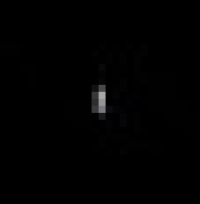
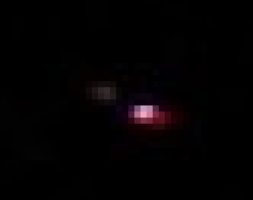
Sure! I attached the image. Taken with the lens cover mounted (i.e., complete darkness) and at ISO 100 (30 second long exposure). Does that image help decide whether it is sun damage or caused by something else?

And while I'm at it, I gotta ask... have you by chance taken any photos in the past that contain the sun in the frame and could contribute any values (exposure, f-number, weather & time of day)? :)
 

Attachments

  • _K0A8417.JPG
    _K0A8417.JPG
    109.6 KB · Views: 16
Last edited:
  • Like
Reactions: 1 user
Upvote 0
Did you personally ever have any experiences with taking pictures with the sun visible in the frame without ND filters, with or without damaging your sensor?

:)
No, I have no experience. It's quite possible you will not get a single piece of data requested here for your research, and most unlikely you well get enough data to analyse quantitatively.
 
  • Like
Reactions: 1 user
Upvote 0
Sure! I attached the image. Taken with the lens cover mounted (i.e., complete darkness) and at ISO 100 (30 second long exposure). Does that image help decide whether it is sun damage or caused by something else?:)
Now we can see the image, is it the full image reduced in size by a factor of 2 or is it a crop? If it is cropped then the spots are only a pixel or two wide, and, if reduced, of similar size. The image of the sun on an R7 sensor from a 50mm lens would be about 150 pixels wide, which you would expect to burn a much wider area of the sensor than you are seeing.
 
  • Like
Reactions: 1 users
Upvote 0
Now we can see the image, is it the full image reduced in size by a factor of 2 or is it a crop? If it is cropped then the spots are only a pixel or two wide, and, if reduced, of similar size. The image of the sun on an R7 sensor from a 50mm lens would be about 150 pixels wide, which you would expect to burn a much wider area of the sensor than you are seeing.
Thank you for pointing this out! It is the full image, and unless it got reduced to half resolution upon uploading it, it should have the full resolution. I've attached cropped images of the two spots below once more, shown zoomed in, so the individual pixels are visible. I am relieved that this makes it unlikely that I caused the damage, not having touched the sensor even once (using a rocket blower very carefully has been enough to remove any dust so far). I will try my luck with a warranty claim!

This also means that I can add the first set of values to this collection thread:

NO sun damage at f/1.8, 10 s stationary exposure, slightly hazy weather, afternoon (sun intensity: ~20% of full mid-day intensity)
This can be re-scaled to: f/1.8, 2 s of mid-day sun exposure. Given the formula from the first post, this is enough to calculate a first set of limits!

Meaning that the following durations should be safe for exposure to the full-intensity sun:
(largely independent of focal length)
f/1.2f/1.8f/2.8f/4f/5.6f/8f/11
≤1 s≤2 s≤5 s≤10 s≤20 s≤40 s≤75 s
Out of an abundance of caution, maybe divide those numbers by a factor of 2 especially when actually using a zoom lens, until we have more experience reports in. Once those reports come in, these numbers might increase!

EDIT: Use the values found in Table 7 here instead!


No, I have no experience. It's quite possible you will not get a single piece of data requested here for your research, and most unlikely you well get enough data to analyse quantitatively.
Single data points already are enough to provide (better) upper limits to what is safe or (initial) lower limits to what is unsafe, so even 2-3 more reports would be great to get closer to the actual limit (which I assume is a bit higher). Still hopeful...
 

Attachments

  • Patch 1.png
    Patch 1.png
    3.5 KB · Views: 3
  • Patch 2.png
    Patch 2.png
    6.2 KB · Views: 4
Last edited:
Upvote 0
Meaning that the following durations should be safe for exposure to the full-intensity sun:
(largely independent of focal length)

f/1.2f/1.8f/2.8f/4f/5.6f/8f/11
≤1 s≤2 s≤5 s≤10 s≤20 s≤40 s≤75 s
The focal length of the lens is a crucial factor and times will not be largely independent of focal length! Briefly, the temperature reached by a pixel heated by light will depend on the rate of heating and the rate of loss of heat. The rate of heating will vary as the light intensity. The rate of loss of heat is primarily by conduction of the heat to the surrounding pixels and the rest of the sensor, and will depend on the temperature difference between the pixel and the surroundings (Newton's law of cooling). Suppose you double the focal length of the lens at the same f-number, then the rate of heating of the pixel is the same as the light intensity is the same, but it will be spread over 4x the area. Accordingly, the rate of loss of heat at the centre of the image will be lower as there will be a larger number of heated pixels surrounding the centre and they will be of similar temperature to the central pixels and so there will be lower lateral conduction conduction of heat away. Accordingly, the pixels in the image will heat up faster and reach a higher temperature as the focal length increases at constant f-number. (And this is why telephoto lenses can even damage shutters, both the total amount of light hitting the shutter and the rate of loss by conduction are crucial).
 
  • Like
Reactions: 1 user
Upvote 0
The focal length of the lens is a crucial factor and times will not be largely independent of focal length! Briefly, the temperature reached by a pixel heated by light will depend on the rate of heating and the rate of loss of heat. The rate of heating will vary as the light intensity. The rate of loss of heat is primarily by conduction of the heat to the surrounding pixels and the rest of the sensor, and will depend on the temperature difference between the pixel and the surroundings (Newton's law of cooling). Suppose you double the focal length of the lens at the same f-number, then the rate of heating of the pixel is the same as the light intensity is the same, but it will be spread over 4x the area. Accordingly, the rate of loss of heat at the centre of the image will be lower as there will be a larger number of heated pixels surrounding the centre and they will be of similar temperature to the central pixels and so there will be lower lateral conduction conduction of heat away. Accordingly, the pixels in the image will heat up faster and reach a higher temperature as the focal length increases at constant f-number. (And this is why telephoto lenses can even damage shutters, both the total amount of light hitting the shutter and the rate of loss by conduction are crucial).
EDIT (after finishing to write this post): Indeed, you are right! I initially stated that I would like to focus specifically on single-photosite heating rather than the second scenario, but I now see that it is relevant enough to not ignore it.

As you described above, with my 50 mm lens, the sun measured about 150 pixels wide, which is more than half a millimeter in size on the sensor. Even here, the central pixels will suffer from reduced heat transfer to the non-illuminated areas compared to pixels close to the edge of the projected sun image, so sun damage would likely first occur in a smaller central area (which, however, should still be much larger than maybe 3⋅3 pixels as seen in my images). But to quantify this dependence properly, I now took the time to actually calculate the conduction rates across different distances on the sensor and consider its physical properties. With this, I now got a much better idea of the effect and how focal length influences maximum exposure times, and was able to create a relatively simple physics-based model to determine the maximum exposure times based on f-number and focal length.

Strap in for what basically turned into a small research paper... or directly skip to the results in Table 7!
(split into multiple posts because of the forum's 10000 character limit per post... am I the first person to hit that?)
 
Last edited:
Upvote 0
Let us first quantify the power density that the sun projects onto the sensor.

For the purpose of this calculation, let's assume a focal length where the projection of the sun is exactly 1 mm² in area. With an angular solar diameter of 0.53°, this occurs at about 121 mm focal length. Now if we project the full sun with a power (solar constant S₀) of 1400 W/m², focused with an 121 mm f/1.8 lens (collecting diameter is 121 mm/1.8 = 67.2 mm, meaning a collecting area of 3550 mm² = 0.00355 m²), onto 1 mm² = 0.000001 m² of the sensor, we get a deposited amount of heat of almost exactly 5 MW/m²: 1400 W/m²⋅0.00355 m² / 0.000001 m² = 4970000 W/m² ≈ 5 MW/m². This power density is independent of focal length (this specific value is for f/1.8), and is proportional to 1/(f-number)². For a 1 mm² spot, this equates to a heating power of 5 W = 5 J/s.

Here is the solar power density on the sensor for different f-numbers:
f/1.2f/1.8f/2.8f/4f/5.6f/8f/11
11 MW/m²5 MW/m²2 MW/m²1 MW/m²520 kW/m²250 kW/m²130 kW/m²
[Table 1]

Let's next consider the sensor.

The detector itself is a CMOS die made of silicon. While silicon only melts at around 1700 K, the sensor is a composite of several other materials in addition to the silicon detector area. The composite construction contains metal traces that melt at 900 K for aluminium and 1400 K for copper, adhesives (500-600 K for epoxy- and silicone-based adhesives) for bonding, and also organic polymer (plastics) for the Bayer filter with a melting point of just 500-600 K. As such, the photosites should already take damage at above ~600 K (330 °C), where the traces start to delaminate and photosites become unreadable (hot or dead pixels).

The sensor is around 1 mm thick. Silicon, which makes the majority of the sensor, has a specific heat capacity of around 0.70 J/(g⋅K) and a density of 2.3 g/cm³, so a volumetric heat capacity of 1.6 J/(cm³⋅K). That of the metal traces is a bit higher, that of the adhesives is a bit lower, so let's just assume an overall heat capacity of the sensor of 1.6 J/(cm³⋅K). Thus, a 1 mm² area of the sensor has a heat capacity of around 0.0016 J/(mm²⋅K), and the total sensor has a heat capacity of 0.53 J/K for an 22.3 mm⋅14.9 mm = 332.3 mm² APS-C sensor and 1.38 J/K for a 36 mm⋅24 mm = 864 mm² full-frame sensor.

Let us quickly consider the case of omitting any heat transfer (which is unphysical, but just for illustrative purposes), and calculate, the maximum time to heat the sun-illuminated area of the sensor by 300 K (from ambient ~300 K to 600 K): t = 300 K / ([solar power density] / 0.0016 J/(mm²⋅K)).

This time until the maximum safe temperature is reached (which ignores heat transfer!) is:
f/1.2f/1.8f/2.8f/4f/5.6f/8f/11
0.044 s ≈ 0.05 s0.096 s ≈ 0.1 s0.24 s ≈ 0.25 s0.48 s ≈ 0.5 s0.92 s ≈ 1 s1.92 s ≈ 2 s3.69 s ≈ 4 s
[Table 2]

Let us now consider different types of heat transfer/cooling.

We need to differentiate convective, radiative, and conductive cooling mechanisms.

Convective cooling is heat transfer through air molecules inside the sensor housing. For air, the convective heat coefficient is around h ≈ 10 W/(m²⋅K). For a temperature difference of 300 K (sensor to ambient air), and considering the effect on both the front- and backside of the sensor, this leads to a convective cooling power (per area) of 2⋅10 W/(m²⋅K)⋅300 K = 6 kW/m², which is negligible compared to the solar power density even for f/11 (see Table 2).

Radiative cooling is thermal radiation emitted by the sensor that heats up its surrounding housing. With an assumed emissivity of ε ≈ 0.9 and using the Stefan-Boltzmann constant, both sides radiating, and again an assumed temperature difference of 300 K (as before), we get a radiative cooling power (again, per area) of 2⋅0.9⋅5.67⋅10⁻⁸ W/(m²⋅K⁴)⋅((600 K)⁴ - (300 K)⁴) = 13.2 kW/m², which again is very small compared to the heating power density.

Lastly, the conductive cooling mechanism. It transfers heat through the sensor to neighboring areas of the sensor. We need to distinguish lateral (within the same layer) and vertical (perpendicular to the sensor) transfer. Silicon has a heat conductivity of roughly 150 W/(m⋅K), whereas the other components have vastly different values (200-400 W/(m⋅K) for wiring; <10 W/(m⋅K) for glue, polymers etc.). However, the silicon layer is going to be absorbing most of the light and therefore where the vast majority of thermal energy is going to be deposited is the silicon layer, and therefore, let's focus only on lateral conduction within this layer. As such, let us assume that the sensor has a heat conductivity of 150 W/(m⋅K), which is the value for silicon. This doesn't mean that there is no vertical heat transfer, and the other layers such as the Bayer filter etc. will melt if the silicon layer beneath it reaches a certain temperature. Conduction strength is linearly dependent on temperature difference, meaning that stronger gradients across the sensor transport heat more quickly. Now conductivity is also inversely dependent on the conduction path distance. For very small spots (short focal lengths), the conduction path can be assumed as ~0.5 mm, whereas if the projection of the sun on the sensor is considerably larger than 1 mm², then larger path lengths come into play. Furthermore, as the adjacent areas of the sensor also heat up (which happens fairly quickly, as per Table 2), conduction path lengths do increase even for small focal lengths, as the heat basically needs to be transported "beyond the heated area", which increases. For the purpose of these calculations, let us assume that the sun is not sitting directly at an edge, but relatively centered within the frame, to allow heat conduction in all directions. Heat conduction at the very edges of the sensor is reduced by up to 50% (for edges) and 75% (for the corners), which I will ignore to keep things simple.
 
Last edited:
Upvote 0
To calculate the conductive cooling quantitatively, let's look at the radius of the sun projection on the sensor at different focal lengths:
10 mm18 mm35 mm50 mm85 mm100 mm200 mm300 mm500 mm800 mm1000 mm
0.047 mm0.084 mm0.16 mm0.23 mm0.40 mm0.47 mm0.93 mm1.40 mm2.33 mm3.72 mm4.65 mm
[Table 3]
Looking at these numbers, I guess a good rule of thumb would be radius of sun on sensor ≈ focal length / 200! Let us use those numbers as conduction path lengths to calculate the conductive cooling for a patch of central pixels that sits in the middle of the sun projection as a next step:

The formula is 150 W/(m⋅K)⋅[temperature difference]/[path length]. Let's consider temperature differences of 300 K and 150 K between the sun-illuminated parts of the sensor to the surrounding sensor temperature for reasons I'll get to in a moment, for all these focal lengths (and path lengths of 1/200th of each of them). Then we get the following lateral conductive cooling powers (per area):
Focal length10 mm18 mm35 mm50 mm85 mm100 mm200 mm300 mm500 mm800 mm1000 mm
(Initial)
conduc-tion path length
0.05 mm0.1 mm0.175 mm0.25 mm0.425 mm0.5 mm1 mm1.5 mm2.5 mm4 mm5 mm
300 K
(330 °C)
900 MW/m²500 MW/m²257 MW/m²180 MW/m²106 MW/m²90 MW/m²45 MW/m²30 MW/m²18 MW/m²11.2 MW/m²9 MW/m²
150 K (180 °C)450 MW/m²250 MW/m²129 MW/m²90 MW/m²53 MW/m²45 MW/m²22.5 MW/m²15 MW/m²9 MW/m²5.6 MW/m²4.5 MW/m²
[Table 4]
The actual sensor temperature is listed in parentheses.

Comparing these numbers to those of sun-induced heating in Table 1, it becomes apparent that heat is conducted away much faster than it is deposited. However, as this process is occurring, the surrounding area is also heating up, which gradually increases the conduction path length (and, as the sensor as a whole heats up, decreases the temperature difference). To keep things comprehensible without having to go into simulations, let us model the heating process to a subsequent heating of annular rings of increasing radius to the maximum temperature. Thus, we can simplify it as a step-wise doubling of the conduction path length. As long as the conductive heat transfer is considerably larger than the radiative heat deposition by the sun, this process would continue, and only once it can no longer be satisfied, sensor damage would occur, as heat can no longer be conducted away from the area of the sun projection quickly enough. As such, indeed, sun damage would show as an extended spot of roughly the size of the projection area, and not only the central bunch of pixels. We define "considerably larger" as 2x larger, or in other words, simply look at the last row of Table 4 above and compare these values to the Table 1 (which is the reason why I listed all values at these two temperatures).

The values in the last row correlate with the conduction path length via the following formula:
Conductive cooling power (in MW/m²) = 22.5 mm / [Conduction path length in mm]⋅MW/m².
Maximum conduction path length in mm = 22.5 mm⋅MW/m² / [Solar power density in MW/m²].
This gives the following values for the maximum conduction path length:
f/1.2f/1.8f/2.8f/4f/5.6f/8f/11
2.05 mm4.5 mm11.3 mm> sensor size
⟹ 13.4 mm
> sensor size
⟹ 13.4 mm
> sensor size
⟹ 13.4 mm
> sensor size
⟹ 13.4 mm
[Table 5]
For anything above f/2.8, the conduction path length would be larger than the sensor size. As such, for any f-number beyond ~f/3, a conduction path length that is equal to half a diagonal of an APS-C sensor of 0.5⋅√((22.3 mm)² + (14.9 mm)²) = 13.4 mm is taken as the upper limit, after which the whole sensor is heated up. While the value may be slightly larger for full-frame cameras, for the sake of simplicity, I will for now assume this value for both sensors sizes.

The duration to heat such the aforementioned rings of increasing size is only dependent on the focal length, and is then simply given by the time values in Table 2, divided by 2 (we only consider a temperature increase of 150 K for each ring), and multiplied by the factor that this area is larger than the area that is illuminated by the sun (e.g., for the first doubling of the radius, this would be 4x of the area (whereas one is already heated up, so 3x), and thus, 3x the duration listed in the Table). Thus, for the n-th ring (with a radius that is 2^n times the size of the initial conduction path length/the solar illumination circle) to heat up, the duration would always be 4 times the duration for the previous ring (or 3x the time to heat the initial solar illumination circle in case of the second ring). They can then be summed up subsequently until a conduction path length or ring radius that is larger than the values in Table 5 is reached. Then, as a last step, the aforementioned time is added once more, illustrating the duration that the central illuminated sun projection takes to reach 600 K.

For this simple ring-based heating model, here are the time values from Table 2 again, divided by 2 (to equate a temperature increase of 150 K):
f/1.2f/1.8f/2.8f/4f/5.6f/8f/11
0.022 s0.048 s0.12 s0.24 s0.46 s0.96 s1.85 s
[Table 6]
 
Last edited:
Upvote 0
For instance, for a 50 mm f/1.8 lens, the heating time of the central circle with a radius of 0.25 mm is 0.048 s. The next ring with a radius of 0.5 mm takes 3⋅0.048 s to heat up. The next ring with a radius of 1 mm takes 12⋅0.048 s to heat up. The next ring with a radius of 2 mm takes 48⋅0.048 s to heat up. The next ring with a radius of 4 mm takes 192⋅0.048 s to heat up. This is also the last ring that is considered, since the following ring of 8 mm radius is larger than the maximum conduction path length of 4.5 mm given for f/1.8 in Table 5. Lastly, another 0.048 s is added. Summed up, this total time then is (1+3+12+48+192+1)⋅0.048 s = 12.3 s.

However, this approach so far neglects the outermost "ring" that fills the radius up until the maximum conduction path lengths from Table 5. Now that it is understood how to obtain these values, because of this shortcoming and it being too cumbersome of a calculation to perform every time, this calculation can be simplified, by simply dividing the square of the maximum conduction path length by the square of the initial conduction path length, to obtain a ratio of how many times the initial conduction path length (the sun projection circle) fits into the maximum conduction path length circle of Table 5, plus one (to heat the initial sun projection circle to 600 K). This gives a maximum exposure time after which the sensor gets damaged of ((4.5 mm)² / (0.25 mm)² + 1)⋅ 0.048 s = 15.6 s.

This model of a circular disk where the temperature is increased homogeneously by 150 K can be understood as depositing exactly the same amount of energy onto the same disk where the temperature is a square-root gradient (temperature proportional to √r) that ranges from +0 K to +300 K in its center, which is therefore, in my eyes, a good approximation of reality despite its simplicity. The value of 15.6 s is also just under 8 times larger than the experimentally determined safe exposure time of 2.0 s from my previous post that I found to not cause damage, which gives me additional confidence that the numbers produced by this model may not be too far from the truth.

Using this model, I then spent way too long calculating all the values for all combinations. As a summary, the formula calculate them is: [Time to reach critical temperature on sun-illuminated circle on sensor in seconds] = ([Maximum conduction path length for f-number from Table 5]² / [Initial conduction path length for focal length from Table 4]² + 1)⋅[Heating time for focal length from Table 6].
 
Last edited:
Upvote 0
Here they are, the model-based predicted maximum durations above which the camera sensor starts taking damage when pointed at the sun:
Maximum exposure times to photograph the midday sun after which the sensor starts taking damage:
Focal length10 mm18 mm35 mm50 mm85 mm100 mm200 mm300 mm500 mm800 mm1000 mm
f/1.237.0 s9.3 s3.0 s1.5 s0.53 s0.39 s0.11 s0.063 s0.037 s0.028 s0.026 s
f/1.8388.9 s97.2 s31.8 s15.6 s5.4 s3.9 s1.0 s0.48 s0.20 s0.11 s0.087 s
f/2.86129 s1532 s500.5 s245.3 s85.0 s61.4 s15.4 s6.93 s2.57 s1.1 0s0.73 s
f/417238 s4310 s1407 s689.8 s238.8 s172.6 s43.3 s19.4 s7.14 s2.93 s1.96 s
f/5.633039 s8260 s2697 s1322 s457.7 s330.9 s83.1 s37.2 s13.7 s5.62 s3.76 s
f/868952 s17239 s5630 s2759 s955.3 s690.5 s173.3 s77.6 s28.5 s11.7 s7.86 s
f/11132876 s33220 s10849 s5317 s1841 s1330 s334.0 s149.5 s55.0 s22.6 s15.1 s
[Table 7]

Since the sun moves 360° across the sky in 24 hours, it takes 127.2 s to move one diameter further across the sky. As such, values greater than this amount are crossed out in the table above, since they are not relevant (unless the camera was mounted on an equatorial mount). Furthermore, as radiative and convective cooling that transfer heat away from the sensor are ignored for now (much slower and weaker than in-sensor lateral conductive heat transfer), the overheating time is always reached eventually within this table, although any values larger than a thousand seconds or so would reach a safe equilibrium temperature anyways. I just listed them so that the dependence of exposure times on focal length and f-number is more apparent. Impractical combinations of focal lengths and f-numbers (such as 1000 mm f/1.2) are also listed regardless of feasibility for the same reason - but who knows, maybe someone has a telescope strapped to their camera?

And indeed, it turns out, focal length is just as relevant as f-number. While this sadly means that no "rule of thumb" came out of this, the resulting Table 7 can be used for reference for all photographers who intend to take a picture with the sun in the frame! I would like to stress again that these values are ballpark estimates (at the "order of magnitude" level), since I do not know the exact material composition of the sensor, reflectivity, ambient temperature, and many other smaller effects. I have been making some (hopefully reasonable) assumptions in order to calculate values at all - and the produced exposure times look reasonable enough to me. Therefore, I would still like to remind everyone that while Table 7 can be used as a great cheat-sheet in the field, until we have actual experience reports that we can scale these numbers by, you should divide all values by a factor of 2 or even 4 just to be on the safe side. These numbers reflect the upper exposure limits for photographing the bright midday sun. At different times of day and/or atmospheric/weather conditions, depending on the brightness levels of the sun, these exposure times can be increased by the respective factor. For instance, if the light is only ~10% as strong as the midday sun, then exposure limits would increase tenfold.

Since all of the scaling relations used in this model are based on actual physics (with an uncertainty factor of only perhaps 2 for sensor heating and heat dissipation speed combined), they should be fairly self-consistent, meaning that once we have proper reports of what did cause sensor damage that are slightly lower than these numbers (or in case of non-damage at a higher exposure time than listed in Table 7), all other values can likely be scaled up or down by a single factor. This adjustment, in terms of the model, can be understood as simply adjusting the temperature at which the sensor starts taking damage, currently assumed to be at 330 °C. The rest of the model only carries an uncertainty factor of perhaps 1.5-2, since the physics of heat dissipation and sensor heating are fully covered.

Once some experience reports come in (if they do), I will take the time to re-scale the table accordingly.

I hope that these results will be helpful to many of you! :)
 
Last edited:
Upvote 0
The "damage" to your sensor appears to be a few "hot" or "stuck" pixels. Solar damage is usually a cluster of dead pixels. Are you sure the hot pixels weren't there before the exposure to the sun? I had meant to mention this earlier.
 
Upvote 0
The "damage" to your sensor appears to be a few "hot" or "stuck" pixels. Solar damage is usually a cluster of dead pixels. Are you sure the hot pixels weren't there before the exposure to the sun? I had meant to mention this earlier.
Great idea, thank you! I don't know why I didn't think of that myself so far. I found some older, very dark images taken earlier this year, which also feature these two spots. It appears that we can rule out the ~5-10 s accidental stationary exposure to the hazy afternoon sun (~20% of maximum intensity) at f/1.8 and 50 mm focal length as having caused them.

However, judging by the calculated values in Table 7, just 5-10x longer would likely have caused permanent damage (TBC), meaning anywhere from half a minute to 1.5 minutes even under those hazy conditions. After seeing how much of an effect stopping down just a little makes, I will definitely not be walking around with the aperture wide open anymore (especially with telephoto lenses), and for sure not accidentally place the camera on a stationary surface facing the sun when dropping something anymore...
 
  • Like
Reactions: 1 user
Upvote 0