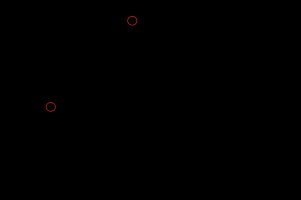
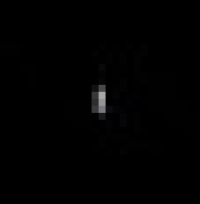
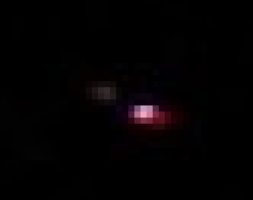
Hello everyone! I have recently spotted two small patches of "white pixels" on my R7, and have been wondering if accidental exposure to the sun could have caused that during a recent shoot where I walked around with my mounted Nifty Fifty at f/1.8 without a lens cap (and focusing continuously). During that time, the sun definitely entered the frame a few times, but wasn’t stationary for more than ~10 seconds, so I am unsure if that caused it.
By doing some research, I had hoped to find a comprehensive guide on where the "danger zone" begins and which configurations are safe, but could not find anything concrete. Thus, I am hoping that some more experienced photographers could share their experiences to determine in an empirical way what is safe and what isn’t.
From what I understand, there are two distinct scenarios that are dangerous:
It is my understanding (please correct me if I am wrong, though!) that the f-number and the duration of the exposure are the only relevant variables, with other things like focal length actually not (strongly) affecting the intensity of light at a single photosite (and instead mostly the total thermal load on the sensor).
Thus, I think it would be most useful to derive an approximation formula for maximum safe exposure time of a single photosite to the sun as a function of f-number ("N"). I created a simple prototype below:
t₀/N² < t_max(N²) < t₁/N²,
where t₀ is the largest reported time where you observed no sensor damage when using a lens of f-number "N", and t₁ is the smallest reported (by you, below!) time where you observed sensor damage when using a lens with f-number "N". t_max then is the f-number-dependent threshold exposure time, where sensor damage is starting to be expected.
As mentioned, I would like to derive upper time limits of what is safe and the lower time limits of when sensor damage can be expected (probably differing by a factor >2).
Therefore, I would like to ask YOU, if you ever photographed the sun without an ND filter for a certain amount of time and experience no damage, as well as if you ever photographed the sun and experienced sensor damage (with or without ND filter), to report the duration and f-number of the lens that you used, as well as approximate time and sun intensity/weather (all of which is conveniently stored within images if you didn't use ND filters). It is important to note that the camera must have remained steady for this shot for wide angle lenses (less important for telephoto lenses, because the sun covers a large area of the sensor!).
As this is essentially two formulas in one, not only those who damaged their sensors are asked to comment their exposure times, f-numbers and lighting conditions, but also everyone who pointed at the sun and DIDN'T damage their sensor. This will allow everyone reading this thread to get a feeling for what is generally safe, and what is generally destructive.
Based on this thread, we already have a first reported exposure duration of around 5 minutes that did not cause damage, although the f-number is missing. @Kit Lens Jockey if you are seeing this, do you by chance still have the picture and can report on the f-number and a rough approximation of the density of the solar-blocking filter on the window?
As discussed in the replies, this little project does not aim to produce exact threshold values. They will have a large uncertainty and may even be off by a factor of 2, 5, or even more. But it would be immensely helpful to have at least some rough guidelines, such as "When using f/1.8, it is safe to point your camera at the sun for 1-2 seconds" versus "[...] 10-20 seconds" versus "[...] 2-3 minutes". As in, understanding the rough order of magnitude, without having to go through a potentially very expensive trial-and-error experiment of "just risking it".
Thank you all for your help! Once some of you reported your experiences and concrete values, I will update this post to derive lower and upper limits (t₀ and t₁).
By doing some research, I had hoped to find a comprehensive guide on where the "danger zone" begins and which configurations are safe, but could not find anything concrete. Thus, I am hoping that some more experienced photographers could share their experiences to determine in an empirical way what is safe and what isn’t.
From what I understand, there are two distinct scenarios that are dangerous:
- Thermally overwhelming single photosites: Focusing the sun with a low focal length and wide open aperture onto single photosites (sun covers very small area on sensor), overheating and damaging them, causing them to permanently malfunction, while adjacent photosites remain (mostly) intact.
- Thermally overwhelming the sensor cooling capability: With a telephoto lens, project a larger image of the sun onto the sensor (lower intensity/photosite, but much more energy deposited on sensor overall), causing large portions of or the entire sensor to overheat, melt, and potentially cause a fire.
It is my understanding (please correct me if I am wrong, though!) that the f-number and the duration of the exposure are the only relevant variables, with other things like focal length actually not (strongly) affecting the intensity of light at a single photosite (and instead mostly the total thermal load on the sensor).
If I have a 200mm lens with f/1.8 compared to an 18mm lens with f/1.8, it is my understanding (based on this this formula) that the light intensity hitting each photosite is identical, only the image of the sun is much larger on the sensor in the former case (risking damage to many more photosites at the same time, and requiring larger turns of the camera to get the photosites out of the sun projection, and producing a much higher thermal load on the sensor as a whole). A wide-angle lens simply projects the same-intensity sun because of the same f-number, but onto much less photosites. This is correct, right?
I am aware that I am ignoring the fact that in case of telephoto lenses, there is a greatly reduced heat dissipation to neighboring photosites if they are also illuminated by the sun, since a whole section of the sensor then heats up as a whole. This may well introduce a (weak) dependence of the formula also on focal length, however, its impact should be lower (at most linear) compared to the f-number, which has a squared relationship according to this formula. For the sake of simplicity, I will thus ignore focal length.
ISO should not have any impact whatsoever, because it doesn't impact the intensity of light that shines onto the photosite.
I am aware that I am ignoring the fact that in case of telephoto lenses, there is a greatly reduced heat dissipation to neighboring photosites if they are also illuminated by the sun, since a whole section of the sensor then heats up as a whole. This may well introduce a (weak) dependence of the formula also on focal length, however, its impact should be lower (at most linear) compared to the f-number, which has a squared relationship according to this formula. For the sake of simplicity, I will thus ignore focal length.
ISO should not have any impact whatsoever, because it doesn't impact the intensity of light that shines onto the photosite.
Thus, I think it would be most useful to derive an approximation formula for maximum safe exposure time of a single photosite to the sun as a function of f-number ("N"). I created a simple prototype below:
t₀/N² < t_max(N²) < t₁/N²,
where t₀ is the largest reported time where you observed no sensor damage when using a lens of f-number "N", and t₁ is the smallest reported (by you, below!) time where you observed sensor damage when using a lens with f-number "N". t_max then is the f-number-dependent threshold exposure time, where sensor damage is starting to be expected.
As mentioned, I would like to derive upper time limits of what is safe and the lower time limits of when sensor damage can be expected (probably differing by a factor >2).
Therefore, I would like to ask YOU, if you ever photographed the sun without an ND filter for a certain amount of time and experience no damage, as well as if you ever photographed the sun and experienced sensor damage (with or without ND filter), to report the duration and f-number of the lens that you used, as well as approximate time and sun intensity/weather (all of which is conveniently stored within images if you didn't use ND filters). It is important to note that the camera must have remained steady for this shot for wide angle lenses (less important for telephoto lenses, because the sun covers a large area of the sensor!).
As this is essentially two formulas in one, not only those who damaged their sensors are asked to comment their exposure times, f-numbers and lighting conditions, but also everyone who pointed at the sun and DIDN'T damage their sensor. This will allow everyone reading this thread to get a feeling for what is generally safe, and what is generally destructive.
Based on this thread, we already have a first reported exposure duration of around 5 minutes that did not cause damage, although the f-number is missing. @Kit Lens Jockey if you are seeing this, do you by chance still have the picture and can report on the f-number and a rough approximation of the density of the solar-blocking filter on the window?
As discussed in the replies, this little project does not aim to produce exact threshold values. They will have a large uncertainty and may even be off by a factor of 2, 5, or even more. But it would be immensely helpful to have at least some rough guidelines, such as "When using f/1.8, it is safe to point your camera at the sun for 1-2 seconds" versus "[...] 10-20 seconds" versus "[...] 2-3 minutes". As in, understanding the rough order of magnitude, without having to go through a potentially very expensive trial-and-error experiment of "just risking it".
Thank you all for your help! Once some of you reported your experiences and concrete values, I will update this post to derive lower and upper limits (t₀ and t₁).
Last edited:


 . If a large number of people responded here, we would be able to see such trends emerging, and could draw some conclusions, although as mentioned, I expect the effect to be limited to maybe a factor of 2. But I think that trying to incorporate too many factors may also be the reason why such a rule of thumb has not been created yet, because it would simply require too large of a sample size to be conclusive and quantitatively evaluate the contribution and scaling relation of each variable. Moreover, many people may also feel uneasy sharing the exact time and date of the picture, as well as the location (in order to calculate the exact solar irradiance and obtain ground-level light intensity based on historical weather data etc.). So instead, I intend to keep it simple and focus on the main ones - as mentioned, f-number and exposure time.