24-70 f4 IS macro performance

eyeland

Daybreak broke me loose and brought me back...
Feb 28, 2012
152
0
6,121
Denmark/Isreal
I haven't really managed to find a reliable assessment of the 24-70 f4 IS macro performance.
I was looking into some of the cheaper options such as the 50mm 2.5 macro but it occurred to me that the 24-70 might be good enough for my macro hobby while also being very useful to me professionally as a replacement for my 24-105 (also, there is a 250$ cashback on the 24-70 in my country)
Anyone care to chime in with their experien, the ? Is the macro function on the 24-70 comparable to a dedicated macro lens? (I am aware of the very close focusing distance required to achieve x 0.7)
EDIT: After the mail-in rebate in DK, the 24-70 ends up at around 1100$
 
Yea, I read that one. Apart from
I'm not going to say that this lens is as sharp as the Canon 100mm L Macro Lens, but the Canon 24-70 f/4 L IS Lens' macro mode is very impressive. This lens could easily displace a macro lens in your pack - which in turn makes the size and weight difference of what you are carrying big.
he doesn't really say much about the macro mode.
I am specifically interested in how well this lens performs @ x0.5 magnification vs the 50mm 2.5 macro.
At the moment, I can't really justify the price of the 100mm 2.8L macro lens (which costs the same in DK)
 
Upvote 0
I have this lens and have played with this feature. It gets you very close. The only disadvantage of the macro mode is that you have to get very close to the subject, this means you either have to remove the hood to allow light to pass or add extra lighting as the camera and lens block out a lot of light. Overall, great lens! But wouldn't buy it primarily for the macro feature.
 
Upvote 0
eyeland said:
any idea of the working distance for 0.5 magnification?
To expand 0.5X in 70mm "normal" mode, the front element of the lens should be about 18cm from the object. On the other hand, to 0.7x magnification, on "macro" mode, the front element should stay approximately 1 cm of the object. But why the maximum magnification changes as little as 18cm to 1cm approach? It turns out that the focal length of each lens (70mm for example) is measured with the set focus to infinity. Unfortunately, when you set the focus to very close to the nominal distance 70mm will actually be something like 50mm. This explains the small difference in maximum magnification mode "macro". I do not recommend using this lens to photograph objects smaller than a chicken egg. Unable to fill the frame with an object the size of a coin of 10 cents on the dollar.
 
Upvote 0
@ ajfotofilmagem
Interesting
As I understand it, to achieve 0.5 magnification with the 50mm 2.5 compact macro, the focus distance will be 23cm. With my current budget limitations, selling my 24-105 to get the 24-70 will be cheaper than getting the 50mm 2.5 macro, and seeing as 18cm vs 23cm doesn't make much of a difference in terms of scaring off insects, that serves as one more argument in favor of the 24-70 (the 24-70 will be used for paid gigs whereas the macro use is mostly hobby related)
Anyone got a link to MFT for 24-70 in macro mode?
 
Upvote 0
eyeland said:
@ ajfotofilmagem
Interesting
As I understand it, to achieve 0.5 magnification with the 50mm 2.5 compact macro, the focus distance will be 23cm. With my current budget limitations, selling my 24-105 to get the 24-70 will be cheaper than getting the 50mm 2.5 macro, and seeing as 18cm vs 23cm doesn't make much of a difference in terms of scaring off insects, that serves as one more argument in favor of the 24-70 (the 24-70 will be used for paid gigs whereas the macro use is mostly hobby related)
Anyone got a link to MFT for 24-70 in macro mode?
Note that the lens manufacturers do not disclose the distance between the front element of the lens and the object. They disclose only the distance between the camera sensor (marked on the body with a circle crossed by a straight line) and the object.
In this respect, the 24-70 F4 (when macro mode) will be very close to the object to achieve maximum magnification.

A good alternative is to use prime lenses 50mm or 35mm, and a set of three extension tubes for approximately maximum magnification of 1X. If using extension tubes with electrical contacts, will keep running AF, Image Stabilizer, aperture control, etc..

The MTF chart are not measured in minimum focus distance, so can not show the true performance for use in macro.
 
Upvote 0
@[/size] ajfotofilmagem
[/size]Thanks for the advice
[/size]I am already using tubes and closeup filters, but I don't like the extra tension it puts on the mount. Atm I am using some old manual primes as well as my 24-105 on the tubes. I was just thinking that getting the 24-70 f4 might save me a bit of the hassle :)
 
Upvote 0
I have the lens and bought it for it's broader usefulness and that I'd have a macro of sorts on holidays. The too close focus aspect strikes me as having been over-blown. Outdoors I think it's fine but it doesn't compare with the amazing 100 and it's not really a serious macro.

In summary I don't regret this purchase (6D & 24-70 F4) at all.

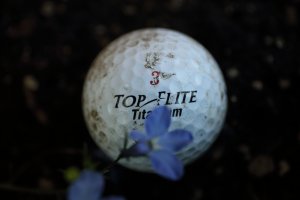
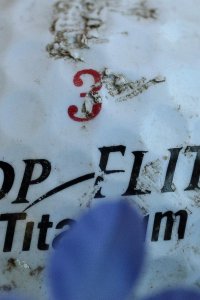
Here are some sample shots of something you can relate to that I just took, enlarged as much as possible.

Jack
 

Attachments

  • GBall_17171.JPG
    GBall_17171.JPG
    1.8 MB · Views: 406
  • GBallCrop_17171.JPG
    GBallCrop_17171.JPG
    201.5 KB · Views: 412
Upvote 0
I have this lens and I've enjoyed the macro mode. My observations:

  • First: it only delivers macro functionality at 70mm, it is not a 'zooming macro'.
  • I am not a pro, but from what I've read of professional macro shooters, shaping the light is delicate, scripted process that this lens would not support due to the limited working distance. So I only use this lens' macro mode for handheld walkaround work in great light.
  • Kai very very briefly spoke to macro use here (including a demonstration of the working distance): https://www.youtube.com/watch?v=A-q0JcUCwpw (see 7:14 to 7:35 or so)
  • Image Stabilization, as you might imagine, cannot remotely overcome the added DOF you need. So if you want an entire flower, bug, etc. in frame, you have to stop down to comical levels (like F/22) or focus stack with multiple shots. In either case, you should probably be on a tripod. (The working distance is so small that I think a macro flash would be difficult to use.)
  • Some folks really do want to stop down to comical levels with macro lenses. Both 1:1 100mm macros Canon sells stop down to F/32, whereas this 24-70 only stops down to f/22. This has not been a limitation for what I shoot.
That said, I enjoy this mode thoroughly for what this lens is made for -- the perfect travel/walkaround option. I slam this on my 5D3 and go explore things. In my travels, I may see something I want to get close to -- that's where this mode is great. My 100L macro stays at home (as I'd only use it for 1-2% of my travel shots) and I have more space in my bag. I also use this lens as my single lens for hiking, as it's got a very sharp wide end, is light/compact (for a zoom), and it's weather sealed. In that instance, I've got a great landscape lens and a serviceable macro all in one.

But make no doubt of it, a proper, purpose-built macro with 1:1 and a decent working distance will trump the 24-70's macro mode handily if you shoot macro often. My thinking is this -- if I need a tripod, a bulb sprayer and a reflector, I reach for the 100L.

If I just want to snap a flower as I'm walking around, I leave the 24-70 on, take the shot, and move.

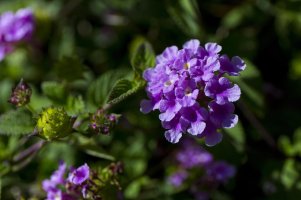
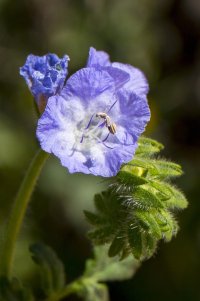
Shots below were taken with the 24-70 in macro mode.

- A
 

Attachments

  • _Y8A0973R 2000.jpg
    _Y8A0973R 2000.jpg
    206.1 KB · Views: 372
  • _Y8A4244Rc 2000.jpg
    _Y8A4244Rc 2000.jpg
    555.4 KB · Views: 389
  • _Y8A4086Rc2.jpg
    _Y8A4086Rc2.jpg
    232.8 KB · Views: 392
Upvote 0
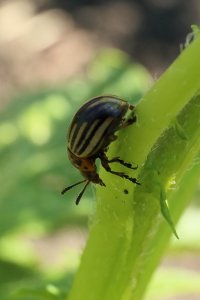
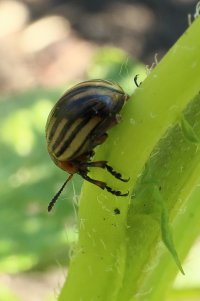
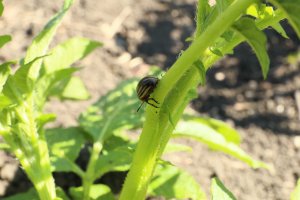
Data is included. Hope this helps and that you're familiar with this beetle that is about 3/8" or less in length. My use would tend to be walk around hand held on holidays and for that I think it's fine - very handy and quick.

Jack
 

Attachments

  • PotatoeB_Crop_17184.JPG
    PotatoeB_Crop_17184.JPG
    1.4 MB · Views: 416
  • PotatoeB_Crop_17190.JPG
    PotatoeB_Crop_17190.JPG
    1.2 MB · Views: 439
  • PotatoeB_17190.JPG
    PotatoeB_17190.JPG
    2.7 MB · Views: 388
Upvote 0
Thanks for all the advice. I think I will go for it as soon as I find a buyer for my 24-105 :)
the dedicated macro lens will have to wait for another day as I am afraid that the limited use it would see doesn't justify the cost. Btw, what would be the approximate working distance to get 0.7 magnification on the dedicated 100mm macros?
 
Upvote 0
eyeland said:
Thanks for all the advice. I think I will go for it as soon as I find a buyer for my 24-105 :)
the dedicated macro lens will have to wait for another day as I am afraid that the limited use it would see doesn't justify the cost. Btw, what would be the approximate working distance to get 0.7 magnification on the dedicated 100mm macros?
Canon 100mm F2.8 macro reaches 0.7X magnification with distance between the front element and the object, about 15cm. Comparing Canon 24-70 F4 reaches the same magnification, about 1 cm from the object.
 
Upvote 0
eyeland said:
Thanks for all the advice. I think I will go for it as soon as I find a buyer for my 24-105 :)
the dedicated macro lens will have to wait for another day as I am afraid that the limited use it would see doesn't justify the cost. Btw, what would be the approximate working distance to get 0.7 magnification on the dedicated 100mm macros?
A few comments:

  • The 24-70 F/4L IS is a clear winner over the 24-105 for sharpness and distortion, and it's comfortably better than the 24-70 F/2.8L Mark I. Only the 24-70 II is sharper, and for $2K+, it ought to be: http://www.lensrentals.com/blog/2013/01/canon-24-70-f4-is-resolution-tests

  • The 100L macro is not a dedicated macro lens so much as a fully featured macro lens. Dedicated implies that's all it does, like the 180L macro (AF too slow to do much else with it, maybe landscapes?) or the MP-E 65mm trombone 5x macro. The 100L macro is not such a lens... but I think that's a good thing. The 100L macro is a stellar prime for non-macro purposes -- the AF is quick and the sharpness is terrific. Sure, it's not an ultra-fast aperture, but you can nail some terrific shots with that lens (see CR's review here: http://www.canonrumors.com/reviews/review-canon-ef-100-f2-8l-is-macro/). I never shoot video, but I'd imagine the IS is pretty good for that as well.

- A
 
Upvote 0
You wouldn't want to shoot birds in flight with this combo, but I have had fine photos of perched or swimming birds with the 180L macro and 1.4x TCII. Yep, AF is s-l-o-w. That combination is fabulous for poisonous snakes - snake not worried (not engaging in threat display that gives it the customary name of "cottonmouth"), therefore human not worried. A 300mm f/4L IS with an extension tube might be even better. And the 180L is good for landscape, plant portraiture, etc. Lovely bokeh - you don't have to shoot macro at f/22, folks. I shoot at f/3.5 fairly frequently, to get that bokeh.
 
Upvote 0
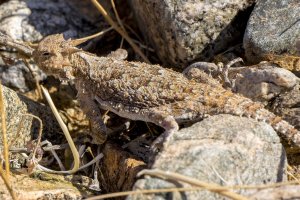
Meanwhile, here are some photos taken with my cheap and cheerful 50/2.5 compact macro
 

Attachments

  • IMG_7734.jpg
    IMG_7734.jpg
    104.9 KB · Views: 310
  • IMG_7740.jpg
    IMG_7740.jpg
    124.5 KB · Views: 284
  • IMG_7741.jpg
    IMG_7741.jpg
    168.2 KB · Views: 313
  • IMG_8021.jpg
    IMG_8021.jpg
    102.8 KB · Views: 316
  • IMG_8026.jpg
    IMG_8026.jpg
    114.2 KB · Views: 321
Upvote 0