APS-C 60mm or 100mm macro lens?

I'm in the same boat as you, but I do have the 60 macro. I really enjoy this lens, but late last year I purchased a FF camera and I'd like to have just one macro I can use on both cameras. I'll get the 100L when that time comes, but my 60 macro is on the "to sell" list. I would recommend you go for the EF lens.
 
Upvote 0
sulla said:
Definitely the 100. Gives you more working distance. Working distance can only be trumped by - more working distance.
+1

The longer working distance is fantastic for dealing with insects.... and the 100L is one of those rare lenses that seems to have gotten everything right and in balance.....
 
Upvote 0
I have the EFS60mm and I'm very pleased with it. Razor sharp from wide open, it also doubles as a useful portrait lens and the bokeh is beautifully creamy. 100mm on a crop camera is a little long for portraiture in my experience.

The EFS lens uses internal focussing so there is no external movement, dust is not going to get into the lens. Reviewers have commented that it lacks only a moisture seal on the mount and a red ring round the other end to qualify as an L - but Canon haven't designated any EFS lens as L, probably for marketing reasons.

It's true that working distance is important, particularly with jumpy subjects (grasshoppers?) and I once owned a Sigma 180mm f/2.8 APO macro lens which was wonderful. But it was FD mount and has long since gone the way of all things (ebay).

While it would be easy to recommend the 100L, as so many here have done, the choice you gave us was the EFS60 or the non-L 100. The EFS60 is a sharper lens, the 100 gives greater working distance. On a crop camera the 60 will take fine portraits, the 100 will be less useful in that role.

In terms of optical quality the 60mm is a true bargain, in my view the best justification of Canon's policy of designing lenses that only work on crop sensors. The same lens in an EF mount would be bigger, heavier, more expensive and/or optically poorer. Not all of Canon's EFS lenses are so easy to justify.
 
Upvote 0
I have used the EF-S 60mm, multiple copies of the EF 100mm USM and EF 100mm L. They're all great lenses.

Any distinction between the 3 lenses based on sharpness makes little sense, they're all sharp, very sharp, and have good contrast & generally smooth bokeh. Particularly the difference in sharpness between the 60mm and 100mm USM is at a hyper-pixel peeping level … plus don’t forget lens to lens variation. The L on average is a smidge sharper… but I challenge people to find meaningful difference between all 3 lenses. (Too many pixel peepers, too few photographers!) #rantover

In the end I went for the 100mm USM (non L) –… and I got a good copy. Biggest bonuses / pros of the 100mm USM for me over the EF-S:
- Longer working distance (for both insects, and often helps with less problems with 'shadows'
- FF compatible (if upgrading to FF from APS-C)
- it can often be bought on sale here in Australia for good prices (significantly cheaper than the 100mm L, and often less expensive than the EF-S 60mm).
-
For some outdoor portraits, I really like 100mm length for outdoor portraits (and for indoor / general portraits, I most often use focal lengths of between 40mm and 85mm)… As I have had 50mm primes, another prime at 60mm is too close.

Hybrid IS helps for 3:1 and less so at 2:1 distances, but does little at 1:1 working distance handheld. At 1:1 the slightest sway (even when breathing, or trying to hold still, holding one’s breath in) – will render an out of focus (OOF) outcome. That’s why for true 1:1 macro photos, I recommend using a tripod (or other sturdy base on which to place the camera). Not to say I haven’t taken 1:1 macro photos handheld… I have… with my 100mm L and often get good results.

Yes, I’m still waiting for a new Canon 50 – 55mm prime, with great optics, USM and IS…. Please pretty please.

Anyway… hope you’ll do well in your decision of what macro lens to get, and enjoy taking photos!

 
Upvote 0
Well, its a really hard decision. The 100mmL im very interested in too and it would be the perfect starting lense with a new FF body. But its like double the price than the non-L. And im still not really sure if the cash is worth the L features since IS on a macro lense is not too useful imho since i like to go as close as i can. And i dont use macro lenses for anything else than macro shots. Snapshots okay sometimes but nothing that matters.
I think ill probably go for the 60mm and work the hell out of it and if i go FF ill buy the 100L. Still...there arent many other cases where lenses are this equal haha.

p.s.

i mostly go for spiders. theyre quite small so magnification is important. more than for like...frogs or such

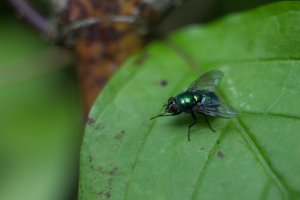
the picture is about the closes i can go with my old 35mm 2.8 m42 lens. its not even called a macro lens i think.
important for me that i can go closer than this! cropping is not so nice on my 1100D...
 

Attachments

  • IMG_2046.jpg
    IMG_2046.jpg
    349.6 KB · Views: 223
Upvote 0
sandymandy said:
Well, its a really hard decision. The 100mmL im very interested in too and it would be the perfect starting lense with a new FF body. But its like double the price than the non-L. And im still not really sure if the cash is worth the L features since IS on a macro lense is not too useful imho since i like to go as close as i can. And i dont use macro lenses for anything else than macro shots. Snapshots okay sometimes but nothing that matters.
I think ill probably go for the 60mm and work the hell out of it and if i go FF ill buy the 100L. Still...there arent many other cases where lenses are this equal haha.

p.s.

i mostly go for spiders. theyre quite small so magnification is important. more than for like...frogs or such

the picture is about the closes i can go with my old 35mm 2.8 m42 lens. its not even called a macro lens i think.
important for me that i can go closer than this! cropping is not so nice on my 1100D...

Using that reasoning the most important difference between the three lenses is working distance. 60mm is 3.5" very short for live bugs, the 100L is 5.9", the 100 non L is 6.0". Personally I got the L, for me the differences are worth the money, the build, sealing, modern coatings, smoother aperture add up to a comfortably better package than the non L, throw in the IS, however regularly you use it, or not, and the L is a it of a bargain.

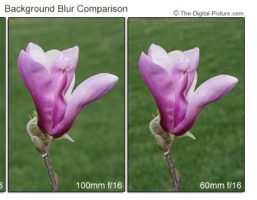
The other huge difference between the 60 and the 100 focal lengths is the background blur at same apertures, look at the difference below between a 60 Macro and the 100L Macro at the same magnification, framing and aperture, I prefer the considerably more blurred 100 but others might not. Link here http://www.the-digital-picture.com/Reviews/Canon-EF-100mm-f-2.8-L-IS-USM-Macro-Lens-Review.aspx
 

Attachments

  • Screen Shot 2015-02-22 at 8.42.06 PM.png
    Screen Shot 2015-02-22 at 8.42.06 PM.png
    221.1 KB · Views: 802
Upvote 0
I'm making the same choice currently and have about 90% decided to go with the EF-S 60. For me, I've tried to put a cap on the number of lenses I own, otherwise I know it will get a little out of hand. I want to expand my photography so I need to compromise somewhere. I already have 35, 50, and 135 primes (not willing to give up 135) so the 60 is the best fit by selling the 50. I find most of my 50 shots are stopped down some any way, so I'm not giving up much and actually getting a better spread plus gaining macro. It just might be the first practical choice I've made since I bought a DSLR.

Take everything I said with a grain of salt, in the last two months I've bought two lenses, I'm watching a couple 60 macros on Ebay, and will soon be pulling the trigger on the new 100-400 and haven't actually sold anything yet. Don't tell my wife! I do have the best of intentions though. ;)
 
Upvote 0
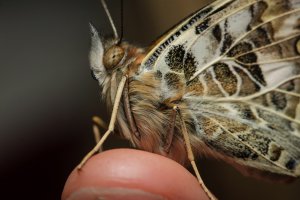
Yes, working distance with an insect,or arachnid, will be tricky with the 60 macro, but it can be done. Sometimes you get a subject that is well behaved like the one below (which was taken with a 60 macro).
 

Attachments

  • Painted Lady Portrait-1CR.jpg
    Painted Lady Portrait-1CR.jpg
    680 KB · Views: 184
Upvote 0
privatebydesign said:
The other huge difference between the 60 and the 100 focal lengths is the background blur at same apertures, look at the difference below between a 60 Macro and the 100L Macro at the same magnification, framing and aperture, I prefer the considerably more blurred 100 but others might not.

Fair enough, but this isn't a good sample for macro - it's a closeup-ish flowery shot that probably is just in macro distance, I dunno how large the plant actually is. For actual near 1:1 macro, I guess the background would be plenty blurry with a 60mm, too. Last not least, I'd simply focus-stack such a flower = total background blur and max. sharpness.

I have no idea how big the dof difference is for the same framing 100mm vs 60mm on crop. But it's important because with anything that moves and you cannot focus stack, your primary concern is not to get a pleasant bokeh but to somehow manage enough dof to get anything into focus at all.

That's even if a butterfly is sitting right angle to the lens any you might think dof shouldn't be a problem, but it usually is below diffraction f-stops...

wsmith96 said:
Yes, working distance with an insect,or arachnid, will be tricky with the 60 macro, but it can be done. Sometimes you get a subject that is well behaved like the one below (which was taken with a 60 macro).

... the sample shot just above is a good demonstration: the fur near the camera is in focus, the eye just barely and the head is already clearly out of focus even for web size, never mind the wings.

Btw in my experience the working distance isn't so important for butterflies, either they decide to flee very early on or sit still unless you bump 'em with the lens. It's more about getting your own lens into the way of the ambient light or flash(es) that makes the difference with longer focal lengths.
 
Upvote 0
sagittariansrock said:
I am not sure I can see any benefit of getting the 60mm except for slower minimum shutter speed required. The DoF advantage of a wider FL vanishes due to a shorter working distance, I believe (please check DoFmaster).
Advantages of the 100mm on the other hand:
1. Greater working distance- always useful.
2. Compression will allow a smaller part of the background to be visible, and look less busy
(see the comparison between 60, 100 and 180mm in http://www.the-digital-picture.com/Reviews/Canon-EF-180mm-f-3.5-L-USM-Macro-Lens-Review.aspx)
3. No worries if and when you move to FF.
Given your intention to hand hold, I think 100L might be worth saving up for. I believe most people won't be repulsed by a smoother bokeh than the non-L, and will be able to hand hold it reasonably well at 1:1 (I was, and I am no great shakes at steady handholding).
I went for the 100 for the above reasons. I got the non -L to save money. I like using my lightweight Gitzo tripod.
 
Upvote 0
I do not understand the argument with the long reach. When it is about a crop-Camera, then the EF-S 60 gives 100mm-FF-Äquivalent, same Focal lenght as the 100 USM or 100L on a FF-Camera. When you want to have realy long reach, then use a Tele-Lens.

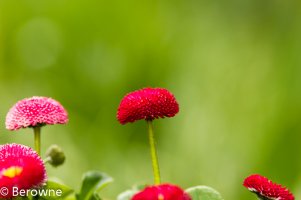
550D; EF 200/2.8; ISO 200; f2.8; 1/1000sec.
 

Attachments

  • _MG_7802.jpg
    _MG_7802.jpg
    287.3 KB · Views: 246
Upvote 0
Marsu42 said:
... the sample shot just above is a good demonstration: the fur near the camera is in focus, the eye just barely and the head is already clearly out of focus even for web size, never mind the wings.

Btw in my experience the working distance isn't so important for butterflies, either they decide to flee very early on or sit still unless you bump 'em with the lens. It's more about getting your own lens into the way of the ambient light or flash(es) that makes the difference with longer focal lengths.

Agreed - this shot was taken with the aperture wide open and the light source was troublesome in relation to the position of the lens.
 
Upvote 0
Berowne said:
When you want to have realy long reach, then use a Tele-Lens.

But a tele-lens (next to worse iq than a macro) needs way higher shutter speed as you're so far away from the subject, and you completely lose af precision when shooting with a thin dof. I have some nice "environmental" butterfly shots with my 70-300L on a 60d, but you never, ever get near that kind of magnification even on mfd.

wsmith96 said:
Agreed - this shot was taken with the aperture wide open and the light source was troublesome in relation to the position of the lens.

The nice thing about macro shooting is that you really learn to develop a sense for details - you don't see "oh, a butterfly!" anymore but know the whole animal front to back. And the behavior, if you try to crawl up on it.

The problem with shooting live animals (and we don't kill 'em for focus stacking, do we?) is that if you want to have a lot in focus this leaves you with exactly one position - right angle to the lens. With everything else, the dof is too thin to get even one eye into focus, let alone the whole head so I feel this always has a "out of focus" look to it. Ymmv.
 
Upvote 0
Marsu42 said:
Berowne said:
When you want to have realy long reach, then use a Tele-Lens.

But a tele-lens (next to worse iq than a macro) needs way higher shutter speed as you're so far away from the subject, and you completely lose af precision when shooting with a thin dof. I have some nice "environmental" butterfly shots with my 70-300L on a 60d, but you never, ever get near that kind of magnification even on mfd.

Yes, but shooting the butterfly with the 200 on APS-C is funny!
 

Attachments

  • _MG_6530.jpg
    _MG_6530.jpg
    279.7 KB · Views: 224
  • _MG_6534.jpg
    _MG_6534.jpg
    308 KB · Views: 218
  • IMG_6544.jpg
    IMG_6544.jpg
    325.1 KB · Views: 220
Upvote 0
What are you shooting, how are you lighting it, and are you likely to use the lens for studio copy work?

Shy critter - telephoto macro. Studio copy work at lower magnification 1:4 to 1:2 - normal or short telephoto macro. Natural light only - telephoto macro. Natural and flash - any focal length.

Are you likely to use the lens for non-macro applications?

You can't go wrong. All the Canon macro lenses are very good. I have used EF-S 60 for a long time. I do a fair amount of studio work at 1:4 up to 1:1, and I have lighting, so the 60 allows me to work without standing on a ladder all the time.
 
Upvote 0
Berowne said:
Yes, but shooting the butterfly with the 200 on APS-C is funny!

Sure, I guess a lot of people buying macro lenses start off like that, shoot away and add a watermark. A tele lens can produce nice shots for web-size, but if you encounter really nice scenes you begin to wonder why you cannot make more of it - and with a tele-lens even with as little mfd as the 70-300L, you can only get so much magnification.
 
Upvote 0
I like the 100 mm Canon non-L. It is a fine lens. For lots of purposes, it will do better than the shorter lens. It is especially good for insects, small jewelry and flowers.
However, there are times when a shorter lens might be more useful, especially for copy work. A shorter lens gives you more versatility, and is certainly easier to hold at slower shutter speeds. I also have the Sigma 50F2.8 macro, and like it for trips to the gardens, flowers, close-ups of larger objects and portraits.
Lighting can be a problem with short working distances, as others have pointed out. If you think you may go full frame, then avoid crop lenses. There is no one correct answer here, as it all depends on what you want to photograph.
I like SLRs because you can pick the focal length and max aperture to suit your needs.
 
Upvote 0
I wouldn't shy away from the 60 just because it is a crop lens. If you think you are going FF in a year or two, just buy used. Looking at completed listings on Ebay the used copies all sell at a very similar price point. You'd just be borrowing the lens for a year. You will lose a bigger percentage on the 60 if you buy new, at least in Canada. I find the used 60 sells for 250-300 below new retail (plus tax savings), but the 100L only saves you about 150-200 off retail (sorry, I wasn't looking at prices for the non L to compare).
 
Upvote 0