
You are using an out of date browser. It may not display this or other websites correctly.
You should upgrade or use an alternative browser.
You should upgrade or use an alternative browser.
APS-C 60mm or 100mm macro lens?
- Thread starter sandymandy
- Start date

I also suggest a 100 mm lens. Even with crop factor, 50/60 mm is on the short side. Given that IS is useless at 1:1, and that AF is also useless at close focus, consider the Zeiss Makroplanar 100 mm f/2.0 ZE. Image quality is WAY superior to Canon [Although I have a Canon 180MacroL, it is a lens of last resort because of lateral color issues]. The one downside is, that the Zeiss only goes to 1:2, for 1:1 you use extension tubes. On the upside, you get f/2.0, so a bright screen.
I've used a lot of macros over the years. OM 50 & 80 mm, Nikon 105, Pentax 100, Zeiss 100 C/Y & ZE, Canon 180 and MPE 65, Schneider 180Apo (on 4x5). The Zeisses are in a class of their own. The Zeiss 100 Makroplanar is my main workhorse lens for nature/natural history.
I've used a lot of macros over the years. OM 50 & 80 mm, Nikon 105, Pentax 100, Zeiss 100 C/Y & ZE, Canon 180 and MPE 65, Schneider 180Apo (on 4x5). The Zeisses are in a class of their own. The Zeiss 100 Makroplanar is my main workhorse lens for nature/natural history.
Upvote
0

Zeidora said:Given that IS is useless at 1:1
... agreed (though others don't) ...
Zeidora said:and that AF is also useless at close focus.
... but I definitely agree here. Sure enough the keeper rate is very low with a very thin dof, but for example with shooting butterfly macros (i.e. really near or at 1:1) doing ~5 quick attempts to nail the focus it usually works.
I have no idea how I'd do that with manual focus because if you're in the real outdoors lying on the ground with a live animal, it's about speed. Esp. with the very small viewfinder of a crop camera, mf would be really tricky.
Upvote
0
Marsu42 said:Zeidora said:Given that IS is useless at 1:1
... agreed (though others don't) ...
Zeidora said:and that AF is also useless at close focus.
... but I definitely agree here. Sure enough the keeper rate is very low with a very thin dof, but for example with shooting butterfly macros (i.e. really near or at 1:1) doing ~5 quick attempts to nail the focus it usually works.
I have no idea how I'd do that with manual focus because if you're in the real outdoors lying on the ground with a live animal, it's about speed. Esp. with the very small viewfinder of a crop camera, mf would be really tricky.
Very simple. Keep focus = magnification fixed, move camera to/from subject, look at ground glass, shoot, shoot, shoot. If you know that AF is off, you are forced to look at viewfinder and make decisions. Keeper rate is low at any rate, but these days, no problem.
Also consider that the MPE 65 is MF only, so somehow it must be possible to do macro with MF lens. Just did a Cyclosa spider last week. Then flash is of the essence (MT 24 EX).
Upvote
0
Zeidora said:look at ground glass
You're right, this is an alternative, I nearly forgot about it. I use it to shoot macros of frog eyes as the dof is so tiny the af will never work. Imho it really depends on the vf size, for example I find it easier with my 6d than 60d. And for anything with less magnification, arguably af works better the larger the distance gets.
Another drawback of the fixed focus approach that you have to move the camera back and forth, this can be a problem if you're lying in the ground or standing waist-high in water and would rather keep a stable position
 .
.
Upvote
0
Marsu42 said:Zeidora said:look at ground glass
You're right, this is an alternative, I nearly forgot about it. I use it to shoot macros of frog eyes as the dof is so tiny the af will never work. Imho it really depends on the vf size, for example I find it easier with my 6d than 60d. And for anything with less magnification, arguably af works better the larger the distance gets.
Another drawback of the fixed focus approach that you have to move the camera back and forth, this can be a problem if you're lying in the ground or standing waist-high in water and would rather keep a stable position
"Movement" to get focus is on the order of a few millimeters, maybe a cm back and forth. No problem standing in water or lying on the ground. If you think about scaring animals off with movement, I'd be more concerned with rapid movement of lens parts under AF, than slow and controlled body/camera movement. I wouldn't do it on a tight rope, but then there are other reasons for not doing macro on a high wire

Upvote
0

I'll not argue with the technical differences between 60mm EFS, 100mm USM, 100mm L USM IS. I had used the non-L 100 only both on my 6D and 500D. The only advice I'll give you is to invest in a good macro lighting equipment as it is arguably more useful for macro shots. Rarely I've used a tripod because it's very hard to tell insects to stay put. Another thing is to perfect your breathing techniques when taking macro shots. Please find below some shots taking with my 100mm USM. Some are taken wide-open. Holding your breath while taking a shot is very important to keep your hands steady. I guess that's what we call human IS.


Upvote
0

I have the 50 compact macro and the 100L macro that I use on a 40D. I would certainly recommend the 60 over the ancient 50 macro, although optically it is excellent and cheap.
I use the 100L for about 95% of my macro photography. My favorite subjects are reptiles and amphibians so the extra working distance of the 100L is helpful. Essential when photographing rattlesnakes. I generally use Canon's twin macro flash. However the camera makes a great telephoto because of the IS. Extremely sharp photos are possible handheld at about 1/30 second. In addition, the narrow angle of view along with more of a background blur is noticeably better than using a shorter length lens. So if price is within range, I would highly recommend the 100L over the 60 macro. That said, the 60 is an extremely sharp lens and you would not go wrong with that lens. You could always buy a used 50 and see how that works. Recently, just for the heck of it, I've experimented using the 50 with the twin flash and notice a little bit of a shadow around the subject which makes the image 'pop' better, no doubt because I am closer to the subject and the flashes are at more of an angle.
So, if the 100L is more affordable, you would not only have an excellent macro lens, but an excellent telephoto more portable because you can get away without using a tripod. Tripods are highly desirable for macro work when they are practical to use. That depends on your type of photography. For someone like myself that logs miles on the mountains looking for subjects, a tripod would be a handicap most of the time and the subject would be gone by the time I set one up. There would be no way I would consider the 100 non-IS since the IS is that useful. A lot of people will say you do not need IS on a macro lens. My thought are...it is not an absolute necessity, but it is highly desirable.
I use the 100L for about 95% of my macro photography. My favorite subjects are reptiles and amphibians so the extra working distance of the 100L is helpful. Essential when photographing rattlesnakes. I generally use Canon's twin macro flash. However the camera makes a great telephoto because of the IS. Extremely sharp photos are possible handheld at about 1/30 second. In addition, the narrow angle of view along with more of a background blur is noticeably better than using a shorter length lens. So if price is within range, I would highly recommend the 100L over the 60 macro. That said, the 60 is an extremely sharp lens and you would not go wrong with that lens. You could always buy a used 50 and see how that works. Recently, just for the heck of it, I've experimented using the 50 with the twin flash and notice a little bit of a shadow around the subject which makes the image 'pop' better, no doubt because I am closer to the subject and the flashes are at more of an angle.
So, if the 100L is more affordable, you would not only have an excellent macro lens, but an excellent telephoto more portable because you can get away without using a tripod. Tripods are highly desirable for macro work when they are practical to use. That depends on your type of photography. For someone like myself that logs miles on the mountains looking for subjects, a tripod would be a handicap most of the time and the subject would be gone by the time I set one up. There would be no way I would consider the 100 non-IS since the IS is that useful. A lot of people will say you do not need IS on a macro lens. My thought are...it is not an absolute necessity, but it is highly desirable.
Attachments
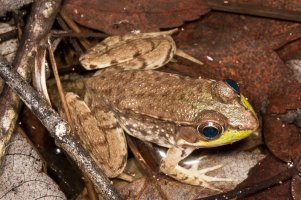
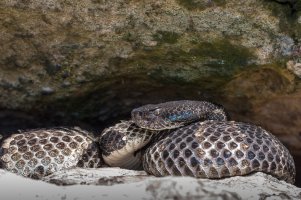
Upvote
0

With the 100mm you will benefit from longer working distance. Non-L 100mm and 60mm macros perform almost identical in terms of IQ and sharpness. 100L is way better hands down and sigma 105mm is an option I invite you to consider as it delivers excellent IQ and sharpness and it's just little more expensive than the non-L 100mm macro, AND very importantly it has OS (image stabilization)sandymandy said:Hi,
im not sure if to buy the ef-s 60mm for my APS-C or the EF 100mm.
pro thing would be that i could use the 100mm on a FF camera too. contra perhaps that 100mm on APS-C is really shaky. but i wanna use a monopod anyway.
price wise they are not so much different. so which one should i go for? thought im gonna go with the YN 14 EX flash. original canon flashes are like extremly expensive for macro shooting...
Upvote
0
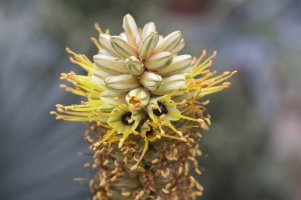
Taken with a Sigma 70mm f/2.8 macro, handheld at f/8, not 1:1.
This lens is out of production (new) for the Canon EOS mount.
It extends while it is focusing, does not have a USM (so, it is noisy when focusing but still is quick) or OS (stabilisation) and it will not manually focus unless the switch is set to MF (the focus ring is locked and will not turn by hand in AF mode).
That said, it seems to work rather well and it can be had used for a relatively small amount of money.
The extending design may be an advantage over some non-extending macro lenses if this Sigma does not "lose mm's" in macro mode.
This lens is out of production (new) for the Canon EOS mount.
It extends while it is focusing, does not have a USM (so, it is noisy when focusing but still is quick) or OS (stabilisation) and it will not manually focus unless the switch is set to MF (the focus ring is locked and will not turn by hand in AF mode).
That said, it seems to work rather well and it can be had used for a relatively small amount of money.
The extending design may be an advantage over some non-extending macro lenses if this Sigma does not "lose mm's" in macro mode.
Attachments
Upvote
0
Zeidora, you have quite the lens collection there. You are a little hard on the EF 180 f/3.5L macro - a little lens correction helps - the function of a longer telephoto macro is to deal with shy live subjects. In what way is the Zeiss 100 image quality better than the Canon 100L macro image quality? I have thought about getting a mid-length macro, and my macro focusing is manual (focus ring, moving stage, or "LordV method").
"LordV method": hold the camera and at the same time with the same hand hold a more-or-less vertically placed thin or medium-sized "stick" (hiking pole, even a collapsible fishing rod holder) either against the camera body or by hooking your little finger onto the stick. You now have a pivot point and can rock forward or back to get fine focus, using minor wrist action to adjust framing. I may try the string technique too - string attaches to the 1/4" tripod hole in the bottom of the camera, stand on string, pull upward. Our local botanical garden does not allow tripods or even purpose-built monopods in indoor spaces - worried about liability of people falling over the tripod, and the tripod obstructing traffic in a narrow space. The collapsible fishing rod holder fits inside my camera bag, and of course the string would fit in my pocket.
"LordV method": hold the camera and at the same time with the same hand hold a more-or-less vertically placed thin or medium-sized "stick" (hiking pole, even a collapsible fishing rod holder) either against the camera body or by hooking your little finger onto the stick. You now have a pivot point and can rock forward or back to get fine focus, using minor wrist action to adjust framing. I may try the string technique too - string attaches to the 1/4" tripod hole in the bottom of the camera, stand on string, pull upward. Our local botanical garden does not allow tripods or even purpose-built monopods in indoor spaces - worried about liability of people falling over the tripod, and the tripod obstructing traffic in a narrow space. The collapsible fishing rod holder fits inside my camera bag, and of course the string would fit in my pocket.
Upvote
0
NancyP said:by hooking your little finger onto the stick.
I'd love to the a picture of *that* :->
NancyP said:I may try the string technique too - string attaches to the 1/4" tripod hole in the bottom of the camera, stand on string, pull upward.
This one is rather ingenious as the equipment needs zero packing space. I wonder how many stops this axes off the shutter on average vs controlled breathing alone?
Upvote
0

A macro lens is one I would seriously consider buying pre-owned because so many seem to get very little use before they are unloaded. It seems like every one I see on Craigslist is a case of "I really thought I would use this thing, but I shot it 4 times then put it away for 3 years....".
Upvote
0

NancyP said:The question is, can I set up one camera with radio remote release to photograph me using the stick or string technique? I may have to push the radio remote with my toe...
If you have some RT flash system gear then yes, easily. I have set up my 1Ds MkIII and 600EX so it triggers my EOS-M whenever I take a shot with the 1Ds MkIII, the flashes only sync to the main camera but the triggering works great, the M will AF and either auto expose or shoot at whatever manual settings were set in it.
The mode is called Linked Shot, and is good fun.
Upvote
0

i imagine handholding a 60mm on APS-C is quite hard already. not sure if 100mm is possible for getting an okay rate of in focus shots. chep good monopod recommendations? im afraid tripod will be too annoying to carry around for me since it feels so big (the one i got now is a cheap, light one) and im a slim person too. but some kind of stability would be good...
i know there are really tiny tripods out their or this gorilla (?) things. are they useful or just gimmicks...
i know there are really tiny tripods out their or this gorilla (?) things. are they useful or just gimmicks...
Upvote
0
sandymandy said:i imagine handholding a 60mm on APS-C is quite hard already. not sure if 100mm is possible for getting an okay rate of in focus shots. chep good monopod recommendations? im afraid tripod will be too annoying to carry around for me since it feels so big (the one i got now is a cheap, light one) and im a slim person too. but some kind of stability would be good...
i know there are really tiny tripods out their or this gorilla (?) things. are they useful or just gimmicks...
I think you are overthinking it.
Handholding the 60mm is not an issue.
There are many levels of macro photgraphy. There are many excellent images done with a minimal investment in equipment just as there are many excellent images done with a large investment in equipment.
Is a tripod useful? Yes. Will you want to bring it out every time (don't forget the remote shutter release)? Probably not. After you get the tripod, then you need some sort of tripod head and I can tell you that making adjustments for macro pictures with a ball head is a pain.
A monopod is quite useful for that extra little bit of stability and it can be adjusted for height quickly.
There are many threads about tripods, monopods and heads... so spend some time searching here and elsewhere. It is quite uncommon to get "cheap and good" in the same product.
One thing that the 100L macro has over the non-L 100 or the EF-S 60 is a lens collar. That lens collar allows you to rotate the camera. That is a big help compared to attaching the tripod to the single screw on the bottom of the camera. Of note, the OEM Canon lens collar does NOT come with the lens and it is rather expensive for what it is- 3rd party versions are available. There is no way to attach a lens collar to the non-L 100 or EF-S 60. The 100L also has image stabilization tailored for macro shooting, which can help with handheld shots if you can't keep the shutter speed with the 100L at 1/200s or better on the APS-C sensor.
Once you decide to get a tripod or monopod, you will see the added utility in Arca-Swiss style camera plates, camera L plates and lens plates.
If you haven't spent time checking out the "Post Your Setup" or "Shooting with Tubes" threads in the "Macro World" forum over at Fred Miranda, it is well worth the visit.
Upvote
0
NancyP said:Zeidora, you have quite the lens collection there. You are a little hard on the EF 180 f/3.5L macro - a little lens correction helps - the function of a longer telephoto macro is to deal with shy live subjects. In what way is the Zeiss 100 image quality better than the Canon 100L macro image quality? I have thought about getting a mid-length macro, and my macro focusing is manual (focus ring, moving stage, or "LordV method").
"LordV method": hold the camera and at the same time with the same hand hold a more-or-less vertically placed thin or medium-sized "stick" (hiking pole, even a collapsible fishing rod holder) either against the camera body or by hooking your little finger onto the stick. You now have a pivot point and can rock forward or back to get fine focus, using minor wrist action to adjust framing. I may try the string technique too - string attaches to the 1/4" tripod hole in the bottom of the camera, stand on string, pull upward. Our local botanical garden does not allow tripods or even purpose-built monopods in indoor spaces - worried about liability of people falling over the tripod, and the tripod obstructing traffic in a narrow space. The collapsible fishing rod holder fits inside my camera bag, and of course the string would fit in my pocket.
Hi Nancy,
You are right, I like my glass. I do understand the purpose of the 180 to bridge longer distances, and that is why I got it. Where I need even more distance, I use a 300/2.8 IS with extension rings.
I try to attach a couple of images (first time attempt, so will see).
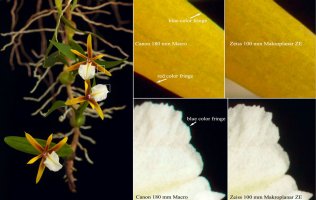
First is an image of an orchid (Diena polybulbon), same framing (more or less) with details blown up to show distinct lateral color in 180 macro, while the Zeiss has zero. The two blow up areas are highlighted with some squares on the main picture. Note, that the highlighted areas are by far not in the corner, so corner LC will be much more pronounced. Some here may consider the LC as negligible, but I want to show that there are lenses free of those defects. This was shot on a 5dmkii, so the effect will also be more pronounced on bodies with smaller pixels; I have a 5dsr on order.
I have not used the Canon 100 macro, so cannot comment on it. However, I have not seen any reviews that suggest it is on par with the Zeiss. Whenever I have compared Zeiss vs. others, Zeiss has come out on top. Zeiss vs. Leica stereomicroscopes, Zeiss vs. Swarovski birding binoculars, Zeiss vs. Hitachi/JEOL scanning electron microscopes. If you have a chance, try the Zeiss. It costs about the same as the Canon 180 macro.
My focusing is also manual (duh), also use focusing stages (manual and motorized Stackshot). In zoos etc. where I cannot use a tripod, I have used flashes. If you hold a rubber hood agains the glass, you can eliminate reflections. Some places don't like flashes either. Haven't done that in a while, rather go outside and shoot in the wild.
I have had 50 macros before, but then quickly "graduated" to the longer ones. First OM 90, then Nikkor 105, Pentax 100 (for underwater), Zeiss 100 CY, now Zeiss 100 ZE. For botanical work, I very much prefer the longer focal length as you can frame more freely and are less prone of introducing shadows with your gear/body. If you want the plant-in-environment shot, then rather go with WA. I used the 21 for that quite a bit, but that was occasionally too wide, so recently got the 24/2 and like it quite a bit for that. May workhorse lens is the 100 mm MP.
I have not used stick or string. I rather brace myself against wall, arms against chest. Or just enjoy without pictures. Last but not least, if you are really into it, contact the place before hand, and offer to make the images available. Some may then let you set up a tripod in off-peak periods. I work at a museum, and although I don't think we had such a request, I think we could find common grounds.
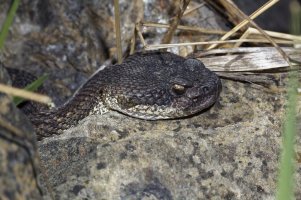
Second is a shot of a rattler (Crotalus oregonensis) in the wild chaparral with 300/2.8 IS @ f/13 1/60s MF and extension ring, a 4' reflector brightening up the shadow on the rock. I don't see rattlers that often; I don't like the grass over the head, but was not about to remove it. The shot just gives an idea that this works pretty well.
Enjoy your botanical shooting.
Attachments
Upvote
0
Zeidora said:I have not used the Canon 100 macro, so cannot comment on it. However, I have not seen any reviews that suggest it is on par with the Zeiss. Whenever I have compared Zeiss vs. others, Zeiss has come out on top. Zeiss vs. Leica stereomicroscopes, Zeiss vs. Swarovski birding binoculars, Zeiss vs. Hitachi/JEOL scanning electron microscopes. If you have a chance, try the Zeiss. It costs about the same as the Canon 180 macro.
My focusing is also manual (duh), also use focusing stages (manual and motorized Stackshot). In zoos etc. where I cannot use a tripod, I have used flashes. If you hold a rubber hood agains the glass, you can eliminate reflections. Some places don't like flashes either. Haven't done that in a while, rather go outside and shoot in the wild.
Nancy-
For manual focusing, I'd thow out a suggestion for trying the Mamiya 645 120mm f/4 macro "version A" (there is a later version that works with the AF models of Mamiya cameras and it costs more- not the one you want).
With a relatively inexpensive Fotodiox adapter, you can have focus confirmation.
Because this lens is designed for medium format, you have no viginetting wide open.
This is also a true manual focus lens with about 270 degrees of rotation on the focus ring, maybe a little more. This compares favorably with the Zeiss and far exceeds the manual focus range obtained while using a Canon EF lens in Manual mode. I have tried using Canon EF lenses in Manual mode and fail miserably but I can use lenses that are truly manual focus- there is a big difference.
This Mamiya lens also does 1:1 (life size) where the 100mm Zeiss does 2:1 (1/2 of life size).
There are numerous favorable reviews of this Mamiya lens out there on the web.
The Zeiss is f/2 and the Mamiya is f/4. The bokeh from the Mamiya is very, very good and you get an extra 20mm plus the 1:1 ratio.
The other significant difference is cost. The Mamiya in excellent condition and the adapter can be had for less than 1/2 of new Zeiss lens cost. Truly a bargain for the performance.
Upvote
0
danski0224 said:For manual focusing, I'd thow out a suggestion for trying the Mamiya 645 120mm f/4 macro "version A" (there is a later version that works with the AF models of Mamiya cameras and it costs more- not the one you want).
With a relatively inexpensive Fotodiox adapter, you can have focus confirmation.
Because this lens is designed for medium format, you have no viginetting wide open.
This is also a true manual focus lens with about 270 degrees of rotation on the focus ring, maybe a little more. This compares favorably with the Zeiss and far exceeds the manual focus range obtained while using a Canon EF lens in Manual mode. I have tried using Canon EF lenses in Manual mode and fail miserably but I can use lenses that are truly manual focus- there is a big difference.
This Mamiya lens also does 1:1 (life size) where the 100mm Zeiss does 2:1 (1/2 of life size).
There are numerous favorable reviews of this Mamiya lens out there on the web.
The Zeiss is f/2 and the Mamiya is f/4. The bokeh from the Mamiya is very, very good and you get an extra 20mm plus the 1:1 ratio.
The other significant difference is cost. The Mamiya in excellent condition and the adapter can be had for less than 1/2 of new Zeiss lens cost. Truly a bargain for the performance.
Danski: Interesting! Does the Mamiya lens have auto-aperture on a Canon body, or do you have to use working aperture with dark view finder? Working aperture is OK for tripod work, but is a non-starter for hand-held. I had a Zeiss MP 100 C/Y (going to 1:1), but replaced it with the ZE version for automatic aperture, which is critical for me. Overall, I'd prefer a lens that goes straight to 1:1, so now have to use extension tubes. The f/2 of the MP ZE is not that useful; I hardly ever shoot that open.
I somewhat doubt that a Mamyia lens on a Canon body will have auto-aperture. There are also Zeiss 100 mm C/Y lenses on the market, and those are also about half of a new ZE, and I bet they are smaller/lighter, if you are willing to accept working aperture plus adapter.
Not sure I agree with your vignetting point. It is reduced by closing aperture, so an f/4 lens will have less wide open compared to a f/2 all open of same collecting angle or focal length. The vignetting/light fall-off/relative illuminance[Zeiss term on their datasheets] of an f/2 lens at f/4 will the very similar to a f/4 lens at f/4 of same focal length. [that's the reason you use center filters on LF WA, and those are usually optimized for an intermediate apertures]. The 20 mm more on the Mamyia will reduce it by a hair, but once you close f-stop to f/8 or more, as is common in macro, you won't notice any difference any more.
Upvote
0
Similar threads

- Replies
- 0
- Views
- 573


- Replies
- 22
- Views
- 22K

- Replies
- 28
- Views
- 11K
