
You are using an out of date browser. It may not display this or other websites correctly.
You should upgrade or use an alternative browser.
You should upgrade or use an alternative browser.
Butterflies, Moths and Assorted Insects...
- Thread starter dpc
- Start date
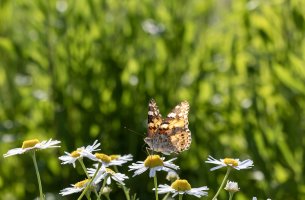


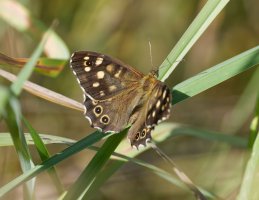
The English name for Polygonia c-album is the Comma or Comma butterfly.
The white C is clearly visible on the wing.
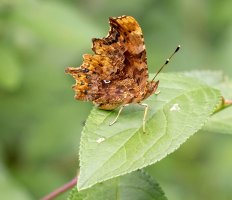
The white C is clearly visible on the wing.
Upvote
0



- Oct 29, 2016
- 698
- 1,277
- 6,034
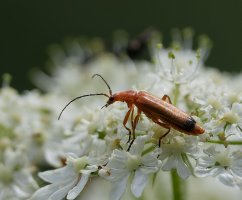
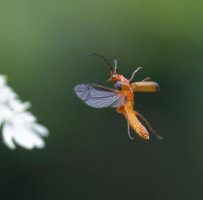
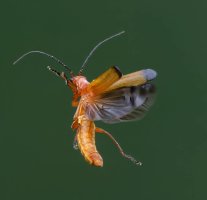
A flying contortionist!Common Red Soldier Beetle (RF 100-500mm/R5ii). These are only 1 cm long, and the images only about 500-600 px.
View attachment 230411View attachment 230414View attachment 230415
Upvote
0

...ran into this via Google AI:
Hummingbird moths do not intentionally "spit out" or regurgitate nectar. Like butterflies, they draw liquid nectar through their straw-like proboscis to fuel their intense hovering flight. [1, 2, 3, 4, 5]
Because the nectar they consume is mostly water and sugar, they extract the nutrients and pass the excess fluid through their digestive system to excrete it as waste while flying. They do not spit it back out through their mouths.
=====
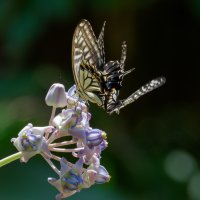
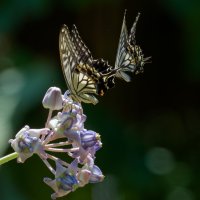
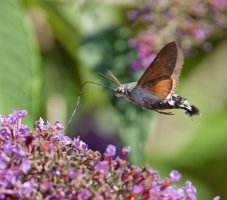
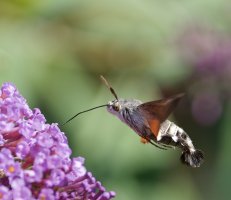
One half-decent and two rather pedestrian images of Hummingbird Moths follow (M6MkII + adapted EF-100-400)
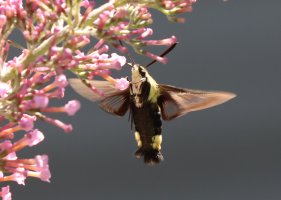
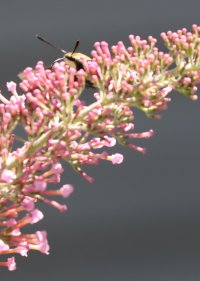
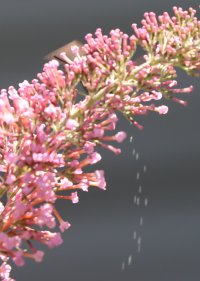
Examination of EXIF data reveal that the three images above were acquired within a time span of 0.42 seconds (the first two were in succession; the two images that follow are not posted here, so what is here are #s 1, 2 and 5 imaged at 14 fps) so the 'drops' in the image above are likely 'excretion'.
Just another joy of photography with decent gear...and the moth was rather modest (flying behind flowers while excreting ).
).
Hummingbird moths do not intentionally "spit out" or regurgitate nectar. Like butterflies, they draw liquid nectar through their straw-like proboscis to fuel their intense hovering flight. [1, 2, 3, 4, 5]
Because the nectar they consume is mostly water and sugar, they extract the nutrients and pass the excess fluid through their digestive system to excrete it as waste while flying. They do not spit it back out through their mouths.
=====
One half-decent and two rather pedestrian images of Hummingbird Moths follow (M6MkII + adapted EF-100-400)
Examination of EXIF data reveal that the three images above were acquired within a time span of 0.42 seconds (the first two were in succession; the two images that follow are not posted here, so what is here are #s 1, 2 and 5 imaged at 14 fps) so the 'drops' in the image above are likely 'excretion'.
Just another joy of photography with decent gear...and the moth was rather modest (flying behind flowers while excreting
).
Last edited:
Upvote
0
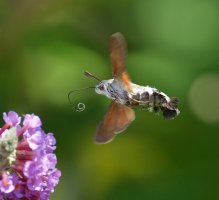
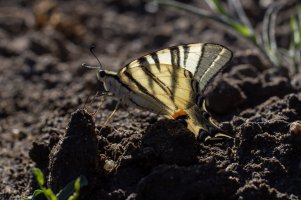
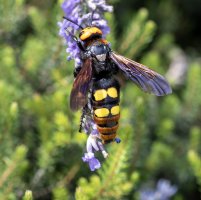
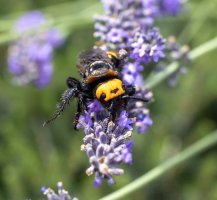
*Megascolia maculata* is relatively rare here, but it will likely become more common due to climate change. I first saw it last year in Croatia; this photo was taken today right in front of my house.
In English, Megascolia maculata is commonly known as the mammoth wasp or greater mammoth wasp. It is a solitary parasitoid belonging to the family Scoliidae and is recognized as the largest species of wasp in Europe.
Females can grow up to 6 cm in length, making them significantly larger than the males. Despite their intimidating size, they are generally docile and use their large size to parasitize the larvae of the rhinoceros beetle (Oryctes nasicornis). [1, 2]
This specimen was truly huge... with a terrifying pumpkin head
In English, Megascolia maculata is commonly known as the mammoth wasp or greater mammoth wasp. It is a solitary parasitoid belonging to the family Scoliidae and is recognized as the largest species of wasp in Europe.
Females can grow up to 6 cm in length, making them significantly larger than the males. Despite their intimidating size, they are generally docile and use their large size to parasitize the larvae of the rhinoceros beetle (Oryctes nasicornis). [1, 2]
This specimen was truly huge... with a terrifying pumpkin head
Last edited:
Upvote
0


