
You are using an out of date browser. It may not display this or other websites correctly.
You should upgrade or use an alternative browser.
You should upgrade or use an alternative browser.
Buying my first MACRO lens
- Thread starter Salah Yousef
- Start date
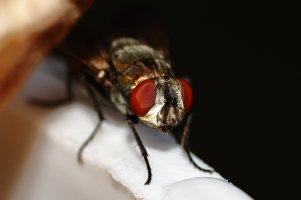

Zeidora said:Re AF, for 1:10 ratio or so, maybe, because you get decent depth of field. Once you go into 1:2 - 1:1 range, DOF gets very small, and you have to decide where you want the focal plane. Spoiler alert: it's rarely near the center.
You have three options: either make the object sufficiently small in frame to have the area where focal plane should go through in the central area, or use the sports approach of "spray and pray". Third, you can crank down f-stop and invite diffraction. Don't know details of pixels size for the 600D, but crop cameras generally have smaller pixels, so are more strongly affected by diffraction at same MP count. On my 5DsR with ~4 µm pixels, the limit is at effective f-stop f/11, which is f/5.6 set on lens at 1:1. And yes, I have experimentally verified that. Accordingly, you want to shoot as open as possible to get DOF you need but limit blurring of image due to diffraction, and that requires precise and intentional placement of focal plane.
You can also fiddle with AF points, select AF point in image area depending on composition, then shoot in AF, but you are faster with MF. It may take a little time to get comfortable with MF. I grew up doing macro when there was no AF, so it is second nature.
The C 180M is well-known to be VERY slow and erratic with AF. Know that from personal experience when using it as a short tele at longer distances. I keep AF off with the 180M, despite the fact that MF is not as easy as on a lens designed for MF, like the Zeiss (greater angular movement for same change in focus = more precise focus; and build-quality, of course).
One problem with a 600D and MF may be matt focusing screen. Not sure you can switch it out.
On the 5DIII...and even the 60D...Live View allows for AF pretty much anywhere within the frame, and produces razor sharp results. Works great for focus-stacking sequences too.
I'm not saying that AF trumps manual focus! But I think it is an overstatement to say AF is useless!
Upvote
0

YuengLinger said:On the 5DIII...and even the 60D...Live View allows for AF pretty much anywhere within the frame, and produces razor sharp results. Works great for focus-stacking sequences too.
I'm not saying that AF trumps manual focus! But I think it is an overstatement to say AF is useless!
I might just try that with my 80D - with the AF point coverage and it should work pretty well.
What's a good and moderate cost focus stacking software?
Thanks,
John
Upvote
0

Another vote for the 100L. It's an excellent macro lens. But it's FL, IS, relative fast speed (f/2.8), and sharpness make it an excellent portrait lens as well.
Of course you will be shooting on crop. I know you said money/budget isn't a factor but the EF-S 60mm is an excellent lens as well. I've gotten some great shots with that lens when I had it.
Depending on what you are shooting, aka if static and quite close, I'd recommend a macro ring flash. Yougnuo has one for a 100 bucks that is very solid.
Best of luck!
Of course you will be shooting on crop. I know you said money/budget isn't a factor but the EF-S 60mm is an excellent lens as well. I've gotten some great shots with that lens when I had it.
Depending on what you are shooting, aka if static and quite close, I'd recommend a macro ring flash. Yougnuo has one for a 100 bucks that is very solid.
Best of luck!
Upvote
0
chrysoberyl said:YuengLinger said:On the 5DIII...and even the 60D...Live View allows for AF pretty much anywhere within the frame, and produces razor sharp results. Works great for focus-stacking sequences too.
I'm not saying that AF trumps manual focus! But I think it is an overstatement to say AF is useless!
I might just try that with my 80D - with the AF point coverage and it should work pretty well.
What's a good and moderate cost focus stacking software?
Thanks,
John
This worked quite well for me when I owned a 70D, was actually my preferred way to focus on macro.
Upvote
0
One advantage of the 100L is its IS system.
To quote from Canon's site:
http://cpn.canon-europe.com/content/education/technical/making_the_most_of_macro.do
The bit about
applies, I believe, to all macro lenses with IS and although a surprise is still better than nowt.
To quote from Canon's site:
A normal Image Stabilization system works by detecting and counteracting rotational motion – that is motion around a point. However, in macro shooting, the camera movement appears to be less rotational and more shift-based, as the whole camera appears to move along a plane rather than around a point. For this reason, the IS system for shooting macro subjects needs to be different. The Hybrid IS corrects for both rotational and shift based motion and offers up to four stops of IS ability in normal shooting, three stops at half-life size and two stops at life-size.
http://cpn.canon-europe.com/content/education/technical/making_the_most_of_macro.do
The bit about
four stops of IS ability in normal shooting, three stops at half-life size and two stops at life-size
applies, I believe, to all macro lenses with IS and although a surprise is still better than nowt.
Upvote
0

Definitely and plus whatever we're up to on recommending the 100L. I use it and the 180L frequently and have taken to using the 100L handheld for product shots as I can save tons of time by handholding. I'm at 1/250s, so the IS doesn't matter there, but it allows me to line up the shot perfectly. For outdoor/nature work, I prefer the 180L due to the longer focal length and ability to use extenders, but for most everything else the 100L is great.Mikehit said:One advantage of the 100L is its IS system.
Upvote
0
chrysoberyl said:YuengLinger said:On the 5DIII...and even the 60D...Live View allows for AF pretty much anywhere within the frame, and produces razor sharp results. Works great for focus-stacking sequences too.
I'm not saying that AF trumps manual focus! But I think it is an overstatement to say AF is useless!
I might just try that with my 80D - with the AF point coverage and it should work pretty well.
What's a good and moderate cost focus stacking software?
Thanks,
John
HeliconFocus is good and pretty cheap. Affinity Photo is introducing a focus stacking feature soon, apparently.
Upvote
0

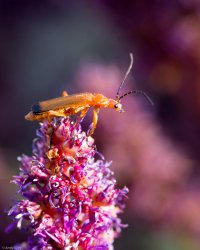
Absolutely love my Canon 100L -- its consistent AF and very good IS help a lot with photographing insects or other tiny critters. And the image quality is amazing; I often find myself amazed by the details it captures when I upload my pictures to the computer.
On top of macro use, though, I also find that it makes a great landscape and portrait lens.
As others have pointed out, the biggest downside is that for insects, you'll find that the working distance is a bit short. You'll need to get really close to your subject, and most bugs won't stick around for that. If budget won't be a problem, I would recommend that you maybe give the Canon 180L macro a try. I've never used it, but I feel the extra working distance would be an enormous help with insect photography.
I'm perfectly happy with my 100L, though, and I feel like the versatility of the 100mm focal length outweighs the inconvenience of needing to be very, very careful when sneaking up on bugs.
On top of macro use, though, I also find that it makes a great landscape and portrait lens.
As others have pointed out, the biggest downside is that for insects, you'll find that the working distance is a bit short. You'll need to get really close to your subject, and most bugs won't stick around for that. If budget won't be a problem, I would recommend that you maybe give the Canon 180L macro a try. I've never used it, but I feel the extra working distance would be an enormous help with insect photography.
I'm perfectly happy with my 100L, though, and I feel like the versatility of the 100mm focal length outweighs the inconvenience of needing to be very, very careful when sneaking up on bugs.
Attachments
Upvote
0

chrysoberyl said:What's a good and moderate cost focus stacking software?
Thanks,
John
there's also Zerene Stacker, which I like the best, and also combineZ (have not used that). Earlier versions of HeliconFocus gave me more artifacts than Zerene for the subject matter I shoot. I think both have trial versions to download, so you can play with it for a bit. Have not used HF in a while. Both have pros and cons (e.g., load CR2 files directly in HF, while ZS only takes .tif and .jpg) and live view in HF, not supported in ZS. Both cost about the same, if memory serves me well. PS CS5.5 was really poor at serious z-stacking (20-100 frames), produced more artifact blurs than anything else. Haven't used more recent versions.
Upvote
0
scyrene said:HeliconFocus is good and pretty cheap. Affinity Photo is introducing a focus stacking feature soon, apparently.
Many thanks!
Upvote
0
Zeidora said:there's also Zerene Stacker, which I like the best, and also combineZ (have not used that). Earlier versions of HeliconFocus gave me more artifacts than Zerene for the subject matter I shoot. I think both have trial versions to download, so you can play with it for a bit. Have not used HF in a while. Both have pros and cons (e.g., load CR2 files directly in HF, while ZS only takes .tif and .jpg) and live view in HF, not supported in ZS. Both cost about the same, if memory serves me well. PS CS5.5 was really poor at serious z-stacking (20-100 frames), produced more artifact blurs than anything else. Haven't used more recent versions.
Once again, I am in your debt. And I am very pleased that I purchased the Milvus 100 Makro, as you suggested. I beat it daily with a ball-peen hammer to try to get the AF to work...so for I've worn out three hammers without hurting the lens. But seriously, it is a joy to use.
Upvote
0

on my first digital slr .. a 20D.....the ONLY lens I had was the canon 100 macro
wonderful... bodies came and went more lenses etc...
then the 100L macro.... with I.S.
about the same high quality optically.. as original
but I.S. made it even more useful.. as a walk-about portrait lens etc..
price has dropped a lot.. and it is a best buy IMO..
yes it would be nice to have some more working distance ..from 150mm types..
but the 100L is so compact and so dependable..
autofocus is dead-on good and very useful..as is I.S.
I never used a tripod or a flash in flower and bug photos...
on original or I.S. 'L' version...
I was chasing bugs..or waiting for them...
hardly used my tripod ...really.. on anything..
too active I guess..
used ext tubes and 1.4x teleconverter (tamron sp version)
on both lenses..
a 16-35 I.S. and a 100L macro ... can do almost anything...
local walkabout or world travel..
right now my most useful small kit is 35L mk ii and 100L macro...maybe add the small 14mmL ii
on 5d3 or 1dx2
the reliable autofocus and I.S. makes the 100L the top choice IMO
for bugs flowers and people's faces IMO
widely available new and used and holds its value...nowdays..
enjoy it
TOM
wonderful... bodies came and went more lenses etc...
then the 100L macro.... with I.S.
about the same high quality optically.. as original
but I.S. made it even more useful.. as a walk-about portrait lens etc..
price has dropped a lot.. and it is a best buy IMO..
yes it would be nice to have some more working distance ..from 150mm types..
but the 100L is so compact and so dependable..
autofocus is dead-on good and very useful..as is I.S.
I never used a tripod or a flash in flower and bug photos...
on original or I.S. 'L' version...
I was chasing bugs..or waiting for them...
hardly used my tripod ...really.. on anything..
too active I guess..
used ext tubes and 1.4x teleconverter (tamron sp version)
on both lenses..
a 16-35 I.S. and a 100L macro ... can do almost anything...
local walkabout or world travel..
right now my most useful small kit is 35L mk ii and 100L macro...maybe add the small 14mmL ii
on 5d3 or 1dx2
the reliable autofocus and I.S. makes the 100L the top choice IMO
for bugs flowers and people's faces IMO
widely available new and used and holds its value...nowdays..
enjoy it
TOM
Upvote
0

I'm using the EF-S 60mm f/2.8 and I think it's a great lens. If you can get close enough to your subject. You have to be very patient if you want to take shots of beetles or lizards. The first picture below was taken with aperture F16 and 1/10 sec exposure time, the second one aperture F32 and 8(!) sec exposure time. 
https://canon.ssl.cdn.sdlmedia.com/image/636089497153537241SI.jpg?height=650
https://canon.ssl.cdn.sdlmedia.com/image/636100735206352962GJ.jpg?height=650
https://canon.ssl.cdn.sdlmedia.com/image/636089497153537241SI.jpg?height=650
https://canon.ssl.cdn.sdlmedia.com/image/636100735206352962GJ.jpg?height=650
Upvote
0

I ordered the Sigma 105 as a cheaper alternative and returned it. Well, I primarily returned it because there was a scratch on one of the inner glass elements, but I also wasn't thrilled with its autofocus.
I also had some strange exposure problems when using f/4 or higher that may very well have been my own fault. But it was weird that the camera didn't automatically raise the ISO to compensate for stopping down. Might be an incompatibility with the lens' firmware and the new 5D Mk IV?
In any case, I've decided to go with the 100L.
I also had some strange exposure problems when using f/4 or higher that may very well have been my own fault. But it was weird that the camera didn't automatically raise the ISO to compensate for stopping down. Might be an incompatibility with the lens' firmware and the new 5D Mk IV?
In any case, I've decided to go with the 100L.
Upvote
0
pmjm said:I ordered the Sigma 105 as a cheaper alternative and returned it. Well, I primarily returned it because there was a scratch on one of the inner glass elements, but I also wasn't thrilled with its autofocus.
I also had some strange exposure problems when using f/4 or higher that may very well have been my own fault. But it was weird that the camera didn't automatically raise the ISO to compensate for stopping down. Might be an incompatibility with the lens' firmware and the new 5D Mk IV?
In any case, I've decided to go with the 100L.
I'm sure you will be happy; many folks have made that decision and appear quite happy. As for me, I haven't touched my 100L since I bought the Milvus 100 Makro.
John
Upvote
0
chrysoberyl said:I'm sure you will be happy; many folks have made that decision and appear quite happy. As for me, I haven't touched my 100L since I bought the Milvus 100 Makro.
John
The upside is that I seem to have scored the 100L for $331. That Milvus 100 is a hell of a lens, but don't you miss AF? Are you able to sneak up on insects with MF?
Upvote
0
Macro stands for Manual focusing. If you get really close to your subject the contrast based AutoFocus becomes mainly useless since there will be only a very little contrast between the parts of the image. Just think about the head of a completely black beetle like in the second image of my previous reply. Of course, you can try using AF but most of the time it won't work. And you should select one cross-type AF-point only.
The first picture in my previous reply about the spider was made using AF, but it's only a close-up photo, not a "real" macro.
If you get really close to your subject the contrast based AutoFocus becomes mainly useless since there will be only a very little contrast between the parts of the image. Just think about the head of a completely black beetle like in the second image of my previous reply. Of course, you can try using AF but most of the time it won't work. And you should select one cross-type AF-point only.The first picture in my previous reply about the spider was made using AF, but it's only a close-up photo, not a "real" macro.
Upvote
0
SkynetTX said:Macro stands for Manual focusing.
I'll disagree with that.
The biggest issue with using AF is that the magnification changes. If the goal is to only take 1:1 macro pictures (1:1 and above being defined as macro), then the AF typically needs to be turned off. Or, manually pre-focus at 1:1 and move the camera in or out until the desired image is in focus.
Pre-focusing also lets you know where you should be for 1:1 if maximum magnification is desired.
Yes, the AF can hunt, and sometimes it's frustrating.
In my experience, I find that the AF works well far more often than it is "useless", certainly at 1:1 and lower.
I also find it to be virtually impossible to manually focus through the (optical) viewfinder on a modern DSLR (some do not allow screen changes or support certain screens), and using live view while trying to hold the camera and look and focus to be more than virtually impossible. That leaves me with AF if I'm not setting up the tripod.
I would welcome a high resolution EVF or some sort of OVF overlay that shows focus peaking.
Upvote
0
Similar threads


- Replies
- 3
- Views
- 3K

- Replies
- 9
- Views
- 2K


- Replies
- 6
- Views
- 2K
