jrista said:rrcphoto said:jrista said:rrcphoto said:however how much do you think having the stock IR filter still in the camera is holding you back. I could be wrong but aren't you getting around 2-3 stop attenuation there? especially in nebulosity? I know canon's pretty extreme now (if you've ever tried taking IR photos with a R72,etc)
Oh absolutely, the IR cut filter in DSLRs kills off a ton of the Hydrogen-alpha light. My red channel lags my green and blue channels by at least a couple stops, and as such it is always noisier. There are mods out there, from Baader and from Astrodon, where you can pull out the LPF filters in Canon cameras and replace them with astro-geared IR/UV cutoff filters that have a square cutoff, rather than a gradual rolloff into the reds. That can improve Ha and SII transmission from around 20% to around 90% (Baader) or 99% (Astrodon). The problem with these mods is they make regular photography more difficult. You can use custom WB settings, but there is always a strong red hue, and it is very difficult to get rid of.
yes, I do infrared photography, so what I tend to do is get a full or dual spectrum converted camera (a UV block only) and then use filters in front.
thus the camera still works as a terrestrial camera and also as an astro imager.
but you are right - nothing will beat a dedicated CCD imager and the inclusion of the consistent cooling if you are serious about the craft.
looks like where you are, you are in a pretty good area for it to as well - I look at your images and my fingers start twitch to get back into it seriously - however living in a downtown city core isn't' exactly a good location for serious work.
I live in a red/orange zone (depends on the night)...the LP is pretty bad here. Far from a great area for AP though. I do some unfiltered imaging, on brighter targets. I filter all the rest, as it is pretty essential. I am actually looking to sell the Astronomik CLS-XL and get a 52mm screw-in for my drop-in filter on my 600mm lens. I'm going to be getting the IDAS, probably the LPS-D1, although I may pick up the LPS-P2 instead (if I can find it.) The IDAS filters are a little more tuned, and block narrower bands while passing the rest, so color balance is a bit easier (and they don't cut out as much light, so you don't necessarily have to expose for as long.)
rrcphoto said:have you looked at the QHYCCD?
I have. I've also looked at Atik. I own the QHY5L-II guide and planetary camera, which uses an Aptina sensor. I checked out the larger QHY cameras. Their full-frame 11002 camera is actually probably one of the best priced out there...however I've heard a number of times about fogging/frosting problems with the QHY design, and I have never really heard much about their noise quality. QHY and FLI both put a lot of effort into ensuring non-patterned read noise, which is essential for AP as we average many frames together. Any pattern, instead of getting averaged out, ends up getting strengthened like any other signal.
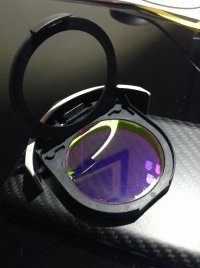
The problem with screw ins on the Canon lenses are that they need to be low profile filters. Most AP filter makers dont offer low profile rings so it's a crap shoot. I ended up just buying extra drop in UV filters and ordering standard 2" AP filters. The filters drop right in place of the UV glass with the addition of some shims (electrical tape) to accomodate the thinner glass used by some manufacturers. I use them both on my 300 and 600 and work quite well. The only draw back is that you cant easily use them for other purposes. However, I think its worth it just to have dedicated filters for use in the lenses rather that dealing with threading them in the field. Less time fiddling means more time actually shooting.
Upvote
0