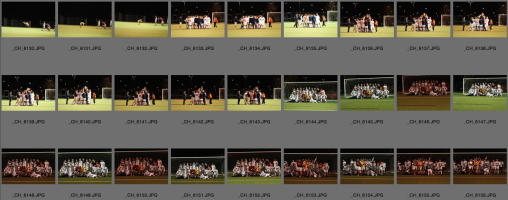
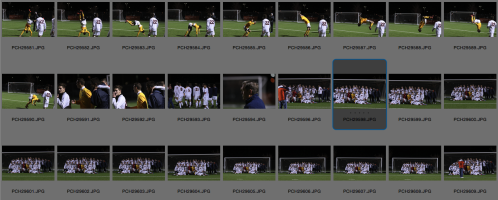
kmhanika said:This is one of the features that I'm most interested in. Does it seem to affect the shooting speed? In other words, is the camera timing the lights before taking the shot or does it provide a sort of auto exposure/white balance?jpmagero said:Smitty Of One said:I just shot my first soccer game under stadium lights. All I have to say is Holy Sh*T that Flicker function is amazing .... But with the Flicker function and the high ISO I know I chose an awesome upgrade from the 7D.
Kathleen
An answer of a hopefully very reliable source:
"If/when flickering of artificial lights is detected, the camera reads the rate of flickering and changes shutter timing in two important ways:
For single shots, it alters actual shutter lag time, so that the actual firing of the shutter coincides with the instant of maximum “peak” illumination during the flickering cycle of the lighting you’re shooting under.
For continuous shooting sequences, the fps rate and instant of actual firing for each shot are also altered, depending on the flicker cycling frequency detected. Again, this is to match each successive still image to an instant of maximum illumination of the artificial lights."
(Source: http://learn.usa.canon.com/resources/articles/2014/eos7dmkii_antiflicker.shtml )
It also manages color quality much better than some auto exposure feature -- flourescent tubes e.g. have different phosphors for red, green and blue color which have different delays for emitting their light.
Best - Michael
Upvote
0


 .
.