Canon EF 11-24mm f4L vs Canon EF 16-35 f2.8 L III

YuengLinger said:
Now I see that the 2.8 III has much less distortion than the f/4, so the GAS is starting to rumble. One thing holding me back is the vignetting, but reports here don't make much of that.

Distortion: Really?

http://www.photozone.de/canon_eos_ff/877-canon_1635_4is?start=1

http://www.photozone.de/canon_eos_ff/992-canon1635f28mk3?start=1

Seems almost identical. Also, for the OP -- a hiking landscaper -- they probably don't come across that many skyscrapers or train tracks while hiking the Dolomites. :D

The f/2.8L III vignetting was jaw-dropping to me. Reporters and sports folks won't mind it, but event folks might -- and astro folks were sobbing in the corner when that got published / verified. Having to push your astro shots 4+ stops in the corners is simply brutal.

- A
 
Upvote 0
I only have an older 17-40, and never upgraded because I rarely shoot that wide, but also because I only had APSC bodies until the 6DII.

Perhaps one suggestion if you want the unique photos that you can get out of 11mm, but don't use it extensively, is to throw an EFS10-18 onto an APSC body. Although the field of view will be as small as a 16mm EF, it still is 10mm on the wide end (you just get a crop), and depending on what you're shooting, it might be enough.

Not the best solution in the world, I'm sure, but a very cheap one, and the 10-18 is a remarkable lens that's practically free, compared to wide L's. You also get the benefit that you can have this on a little rebel body, and don't need to lens swap on the field, since I don't think many people will choose to walk around with EF11-24.
 
Upvote 0
ahsanford said:
YuengLinger said:
Now I see that the 2.8 III has much less distortion than the f/4, so the GAS is starting to rumble. One thing holding me back is the vignetting, but reports here don't make much of that.

Distortion: Really?

http://www.photozone.de/canon_eos_ff/877-canon_1635_4is?start=1

http://www.photozone.de/canon_eos_ff/992-canon1635f28mk3?start=1

Seems almost identical. Also, for the OP -- a hiking landscaper -- they probably don't come across that many skyscrapers or train tracks while hiking the Dolomites. :D

The f/2.8L III vignetting was jaw-dropping to me. Reporters and sports folks won't mind it, but event folks might -- and astro folks were sobbing in the corner when that got published / verified. Having to push your astro shots 4+ stops in the corners is simply brutal.

- A
Do you think TDP has botched the comparison? Please take a look, then tell us what you think. I was surprised by the improvement. But I certainly agree the vignetting is a fly in the ointment.
 
Upvote 0
ahsanford said:
16-35 advantages over the 11-24:

  • Takes standard filters -- this is simply essential. The 11-24 limits you to either rear mount gel filters to get ND functionality (that require a dismount in the field unless you knew you'd need it when you started your hike, sometimes not an ideal thing to have to do!) or a massive outrigger and huge filters (far larger than the typical landscape 100x100 / 100x150) to get a CPL or ND grad.
  • f/2.8
  • Smaller and lighter
  • Cheaper
  • Shoots from 25-35mm
  • Better optically (they are pretty close, though)

11-24 advantage:

  • It goes down to 11mm
  • Annnnnnd.... [crickets]

As you can see, they are not comparable lenses -- it's not one or the other. Clearly, you should use the 16-35 for most of your use and then additionally consider a highly specialized ~ $3500 investment (lens + pricey filtering options) just to shoot a few mm wider FL.

Also, if you hike, IMHO you should probably be using the 16-35mm f/4L IS instead. Critically, it's a much lighter piece of kit and it's just as sharp at the apertures you are going to shoot landscapes with. The use of f/2.8 on the 16-35 f/2.8L III will be wasted as (a) you seem to be shooting landscapes and (b) its coma + staggering 16mm + f/2.8 vignetting are not what you want for astro.

I personally see the f/2.8L III as a dyed-in-the-wool tool for events/sports/reportage folks who need f/2.8 and would use it often at that aperture. Landscapers are wasting their money and back muscles on the f/2.8L III, IMHO.

- A

Well, I am considering to add the 11-24, and I already own the 16-35 LIII. And I know there are few reasons to do so, but occasionally I miss the possibility of going wider.

With regards to the 16-35 f4 L IS, I used to own it, and it is very good indeed. The LIII is a little bit sharper at all focal lengths, and especially at 35mm. The 35mm performance is the biggest reason for me to chose the LIII, in addition to the 1 f-stop advantage.

Weight isn't that much a concern to me. With a good backpack a kg or two doesn't matter.
 
Upvote 0
YuengLinger said:
Do you think TDP has botched the comparison? Please take a look, then tell us what you think. I was surprised by the improvement. But I certainly agree the vignetting is a fly in the ointment.

Just looking at 16mm where this will be the most noticeable:

PZ: Nearly identical (f/4L IS @ -3.41% vs. f/2.8L II @ -3.56%)
TDP: f/2.8L III pretty clearly better (no values listed)
LensTip: f/2.8L III slightly better (f/4L IS @ -4.00% vs. f/2.8L II @ -2.99%)
DXO: f/4L IS just barely better (f/4L IS @ -0.8% vs. f/2.8L II @ -0.9% -- they use a nutty metric)

Thx. Worth checking other sources. I still stand by my recommendation of the f/4L IS all day. I don't shoot architecure, patterns, etc. and my luck correcting this with profiles or manually in post has been fine.

- A
 
Upvote 0
YuengLinger said:
Larsskv said:
SecureGSM said:
personally, I do not shoot wider than 14mm. Sigma 14 F1.8 Art lens is at the very top of my photographic shopping list presently.
Just waiting to the price to settle down a bit.

I am tempted by the Sigma 14 f1.8 as well, but that would be mainly for northern lights photography.

I really do like using my primes, but I have also learned that having the ability to zoom is especially practical when shooting wide angles. 16mm is very often too wide, and i find that the ability to zoom to 35mm is extremely useful (and zooming to 24mm would be good too). Therefore, I don't consider the Sigma 14 f1.8 to be a direct competitor to the 11-24 (for my intended use - hiking)

I was thinking the same way about the Sigma, but thanks to the-digital-picture.com, I was able to see for myself that the distortion of the Sigma is worse that the Canon 16-35mm f/2.8 III. Yes, I know we are talking two mm more on the Sigma, but the Sigma is also has noticeably more distortion than the Canon 14mm, which, unfortunately, just isn't sharp enough for me.

So...Owning the 16-35mm f/4L IS, I've considered upgrading, but thought, eh, just to gain an f/stop and lose IS?

Now I see that the 2.8 III has much less distortion than the f/4, so the GAS is starting to rumble. One thing holding me back is the vignetting, but reports here don't make much of that.

If you consider upgrading, I just stated that the LIII is sharper, but to be more precise, it is noticeably sharper on the 5Ds. I don't think you can tell much difference on a 20 megapixel body - except at 35mm, where I found the f4 L IS to be noticeably less sharp, than at other focal lengths.

Vignetting is a bit annoying at 16mm, with the LIII, even at f5.6. It shows up in post processing, but is easy to fix.
 
Upvote 0
Sigma 14 F1.8 Art lens is a very unique lens with some of use cases to consider: low light crowd shots, packed dance floor, concerts, dimly lit and crowded venues handheld.
come to think of it, F1.8 lens gives me 1 1/3 of a stop low light advantage over F2.8 one. Incidentally, this equals to FF sensor low light advantage over APS-C one. :)

14mm is crazy wide and allows to shoot at 1m distance to your subject and in crowd often there is nowhere to step back. I do not believe that lack of IS could be an issue for a 14mm FF lens. For me 14mm F1.8 lens is no brainer. I will keep my 16 35 F4 L for less exotic situations where I can shoot at apertures equal or smaller than F4 or need a filter.

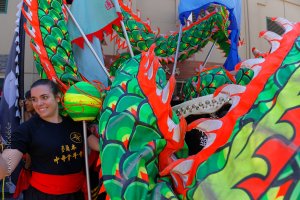
p.s. see the shot attached. I was virtually pushing the dragon with the lens and about 1 meter to the girl on the left. I would never get this shot with a longer lens. 16-35 is indispensable lens but I need that extra 1 1/3 of a stop advantage.


YuengLinger said:
Larsskv said:
SecureGSM said:
personally, I do not shoot wider than 14mm. Sigma 14 F1.8 Art lens is at the very top of my photographic shopping list presently.
Just waiting to the price to settle down a bit.

I am tempted by the Sigma 14 f1.8 as well, but that would be mainly for northern lights photography.

I really do like using my primes, but I have also learned that having the ability to zoom is especially practical when shooting wide angles. 16mm is very often too wide, and i find that the ability to zoom to 35mm is extremely useful (and zooming to 24mm would be good too). Therefore, I don't consider the Sigma 14 f1.8 to be a direct competitor to the 11-24 (for my intended use - hiking)

I was thinking the same way about the Sigma, but thanks to the-digital-picture.com, I was able to see for myself that the distortion of the Sigma is worse that the Canon 16-35mm f/2.8 III. Yes, I know we are talking two mm more on the Sigma, but the Sigma is also has noticeably more distortion than the Canon 14mm, which, unfortunately, just isn't sharp enough for me.

So...Owning the 16-35mm f/4L IS, I've considered upgrading, but thought, eh, just to gain an f/stop and lose IS?

Now I see that the 2.8 III has much less distortion than the f/4, so the GAS is starting to rumble. One thing holding me back is the vignetting, but reports here don't make much of that.
 

Attachments

  • IMG_2592_DxO.jpg
    IMG_2592_DxO.jpg
    732.7 KB · Views: 153
Upvote 0
SecureGSM said:
Sigma 14 F1.8 Art lens is a very unique lens with some of use cases to consider: low light crowd shots, packed dance floor, concerts, dimly lit and crowded venues handheld.
come to think of it, F1.8 lens gives me 1 1/3 of a stop low light advantage over F2.8 one. Incidentally, this equals to FF sensor low light advantage over APS-C one. :)

14mm is crazy wide and allows to shoot at 1m distance to your subject and in crowd often there is nowhere to step back. I do not believe that lack of IS could be an issue for a 14mm FF lens. For me 14mm F1.8 lens is no brainer. I will keep my 16 35 F4 L for less exotic situations where I can shoot at apertures equal or smaller than F4 or need a filter.

p.s. see the shot attached. I was virtually pushing the dragon with the lens and about 1 meter to the girl on the left. I would never get this shot with a longer lens. 16-35 is indispensable lens but I need that extra 1 1/3 of a stop advantage.

.

So you think I'm making too much of the distortion? One thing that got me interested in the Sigma 14 was a friend's shots with his Nikon 14-24mm, and the Sigma is clearly winning the distortion comparison--as it should against an older, still venerable, zoom.

I could also see keeping the 16-35mm f/4 for landscape and hiking while using the 14mm for much else. Of course I'd sell the f/4 if I got the f/2.8 III.

Thanks!
 
Upvote 0
distortion:
I am fairly certain that 0.5% distortion level is nothing to worry about. Seriously. Please see the chart attached.
These distortions are really easy to correct.

distortion.gif


vignetting:
Sigma is virtually vignetting free at F2.8 already. when I shoot at ISO 6400 the last thing I would like to do is auto correct corners for vignetting. it is akin to pushing your shadows by nearly 4 stops at such a high ISO. That is how much Canon 16 35 III L lens vignettes in extreme corners wide open. Not sure if I like this idea.

sharpness:

Sigma at F2.8 is a bit softer in mid frame and extreme corners, but see how much darker images Canon 16-35 III lens produced in these areas..

http://www.the-digital-picture.com/Reviews/ISO-12233-Sample-Crops.aspx?Lens=1073&Camera=979&Sample=0&FLI=0&API=0&LensComp=1121&CameraComp=979&SampleComp=0&FLIComp=0&APIComp=2


YuengLinger said:
So you think I'm making too much of the distortion? One thing that got me interested in the Sigma 14 was a friend's shots with his Nikon 14-24mm, and the Sigma is clearly winning the distortion comparison--as it should against an older, still venerable, zoom.

I could also see keeping the 16-35mm f/4 for landscape and hiking while using the 14mm for much else. Of course I'd sell the f/4 if I got the f/2.8 III.

Thanks!
 
Upvote 0
For me, 11-24 unique use-cases are:
1. Sense of emptiness through the illusion that the center part of image is pushed further back specially in closed geometric spaces, as long as camera tilt and diagonal lines are taken care of. On the contrary, these both can be used for more unique perspectives.
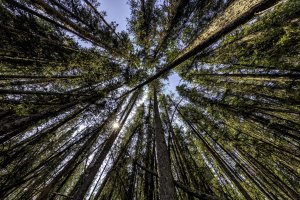
2. Sense of having a merging and strong center point in the picture (an example attached below). Here the trees are not that tall but 11mm makes them look ginormous.
EF11-24mm f/4L, ƒ/8, 11mm, 1/100, ISO 100.
 

Attachments

  • 20170808 194b.jpg
    20170808 194b.jpg
    4 MB · Views: 191
Upvote 0
I just returned the 11-24 L that I borrowed from Canon CPS last week. Fun to try out. I was mostly comparing it against my Tamron 15-30.

The Canon was surprisingly good at such wide focal lengths. I do think people who don't own 11mm are likely to think they wouldn't use it often, but I made a point of carrying it around at inappropriate times, and I found some fun uses. I suspect that were I to own it, I'd do a few more creative things. Maybe not $2,800 worth of creative things.

I do plan, eventually, on getting a wider prime. The Irix 11mm seems pretty interesting. I think I prefer the 15-30 at f/2.8 and then have a wide prime at f/4. I often use that extra stop of light. Not a tripod guy. Will try out the 16-35 III at some point, but would hate to lose the Tamron's stabilization.
 
Upvote 0
I have just picked up a mint Canon 16-35 f/2.8 L II to see if it can replace my 16-35 F4 IS L.
I ran some preliminary sharpness tests at 16mm and was excited as the f2.8 II lens beats my F4 IS by nearly 10% at that focal length.
However... At 35mm the lens really sucked. Excuse my French, It does. seriously... 20% worse sharpness test result at 35mm focal length than F4 on Canon 5D III. :-\


neuroanatomist said:
I don't have both, but I have the 11-24 and I did have the 16-35/2.8 II. I sold the 16-35 II intending to buy the 16-35/4 IS, but decided to get the TS-E 17 instead. I could see owning both the 16-35 and the 11-24, but I couldn't ever see myself bringing both on an outing, because I'd always have the 24-70/2.8 II in the bag as well. My typical travel kit is 24-70, 11-24, TS-E 17, and either the 70-300L or the TS-E 24.
 
Upvote 0
SecureGSM said:
I have just picked up a mint Canon 16-35 f/2.8 L II to see if it can replace my 16-35 F4 IS L.
I ran some preliminary sharpness tests at 16mm and was excited as the f2.8 II lens beats my F4 IS by nearly 10% at that focal length.
However... At 35mm the lens really sucked. Excuse my French, It does. seriously... 20% worse sharpness test result at 35mm focal length than F4 on Canon 5D III. :-\


neuroanatomist said:
I don't have both, but I have the 11-24 and I did have the 16-35/2.8 II. I sold the 16-35 II intending to buy the 16-35/4 IS, but decided to get the TS-E 17 instead. I could see owning both the 16-35 and the 11-24, but I couldn't ever see myself bringing both on an outing, because I'd always have the 24-70/2.8 II in the bag as well. My typical travel kit is 24-70, 11-24, TS-E 17, and either the 70-300L or the TS-E 24.

You might have discovered one of the main reasons we now have a version III...
 
Upvote 0
I have a TSe 17L, a 16-35IIL and a 8-15L fisheye. In the past I've heavily used a Sigma 12-24 HSM and more fisheyes and general wide lenses than i care to mention.
I've found specific uses for the TSe, fisheye, 12-24 (rectilinear corrected ultra wide) and general wide lens. The general wide is by far my used wide lens, it's not the widest or the best optically. But I can capture 90% of my wide needs with it. The others are occasional or specific use where the general can't cover it.
So I've not found a wide "that does it all".
 
Upvote 0
If the range is suitable, the 11-24 is a perfectly fine lens. I found it too heavy with the 1DX but fine with 5D or 6D (or Sony mirrorless, where it actually works with the stabilization very nicely).
In the less extreme range it has better distortion control than all the other EF lenses (including the primes) and it is more than sharp enough everywhere with some border CAs that are easy to correct.

So yes, great lens, although it is not only big, heavy and impractical, it is really challenging to use it well. Probably its biggest drawback is just using it at 11mm when 13-14mm etc. would be more suitable (similar to not using a fast prime at its widest aperture). A prime is probably a better 'educator' in that regard.
 
Upvote 0
I use both of these lenses for landscape while hiking and recently took a trip to Yosemite where I made the comparison myself. I was glad that I had the 11-24 on a hike down from Glacier Point b/c the FOV from many spots could not be covered by the 16-35 III. However, on 2 hikes where I knew the scenery would be more open, I was glad to leave the 11-24 behind. Since I always hike with my tripod and a pano-head, the 16-35 can cover most scenes, but occasionally, the 11-24 is well worth the weight. See thread on 'lens choice for Yosemite' for a few pics if interested.
 
Upvote 0
I don't have the 16-35mm F2.8 III but I do have the 16-35mm F4 and the 11-24mm.
The 11-24mm is a very good lens and it can create some really unusual images. It can create something really distinctive. However it has a number of drawbacks. There is no simple solution of filters. They can be rear mounting which is messy or you can get an enormous front filter set up that won't fully cover its range. It's only practical to not user filters. It's a very heavy lens with a bulbous end to keep you nervous.
All the same I do really like it. It's sharp and 11mm is an unusual perspertive.
The 16-35mm F4 is a lovely lens. I used to have the trusty 17-40mm but the 16-35mm is better.
I'd highly recommend it.
2.8 would be nice for indoor events - other than that F4 is all you need.
I end up not using the 11-24mm but I bring it on special expeditions as it can give you something special from time to time.
 
Upvote 0