Canon Shows off New Concept Camera at CP+ 2026

Fair, but those are your ideas of value. Anyway, it's a sliding scale. Nikon and Canon 600/4 lenses are $15K, give up 1-1/3 stops for the Nikon 600/6.3 knock 70% off the price, then give up an additional 1-2/3 stops and knock 80% off that price. Nikon gives us the middle option, Canon gives us the bottom one.
Sure, I can only express what my mind thinks, every comment is subjective. In your sliding scale, going down the aperture as much as Canon went brings unsuitability in many scenarios. Value is often found mid of the way, not all the way the cheap route.
There we disagree. I was just holding the RF 14/1.4 in my hand, it's small and light and requires digital correction. I know what the Sigma 14/1.4 feels like (because it's close to the EF 11-24/4 that I owned for years) and it's a beast. No, the 14/1.4 is not cheap. Being able to easily carry a lens on a trip is a lot of BANG.
Nope, no lens you mention here is good value. The Sony 14 1.8 would be.
Lol, yes it did and fair. But funny that you mention the Sony 300/2.8. Where are the 100(120)-300/2.8 zooms from Sony and Nikon? You seem fixated on two specific Nikon lenses and/or one specific price range. I suspect that many people willing and able to spend $4-6K on a lens could also spend $10-15K on a lens.
Canon chose to go the premium route with the 100-300, taking it firmly outside the amateur range. The Sony 300 2.8 is much much more approachable. In which world 6k is the comparable with 12k?! I read an article last week of someone thinking of 2 Sony 300 2.8 instead of the 400s and 600s, such is the value of that lens.

Going back to the original point: many just wish Canon would give more choice in more balanced price ranges, because they love many things Canon is now offering and Canon themselves put on themselves the role of sole lens provider for the system.
 
  • Like
  • Haha
Reactions: 2 users
Upvote 0
the 100-300, taking it firmly outside the amateur range. The Sony 300 2.8 is much much more approachable. In which world 6k is the comparable with 12k?!
Since when any of those lenses is amateur level? The 600 and 800mm f/11 are amateur level, and the 200-800mm is a stretch at 2k, but some amateurs may go for it for the specs.

Lenses that cost 4k, 6k 10k are absolute professional tools that you see on the sidelines at stadiums, paired with the highest end bodies, because that’s who they’re designed for. Amateurs are not even a consideration on the development of such products.
 
Last edited:
  • Like
  • Haha
Reactions: 3 users
Upvote 0
Since when any of those lenses is amateur level? The 600 and 800mm f/11 are amateur level, and the 200-800mm is a stretch at 2k, but some amateurs may go for it for the specs.

Lenses that cost 4k, 6k 10k are absolute professional tools that you see on the sidelines at stadiums, paired with the highest end bodies, because that’s who they’re designed for. Amateurs are not even a consideration on the development of such products.
I don’t see any relevancy in “pro” and “consumer” classifications. Amateurs often have deeper pockets than pros and anything under 10k can be fully in reach, 200-800 is of course an amateur lens well loved by pros.
 
Upvote 0
I don’t see any relevancy in “pro” and “consumer” classifications. Amateurs often have deeper pockets than pros and anything under 10k can be fully in reach, 200-800 is of course an amateur lens well loved by pros.
The relevance is exactly the same reason for your complaint. A working professional will find a way to afford the acquisition of a new tool if he feels such tool it is a requirement for his job, regardless of the price. It doesn't make that much of a difference whether it costs 4k or 10k; if it is a requirement for the job, he'll find a way to make it profitable, it's just a matter of how long it takes for the return of that investment. It's a business decision to acquire a tool that suppresses a necessity.

An amateur does not have the revenue to make that investment profitable, hence not being a consideration on the development of such high end products.

The development of new professional tools is all about reaching new heights, not being cheaper.
That's not to say Canon won't ever release, for instance, a RF 300mm f/2.8 as you referred, but it may not be a priority for them, since they know they have the same capability on other lens, and they definitely know that a RF 100-300mm f/2.8 is more versatile than a RF 300mm f/2.8.

How many times did Canon release a non-specialised professional prime lens with the same aperture as an existing professional zoom lens? Not many, if ever.

I'd say it's more likely they create a 300mm f/2.8 with built-in TC (being more expensive), or a 300mm f/2 to f/1.8 (there are patents for that, actually), rather than a "more affordable regular 300mm f/2.8" because, again, it's all about reaching new heights.
 
Last edited:
Upvote 0
The relevance is exactly the same reason for your complaint. A working professional will find a way to afford the acquisition of a new tool if he feels such tool it is a requirement for his job, regardless of the price. It doesn't make that much of a difference whether it costs 4k or 10k; if it is a requirement for the job, he'll find a way to make it profitable, it's just a matter of how long it takes for the return of that investment. It's a business decision to acquire a tool that suppresses a necessity.

An amateur does not have the revenue to make that investment profitable, hence not being a consideration on the development of such high end products.

The development of new professional tools is all about reaching new heights, not being cheaper.
That's not to say Canon won't ever release, for instance, a RF 300mm f/2.8 as you referred, but it may not be a priority for them, since they know they have the same capability on other lens, and they definitely know that a RF 100-300mm f/2.8 is more versatile than a RF 300mm f/2.8.

How many times did Canon release a non-specialised professional prime lens with the same aperture as an existing professional zoom lens? Not many, if ever.

I'd say it's more likely they create a 300mm f/2.8 with built-in TC (being more expensive), or a 300mm f/2 to f/1.8 (there are patents for that, actually), rather than a "more affordable regular 300mm f/2.8" because, again, it's all about reaching new heights.
I’m not complaining and price always matters. By only looking at what Canon does and did in the past, one ignores a huge bunch of the industry. Obviously Canon knows what they’re doing, so do other companies. I just look forward to interesting lenses with a better value than the ones offered now - this doesn’t mean I don’t appreciate what Canon does right now :)
 
  • Like
Reactions: 1 user
Upvote 0
Is it larger than FF?
That's also my question. If Canon would implement a (half) middle format sensor, like Hasselblad or Fuji, this could be a very attractive retro camera. But I doubt it will have such a big sensor, since Canon doesn't produce cameras in the MF segment, so if they don't buy such a sensor elsewhere, they would have to expand their own sensor production line to that bigger format - too costly for only such a special camera. So this camera fancies a FF, APS-C or 1-inch sensor, I guess.

But this interesting camera shows that Canon has a much more creative approach to retro style cameras. Stuffing an in-house digital camera camera just in an edgy grip-less retro body mimicking industrial design of the 60s-80s is only smart because you can sell it to a big enough number of users. Ergonomically, it is a simple downgrading from a modern more user-friendly camera design, so it worsens the shooting experience. Canon designers, by contrast, obviously were thinking about adding a shooting experience you don't have with today's cameras: a true waist-level finder. This is lost in today's photography, the only alternative is using a swivel display - but we all know that often in bright sunshine one can't see much on it. A classic
waiste-level finder is much more useable e.g. in street photography if you want to shoot in a sort of "stealth" approach so people don't necessarily notice that you are taking photographs and don't start their posing (for boring results).
 
  • Like
Reactions: 2 users
Upvote 0
I gotta wonder, why the double mirrors, why not use an EVF? Then look down straight into the EVF with a sensor scrape?
I wondered about that, too, but obviously they tried to provide a sort of classic shooting experience - but maybe comments about this concept camera drive them to reconsider that solution. Generally, I think the idea of bringing a waist-level retro camera out is quite smart, smarter than adding another usual retro-style camera to an already crowded market.
 
  • Like
Reactions: 1 user
Upvote 0
Fair, but those are your ideas of value. Anyway, it's a sliding scale. Nikon and Canon 600/4 lenses are $15K, give up 1-1/3 stops for the Nikon 600/6.3 knock 70% off the price, then give up an additional 1-2/3 stops and knock 80% off that price. Nikon gives us the middle option, Canon gives us the bottom one.
I am with you and Etnaphele: there is definitely a gap in the mid price range in Canon's current RF mount tele lens line, so I can imagine that they will bring a new lens which fills this gap. Could well be the revenant of the past two years here in CR, a 300-600mm that isn't as slow as the 200-800 but still relatively light and compact, and - important - has real L quality. My impression is that Canon generally decided to focus more on zooms than primes in the tele section, looking at the 120-300/2.8.
Lol, yes it did and fair. But funny that you mention the Sony 300/2.8. Where are the 100(120)-300/2.8 zooms from Sony and Nikon? You seem fixated on two specific Nikon lenses and/or one specific price range. I suspect that many people willing and able to spend $4-6K on a lens could also spend $10-15K on a lens. For me, at least, a better argument is the one I made above for the 14/1.4 – the Nikon 600/6.3 is under 1.5 kg and 278mm long, the Canon 600/4 is over 3 kg and 472mm long and I know which one I would take on an airplane and which one I would not.
I was just this morning out with my wife, shooting birds at a river close to our place (wasn't good today) - my wife with her z600/6.3 (+ 1.4x TC), me with my much bigger EF 600/4 III (+ 1.4x TC). I thought again that the compact, light Nikkor is so smart, since f/6.3 is with modern DSLRs quite useable. I am still fit enough to carry and use a big lens hand-held, but the age when I'd love to use such a light lens with real reach is getting closer, definitely. And hand luggage with such big lenses is always a hassle, even if you fly business class.
Oh I get decent JPGs out of DxO. Better than DPP, IMO.
DPP has a quite good RAW converter, but I prefer DxO, too.
 
  • Like
Reactions: 1 user
Upvote 0
I was just wondering what could sway Canon in either lowering some prices - the VCM line is overly expensive in my opinion - and/or let 3rd party lenses on the RF mount: as corporations understand only money, I see financial setback as the only factor. As said, just daydreaming :D
Canon needs to maximise shareholder profits and maintain customer satisfaction.
In the ~7 years of RF mount, Canon hasn't seen significant financial pressure to modify their strategy. I'm not sure what would need to happen to shift the needle enough to change that strategy despite the internet outrage echo chamber of not allowing 3rd party AF FF lenses.

Nikon priced the Z9/Z8 significantly cheaper than the Sony/Canon pro bodies but it hasn't helped them win more market share or significant positive financial results. Great for consumers but at the end of the day, an OEM with a strong balance sheet will bring lots of goodies to the table in the future than one that can't afford it.

Canon allows 3rd party APS-C lenses on RF mount today.
They don't allow RF mount FF lenses with AF today. It is their option whether Canon will allow it in the future or not.
It is also Sigma etc choice whether to release EF mount or RF mount in manual focus (or RF mount with EF protocols).
Yes, it would help consumers with more choice but remove profits from Canon unless they sell more bodies as part of the deal. Alternatively, the 3rd party RF mount lenses could be more expensive than L mount etc due to Canon's licensing costs.

Canon released a compelling (for a bunch of people) set of f1/4 VCM lenses at a certain price.
The initial list price has to allow for tariffs and Canon Europe's bid for extreme profits.
Using rebates or discounting is a much simpler option to "lower" prices and tempt more sales to offset the profit decrease.
Let's also not forget the advantage in the US for refurbished products that doesn't exist in other markets which would be considered lowering prices.
 
Last edited:
  • Like
Reactions: 2 users
Upvote 0
Lenses that cost 4k, 6k 10k are absolute professional tools that you see on the sidelines at stadiums, paired with the highest end bodies, because that’s who they’re designed for. Amateurs are not even a consideration on the development of such products.
"Professional tools" for sure but there is a growing segment of cashed up amateurs prepared to spend a lot of spare cash on the best.
All of the advantages for professionals would also apply to amateurs (weight, size etc) but without the need to financially justify the cost to anyone.

I don't make a cent from my photography but still own 2 FF bodies and 6 L lenses. I might not be able to justify (in my head) a $12k lens but I certainly know the replacement cost of my gear from my annual global insurance policy which runs @ 2.7% premium to replacement cost.
I still have GAS for the 20/1.4 and 14/1.4 though. Maybe one day when they are discounted and I have a workshop/trip to "justify" the purchases :)
 
  • Love
  • Like
Reactions: 1 users
Upvote 0
A classic waiste-level finder is much more useable e.g. in street photography if you want to shoot in a sort of "stealth" approach so people don't necessarily notice that you are taking photographs and don't start their posing (for boring results).
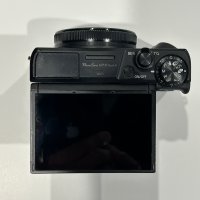
I just flip up the rear LCD screen on my G7X III to get a waist-level finder. It's bright enough.
 

Attachments

  • IMG_3214.JPG
    IMG_3214.JPG
    716.2 KB · Views: 1
  • Like
Reactions: 1 user
Upvote 0
I just flip up the rear LCD screen on my G7X III to get a waist-level finder. It's bright enough.
As I have written, swivel displays are often a bit dark in really bright environments, at least that's my experience. A real classic waist-level viewfinder also doesn't suffer from disturbing reflections. So I am sure that there are photographers out there who would appreciate such a camera design.
 
  • Like
Reactions: 1 user
Upvote 0
I don't know if this word is still even used, but that's just not hipster enough! Too much digital garbage, don't you long for the Canon-flavoured ANALOGUE XPERIENCE? Don't mind the tiny sensor put in there just to call that a camera ;)
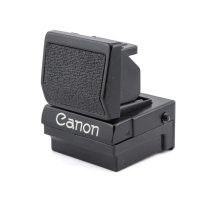
There was an optional waist-level finder for the Canon F-1.
 

Attachments

  • canon_F-1_waist_level_finder.jpg
    canon_F-1_waist_level_finder.jpg
    94.2 KB · Views: 1
  • Like
Reactions: 1 user
Upvote 0
As I have written, swivel displays are often a bit dark in really bright environments, at least that's my experience. A real classic waist-level viewfinder also doesn't suffer from disturbing reflections. So I am sure that there are photographers out there who would appreciate such a camera design.
Perhaps I can improvise and add some ‘side panels’ to the LCD display to improve outdoor visibility.
 

Attachments

  • Hasselblad_500CM.jpg
    Hasselblad_500CM.jpg
    353.4 KB · Views: 1
  • Love
Reactions: 1 user
Upvote 0