Deep Sky Astrophotography

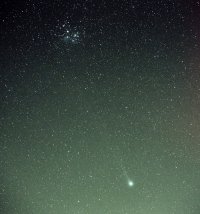
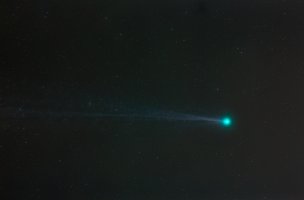
Here is comet Lovejoy from last weekend. I'm still learning pixinsight and that is much more daunting than actually taking the subs.

Working on some new subs I took last night. Good split in the tail. My biggest issues are finding any clear instructions on the finer settings within the tool. Experimentation seems to be the best way to learn.
 

Attachments

  • image.jpg
    image.jpg
    1.2 MB · Views: 302
Upvote 0
East Wind Photography said:
Here is comet Lovejoy from last weekend. I'm still learning pixinsight and that is much more daunting than actually taking the subs.

Working on some new subs I took last night. Good split in the tail. My biggest issues are finding any clear instructions on the finer settings within the tool. Experimentation seems to be the best way to learn.

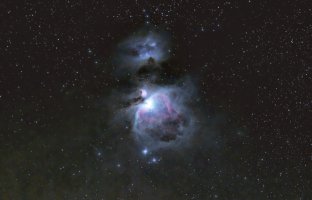
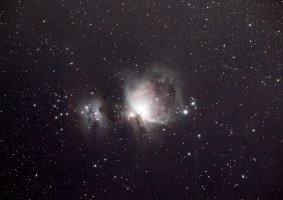
Looking good. I hear you on the experimenting, I am still trying to figure out how to best process what I have on the comet. I did manage to get some short subs For M42, but had to shut down before I had time to get any longer subs for the faint stuff. First clear night in months ( and I mean perfect ) and I have to get hit with a stomach bug ! Anyway, this is 133 x 14 sec taken on the 16th,a little over processed but at least I have something to work on.
 

Attachments

  • M42_2.JPG
    M42_2.JPG
    369.3 KB · Views: 436
Upvote 0
Thanks, Click. I forgot to mention I took these with the SL1 as kind of a test. Those using one of the Vixen or similar trackers may find it a suitable option to shave some weight. I got mine during their refurbished sale last month and I like it so far, a few annoyances but usable.
 
Upvote 0
Great images, guys! I'm glad to see some of you are getting into astrophotography. :) It's a great hobby, especially if your an insomniac like me. :P


nightclicks, excellent results with M42 there. You managed to pull out some of the faint outer dust, which is really quite a challenge. You must have some decently dark skies to do that.
 
Upvote 0
jrista said:
Great images, guys! I'm glad to see some of you are getting into astrophotography. :) It's a great hobby, especially if your an insomniac like me. :P


nightclicks, excellent results with M42 there. You managed to pull out some of the faint outer dust, which is really quite a challenge. You must have some decently dark skies to do that.

Once I get out of the glow of Tulsa it's not to bad as long as the humidity doesn't swell the light dome.I can visually make out the milky way , but only because I know it's there ! Last Thrusday was probably the single best night in a year. Actually it was perfect, light to no wind, low humidity, excellent seeing and 40's to start. unfortunately I got sick before I got the longer subs for the faint stuff, and of coarse clouds have moved back in since. I think if I reprocess I can improve it some ( I have forgotten most of what little I used to know) , full size it is a bit over cooked the really faint stuff is really blotchy looking.
 
Upvote 0
I see that I posted my Comet Lovejoy pic in the wrong sub-forum. It is a single exposure shot on a fixed mount tripod, nothing fancy - no equatorial mount, no image stacking. Just an 85mm f/1.4 lens @ 1.4 and ISO 3200 for 10 secs (so some earth spin is evident). Camera = 7D2 (pic already in 7D2 sub-forum). I can just barely detect a comet tail.
 

Attachments

  • _7D24489.jpg
    _7D24489.jpg
    165.8 KB · Views: 1,095
Upvote 0
Here are my tries with Lovejoy:

70D, Sigma 105 2.8 macro OS, 5 sec, 6400 ISO, freezing cold in the mountain
IMG_7769_.jpg


3.2 sec, 3200 ISO
IMG_7767_.jpg
 
Upvote 0
fish_shooter said:
I see that I posted my Comet Lovejoy pic in the wrong sub-forum. It is a single exposure shot on a fixed mount tripod, nothing fancy - no equatorial mount, no image stacking. Just an 85mm f/1.4 lens @ 1.4 and ISO 3200 for 10 secs (so some earth spin is evident). Camera = 7D2 (pic already in 7D2 sub-forum). I can just barely detect a comet tail.

Nice shot. With this focal length and keeping the crop down you should be able to take it to 6400.
 
Upvote 0
jrista said:
Great images, guys! I'm glad to see some of you are getting into astrophotography. :) It's a great hobby, especially if your an insomniac like me. :P

nightclicks, excellent results with M42 there. You managed to pull out some of the faint outer dust, which is really quite a challenge. You must have some decently dark skies to do that.

I used to do it the hard way back in the day. Started out with a cold camera. Used dry ice to chill the film down to about -20F then exposed for hours tracking manually with a joystick. I then upgraded to using hypersensitized film...soaking the film under temperature and pressure in nitrogen and hydrogen gas. Cost more but you could treat several rolls of film at a time. Stacking was something we did in the dark room by stacking multiple negatives in the enlarger and manually registering the stars. It was all painful and extremely time consuming.

Digital has really improved things quite a bit for astrophotographers. You can achieve better results in far less time and effort once you learn the software side....and the best part is that can be done in the warmth of your living room.
 
Upvote 0
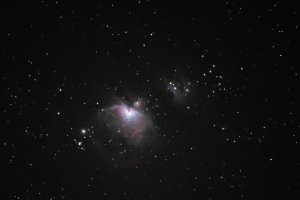
It's really amazing what you guys can do. I'm just starting to get into astrophotography. Here is my 2nd attempt at Orion Nebula. Shot with Canon 6D, 70-200mm F2.8L II (F2.8 @200mm), ISO 3200, approx. 200 images at 1.6s stacked with DSS. (Followed Forrest Tanaka's technique on YouTube.) I don't know if it is the settings I used or the technique I used for PP, it just doesn't look like I was able to get as much detail as some of you.
 

Attachments

  • Orion Nebula Test#2.1_16bit.jpg
    Orion Nebula Test#2.1_16bit.jpg
    208.9 KB · Views: 1,563
Upvote 0
TLau74 , careful this can lead to sleepless nights. :D Looks a lot better than my first attempts at Orion, quite good for 1.6 sec. I think it is actually one of the harder objects due to its wide brightness range and the super bright core. Are you tracking? To get the fainter parts you need to expose the background if you can't see the background you can't see the stuff that is barely brighter than it( if that makes since?). Think of the last two screen adjustment bars on one of those gray scale screen adjustment bars and setting your screen up to see the difference in them . ETR works even better at night .
 
Upvote 0
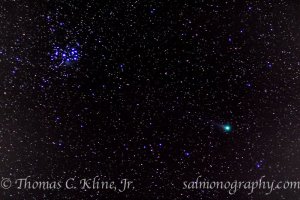
Still a work in progress, really having a ruff time with this one. The tail is clear to me in the subs but getting it pulled out of the star field is really pushing MY limits. At least I had another hour of clear skies before the clouds moved in last night :) This is with the 5DIII and 200 2.8l II, so it spans about 7.5 deg. here. I have some other processing steps to try and tons of subs, so maybe eventually.
 

Attachments

  • C2014 Q2.jpg
    C2014 Q2.jpg
    740.6 KB · Views: 600
Upvote 0
Thanks niteclicks. I'm not tracking automatically (if this is what you mean), only manually adjusting the lens position every 40 shots to get Orion more or less in the center of the frame allowing easier stacking in DSS. Each of the 200 shots taken is 1.6s each; so total exposure time is 320s or 5.3min. I'm already at 3200iso so I can either increase the iso to 6400 maybe still ok for the 6D (?) or I can double the number of subs taken (400 x 1.6s = 640s or approx. 10.7min total exposure). Which would be better, increase iso or # of subs? I want to use a similar technique to try to capture Comet Lovejoy. Friday should be another clear night and I want to take advantage of this (even though it will be around -5deg Celcius).
 
Upvote 0
You are doing a fantastic job doing it that way. At some point you hit a wall where noise swamps the signal and only longer exposures will help, Jrista could help you better. Maybe build yourself a barn door tracker . You already have good data on the brighter stuff, I would give it a try and add it to what you have.
 
Upvote 0
niteclicks said:
East Wind Photography said:
This was 12x50 sec at iso1600 with my 7d2 and 300mm f2.8 II lens at f4. No calibration. Stacked in DSS and then stretched with pixinsight.

I like how you have processed it. What settings did you stack with ? Median should get rid of those satellite tracks .
Steve

There is also one sub that did not register properly. The sequence was a test right after I got my star-watcher tracker. Was mainly interested in seeing how well it would track. The stacking was an afterthought after I discovered the images again. Once the skies clear up again I'll give it another run with some calibration frames.
 
Upvote 0