
You are using an out of date browser. It may not display this or other websites correctly.
You should upgrade or use an alternative browser.
You should upgrade or use an alternative browser.
Development Announcement of a New 800mm f/5.6L IS II [CR1]
- Thread starter Canon Rumors
- Start date

fotoray said:What sense does it make to put IS on such a big lens that would likely always be mounted on a tripod where IS is not needed? Or even not recommended? Is use of a monopod assumed to be the most frequent user choice? Certainly hand-held, where IS would be most helpful, doesn't seem practical because of quick fatigue with such a big lens.
These lenses, now that they are so light, are eminently hand holdable. I hand hold my 600/4 II all the time, with and without a 1.4x TC. The IS is invaluable for hand-held work like that. Even when used on a tripod, there are things, like vibrations caused by wind, that IS is still useful for.
Upvote
0

To add to jrista's comments, I have used most of the big whites and the 800mm is barely hand holdable. Yes, it can be done, but not for more than a few minutes and anything beyond that is not going to be great because your hands won't be steady enough. At 800mm (or longer with extenders), however, IS is a huge help even on a tripod to help frame your subject and to reduce vibrations during the shutter release. The IS on the 800 also makes it a great lens on a monopod even for action work where you're moving positions, which would not be the case without IS.jrista said:fotoray said:What sense does it make to put IS on such a big lens that would likely always be mounted on a tripod where IS is not needed? Or even not recommended? Is use of a monopod assumed to be the most frequent user choice? Certainly hand-held, where IS would be most helpful, doesn't seem practical because of quick fatigue with such a big lens.
These lenses, now that they are so light, are eminently hand holdable. I hand hold my 600/4 II all the time, with and without a 1.4x TC. The IS is invaluable for hand-held work like that. Even when used on a tripod, there are things, like vibrations caused by wind, that IS is still useful for.
Upvote
0

jrista said:These lenses, now that they are so light, are eminently hand holdable. I hand hold my 600/4 II all the time, with and without a 1.4x TC. The IS is invaluable for hand-held work like that. Even when used on a tripod, there are things, like vibrations caused by wind, that IS is still useful for.
I thought all the whites version II had an detection inside to find out if they are used on a tripod, and if that's the case then IS would be switched off. Or am I wrong ?
Upvote
0

FEBS said:jrista said:These lenses, now that they are so light, are eminently hand holdable. I hand hold my 600/4 II all the time, with and without a 1.4x TC. The IS is invaluable for hand-held work like that. Even when used on a tripod, there are things, like vibrations caused by wind, that IS is still useful for.
I thought all the whites version II had an detection inside to find out if they are used on a tripod, and if that's the case then IS would be switched off. Or am I wrong ?
It doesn't turn the IS off, it just prevents it from going into the feedback loop that caused problems in the early IS lenses.
Upvote
0
FEBS said:jrista said:These lenses, now that they are so light, are eminently hand holdable. I hand hold my 600/4 II all the time, with and without a 1.4x TC. The IS is invaluable for hand-held work like that. Even when used on a tripod, there are things, like vibrations caused by wind, that IS is still useful for.
I thought all the whites version II had an detection inside to find out if they are used on a tripod, and if that's the case then IS would be switched off. Or am I wrong ?
The "tripod sensing" really just checks for a certain minimal mount of vertical shake, and if the shake is below that threshold, it throttles IS. If you have wind vibrating the lens, that usually pushes the shake above that threshold, and IS will still operate. Personally, I just use IS Mode 3, and I've never changed it. It works when I need it to, and that's all that matters.
Upvote
0
It took some time to find it, but Canon did give some in-depth information about IS and its tripod sensing, at least for series II lenses (here):
"Improved Performance During Tripod Use: Unlike many other IS lenses that essentially shut off the IS function automatically when tripod use is detected, the new IS II super-telephoto lenses automatically compensate for subtle camera vibrations at shutter speeds from 1/30th to 1 second. Therefore, it is unnecessary to shut off IS during tripod use. This feature will be particularly welcomed by nature and landscape photographers who often use tripods for field work, and who also often use relatively slow shutter speeds. (The IS mechanism is automatically disabled when tripod use is detected and the shutter speed is longer than 1 second.)"
Edit: Also, here's some more info from Canon's press release on the existing 800mm, which was released with the 200 f/2 IS:
Both were the first to use the new 4-stop IS, and here's what they say about the construction:
"The Canon EF 800mm f/5.6L IS USM is not only the longest focal length lens available with OIS, it is also virtually the same physical size as the EF 600mm f/4L IS USM (461mm vs. 456mm), while weighing nearly 2 lbs. less (4500g/9.9 lbs. vs. 5360g/11.8 lbs.). These outstanding features were made possible by the use of a lightweight magnesium alloy lens barrel construction and a state-of-the-art super-telephoto optical system featuring 2 fluorite elements as well as Super UD and UD glass elements. The EF 800mm f/5.6L IS USM is well-suited for a wide variety of long-range photo applications such as wildlife and nature photography as well as sports and documentary photojournalism."
"Improved Performance During Tripod Use: Unlike many other IS lenses that essentially shut off the IS function automatically when tripod use is detected, the new IS II super-telephoto lenses automatically compensate for subtle camera vibrations at shutter speeds from 1/30th to 1 second. Therefore, it is unnecessary to shut off IS during tripod use. This feature will be particularly welcomed by nature and landscape photographers who often use tripods for field work, and who also often use relatively slow shutter speeds. (The IS mechanism is automatically disabled when tripod use is detected and the shutter speed is longer than 1 second.)"
Edit: Also, here's some more info from Canon's press release on the existing 800mm, which was released with the 200 f/2 IS:
Both were the first to use the new 4-stop IS, and here's what they say about the construction:
"The Canon EF 800mm f/5.6L IS USM is not only the longest focal length lens available with OIS, it is also virtually the same physical size as the EF 600mm f/4L IS USM (461mm vs. 456mm), while weighing nearly 2 lbs. less (4500g/9.9 lbs. vs. 5360g/11.8 lbs.). These outstanding features were made possible by the use of a lightweight magnesium alloy lens barrel construction and a state-of-the-art super-telephoto optical system featuring 2 fluorite elements as well as Super UD and UD glass elements. The EF 800mm f/5.6L IS USM is well-suited for a wide variety of long-range photo applications such as wildlife and nature photography as well as sports and documentary photojournalism."
Upvote
0

For me, the maximum focal length that still allows autofocus is important.
I have the 600 II with a 5D3 so can use autofocus at 1200mm at f/8 with a 2x extender. The 800mm f/5.6 can only autofocus with the 1.4 extender (1120 mm at f/8). All things considered, I like the flexibility offered by the 600 f/4 versus the 800 f/5.6.
I have the 600 II with a 5D3 so can use autofocus at 1200mm at f/8 with a 2x extender. The 800mm f/5.6 can only autofocus with the 1.4 extender (1120 mm at f/8). All things considered, I like the flexibility offered by the 600 f/4 versus the 800 f/5.6.
Upvote
0
Kestrel said:For me, the maximum focal length that still allows autofocus is important.
I have the 600 II with a 5D3 so can use autofocus at 1200mm at f/8 with a 2x extender. The 800mm f/5.6 can only autofocus with the 1.4 extender (1120 mm at f/8). All things considered, I like the flexibility offered by the 600 f/4 versus the 800 f/5.6.
Same here, I like being able to use 1200mm f/8 when I need to, and for a lot of the birds I shoot, it's necessary.
However, I do suspect that the 800/5.6 + 1.4x will produce better IQ than the 600/4 + 2x...and for some people, having that extra bit of IQ is everything. I know of some bird photographers who refuse to use teleconverters, ever, period, because they don't like how it affects their sharpness.
Upvote
0
Hi raptor3x, jrista and macguyver thanks a lot for your detailed explanations of IS and tripod. Learned again from CR.
Upvote
0
I didn't find 1600mm at f/11 to be too great with the 800mm, but I didn't have my loaner long enough to really play with it. Also, with the 7D, the 2560mm effective focal length made finding your subject in the VF just about in impossible, and even with IS, manual focusing was a guess.jrista said:Same here, I like being able to use 1200mm f/8 when I need to, and for a lot of the birds I shoot, it's necessary.Kestrel said:For me, the maximum focal length that still allows autofocus is important.
I have the 600 II with a 5D3 so can use autofocus at 1200mm at f/8 with a 2x extender. The 800mm f/5.6 can only autofocus with the 1.4 extender (1120 mm at f/8). All things considered, I like the flexibility offered by the 600 f/4 versus the 800 f/5.6.
Also, when you get into these extremes, you need to be shooting in cold, clean alpine air, or humidity and other environmental conditions will wreck your image.
Upvote
0
mackguyver said:Also, when you get into these extremes, you need to be shooting in cold, clean alpine air, or humidity and other environmental conditions will wreck your image.
Depends on what your shooting. I have no need to shoot wildlife at 1200mm, 600mm is actually more than plenty. Sometimes deer and the like get so close out of curiosity that I can't even get a shot.
With waders and other larger, shy birds, that might be a problem. Depends on whether where you live is humid or not. I live in Colorado. We've had some hot years, but most of the time it's not blistering (80 degrees or cooler) and it's pretty dry up here in general. The only time I've had problems with water vapor being a problem was when the temperature was near or over 100 degrees...then it's a problem even at 600mm.
The real benefit of 1200mm comes into play when your photographing small birds. With just the 600mm, even at a relatively close distance, with a full frame, they are quite small. Moving to 1200mm with passerines isn't because they are far away...it's just to increase their size relative to the frame, but your still relatively close. More than close enough that water vapor in the air isn't going to be a problem between lens and subject (it might wreck your background boke...but that's a whole different deal.)
Upvote
0
Agreed, and that must be nice to have few issues with humidity. I lived in CO for a while and certainly miss a lot or things about it. Here in Florida, the humidity is highest during the best light, and is usually over 80%, so shots beyond 50 feet or so start getting soft. With birds, it seems like you need every millimeter you can get and I'm sure 1200mm helps a lot for the little birds in particular. I didn't feel like 800mm was enough for a lot of birds. Sometimes, you need millimeters to shoot from further away (gators for me, grizzlies for you), though, and that's when air quality, temperature (shimmer), and humidity become a real pain.jrista said:mackguyver said:Also, when you get into these extremes, you need to be shooting in cold, clean alpine air, or humidity and other environmental conditions will wreck your image.
Depends on what your shooting. I have no need to shoot wildlife at 1200mm, 600mm is actually more than plenty. Sometimes deer and the like get so close out of curiosity that I can't even get a shot.
With waders and other larger, shy birds, that might be a problem. Depends on whether where you live is humid or not. I live in Colorado. We've had some hot years, but most of the time it's not blistering (80 degrees or cooler) and it's pretty dry up here in general. The only time I've had problems with water vapor being a problem was when the temperature was near or over 100 degrees...then it's a problem even at 600mm.
The real benefit of 1200mm comes into play when your photographing small birds. With just the 600mm, even at a relatively close distance, with a full frame, they are quite small. Moving to 1200mm with passerines isn't because they are far away...it's just to increase their size relative to the frame, but your still relatively close. More than close enough that water vapor in the air isn't going to be a problem between lens and subject (it might wreck your background boke...but that's a whole different deal.)
Upvote
0
jrista said:The real benefit of 1200mm comes into play when your photographing small birds. With just the 600mm, even at a relatively close distance, with a full frame, they are quite small. Moving to 1200mm with passerines isn't because they are far away...it's just to increase their size relative to the frame, but your still relatively close. More than close enough that water vapor in the air isn't going to be a problem between lens and subject (it might wreck your background boke...but that's a whole different deal.)
Absolutely. As I've said, I use 1000mm as my normal birding focal length now, and it's often not quite enough. Passerines are tiny and skittish, and getting them with good feather detail requires a long focal length coupled with a fairly close distance - I suppose under 50 metres. I've included some shots I took this year at 1000mm - all will be cropped. Any extra focal length is welcome! See my Flickr for better/more details.
Attachments
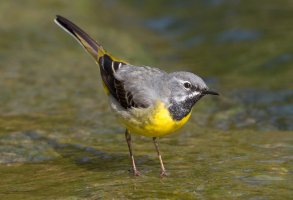
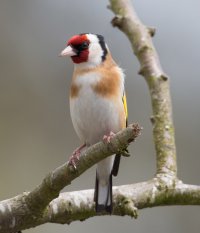
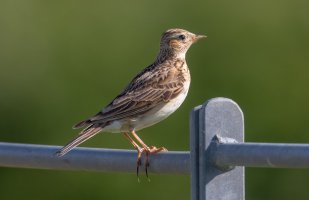
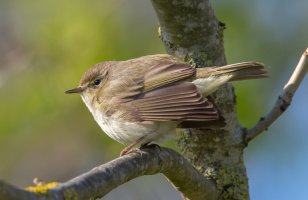
Upvote
0
The question is will it be a complete redesign or a partial one? To completely redesign the lens is expensive with new tooling being a key factor for a focal lengh that is not a huge seller.
The nifty fifty 1.8 should be redesigned to incorporate a metal mount S/H lenses on Ebay etc. always show the MK1 metal mount lenses selling much higher than the MK2 plastic mount version. The gap in price between the 1.4 and 1.8 provides for a lens that could be priced between the two with higher grade materials.
The nifty fifty 1.8 should be redesigned to incorporate a metal mount S/H lenses on Ebay etc. always show the MK1 metal mount lenses selling much higher than the MK2 plastic mount version. The gap in price between the 1.4 and 1.8 provides for a lens that could be priced between the two with higher grade materials.
Upvote
0

I'm sure it'll happen that way. Notice how many rumored lens replacements have been posted on CR? They've been rumored to come out every quarter or so for a few years already.Menace said:dolina said:Actual shipping date: Sometime in 2020
Ha ha - really hope not!
So I expect very much that a new lens will be out by 2020 or even 2019 for the 2020 Tokyo Olympics.
Upvote
0

dolina said:I'm sure it'll happen that way. Notice how many rumored lens replacements have been posted on CR? They've been rumored to come out every quarter or so for a few years already.Menace said:dolina said:Actual shipping date: Sometime in 2020
Ha ha - really hope not!
So I expect very much that a new lens will be out by 2020 or even 2019 for the 2020 Tokyo Olympics.
Well I really resisted getting a used one from my local Canon dealer despite being in near new condition as I'm not in desperate need of native 800mm range at present.
Mind you, tomorrow if a job requires it, it will be a different story

Upvote
0
especially if the subject is ways away. I much prefer the subject be less than 20m.mackguyver said:Also, when you get into these extremes, you need to be shooting in cold, clean alpine air, or humidity and other environmental conditions will wreck your image.
Upvote
0
Similar threads

- Replies
- 70
- Views
- 21K

- Replies
- 9
- Views
- 4K

- Replies
- 5
- Views
- 4K

- Replies
- 58
- Views
- 28K
