Dynamic Range - Try it for yourself, conclude for yourself: 5D III vs. A7r

Neil1000 said:
May I thank both sides in this argument for some excellent technical insights. I have learned a lot over the last few weeks.

We are in the dark as to whether Canon is reluctant or unable to produce a D810 competitor.


So how quickly can Canon move to meet technical development? May I draw your attention to this excellent post from Digital Picture in 2012.

http://community.the-digital-picture.com/showthread.php?t=5865&highlight=daniel+browning

Does it sound familiar and current in this thread?

Is that you, Mikael?
 
Upvote 0
Orangutan said:
In some cases (e.g. that Gold Coast guy) I'm convinced better technique would help.

Reasonably sure that's me, not too sure why I copped a mention here but even so it would have been a common courtesy to use my handle "eml58", I guess where you come from "that Gold Coast Guy" works just fine, but if you'd care to elucidate on where my technique has gone wrong (and I'm sure there's a 300 page book in there somewhere, but a few succinct pointers would do), I'm always extremely keen to learn from those with better technique & skills (indeed it's the main reason I participate in CR).

I assume (I know, dangerous), from your comment you've established you fall into that category ?? better skilled and such ?? So happy to learn from those that can teach.
 
Upvote 0
eml58 said:
Orangutan said:
In some cases (e.g. that Gold Coast guy) I'm convinced better technique would help.

Reasonably sure that's me, not too sure why I copped a mention here but even so it would have been a common courtesy to use my handle "eml58", I guess where you come from "that Gold Coast Guy" works just fine, but if you'd care to elucidate on where my technique has gone wrong (and I'm sure there's a 300 page book in there somewhere, but a few succinct pointers would do), I'm always extremely keen to learn from those with better technique & skills (indeed it's the main reason I participate in CR).

No, I don't think it was you, it was someone who just started posting a few months ago. You've been around for a while, I'm pretty sure. I don't want to re-open that whole event. My only point was that "someone" a while back was making claims about the poor studio performance of a 5D3, but appeared to be drastically underexposing.

I assume (I know, dangerous), from your comment you've established you fall into that category ?? better skilled and such ?? So happy to learn from those that can teach.

No, I'm no pro. I'm just a guy who's smart enough to see that other people here know a lot more about photography than I do. The poor technique by that other person was to disparage ETTR for studio work. I'm happy to be corrected here, but I'm absolutely baffled that there could ever be a DR problem in a studio, where the photographer controls all the lighting.
 
Upvote 0
jrista said:
...lack of DR and Canon's hideous read noise (which is a matter of poor IQ, not simply "doesn't meet my needs"...)

Wrong. The IQ doesn't meet your needs. Canon sensors meet the needs of many photographers better than you or I will ever be, and have produced a plethora of award-winning images. That's not commensurate with 'poor IQ'.

Also, you previously stated that you could achieve equivalent results with Canon, you just didn't want to (or couldn't, same difference) put in the time. Did I miss when you changed your tune on that?
 
Upvote 0
neuroanatomist said:
Canon sensors meet the needs of many photographers better than you or I will ever be

There are two different questions at work, and both are valid. (1) whether it "meets the needs;" (2) whether a different sensor would better meet the needs. By analogy, a 1D4 shooting 10fps met the needs of high-end sports photographers at the time, but a 1DX shooting 12fps better meets their needs. I don't recall reading whether you've said you've tried any camera with a current-gen Sony sensor. I have not, so I don't know the answer to (2) for myself.

Please propose a test protocol that you would find fair and meaningful.
 
Upvote 0
Orangutan said:
neuroanatomist said:
Canon sensors meet the needs of many photographers better than you or I will ever be

There are two different questions at work, and both are valid. (1) whether it "meets the needs;" (2) whether a different sensor would better meet the needs. By analogy, a 1D4 shooting 10fps met the needs of high-end sports photographers at the time, but a 1DX shooting 12fps better meets their needs. I don't recall reading whether you've said you've tried any camera with a current-gen Sony sensor. I have not, so I don't know the answer to (2) for myself.

Please propose a test protocol that you would find fair and meaningful.

For the point I was making, the distinction between 'meets' and 'better meets' is irrelevant. I don't think photographers – award winning or not – list 'poor IQ' among their needs.

I have no doubt that for some, the Exmor sensors better meet their needs...just as for others, an ultrawide tilt-shift lens better meets their needs. Everyone's needs differ, there's no 'test protocol' for that. There are market research tools that help determine the needs of the majority, Canon and other manufacturers obviously invest in such research.
 
Upvote 0
neuroanatomist said:
Orangutan said:
neuroanatomist said:
Canon sensors meet the needs of many photographers better than you or I will ever be

There are two different questions at work, and both are valid. (1) whether it "meets the needs;" (2) whether a different sensor would better meet the needs. By analogy, a 1D4 shooting 10fps met the needs of high-end sports photographers at the time, but a 1DX shooting 12fps better meets their needs. I don't recall reading whether you've said you've tried any camera with a current-gen Sony sensor. I have not, so I don't know the answer to (2) for myself.

Please propose a test protocol that you would find fair and meaningful.

For the point I was making, the distinction between 'meets' and 'better meets' is irrelevant. I don't think photographers – award winning or not – list 'poor IQ' among their needs.

I have no doubt that for some, the Exmor sensors better meet their needs...just as for others, an ultrawide tilt-shift lens better meets their needs. Everyone's needs differ, there's no 'test protocol' for that. There are market research tools that help determine the needs of the majority, Canon and other manufacturers obviously invest in such research.

I get that, but I think you're missing another important point: sometimes people don't know what they're missing. There are cognitive biases that prevent people from believing information which would change their minds. Since you're in the pharma industry I'll risk a pharma analogy: consider medications to treat a particular condition, one of which is 10% cheaper, 10% more effective and has 10% lower risk of side effects. Suppose the physician is not aware of this; s/he may prescribe the less desirable medication because it meets the needs, which it certainly does. Now suppose a major trade journal publishes a large-scale study demonstrating the superiority of the alternative. Most physicians will now be aware, and will likely change their prescription practices.

How this applies to photography: I agree with you on the whole "system" thing -- I really do get that. However, if there were reasonable tests which demonstrated a significant difference to the few hundred(?) high-end loyalist photographers who work with Canon on product development, Canon might start feeling some pressure to improve that one component of their system.

I agree with you about how things are today (system, personal choice, market, business choices, etc). I disagree that it needs to remain so. The first question is whether there really is significant difference that we'd like to see in our next Canon purchase. If the answer is yes, then the next question is whether there's a way to bring that to the attention of people who have some influence. It should go without saying that all the voices on all the photo blogs in the world would not have the power to influence, but a few hundred key professionals might.

I'd also like to see good tests just to satisfy my nerd curiosity.

 
Upvote 0
Orangutan said:
neuroanatomist said:
Orangutan said:
neuroanatomist said:
Canon sensors meet the needs of many photographers better than you or I will ever be

There are two different questions at work, and both are valid. (1) whether it "meets the needs;" (2) whether a different sensor would better meet the needs. By analogy, a 1D4 shooting 10fps met the needs of high-end sports photographers at the time, but a 1DX shooting 12fps better meets their needs. I don't recall reading whether you've said you've tried any camera with a current-gen Sony sensor. I have not, so I don't know the answer to (2) for myself.

Please propose a test protocol that you would find fair and meaningful.

For the point I was making, the distinction between 'meets' and 'better meets' is irrelevant. I don't think photographers – award winning or not – list 'poor IQ' among their needs.

I have no doubt that for some, the Exmor sensors better meet their needs...just as for others, an ultrawide tilt-shift lens better meets their needs. Everyone's needs differ, there's no 'test protocol' for that. There are market research tools that help determine the needs of the majority, Canon and other manufacturers obviously invest in such research.

I get that, but I think you're missing another important point: sometimes people don't know what they're missing. There are cognitive biases that prevent people from believing information which would change their minds. Since you're in the pharma industry I'll risk a pharma analogy: consider medications to treat a particular condition, one of which is 10% cheaper, 10% more effective and has 10% lower risk of side effects. Suppose the physician is not aware of this; s/he may prescribe the less desirable medication because it meets the needs, which it certainly does. Now suppose a major trade journal publishes a large-scale study demonstrating the superiority of the alternative. Most physicians will now be aware, and will likely change their prescription practices.

How this applies to photography: I agree with you on the whole "system" thing -- I really do get that. However, if there were reasonable tests which demonstrated a significant difference to the few hundred(?) high-end loyalist photographers who work with Canon on product development, Canon might start feeling some pressure to improve that one component of their system.

I agree with you about how things are today (system, personal choice, market, business choices, etc). I disagree that it needs to remain so. The first question is whether there really is significant difference that we'd like to see in our next Canon purchase. If the answer is yes, then the next question is whether there's a way to bring that to the attention of people who have some influence. It should go without saying that all the voices on all the photo blogs in the world would not have the power to influence, but a few hundred key professionals might.

I'd also like to see good tests just to satisfy my nerd curiosity.

The point is that the Exmor can't actually meet the demands of a discerning / professional ( insert what you want ) photographer in the vast majority of challenging light situations in one exposure. Yes you can underexpose more, yes you can push more but you will not equal the technical quality of someone who has blended exposures correctly. that is the point. Yes you can try and artificially create a situation to give the Exmor an advantage in one exposure, but it is just that: artificial.

You are correct in saying many working pros may not 'know what they are missing' but don't underestimate the professional 'grapevine', and one of the reasons some don't know is because the Exmor sensor has not taken the professional work by storm, because, as has been very clearly demonstrated in this thread, the advantages are limited, primarily to those who are happy with poor tonality / saturation from heavily pushed data.

A good example of this was the link I made to a friend of mine, international automobile photographer David Burgess. Jrista made a comment about his interest in what the likes of this pro (having seen his work ) would make of the D810. However he must have missed the fact that all David's work is lit by an army of lights and lighting crew, even outside !
 
Upvote 0
Sporgon said:
The point is that the Exmor can't actually meet the demands of a discerning / professional ( insert what you want ) photographer in the vast majority of challenging light situations in one exposure.

This is the question I'd like to see addressed by testing. I think we agree that it would take about 20 stops of clean DR to capture nearly all terrestrial scenes with one frame. But where's the transition point? Presumably, somewhere between 11-15 stops it ceases to be a single-frame capture. For those scenes is there a difference between sensors, both in the ability to capture the scene and in the quality of the shadow detail? I don't know. I see a lot of vehement hand-waving on both sides, and would love to see some good tests. (not to say that anyone owes me any tests)

I currently have a 60D (which certainly does not have Canon's best sensor) and I sometimes have problems with interior shots (e.g. at a house party / fundraiser event) where a window is mostly blown-out, and the interior is not well exposed. As an amateur I'd like to get a better (not perfect) capture of that casual scene without intrusive lighting. To many of you, jrista's interior example was a contrived shot, but it was precisely the problem I see several times a year.

I do have a flash, and I'll need to make friends with it until I have something better. I'm currently considering a refurb 6D.
 
Upvote 0
Orangutan said:
I get that, but I think you're missing another important point: sometimes people don't know what they're missing. There are cognitive biases that prevent people from believing information which would change their minds. Since you're in the pharma industry I'll risk a pharma analogy: consider medications to treat a particular condition, one of which is 10% cheaper, 10% more effective and has 10% lower risk of side effects. Suppose the physician is not aware of this; s/he may prescribe the less desirable medication because it meets the needs, which it certainly does. Now suppose a major trade journal publishes a large-scale study demonstrating the superiority of the alternative. Most physicians will now be aware, and will likely change their prescription practices.

How this applies to photography: I agree with you on the whole "system" thing -- I really do get that.

Again, I get that...but it misses the point. In your analogy, does the 10% more effective medicine make the other medication a 'poor therapy'? What if the risk of adverse events was 10% lower, but the severity of them increased substantially? That's the 'system' issue. The improvement in the sensor under discussion aren't currently 'free'.


Orangutan said:
I'd also like to see good tests just to satisfy my nerd curiosity.

There are ample tests showing the technical differences. What you're asking for is a test of the utility and impact of those differences, and those are determined by the needs/practices of each individual meaning such a 'test' would be in the realm of the social sciences. In this context, that's the market research to which I alluded. We know Canon routinely conducts such research, and yet they haven't released a sensor with substantial improvements in low ISO DR. One possible explanation (among several) is that Canon finds more low ISO DR is not a primary need for the majority of their market.
 
Upvote 0
neuroanatomist said:
Orangutan said:
I get that, but I think you're missing another important point: sometimes people don't know what they're missing. There are cognitive biases that prevent people from believing information which would change their minds. Since you're in the pharma industry I'll risk a pharma analogy: consider medications to treat a particular condition, one of which is 10% cheaper, 10% more effective and has 10% lower risk of side effects. Suppose the physician is not aware of this; s/he may prescribe the less desirable medication because it meets the needs, which it certainly does. Now suppose a major trade journal publishes a large-scale study demonstrating the superiority of the alternative. Most physicians will now be aware, and will likely change their prescription practices.

How this applies to photography: I agree with you on the whole "system" thing -- I really do get that.

Again, I get that...but it misses the point. In your analogy, does the 10% more effective medicine make the other medication a 'poor therapy'? What if the risk of adverse events was 10% lower, but the severity of them increased substantially? That's the 'system' issue. The improvement in the sensor under discussion aren't currently 'free'.
As previously stated, I do understand the trade-off thing. My analogy was more about small (but not inconsequential) differences not being widely known.

Orangutan said:
I'd also like to see good tests just to satisfy my nerd curiosity.

There are ample tests showing the technical differences. What you're asking for is a test of the utility and impact of those differences, and those are determined by the needs/practices of each individual meaning such a 'test' would be in the realm of the social sciences. In this context, that's the market research to which I alluded. We know Canon routinely conducts such research, and yet they haven't released a sensor with substantial improvements in low ISO DR. One possible explanation (among several) is that Canon finds more low ISO DR is not a primary need for the majority of their market.
When there's a quibble about comparative lens quality I usually see flurries of references to bench tests; I don't recall seeing such here. I'd assumed that's why jrista offered his own. If you know of any particularly good tests please post a reference. I'll search for them on my own when I have a bit of time.
 
Upvote 0
Orangutan said:
This is the question I'd like to see addressed by testing. I think we agree that it would take about 20 stops of clean DR to capture nearly all terrestrial scenes with one frame. But where's the transition point? Presumably, somewhere between 11-15 stops it ceases to be a single-frame capture. For those scenes is there a difference between sensors, both in the ability to capture the scene and in the quality of the shadow detail? I don't know. I see a lot of vehement hand-waving on both sides, and would love to see some good tests.

I don't know about Nikon, I didn't do any scientific tests - but as I'm switching between Magic Lantern's dual_iso and vanilla Canon shooting all the time, I have gotten better at predicting a scene's dynamic range.

I find the difference is in daylight shooting with harsh shadows, of course with movement, or you can just bracket. You can capture a lot with Canon's dr range, but you have to ettr precisely and the postprocessing gets more difficult, at least with ACR that's not designed for shots that fill the histogram left to right. Having more dynamic range results in noticeably more resolution in the shadows after pulling them by a moderate amount (like +33 to +50 shadows in ACR).

Orangutan said:
I currently have a 60D (which certainly does not have Canon's best sensor) and I sometimes have problems with interior shots (e.g. at a house party / fundraiser event) where a window is mostly blown-out, and the interior is not well exposed

I didn't mention this for about 10 posts, so it's time now again: if your problems are at low iso, use ML to boost your dr by ~2 stops on the 60d... I'm using it on my 60d all the time since even the 1ev difference 60d vs 6d can be felt in daylight.
 
Upvote 0
Marsu42 said:
Orangutan said:
I currently have a 60D (which certainly does not have Canon's best sensor) and I sometimes have problems with interior shots (e.g. at a house party / fundraiser event) where a window is mostly blown-out, and the interior is not well exposed

I didn't mention this for about 10 posts, so it's time now again: if your problems are at low iso, use ML to boost your dr by ~2 stops on the 60d... I'm using it on my 60d all the time since even the 1ev difference 60d vs 6d can be felt in daylight.

Every time I see one of your posts it's a reminder that I need to make friends with ML. :-)
 
Upvote 0
jrista said:
fish_shooter said:
Maybe Canon is addressing this thread here:
http://www.seeimpossible.usa.canon.com/

Hmm. Canon only sees "impossible", eh? Does that mean, they see that making a better sensor is impossible for them, so they aren't bothering? Or, they see impossible, and intend to make the impossible possible?

Eh, I'll believe Canon has improved their sensors when I see it. :P

A bit ambiguous, eh? Someone in marketing has some 'splainin' to do.
 
Upvote 0
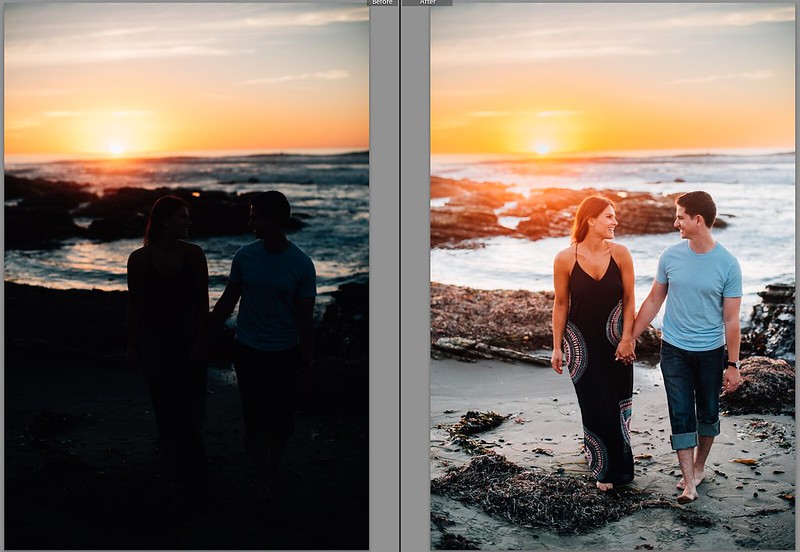
These images are not mine...
Check out this real world use of the D750 and it's dynamic range... Don't think Canon can do that unfortunately...:


Screen Shot 2014-10-04 at 10.10.07 AM
by Ken | www.kenkienow.com, on Flickr

Screen Shot 2014-10-04 at 10.12.17 AM
by Ken | www.kenkienow.com, on Flickr

I love my 5D3 but there are times when I really need the extra stops of DR while shooting weddings. Happened last week shooting the groom at high noon with blaring sun bouncing off his shaved head. No I couldn't move into shade as he was standing on the front bumper of a Fire Engine. Was damned if I exposed for his noggin, was damned if I exposed for his face/body/Fire Engine. I chose the later.
 
Upvote 0