Alrighty, I should probably know this, but I guess I've never had the lenses to test this question before.
Yesterday evening, I received a copy of the new Canon 24-70 F4 IS lens. We can talk about why I selected that lens over the F2.8 and why I'm so crazy, but perhaps folks can explain to me something I observed this morning on my morning walkabout where I took the new lens out for a shakedown cruise.
The images below are uncropped and unretouched, other than being exported from Lightroom at smaller dimensions than the original RAW files from my 5d Mk II.
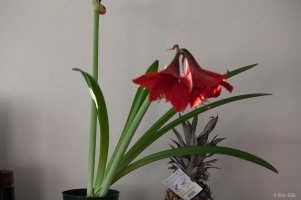
The first image (Img_4708.jpg) is the 24-70 shot at 70mm (at the top of the lens's rotational range) F4, 1/200th, 1000 ISO, -1/3 EV.
The second image (Img_4697.jpg) is the 70-200 Mk II shot at 70mm (at the bottom of the lens's rotational range) F4, 1/160th, 1000 ISO, -1/3 EV
Both images were handheld (left my tripod at home this morning), but I didn't move between switching lenses. Looking at the LCD, I thought "wait, is one of those more zoomed-in than the other?"
At home, thinking perhaps it was how I'd held the camera, I set up the tripod in the kitchen and repeated the test. This time, the tripod definitely didn't move between images.
The first image (Img_4735.jpg) is the 24-70, shot at 70mm, F4, 1/60th, 200 ISO, 0 EV.
The second image (Img_4736.jpg) is the 70-200, shot at 70mm, F4, 1/80th, 200 ISO, 0 EV.
As you can see, in both sets, there's a difference in the angle of view - not necessarily good or bag, but different. So, I can come up with two explanations for what I'm seeing, but I'm hoping someone can shed more light on this.
1. The difference can be explained by the fact that lens manufacturers paint numbers on the lenses which are approximations of the focal length, and two lenses of different design will inevitably have a different length (or angle of view) even at what's nominally the same setting.
or
2. This is the optical result of the difference in physical length between the 24-70 and the 70-200 lenses. At 70mm, the 24-70 is about 3 inches shorter than the 70-200. Because in both tests I tried to keep the focal plane of the image sensor more or less in the same place (roughly in the handheld setting, exactly when it was on the tripod), the front element of the 70-200 was always closer to the subjects, thereby shifting the scene.
My question to the collective wisdom of folks: Are either or both of these explanations accurate, or is there something else at play here? And also, what might explain the approximately 1/3 stop difference that the camera's choosing between shutter speed when it's working with the different lenses? Is this also due to the front element being closer to the subject (that whole "light falling off at the square of its distance" thingy I learned and forgot in my college photography class so long ago?)
Looking forward to learning from others here...
Yesterday evening, I received a copy of the new Canon 24-70 F4 IS lens. We can talk about why I selected that lens over the F2.8 and why I'm so crazy, but perhaps folks can explain to me something I observed this morning on my morning walkabout where I took the new lens out for a shakedown cruise.
The images below are uncropped and unretouched, other than being exported from Lightroom at smaller dimensions than the original RAW files from my 5d Mk II.
The first image (Img_4708.jpg) is the 24-70 shot at 70mm (at the top of the lens's rotational range) F4, 1/200th, 1000 ISO, -1/3 EV.
The second image (Img_4697.jpg) is the 70-200 Mk II shot at 70mm (at the bottom of the lens's rotational range) F4, 1/160th, 1000 ISO, -1/3 EV
Both images were handheld (left my tripod at home this morning), but I didn't move between switching lenses. Looking at the LCD, I thought "wait, is one of those more zoomed-in than the other?"
At home, thinking perhaps it was how I'd held the camera, I set up the tripod in the kitchen and repeated the test. This time, the tripod definitely didn't move between images.
The first image (Img_4735.jpg) is the 24-70, shot at 70mm, F4, 1/60th, 200 ISO, 0 EV.
The second image (Img_4736.jpg) is the 70-200, shot at 70mm, F4, 1/80th, 200 ISO, 0 EV.
As you can see, in both sets, there's a difference in the angle of view - not necessarily good or bag, but different. So, I can come up with two explanations for what I'm seeing, but I'm hoping someone can shed more light on this.
1. The difference can be explained by the fact that lens manufacturers paint numbers on the lenses which are approximations of the focal length, and two lenses of different design will inevitably have a different length (or angle of view) even at what's nominally the same setting.
or
2. This is the optical result of the difference in physical length between the 24-70 and the 70-200 lenses. At 70mm, the 24-70 is about 3 inches shorter than the 70-200. Because in both tests I tried to keep the focal plane of the image sensor more or less in the same place (roughly in the handheld setting, exactly when it was on the tripod), the front element of the 70-200 was always closer to the subjects, thereby shifting the scene.
My question to the collective wisdom of folks: Are either or both of these explanations accurate, or is there something else at play here? And also, what might explain the approximately 1/3 stop difference that the camera's choosing between shutter speed when it's working with the different lenses? Is this also due to the front element being closer to the subject (that whole "light falling off at the square of its distance" thingy I learned and forgot in my college photography class so long ago?)
Looking forward to learning from others here...