rfdesigner said:
ahsanford said:
rfdesigner said:
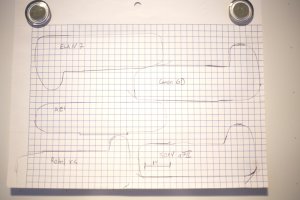
So if it isn't as small as possible, what's the point.. might as well get a 6D or an SL depending on what format you want.
About half the world agrees with you on 'the main point of mirrorless is to get smaller'.
The other half love what pulling the mirror can do to (someday)
outperform SLRs, believe it or not. They have little interest in reducing size.
- A
which markets though?
Sport?.. EVF is going to have to lag vs a mirror, even if it's only 40ms.. a combined mirror/EVF could be good though... raise the mirror once, then leave it there using the EVF while you shoot 25fps at full resolution.
Nature?.. sitting in a hide for hours on end using an EVF is going to kill those batteries.
Wedding?.. maybe, it could give accurate DOF but I don't see a huge leg up on live view.
what am I missing?
I agree with ahansford but I don't think you are missing anything either ... I think there are two broad categories of reasons for wanting mirrorless:
1. you want small and light;
2. any other reason/s why you think mirrorless offers something better than a DSLR, eg EVF, faster sync speeds, etc. (I am unsure of how many of these things would actually require mirrorless as against have simply become associated with mirrorless, but let's leave that to one side for now.)
However, my view is if you are in the first group, you need to be looking at an APS-C (or even a m4/3 sensor), so you have lenses which are also small and light. I think what Canon has done with the EOS M line makes sense in that regard (whatever other criticisms may be leveled at other aspects of the EOS M line). If you are looking for small and light but also a FF sensor, I don't see how you are going to get it by the time you add a wide aperture lens, or a long lens, or perhaps even an UWA lens. At best, it seems to you might get something reasonably small and light if you limit yourself to lenses in the moderate wide angle to normal range - but I think that is a fairly serious limitation for many people, especially if you are shelling out a couple of thousand dollars for the camera body.
So, my thinking is if you want FF mirrorless you are probably in the second group. And so for people wanting FF mirrorless, I would have thought better to keep a body with at least a bit of size (I chose 6D size in the poll but I can see people wanting a range of sizes, eg if you are shooting superteles you probably want larger), so it's a better match for the size/weight of the lenses you are likely to use.
I'm sure there are people who will say they really do want FF mirrorless even though they are looking for small and light. I'm just not sure how realistic that really is. Perhaps there is a compromise though: say Canon made a mirrorless around the size of the SL1 (and perhaps lighter?) with an EF mount, with a view to it being used with lenses like the 40 2.8, the 24/28/35 IS lenses, the 50 1.8 STM and the 50 1.4. That would give people options, and in fact I can see quite a few people who own a 5D3 or similar also buying the mirrorless EF camera. All the lenses would be interchangeable so you could mix and match as you chose on any given day, but basically if you were happy shooting in the wide to normal lengths (and perhaps without very wide apertures) you could take your mirrorless EF + smaller lenses, and the rest of the time you would take your 5D3 or similar. I realise the flange distance issue would mean you wouldn't be using the smallest possible lenses on your mirrorless EF, but even so I reckon it could be pretty good. Plus it seems using a shorter flange distance may lead to increased vignetting on wider angle lenses, so keeping the EF flange distance may have advantages in making the mirrorless EF useful in a wider range of circumstances, so it might actually be a good compromise all around.