First dSLR, lens recommendations

Status
Not open for further replies.
Sartor said:
I’m just a little concerned about the missing IS. How fast shutter speed is required to get rid of shaken images?

IS is no substitute for fast shutter speeds on tele lenses (might work better on mid range zooms). I just have learned this from my 70-300L, and thus have to agree: IS is very convenient, but overrated.

IS is good for close framing (less crop = less noise) and does help you to take ok pictures with long exposure times, but for really sharp pictures you still have to apply the good ol' formula: exposure time = 1 / (lens focal length * crop factor). For a 200mm prime, you should _at_least_ expose with 1/320s on a crop body, for some safety margin and 100% crops on a 18mp sensor I'd strongly advise 1/500s to even less. If your subjects moves like a racecar, you have to go even lower of course.

Last not least: a fast tele lens is no general fix for sensor noise due to the thin depth of field - at 200mm and f2.8, you'll probably be at f4-f5.6 anyway for most shots. I have this comparison because I used to shoot with my 100/2.8 and now have the 70-300/4-5.6.
 
Upvote 0
First of all congrats on the the DSLR purchase! (I remember the excitement of my first SLR) If you haven't already, you will eventually get the "lens" bug and want to add all kinds of glass.

My number one advice is to not buy too much too soon! Take your time, learn what you have and figure out what your needs are/become based on time and experience.

Here are some options I would seriously consider:

Buy
- 10-22
- 24-105
(I didn't do the math but this should be close to your budget)

Rent (for your Malaysia trip)
70-300 or 70-200

The 10-22 plus the 24-105 gives you the perfect walk-around range plus some telephoto. This covers landscapes to moderate telephoto on a crop body. Don't under under estimate the need for a wide lens on a crop body such as the 60D. The only down fall to this combination is swapping lens--but isn't that one one of the benefits of an SLR?
Haven't been to Malaysia or shooting in a rain forest but I would expect the RF is heavily compressed vegetation. I'm betting the 24-105 (38-168mm FF) is more that sufficient reach for a crop body in the RF. Plus the 24-105 is weather sealed. The 10-22 is not sealed so be carefull.

Now for a telephoto zoom, I would rent and not buy one at this time. I'm assuming this will be used outside the rain forests in more open areas (otherwise I'm betting the 24-105 will do the job). I'm a huge fan of the 70-200 IS lens like many others. For this trip you might want something longer than 200 but when you get back home you might find that a lighter faster 70-200 is the best choice. So rent what you need for your trip and based on your experiences, you can buy a telephoto zoom later.

If you are set on buying a tele zoom now, go for a 70-200L IS--absolutely wonderful lens, IQ, build, etc. I have the F4 version. Between the 2.8 and F4 versions, it comes down to speed or weight, and of course cost.

And if you are set on the 15-85 or 17-55, those are both great lens. Neither are sealed and expect excessive distortion at 15 on the 15-85 and some zoom creep--I use to own the 15-85 but not the 17-55. Personally I'd get the 10-22 and 24-105 and rent a tele zoom

Don't forget HQ filters on your lens for moisture and physical protection. I use B&W UV filters
 
Upvote 0
Since this is your first DLSR, you should also consider buying used equipment - you can buy a few lenses on eBay, and sell them for the same or even a little more than you paid in a year or so if they don't fit into your style. Buying used really lowers your financial risk... and as long as you're buying top-end gear, it's usually in good shape.

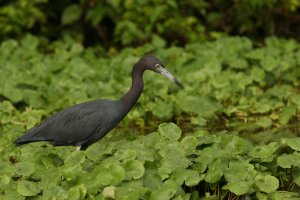
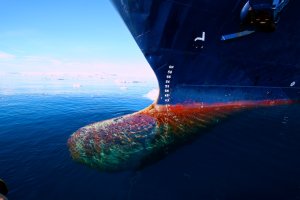
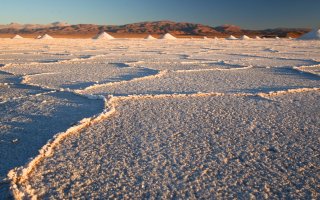
Your suggestion of a 70-200 f/4 IS and a 10-22 were my travel combo while I had a cropped body. I also had a 85mm 1.8 and a 24mm f/2 - and those four lenses went around the world with me.

The 70-200 f/4 IS is wonderful for jungle/wildlife shooting - especially on a cropped body like a 60D.
And the 10-22 is great for capturing the essence of an area... below are some examples of what you can do with these two lenses...

Good luck!
 

Attachments

  • 2007_CostaRica 109.jpg
    2007_CostaRica 109.jpg
    453.4 KB · Views: 1,231
  • 2007_CostaRica 137.jpg
    2007_CostaRica 137.jpg
    245.4 KB · Views: 965
  • 2008_South America Best 45.jpg
    2008_South America Best 45.jpg
    397.5 KB · Views: 982
  • 2008_Kite Buggy 76.jpg
    2008_Kite Buggy 76.jpg
    939.2 KB · Views: 980
Upvote 0
Sartor said:
Thank you for all the replies. It got me thinking quite a lot about which gear to get.

I will definitely go for a tele lens before I buy a wide angle.

The suggested Sigma 17-50 f/2.8 have been in my early considerations, but for some reason it got “replaced” by the Canon 15-85 f/3.5-4.5. I think I’ll end up with the Sigma, mainly because of the better aperture.

I like the idea of the fixed 200 f/2.8L and how it will make me walk around to get the better angle and perspective. I’m just a little concerned about the missing IS. How fast shutter speed is required to get rid of shaken images?

The 70-200 f/4L IS, the 70-300 f/4-5.6L IS or the 300 f/4L IS all have IS, but unfortunately at a much higher price than the 200 f/2.8L (non-IS). I was wandering if I should try to extend my budget to get one of these lenses or maybe just go with the cheap 18-55 f/4-5.6 IS lens.

As for a macro lens I hope my G9 will be sufficient until I can afford a real macro lens.

if those telezooms are to much for your budget you can look into 70-300non L. yes its not a L! but its a great start off lens. once you got better budget you can always sell it and upgrade. AS FOR WILDLIFE I WOULD CHOOSE a zoom over prime any day only because fixed length when in reality animals constantly move to different positions and wont have time to move back ten feet so you can get the shot.
and for macro i would look into 60mm macro lens its great lens i have it on my 60d and love it. and also works as great walk around lens, did i mention its really sharp and cheep!
 
Upvote 0
mr.ranger said:
if those telezooms are to much for your budget you can look into 70-300non L. yes its not a L! but its a great start off lens. once you got better budget you can always sell it and upgrade. AS FOR WILDLIFE I WOULD CHOOSE a zoom over prime any day only because fixed length when in reality animals constantly move to different positions and wont have time to move back ten feet so you can get the shot.

I've got a different opinion here because I've got the 100-300 non-L and my new 70-300L:

* Don't get a cheap tele zoom, just don't. If the iq @300mm from the cheap one looks worse than a crop from a quality lens @100mm, what's it good for? And even worse, on a cheaper zoom the af is less precise producing much more unfocussed shots.

* You might indeed think of not getting a zoom at all, but a prime. While the 70mm on my 70-300L is very convenient for a quick shot of the surrounding area, I find myself nearly constantly shooting @300mm and will now get a 1.4x tc. Basically, for my outdoor shots I could have gotten 300/4L instead, too. It's just that I might need the zoom for other occasions too in the future like events. I'd advise you to find out about your shooting habits by renting a tele zoom for some time.
 
Upvote 0
Cosk said:
Since this is your first DLSR, you should also consider buying used equipment - you can buy a few lenses on eBay, and sell them for the same or even a little more than you paid in a year or so if they don't fit into your style. Buying used really lowers your financial risk... and as long as you're buying top-end gear, it's usually in good shape.

Your suggestion of a 70-200 f/4 IS and a 10-22 were my travel combo while I had a cropped body. I also had a 85mm 1.8 and a 24mm f/2 - and those four lenses went around the world with me.

The 70-200 f/4 IS is wonderful for jungle/wildlife shooting - especially on a cropped body like a 60D.
And the 10-22 is great for capturing the essence of an area... below are some examples of what you can do with these two lenses...

Good luck!

Those are some very nice photos. I still might get the 12-22 as my third lens, but I will start off with a standard zoom lens and a tele prime or zoom. I have looked a little into the used marked and it seems that the lenses keep their value quite nicely - often only 10-20 % below retail as far as I can see.

Marsu42 said:
I've got a different opinion here because I've got the 100-300 non-L and my new 70-300L:

* Don't get a cheap tele zoom, just don't. If the iq @300mm from the cheap one looks worse than a crop from a quality lens @100mm, what's it good for? And even worse, on a cheaper zoom the af is less precise producing much more unfocussed shots.

* You might indeed think of not getting a zoom at all, but a prime. While the 70mm on my 70-300L is very convenient for a quick shot of the surrounding area, I find myself nearly constantly shooting @300mm and will now get a 1.4x tc. Basically, for my outdoor shots I could have gotten 300/4L instead, too. It's just that I might need the zoom for other occasions too in the future like events. I'd advise you to find out about your shooting habits by renting a tele zoom for some time.

I follow you on this one. I think I’ll be zooming in a lot if I get the tele zoom instead of a prime. However, the flexibility of a zoom is convenient.

I’m going to visit my local camera store and see if I can try out some of the zooms and primes to see what fits me best.
 
Upvote 0
AJ said:
I completely disagree with putting a 50/1.4 on a camera and using it exclusively. Whatever you do, don't do that.

Nobody said anything about using it "exclusively." My advice was to get a 50mm and use it while you're learning the craft of photography. Huge difference. And lest you think this was my own original idea, it's practice that has been bantered around by many others before me, both here and other sites as well.

I stand by my original suggestion: Using a 50mm prime while you're learning will help you become a better photographer. The composition in my own images have been suffering somewhat lately, so I'll be using my own 50mm again in the near future.
 
Upvote 0
EOBeav said:
AJ said:
I completely disagree with putting a 50/1.4 on a camera and using it exclusively. Whatever you do, don't do that.

Nobody said anything about using it "exclusively." My advice was to get a 50mm and use it while you're learning the craft of photography. Huge difference. And lest you think this was my own original idea, it's practice that has been bantered around by many others before me, both here and other sites as well.

I stand by my original suggestion: Using a 50mm prime while you're learning will help you become a better photographer. The composition in my own images have been suffering somewhat lately, so I'll be using my own 50mm again in the near future.

This might be an ignorant question, but why would using a prime make you a better photographer (or learn to become)? It's just a different way to shoot. I really like to compose by using the zoom and getting the perfect framing for the shot I want. So, during the last two years I can really see a difference in the composition of my pictures (from snapshot in the beginning to making a photo instead of just taking it now) - and I still have a long way to go...
 
Upvote 0
!Xabbu said:
This might be an ignorant question, but why would using a prime make you a better photographer (or learn to become)? It's just a different way to shoot.

Imho as a beginner, a prime forces you to think more because you have to zoom with your feet and at the same moment will discover that slight variations of angle might have a large impact on shots. And it's easier to take pictures with your eyes because you know exactly what field of view your camera has, so you have an easier time to transform your joe sixpack's view into a photog's view of things. When you get more advanced and know about these things, you can use a zoom as well because it's just convenient and you can concentrate on the next things to remember like lighting with flashes etc.
 
Upvote 0
"Why use a prime like, say, 50mm (or 30mm or 35mm) instead a zoom?"

Many are of the opinion (as apparent from some of the above replies) that using a prime helps the photographer to become a better photographer. Well, that is probably very true. Because it forces (and also allows) the photographers to concentrate on "framing" the composition, consider the angle of (natural) light (which creates different angle of shadow), and consider different points of view for the same scene. This is probably the "purest" way to learn photography.

However, there is another consideration. The "purest" may not be the "most suitable" for each and everyone out there. There is also a high chance that someone at the beginning of their learning process may loose interest when their photographic angle of view is limited to that of just one focal length.

I started with 50mm prime only. However, I got bored with it soon and had to buy another lens just for variety. Ok, my second lens was also a prime (85mm - prime due to the fact that good zooms where not in my budget then) but it gave me some variety and kept my interest alive. So, I think it is best to buy a prime and an optically good mid-range zoom together.

Unfortunately, 50mm on a cropped sensor does not offer a very "attractive" angle of view. A 35mm or 30mm is much better.

Finally, it is sometimes suggested that one does not need a zoom because with a prime one can "zoom with the feet". Well, that is not entirely correct. One can definitely get the same area (in two dimensional term) of the scene by zooming with the feet (with a wider lens) as one would with a tele lens; but, zooming with the foot changes the "point of view" of the photographer with respect to the scene and hence changes the perspective. This definitely changes the composition of the scene. Therefore, zooming with the feet and zooming a zoom lens is not the same thing - for composition.
 
Upvote 0
RAKAMRAK said:
"Why use a prime like, say, 50mm (or 30mm or 35mm) instead a zoom?"

Many are of the opinion (as apparent from some of the above replies) that using a prime helps the photographer to become a better photographer. Well, that is probably very true. Because it forces (and also allows) the photographers to concentrate on "framing" the composition, consider the angle of (natural) light (which creates different angle of shadow), and consider different points of view for the same scene. This is probably the "purest" way to learn photography.

However, there is another consideration. The "purest" may not be the "most suitable" for each and everyone out there. There is also a high chance that someone at the beginning of their learning process may loose interest when their photographic angle of view is limited to that of just one focal length.

I started with 50mm prime only. However, I got bored with it soon and had to buy another lens just for variety. Ok, my second lens was also a prime (85mm - prime due to the fact that good zooms where not in my budget then) but it gave me some variety and kept my interest alive. So, I think it is best to buy a prime and an optically good mid-range zoom together.

Unfortunately, 50mm on a cropped sensor does not offer a very "attractive" angle of view. A 35mm or 30mm is much better.

Finally, it is sometimes suggested that one does not need a zoom because with a prime one can "zoom with the feet". Well, that is not entirely correct. One can definitely get the same area (in two dimensional term) of the scene by zooming with the feet (with a wider lens) as one would with a tele lens; but, zooming with the foot changes the "point of view" of the photographer with respect to the scene and hence changes the perspective. This definitely changes the composition of the scene. Therefore, zooming with the feet and zooming a zoom lens is not the same thing - for composition.

I like what you said. Summarizing - one should zoom with lens and feet accordingly to achieve a desired composition :)
 
Upvote 0
Another reason to use a fast prime, such as the 50mm f/1.4 or f/1.8, is for the shallow Depth of Field. That allows you to blur the background much more easily than with a zoom, especially slow ones (> f/2.8). Doing so makes your subject stand out, aiding with composition.

Remember: years ago, a fast "normal" lens was typically the "kit" lens included with an SLR.
 
Upvote 0
DJL329 said:
Another reason to use a fast prime, such as the 50mm f/1.4 or f/1.8, is for the shallow Depth of Field. That allows you to blur the background much more easily than with a zoom, especially slow ones (> f/2.8). Doing so makes your subject stand out, aiding with composition.

Remember: years ago, a fast "normal" lens was typically the "kit" lens included with an SLR.

Both are so true. A fast prime definitely give much better (and easier) OOF blur than the "slower" zooms (not counting the fantastic zooms like say EF 70-200). And for quite some time after the beginning of the SLR era the "kit" lens used to be a normal lens like 50mm.

However, both of them are completely unrelated to each other. The "normal" lens was not a kit lens because it gave better photos when used properly but rather because first for quite some time the zoom technology was not there and second when the technology became available, the zoom lenses at that point of time were no where near the prime lenses in image quality. From my experience with current primes and zooms I think that gap has been narrowed down quite significantly.

Optically most of the fast primes are excellent and a definite must in the bag of every photographer (at least one of them). However, let's just remember that shallow depth of field (and the resultant OOF blur) even if aesthetically and compositionally nice and pleasing for certain type of photographs, need not be so for other types (of course we can stop down a fast lens to whatever stop we like).
 
Upvote 0
RAKAMRAK said:
:D. Well, definitely that is the perfect summary but only of the last paragraph.

... which is very common and leads to the extensive discussions about the 5d3: see your own opinion strengthened while ignoring everything else. That's why psychologists find great jobs in marketing!

Concerning zoom vs prime: It's correct that you can use a zoom to frame, but cropping is something you can do later on too - you can even change the distortion of a 35mm to a 50mm with one click in postprocessing if needed and most people probably won't notice if they don't know the original scene. But you cannot change the angle you shot at, and that's what you're forced to think about when using a prime. Zooming with your feet is just a by-product of finding the best angle to shoot at. Of course if your prime is too narrow you're screwed.
 
Upvote 0
Marsu42 said:
RAKAMRAK said:
:D. Well, definitely that is the perfect summary but only of the last paragraph.

... which is very common and leads to the extensive discussions about the 5d3: see your own opinion strengthened while ignoring everything else. That's why psychologists find great jobs in marketing!

Concerning zoom vs prime: It's correct that you can use a zoom to frame, but cropping is something you can do later on too - you can even change the distortion of a 35mm to a 50mm with one click in postprocessing if needed and most people probably won't notice if they don't know the original scene. But you cannot change the angle you shot at, and that's what you're forced to think about when using a prime. Zooming with your feet is just a by-product of finding the best angle to shoot at. Of course if your prime is too narrow you're screwed.

It is not always about the distortion. It is actually about the "angle" (which I have tried argue below at Flickr, have a look if time permits)

http://www.flickr.com/photos/alo-chhaya/7091640629/#


Precisely for finding the "angle" a zoom is better than prime. Cropping won't give us a different angle which we are talking about.

(Do not get me wrong; I am neither against prime nor overtly for zooms, I love both. And out my three lenses two are fast primes. Well relatively faster than the available zooms at least.)
 
Upvote 0
RAKAMRAK said:
It is not always about the distortion. It is actually about the "angle" (which I have tried argue below at Flickr, have a look if time permits)

Nice image @flickr - and I know about this, that's why I wrote distortion correction is an option *if* the viewer didn't know the original scene and won't notice the angle and distortion don't fit. But here too it can be argued that a prime reduces the numbers of degrees of freedom because you've got a limited choice. With a zoom, what's the best angle? With 35mm? 50mm? 40mm? 41mm? While making up your mind about that, using just two primes you might be further ahead composing the scene while the zoom user still ... well, zooms and walks towards or away from the object to frame.

But to make myself clear, too: I've got zooms and primes (100mm macro, 50mm "normal") and plan to get a 35L - so I'm really not set on anything but try to see both sides.
 
Upvote 0
There's only one compelling reason why you should learn to shoot with a prime. That's because retro-grouches learned it that way back in the 60s, and therefore you should too.

The advantage of primes is aperture and selective focus, not composition. Zooms are much better for learning composition. The notion that primes "force you to think and zoom with your feet" can easily be simulated by setting a focal length on a zoom before you raise the camera to your eye.

It is very instructive to take a subject and shoot it at with a variety of focal lengths (say 24, 35, 50 and 85 mm) to see the effect of wideangle, normal, and compressed views. Set the focal length and then "zoom with your feet". In the end this leads to better composition and photography compared to trying to hobble yourself with a single focal length. Learning correct choice of focal length is an essential part of composition.

I would argue that, if you really want a learning tool for composition, you should get a superzoom. Of course there are reasons why a superzoom may not be the best choice (IQ, aperture) but from a composition perspective it can't be beat.
 
Upvote 0
RAKAMRAK said:
marekjoz said:
I like what you said. Summarizing - one should zoom with lens and feet accordingly to achieve a desired composition :)

:D. Well, definitely that is the perfect summary but only of the last paragraph.

Ok, Summarizing - one should zoom with lens and feet accordingly to achieve a desired composition, having it learnt using primes (especially 30, 35mm on crop) while still paying attention not to get bored or disinterested. Better? :)

Seriously - you're a bit limited to whan you can do having a particular prime on a body attached and nothing helps no matter how you will work with your feet. Below 70, 80 - you have it difficult to frame a good portrait. Having 50 and up - the room can be to small etc. Primes are great when you are prepared to what you are going to shoot sacrifying frames you definitely loose. Landscape, portrait, product, "stylish" street are great for primes. As a general purpose lens it's difficult to find a prime. I think that having ie 15-50 f1.4 and 24-135 f1.8 would bring this discussion to another level :)
 
Upvote 0
Status
Not open for further replies.