Focal lengths

What's the longest focal length you've used?

  • <100mm

    Votes: 0 0.0%
  • 101-200mm

    Votes: 1 4.8%
  • 201-400mm

    Votes: 3 14.3%
  • 401-600mm

    Votes: 8 38.1%
  • 600-1000mm

    Votes: 1 4.8%
  • 1001-2000mm

    Votes: 7 33.3%
  • 2001mm+

    Votes: 1 4.8%

  • Total voters
    21
Dec 4, 2013
3,963
2,593
14,391
UK
www.flickr.com
Hey, I hope this hasn't been done before, and that it's okay to ask. Ever since I got into bird photography, there's been no such thing as too much focal length. So it often surprises me how short the longest lens other people use. Of course if you're not photographing small things far away, long lenses are of little use.

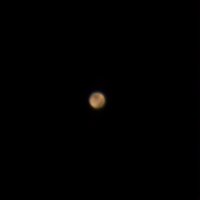
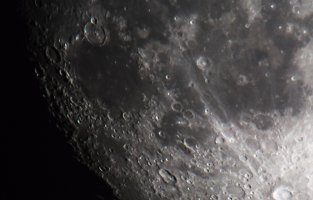
I recently got yet another teleconverter, and out of interest stacked them all for shots at 5600mm. It's not useable for most purposes but I was able to photograph surface features on Mars, and get detailed shots of the moon (image stacking being essential for both!).

Anyway, what's the longest focal length you've used? And if you want to comment, are you happy with that, or do you feel you need more reach?

(Standard 'length isn't everything' disclaimer).
 

Attachments

  • moonstack91011-1-1.jpg
    moonstack91011-1-1.jpg
    517.8 KB · Views: 341
  • Converted_file_925ec39f-1.jpg
    Converted_file_925ec39f-1.jpg
    153.8 KB · Views: 329
I have stacked 2xIII and 1.4xIII, with a 12mm tube in between, on my 600mm f4L IS II, mounted on a 5DIII body. Not something I will be doing very often. 1200mm is about as far as I find practical, unless the subjects are very stationary. But with a sturdy tripod/gimbal combo, good IS and working AF I would be tempted in some cases though.
 
Upvote 0
Eldar said:
I have stacked 2xIII and 1.4xIII, with a 12mm tube in between, on my 600mm f4L IS II, mounted on a 5DIII body. Not something I will be doing very often. 1200mm is about as far as I find practical, unless the subjects are very stationary. But with a sturdy tripod/gimbal combo, good IS and working AF I would be tempted in some cases though.

What did you use that for? Sorry, I should have said that. I've shot handheld up to 2800mm, but only in extremis (standard walkaround for birds is 1000mm). I'd say stacking the 2x and 1.4x provide acceptable image quality in good light, but beyond that it's just for fun (except in the astro realm where you can merge multiple images).
 
Upvote 0
Thank the Lord God, I do not photograph birds. ??? My bank account could not bear to buy the Canon big whites. :-[ The most TELE I ever used was 300mm on APS-C (480mm equivalent), and it was not enough. :-X I try to control myself not to give in to the temptation of a 800mm, because I do not want to rob a bank. :P For those moments of extreme GAS, I recommend something like Powershot SX50, which can save your life. ;)
 
Upvote 0
Excluding telescopes, I've used the EF 600/4 L II with both 2x and 1.4x TCs (a Kenko in this case, as they stack directly without the need for an extension tube...IQ suffers a little bit). That gets you to 1680mm.

With telescopes, I've poked around with focal lengths up to around 8000mm to 10,000mm using SCT and RC type OTAs with barlow lenses. The only real reason you would use such focal lengths is for planetary (to get any real kind of sharp detail on planets, you need at least 8000mm), solar (sunspot closeups) and lunar (individual craters and finer surface detail).

I haven't purchased my own OTA yet, once I do, I really can't wait to do planetary imaging at over 8000mm. :P
 
Upvote 0
jrista said:
Excluding telescopes, I've used the EF 600/4 L II with both 2x and 1.4x TCs (a Kenko in this case, as they stack directly without the need for an extension tube...IQ suffers a little bit). That gets you to 1680mm.

With telescopes, I've poked around with focal lengths up to around 8000mm to 10,000mm using SCT and RC type OTAs with barlow lenses. The only real reason you would use such focal lengths is for planetary (to get any real kind of sharp detail on planets, you need at least 8000mm), solar (sunspot closeups) and lunar (individual craters and finer surface detail).

I haven't purchased my own OTA yet, once I do, I really can't wait to do planetary imaging at over 8000mm. :P

How do telescope focal lengths relate to sensor size? Like, is 8000mm an equivalent in full frame lens terms?
 
Upvote 0
scyrene said:
jrista said:
Excluding telescopes, I've used the EF 600/4 L II with both 2x and 1.4x TCs (a Kenko in this case, as they stack directly without the need for an extension tube...IQ suffers a little bit). That gets you to 1680mm.

With telescopes, I've poked around with focal lengths up to around 8000mm to 10,000mm using SCT and RC type OTAs with barlow lenses. The only real reason you would use such focal lengths is for planetary (to get any real kind of sharp detail on planets, you need at least 8000mm), solar (sunspot closeups) and lunar (individual craters and finer surface detail).

I haven't purchased my own OTA yet, once I do, I really can't wait to do planetary imaging at over 8000mm. :P

How do telescope focal lengths relate to sensor size? Like, is 8000mm an equivalent in full frame lens terms?

Well, it depends on the scope. When it comes to the popular SCTs (like Celestron EdgeHD and the Meade Aplantics) and RCs, they are usually designed to cover at least the 42mm diagonal of a 35mm sensor frame. But when it comes to telescopes in general, they have a pretty wide range of image circle sizes. If you attach focal reducers, that affects the amount of backfocus, which in turn usually has an impact on image circle size. It seems to be a general standard that your average refractors (which often need at least a field flattener, if not a full focal reducer, to get a flat field) support a 22mm image circle. That is for fairly small sensors, which are more common in astrophotography CCD imagers. APS-C sized sensors are usually supported "natively" without focal reducers usually (~27mm diagonal.)

Larger scopes, as well as the new Rowe-Ackermann Schmidt Astrograph from Celestron, support image circles from 50mm up to 70mm. The larger scopes are ultimately designed to be used with both full-frame (36x24mm) and square full frame (37x37mm or larger, usually 4096x4096 pixels) CCD sensors. The 37x37mm sensors have a 52mm diagonal. There are some newer, larger sensors coming on the market soon that will have around a 65mm diagonal, and the ultimate top of the line is expected to be around 70mm in the future. Kodak is primarily the manufacturer supplying either FF or large square sensors, with 9µm, 11µm, and 24µm pixels. Sony has entered the market as well, and is supplying some of the highest sensitivity (highest Q.E.) small sensors (up to 22mm) that are often used in autoguiding cameras (ultra high sensitivity, configurable frame rate video cameras that are very similar to webcams, basically.) Some Sony sensors have found their way into entry-level Atik CCD cameras. Aptina also supplies 22mm and APS-C sized sensors.

There really isn't a standard sensor size that is supported by telescopes. Most support the 22mm and APS-C sensor diagonals. Larger OTAs usually support 35mm full frame. Outside of Celestrons new RASC Astrograph (which produces a 70mm image circle and costs a mere $3400), you usually have to buy either an RC Optical Systems or PlaneWave truss to get a 65mm (RCOS) or 70mm (PlaneWave) image circle...and those puppies cost tens of thousands of dollars.

 
Upvote 0
jrista said:
scyrene said:
jrista said:
Excluding telescopes, I've used the EF 600/4 L II with both 2x and 1.4x TCs (a Kenko in this case, as they stack directly without the need for an extension tube...IQ suffers a little bit). That gets you to 1680mm.

With telescopes, I've poked around with focal lengths up to around 8000mm to 10,000mm using SCT and RC type OTAs with barlow lenses. The only real reason you would use such focal lengths is for planetary (to get any real kind of sharp detail on planets, you need at least 8000mm), solar (sunspot closeups) and lunar (individual craters and finer surface detail).

I haven't purchased my own OTA yet, once I do, I really can't wait to do planetary imaging at over 8000mm. :P

How do telescope focal lengths relate to sensor size? Like, is 8000mm an equivalent in full frame lens terms?

Well, it depends on the scope. When it comes to the popular SCTs (like Celestron EdgeHD and the Meade Aplantics) and RCs, they are usually designed to cover at least the 42mm diagonal of a 35mm sensor frame. But when it comes to telescopes in general, they have a pretty wide range of image circle sizes. If you attach focal reducers, that affects the amount of backfocus, which in turn usually has an impact on image circle size. It seems to be a general standard that your average refractors (which often need at least a field flattener, if not a full focal reducer, to get a flat field) support a 22mm image circle. That is for fairly small sensors, which are more common in astrophotography CCD imagers. APS-C sized sensors are usually supported "natively" without focal reducers usually (~27mm diagonal.)

Larger scopes, as well as the new Rowe-Ackermann Schmidt Astrograph from Celestron, support image circles from 50mm up to 70mm. The larger scopes are ultimately designed to be used with both full-frame (36x24mm) and square full frame (37x37mm or larger, usually 4096x4096 pixels) CCD sensors. The 37x37mm sensors have a 52mm diagonal. There are some newer, larger sensors coming on the market soon that will have around a 65mm diagonal, and the ultimate top of the line is expected to be around 70mm in the future. Kodak is primarily the manufacturer supplying either FF or large square sensors, with 9µm, 11µm, and 24µm pixels. Sony has entered the market as well, and is supplying some of the highest sensitivity (highest Q.E.) small sensors (up to 22mm) that are often used in autoguiding cameras (ultra high sensitivity, configurable frame rate video cameras that are very similar to webcams, basically.) Some Sony sensors have found their way into entry-level Atik CCD cameras. Aptina also supplies 22mm and APS-C sized sensors.

There really isn't a standard sensor size that is supported by telescopes. Most support the 22mm and APS-C sensor diagonals. Larger OTAs usually support 35mm full frame. Outside of Celestrons new RASC Astrograph (which produces a 70mm image circle and costs a mere $3400), you usually have to buy either an RC Optical Systems or PlaneWave truss to get a 65mm (RCOS) or 70mm (PlaneWave) image circle...and those puppies cost tens of thousands of dollars.

Eek... I suppose what I meant was, is 8000mm in telescope terms the same as, say, a lens with attached teleconverters amounting to a 8000mm focal length? Would a planet be magnified the same amount by both?
 
Upvote 0