Get a 300mm or 600mm? Oh the agony...

I purchased the 300mm f/2.8 after going through every argument that everyone else has gone through. I would have purchased the 600mm lens if I was a very dedicated bird shooter, but I'm not. I shoot a little bit of this and of that. I am extremely happy with the sharpness of the 300mm lens. Truly outstanding. However, I admit that there are times when I would love to have the 600mm lens. That will have to wait because I've ordered the new Zeiss Otus lens for Canon. There goes some of the funds I would have used to purchase the 600mm lens. Boys and their toys, right!
 
Upvote 0
Jeffrey said:
I purchased the 300mm f/2.8 after going through every argument that everyone else has gone through. I would have purchased the 600mm lens if I was a very dedicated bird shooter, but I'm not. I shoot a little bit of this and of that. I am extremely happy with the sharpness of the 300mm lens. Truly outstanding. However, I admit that there are times when I would love to have the 600mm lens. That will have to wait because I've ordered the new Zeiss Otus lens for Canon. There goes some of the funds I would have used to purchase the 600mm lens. Boys and their toys, right!
You will not regret it. The Otus is just magnificent!
 
Upvote 0
Re: Real World Subject

Encountered lazy hawk this morning and almost got thru all options, in the car, before it flew. 60D/70D and 6D; w/300 2.8L IS II, 500 4L IS II, 70-200 4L IS @200; plus 1.4x III. Anyone interested?
Since how I would do it will not suit some (most?) of you, I'm not going to do a comparison. But I'd be happy to upload the sharpest frame of each combo.
I've only sent a couple of snaps to this site, so you guys tell me what's standard upload for this "serious" work. Full frame? Is some resizing/compression in order?

A couple people have mentioned it, but ability to achieve precise focus is big factor in this debate. 3D feathers are much tougher than brick walls. Also, anyone on a budget is making a huge mistake if they don't, at least, consider the ol' 400 5.6L.
 
Upvote 0
Here's another angle. 600 X1.4 vs. 300 X2 A strange comparison admittedly but if one was in the habit of using 840 to avoid the effort of getting into 600 range then the results are not much better than 300 X2 and 600 X2 appears to be quite a bit worse sharpness than what you get with 300 X2, FWIW, apples and oranges.

What's the feeling of those shooting both 600 and 300 relative to the performance when extended?

http://www.the-digital-picture.com/Reviews/ISO-12233-Sample-Crops.aspx?Lens=748&Camera=453&Sample=0&FLI=1&API=2&LensComp=739&CameraComp=453&SampleComp=0&FLIComp=2&APIComp=3

Jack
 
Upvote 0
Jack Douglas said:
Here's another angle. 600 X1.4 vs. 300 X2 A strange comparison admittedly but if one was in the habit of using 840 to avoid the effort of getting into 600 range then the results are not much better than 300 X2 and 600 X2 appears to be quite a bit worse sharpness than what you get with 300 X2, FWIW, apples and oranges.

What's the feeling of those shooting both 600 and 300 relative to the performance when extended?

http://www.the-digital-picture.com/Reviews/ISO-12233-Sample-Crops.aspx?Lens=748&Camera=453&Sample=0&FLI=1&API=2&LensComp=739&CameraComp=453&SampleComp=0&FLIComp=2&APIComp=3

The problem with using the TDP crops in this case is that ISO 12233 chart shots must fill the frame - the 300+2x is shot closer to the subject. If you shot from the same distance, cropped those 300+2x shots to the 840mm FoV, then enlarged then to the same size, the difference would be more apparent (advantage to 600+1.4x), more so with the 600+2x. But if you compare at half the distance, the 300 takes the 2xIII better than the 600.

So...if you can get close enough to your subject, the 300 II is the better lens. But most people who choose the 600 do so because they can't get closer. For the same reason, bird shooters chose the 800/5.6 over the 600/4 MkI (but the 600 II + 1.4xIII is better than the 800/5.6, so until an 800 II comes along, the 600 II is a better choice).
 
Upvote 0
Once again, thanks Neuro. That makes sense and is good to know. These things make me wonder and I don't have the background so it's easy to get off track.

Since you're such a nice guy always willing to answer ;) here's another question. In doing AFMA on Canon tele's have you found it matters which direction focus comes from MFD or Inf??

Jack
 
Upvote 0
Jack Douglas said:
Since you're such a nice guy always willing to answer ;) here's another question. In doing AFMA on Canon tele's have you found it matters which direction focus comes from MFD or Inf??

Thanks! :)

It might. The key is you shouldn't take just one shot per value, and when you take several shots, use both methods.

When I was using a LensAlign Pro, I would shoot single shots starting from infinity focus and review at maximum zoom on the rear LCD, in increments of 5 units then narrowing further, until I have a tentative AFMA setting for that lens. Then I would shoot at a total of 11 AFMA settings – 5 units on either side of my preliminary choice – for computer review. At each setting, I would shoot eight shots, two starting from infinity, then two without refocusing, then two starting from the MFD, then two more without refocusing. I generally found that as I stepped through the images on the large monitor, when approaching the best adjustment, the shots from infinity will be off, then at the best adjustment they’ll all be spot on, then as I move away the shots from the MFD will be off, or vice versa.

Now that I use Reikan FoCal, I capture images myself and load them into the software in Manual mode. I shoot two shots at each even AFMA value from |20| to |12|, one each from infinity and MFD, then three shots at all AFMA values from –10 to +10, one from infinity, one from MFD, the third without refocusing. Similar to my observations with the LensAlign, when plotted in FoCal all three shots for each value are clustered at and near the optimal setting, but on the shoulders of the peak I often see two of the three shots adjacent with the third a slight outlier (but...I haven't actually checked to see if the outliers are infinity on one side of the peak and MFD on the other).

Thinking about it, although the above observation suggests there might be a difference, I don't really know if it matters - I just assumed it would be better to twist the ring both ways, since in the real world you don't always focus one direction. The real test would be to do a set AFMA tests with all shots starting at infinity, and another set with all shots starting from the MFD, and see if the result is the same.
 
Upvote 0
mackguyver said:
Speaking of FOCAL, has anyone tried using larger (i.e. 11x17" / A3) targets with their long lenses? The standard letter / A4 target is pretty hopeless at 50x and FOCAL's guides recommend larger targets.

I don't understand... If you place the printed target at a distance of 50 times the focal length, the target will be the exact same size in the image whether you're using a 16mm lens or a 1200mm lens.

The reason to print larger target is if you are testing at distances greater than 50x the focal length, and the reason you'd be doing that is if you usually use that lens at those distances. Note that FoCal suggests that with long telephoto lenses, you can actually test at less than 50x the focal length.
 
Upvote 0
neuroanatomist said:
mackguyver said:
Speaking of FOCAL, has anyone tried using larger (i.e. 11x17" / A3) targets with their long lenses? The standard letter / A4 target is pretty hopeless at 50x and FOCAL's guides recommend larger targets.

I don't understand... If you place the printed target at a distance of 50 times the focal length, the target will be the exact same size in the image whether you're using a 16mm lens or a 1200mm lens.

The reason to print larger target is if you are testing at distances greater than 50x the focal length, and the reason you'd be doing that is if you usually use that lens at those distances. Note that FoCal suggests that with long telephoto lenses, you can actually test at less than 50x the focal length.

Actually I have found that the supertele's are the easiest to do the AFMA with. The regular size target is fine.
The hardest part is finding a spot inside that I can get 50x the distance away from. I need a bigger house so I do not have to go outside to do this.
 
Upvote 0
I have been away for a little and came back today. I am impressed with al lthe information that has been provided to my question. All of you, I offer my deepest thanks. You have given me allot to think about regarding this purchase.

I can rule out the 200-400 I am not on the side lines of a football game photographing the action. Allthough it would be useful in Motorsports it's cost for now is prohibative. I think it's 3-4K to high price for me to justify it.

While I want the 600 after reading everything here the 300 sounds like a great choice for me. This next week is the Phoenix Imaging Expo and I am hoping to get my hands on some of these lenses to real get an idea of what I am in for.

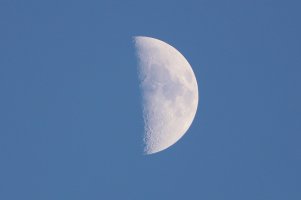
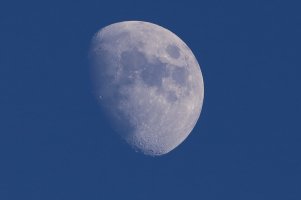
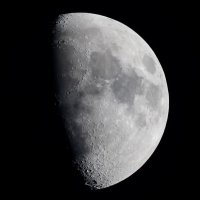
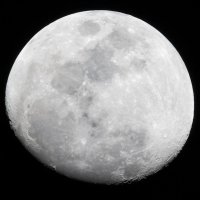
I do have 1 question, does anyone have a Moon shot with the 600mm by it's self and a Moon shot with the 600 and 2X? I can use this in a way to gauge my reach. I would love to do some Moon shots and there is a full moon comming up on the 16th of Jan. I will be using my 70-200 with a 2X this time around to give me an idea on how much more reach I want to achive.
 
Upvote 0
neuroanatomist said:
mackguyver said:
Speaking of FOCAL, has anyone tried using larger (i.e. 11x17" / A3) targets with their long lenses? The standard letter / A4 target is pretty hopeless at 50x and FOCAL's guides recommend larger targets.

I don't understand... If you place the printed target at a distance of 50 times the focal length, the target will be the exact same size in the image whether you're using a 16mm lens or a 1200mm lens.

The reason to print larger target is if you are testing at distances greater than 50x the focal length, and the reason you'd be doing that is if you usually use that lens at those distances. Note that FoCal suggests that with long telephoto lenses, you can actually test at less than 50x the focal length.
I guess I posted this a bit out of context - for longer lenses, bigger targets allow longer distances, but as you posted, I have been using FoCal at less than 50x for my longest lenses. I've noticed that I get better results with all lenses by going closer than 50x, particularly my wider lenses. It seems that the target size is just too small for enough pixels of data to be collected. I'm thinking a larger target with larger patterns will help FoCal produce more accurate results at all distances, so long as the entire target can be shown in the viewfinder. I would use the vector image to print it so it would scale correctly without interpolation. The new version of FoCal allows you to calibrate your target size, so I think this would work well.

I guess ultimately, this just jogged my memory and I was wondering if anyone had used larger targets :)
 
Upvote 0
mackguyver said:
neuroanatomist said:
mackguyver said:
Speaking of FOCAL, has anyone tried using larger (i.e. 11x17" / A3) targets with their long lenses? The standard letter / A4 target is pretty hopeless at 50x and FOCAL's guides recommend larger targets.

I don't understand... If you place the printed target at a distance of 50 times the focal length, the target will be the exact same size in the image whether you're using a 16mm lens or a 1200mm lens.

The reason to print larger target is if you are testing at distances greater than 50x the focal length, and the reason you'd be doing that is if you usually use that lens at those distances. Note that FoCal suggests that with long telephoto lenses, you can actually test at less than 50x the focal length.
I guess I posted this a bit out of context - for longer lenses, bigger targets allow longer distances, but as you posted, I have been using FoCal at less than 50x for my longest lenses. I've noticed that I get better results with all lenses by going closer than 50x, particularly my wider lenses. It seems that the target size is just too small for enough pixels of data to be collected. I'm thinking a larger target with larger patterns will help FoCal produce more accurate results at all distances, so long as the entire target can be shown in the viewfinder. I would use the vector image to print it so it would scale correctly without interpolation. The new version of FoCal allows you to calibrate your target size, so I think this would work well.

I guess ultimately, this just jogged my memory and I was wondering if anyone had used larger targets :)

50x focal length for distance is what FoCAL originally stated. In subsequent versions of FoCal they have made mention of shooting at closer distances then 50x.
http://s449182328.websitehome.co.uk/focal/dl//Docs/FoCal%20Test%20Distance_1.1.pdf


I personally calibrate my tele's at 20-25x focal length. This way If I am shooting song birds (That are often at that distance from my camera) then the lens is calibrated for that situation. When I shoot wildlife that is much farther away, I might not have quite the optimal AFMA setting as it can slightly vary with shooting distances, but I do have a larger DOF to make up for this variability, therefore all shooting distances are just fine with a close AFMA calibration distance.
 
Upvote 0
Jack
Here is the moon from my 300mm 2.8 II + 2xTCIII on 5DIII. Hand-held at iso 400, f/5.6 and 1/1000.
 

Attachments

  • 600mm_2872.jpg
    600mm_2872.jpg
    52.2 KB · Views: 1,618
Upvote 0