Help deciding on a macro lens

m said:
As this is a thread looking for a 100mm-ish macro lens, I'd like to mention the Apo Lanthar 125mm from Voigtländer.

I don't own one.
People are saying it's a very nice lens and a pretty rare one, too.

Did not know about that lens; but just found this comparison with the Zeiss: http://thepictorial.com/reviews/clash-of-the-titan-macros/
This review is very positive about the Voigtländer, which is about half the price of the Zeiss!
 
Upvote 0
michalk said:
Hi everyone,

I'm a long time reader, first time poster and I'd really appreciate your help. I want to get into macro photography and I'm considering buying Carl Zeiss Makro-Planar T* 100/2 ZE. It seems to be optically superior to the Canon alternative and it also gives me one stop of light more than the Canon. I lack a dedicated portraiture lens above 50mm as well and the Zeiss seems to be a decent portrait lens (I own a Canon 70-200 f/2.8 IS II L and I'm not certain whether Canon 100m 2.8 L would be any better than the zoom for portraits).

There are two obvious drawbacks, lack of AF and 0.5x magnification. I don't think the magnification will be a problem for me, but I'm not certain how important AF is in a macro lens. I'd be grateful for any advice and your experiences with different macro lenses.

Mike

If you plan on dual purposing the lens for portraiture, I would say nay on the Zeiss Makro unless you are insanely good at manual focusing. I had the same thought prior to picking up the 50mm Makro. While I have had success with it for portraiture, there are plenty of other options that make for a much easier time producing (other than macro) images.

Also, you may not mind the thought of not having at least a 1:2 magnification. But if you are going to be doing a decent amount of macro, I'm almost certain you'll end up realizing you want to get in closer in many instances.

I currently have the Zeiss 50/2 and 100L and find that they both serve their respective purposes. I think you'll find the 100L is much better for dual purposing.

+1 with re to what Neuro said about having the F2. When doing macro, it's very difficult to get a lot of things completely in focus since the DOF is so thin. I took a shot of a .223 round last night with the Zeiss 50/2 at F/8 at MFD and still had part of the bullet not completely in focus. I suppose though if you wanted to dual purpose the lens for portraiture, the F2 would be nice. But again, how good are your MF abilities?

IMO, if you really don't mind not having a true macro magnification, plan on using it for other purposes than macro, and are okay with manual focusing, take a look at the 90mm TSE. I often times use this for getting close-up macro type shots as it enables you to much more easily get a subject completely in focus. It only gives you a .29 mag. With an extension tube, it takes you to .43 which is just about on par with the Zeiss. If I had to pick one out of the three lenses I just named to keep, it would be the 90 TSE as there are plenty of other things you could do with it creatively as well (based on the parameters you have provided that is).
 
Upvote 0
Another note on using the macro as a portrait lens.
I use my 100mm in none-macro situations and what always fascinates me is the very little movement the focus ring does.
There's barely any movement of the focusing ring from 3m to infinity.
That's cool with AF, because less movement means quick focus, but I doubt that I could focus this thing manually in this setup.

I assume that the mechanics of the Zeiss are different to allow more precise manual focusing.

Vossie said:
This review is very positive about the Voigtländer, which is about half the price of the Zeiss!

The article says the voigtländer is more expensive.
The important thing about this lens is that it's very rare and that makes it expensive.
 
Upvote 0
I'm very happy with the ef 100mm f/2.8 Macro (standard). Dropped it hard, very hard onto a tile floor from about 4 feet up and the focus ring wouldn't turn. Sent it to Canon, relatively small repair bill, works as good as ever.

But I have friends who rave about the L version and occasionally use it for portraits too.

Just want to say the replies lately are so helpful and sincere.

Great forum!
 
Upvote 0
The article says the voigtländer is more expensive.
The important thing about this lens is that it's very rare and that makes it expensive.

You are right, the lens is no longer being made and goes for about EUR 2000 / $2600 on Ebay. The Zeiss is about EUR 1700 in Europe ans $1850 in the US.

Strangely, it is still on the Voightlander site, where it is listed at EUR 999 (which is what i based my prvious statement on): http://www.voigtlaender.de/cms/voigtlaender/voigtlaender_cms.nsf/id/pa_asan6m4dyb.html
 
Upvote 0
michalk said:
Thank you for all the replies so far!

My main use for the macro will be food close ups to start with, but I will also use it for a variety of other purposes (e.g. I travel a lot and often find myself wishing for a macro lens while doing it). As I mentioned I was hoping to use the lens as a portrait lens as well (f/2.0 would sometimes be useful here), but on the other hand I wouldn't want to compromise its primary use.

I could be wrong, but I suspect that by "food close-ups" you're not really implying the sort of "true" macro photography that others have been addressing - do you want, say, to have a solitary beautifully lit caviar egg fill the image? If you merely want to "get close" but let the image be recognizably of food, all you may need is a lens with a short minimal focus distance or a lens with sufficient magnification. Macro lenses are great for that too, of course (that's primarily why I like them so much), but for such purposes it will matter less whether it's 1:1 or 1:2 or even whether it's 50mm or 100mm or 180mm (by all accounts the Sigma 180mm IS lens is fantastic, but if the food you want to photograph is in a restaurant chances are you won't want to us *that* lens...).

The 100L is one of my favorite all-purpose lenses, for all the reasons already given by others. The IS won't always be helpful, but sometimes it will and I would rather have it than not; and while AF isn't as accurate as MF when operating with shallow depth of focus, especially if you care about - and you will - which precise details are in focus, it's nice to have it otherwise, especially when you're using it on a dslr, hand-held, where MF is rather hard to do effectively. But if you don't need IS and don't need 100mm you could by the 70mm Sigma, which does 1:1 magnification, has superb image quality, costs half as much as the 100L and makes an excellent all-purpose walk-around lens. Or you could try the 100mm non-L Canon. Or, frankly, just about any macro lens - as far as I can tell, they all provide impressive image quality, with differences among them being relatively trivial in actual use.

(If you had a decent mirrorless body it would be easy to recommend some cheap macro lenses to start (or even end) with. E.g. for less than $150 you can buy a Nikon 55mm f2.8 MF lens + adapter and get superlative image quality; it also has the advantage of being small and light (a mere 289g) - but I wouldn't want to try to use mine on a dslr....)
 
Upvote 0
Missed the whole food shooting follow-up. If that is the case, like sdsr said, you aren't really looking for a very large magnification macro.

I would definitely try renting the 90mm TSE. Lots more flexibility in focusing and opens up a lot of creative options especially if shooting food and portraits.
 
Upvote 0
Thank you all for the helpful feedback, this is why I like photography community so much.

By food close-ups I mean macro between 1:5 and 1:1, although it is unlikely I will go to 1:1 magnification when shooting food. I own a Sigma 50 art which I use for most of the shots below 1:5 magnification (Sigma maximum is 1:5.6 I believe). Bear in mind food is going to be only one of the uses, although a major one. There is plenty of detail I would like to capture when travelling and I love to experiment in my home studio. My initial worry was AF, but as I am not intending to shoot insects I realise now that I should worry more about the potential future use of 1:1, which so many of you pointed out.

I'd like to believe I'm quite decent with MF, decent enough to get results I'm happy with when shooting relatively still images like portraits, so I don't think MF is going to be a problem when using the lens for this purpose. In any case I own the 70-200 mk2 as I mentioned earlier, which I can always use when I need AF at 100mm f/2.8+. The reason I am considering the Zeiss as a dedicated portrait lens instead (in addition to macro) is the extra stop of light and its IQ (although it is hard to beat the zoom on IQ).

Voigtländer sounds like a great lens that I haven't considered, it is definitely worth looking at. 90mm TS-E is a great lens in its own right, and one that I would like to own one day, but the .29 magnification makes it much less compelling as a macro lens.
 
Upvote 0
michalk said:
90mm TS-E is a great lens in its own right, and one that I would like to own one day, but the .29 magnification makes it much less compelling as a macro lens.

An EF 25 extension tube takes you to 0.6x mag, higher than the Zeiss macro you're considering. Look back up at the numbers I provided above for DoF. Depending on the subject, tilt can give you very deep DoF without resorting to apertures where diffraction robs you of sharpness.

Look at some tests (like TDP's ISO 12233 crops) for the Zeiss lens stopped way down to see the effects of diffraction. The TS-E 90mm with the 25mm tube and 2x TC will deliver 1.2x magnification and on FF at f/8 will be sharper and have better contrast than the Zeiss 100mm macro stopped down to f/16.

I wouldn't discount the TS-E 90mm as a macro lens...there are very good reasons it's the lens of choice for product photography.
 
Upvote 0
michalk said:
I'd be grateful for any advice and your experiences with different macro lenses.

While it is possible to do "macro" and use autofocus, changing the focus changes the magnification. As Neuro explained, the only reliable way to maintain 1:1 (or max magnification) is to set the lens to the maximum magnification and then move the camera and leave the focus adjustment on the lens alone.

Purists will call anything less than 1:1 "close-up" rather than macro.

I have tried manual focus and then switch to live view to confirm (tripod in use), and I have been off. Maybe more practice will help.

A 180mm macro lens will give you more working distance to the subject than a 100mm macro at minimum focus/max magnification. This may be important to you. I happen to like the 150mm Sigma macro.

As magnification goes up, depth of field goes down. Very little of a macro shot at 1:1 and at f2.8 will be in focus, unless the object is flat and in the same plane as the camera sensor.

Given the performance of current digital cameras, I'm not sure if the difference between f2.8 and f2.0 is massively importatnt from a lighting perspective. Bokeh and depth of field, sure.

The Canon 100L macro also has the fancy IS stuff- nice to have when you need it.

There are many threads/comments about the Canon 90mm TSE being *the* product photography lens. Maybe there is a reason? It also takes teleconverters for an easy 126mm.
 
Upvote 0
for what it's worth, i have the sigma 70mm f2.8 macro, which i use with a manfrotto 454 micro adjust plate. it was the best performing macro lens in it's price bracket at time of launch, af is there but unusable, and probably not what you want to use anyway, on any macro lens.

I had triedthe old 50mm f2.5 but was getting horrific fringing wide open.

just my tuppence worth
 
Upvote 0
I'm not as accomplished as the others but this is my experience with macro lenses

1. Image quality across all macro lenses are superb! Difference may be told in how bokeh is rendered and the 100L is a bokeh champion in my opinion.

2. DOF between f/2.0 & f/2.8 is neither here nor there. Even at f/11, shooting a butterfly side on, you probably won't have the back legs in perfect focus.

3. AF for macro is dangerous but IS helps. Just make sure you've depressed the shutter button half way to initialize the IS as it has a slight kick that could, ironically affect sharpness.

4. Yes, shooting macro on a tripod guarantees a sharp image. If the subject is static. Handheld is the way to go
 
Upvote 0
neuroanatomist said:
michalk said:
90mm TS-E is a great lens in its own right, and one that I would like to own one day, but the .29 magnification makes it much less compelling as a macro lens.

An EF 25 extension tube takes you to 0.6x mag, higher than the Zeiss macro you're considering. Look back up at the numbers I provided above for DoF. Depending on the subject, tilt can give you very deep DoF without resorting to apertures where diffraction robs you of sharpness.

Look at some tests (like TDP's ISO 12233 crops) for the Zeiss lens stopped way down to see the effects of diffraction. The TS-E 90mm with the 25mm tube and 2x TC will deliver 1.2x magnification and on FF at f/8 will be sharper and have better contrast than the Zeiss 100mm macro stopped down to f/16.

I wouldn't discount the TS-E 90mm as a macro lens...there are very good reasons it's the lens of choice for product photography.

On the money as usual, Neuro.

Not sure what look you are wanting to accomplish with regard to macro. But as far as light gathering capability + the ability to achieve the DOF that you want, you can't beat the 90mm TSE. You will be able to shoot at 2.8 and still get most entire subjects in focus at maximum magnification which is impossible with any of the other lenses you are considering.

Generally speaking in my personal uses, I am shooting macro subjects at a downward angle. Depending on the size and positioning of the subject, F8 is still not enough a lot of the time. In those same scenarios, the 90mm TSE at 2.8 gets the job done.

Also, if you are looking for something that is versatile, the TSE is great as I have not only used it for macro, but portraiture and landscape as well.
 
Upvote 0
Thank you for all your comments. I decided to buy an EF 25mm extension tube first (which I will find plenty of use for anyway) and rent a TS-E 90mm and 100L to see what kind of results I can get out of them. The longer I think about it the harder it gets to decide.
 
Upvote 0
A very interesting topic with good info. (Such as the points about using 90 mm TS/E for macro work).

Your plan to start out with an etension tube sounds like a good way to gain some experience.

My experience is solely with the Canon 100 mm L macro.
I like this optics very much - good build, handles well, great function with many uses.
And I am very pleased with the IQ.

I am still in the learning-phase regarding macro-photo, but find it both fun, challenging and rewarding.

For me the 100mm length seems to be the right choice (on FF with my 6D). Also very useful for portraits btw. If you work with things like nervous insects you should consider also longer FL.

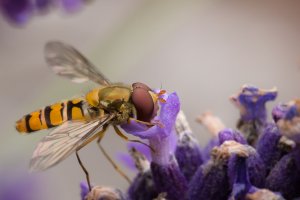
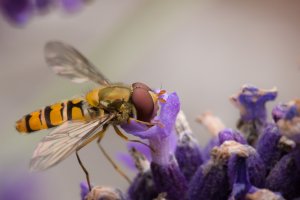
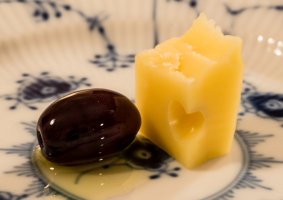
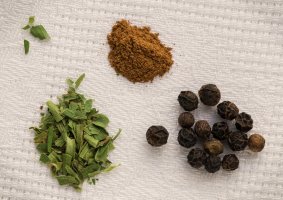
I attach a few samples:
1. Live insect (but not in flight), AF is a must, and IS is very much an advantage here. 1/60s, f/11, ISO 800. Approx 60% crop.
2. Same image, but 100% of cropped resolution
3. Food close-up. 2.5 s, f/18, ISO 400. Manual focus, tripod
4. Food / Spices, 1/13s, f/22, ISO 400. Manual focus, tripod
No 4 Illustrates sharpness well (even at f/22) - notice the thin red thread between cinnamon and peppercorns.

Appreciate comments - and look forward to hear your experience.
 

Attachments

  • IMG_7342-3.JPG
    IMG_7342-3.JPG
    530.8 KB · Views: 423
  • IMG_7342.JPG
    IMG_7342.JPG
    1.5 MB · Views: 478
  • Have a bite.jpg
    Have a bite.jpg
    727.4 KB · Views: 474
  • Spice it up.jpg
    Spice it up.jpg
    300.7 KB · Views: 431
Upvote 0