Lens dilemma for night sky

I was just looking into this very thing yesterday and it looks like the 24-70 f/2.8 II has the lowest coma of just about any Canon lens (other than the super teles):
http://www.lenstip.com/358.7-Lens_review-Canon_EF_24-70_mm_f_2.8L_II_USM_Coma__astigmatism_and_bokeh.html

Lenstip is about the only site that specifically tests for it. Sadly my beloved 24 f/1.4 II doesn't perform so well:
http://www.lenstip.com/245.7-Lens_review-Canon_EF_24_mm_f_1.4L_II_USM_Coma_and_astigmatism.html

For wider angles, the others are right, the Samyang 14 mm f/2.8 ED AS IF UMC is your best bet and blows away the 14 f/2.8 II:
http://www.lenstip.com/239.7-Lens_review-Samyang_14_mm_f_2.8_ED_AS_IF_UMC_Coma_and_astigmatism.html

Check out their other reviews too if you want to to find the right lens to make sure your stars are still round in the corners :)
 
Upvote 0
This isn't done yet, but I recently rented the Canon 14, 24, 16-35 and 17-40 along with my Samyang 14 and 24 and Zeiss 21 to test exactly this stuff. http://www.extremeinstability.com/lenses.html Guessing you can get the idea from that right now. The Samyang 14 and 24 can both be used wide open on stars no problem. Canon's are a joke on stars. And otherwise still aren't worth the money. Unless one doesn't care for corners I guess.
 
Upvote 0
extremeinstability said:
This isn't done yet, but I recently rented the Canon 14, 24, 16-35 and 17-40 along with my Samyang 14 and 24 and Zeiss 21 to test exactly this stuff. http://www.extremeinstability.com/lenses.html Guessing you can get the idea from that right now. The Samyang 14 and 24 can both be used wide open on stars no problem. Canon's are a joke on stars. And otherwise still aren't worth the money. Unless one doesn't care for corners I guess.
extremeinstability, when I said Lenstip was about the only place I had seen coma tests, your site was the other site, but I didn't have your URL. Thanks for posting and keep up the great tests!
 
Upvote 0
I will be adding full size image examples for download once I get that far. But at least on the 16-35 and 17-40 these two should give one an idea. Only 6 seconds long so no moving stars like the edges look.

http://www.extremeinstability.com/lenstestimages/blurring-canon1635.jpg
http://www.extremeinstability.com/lenstestimages/blurring-canon1740.jpg


That should give a person a general idea of the sharpness fall off on either of those lenses wide open at the wide ends. 17-40 seems it holds onto sharpness further out then falls the hell off hard. Sure one is F4 and the other F2.8. But clearly it pays to go prime when it comes to corners and stay away from Canon when it comes to coma.
 
Upvote 0
mackguyver said:
extremeinstability said:
This isn't done yet, but I recently rented the Canon 14, 24, 16-35 and 17-40 along with my Samyang 14 and 24 and Zeiss 21 to test exactly this stuff. http://www.extremeinstability.com/lenses.html Guessing you can get the idea from that right now. The Samyang 14 and 24 can both be used wide open on stars no problem. Canon's are a joke on stars. And otherwise still aren't worth the money. Unless one doesn't care for corners I guess.
extremeinstability, when I said Lenstip was about the only place I had seen coma tests, your site was the other site, but I didn't have your URL. Thanks for posting and keep up the great tests!

Yeah lens tip was the only place I've seen it too. I never paid much attention to it till I bought a Canon 24L II and tried to shoot the night sky with it. Heck didn't even know about it till then. Using that I was like, holy crap what the hell, the outer third at least of the sky is ruined lol. Then found lens tip and well swapped that Canon for the Zeiss 21. Eventually wound up with the Samyang 14 and 24s which are quite scary good. I now need to get the 24 centered if that is the issue because its good side is just straight up ridiculous at F1.4 even. And the bad side is still as good as the Canon 24L II wide open lol. It just matters where the focus is set at infinity. I need to get it back out at night and make sure I set it so it is splitting the difference. Then compare to the Canon again. But it has to be better. It's worlds better with coma.
 
Upvote 0
I've tried many of the prime lenses, and the best I have found is the Zeiss Distagon 15mm f/2.8. It is very expensive at $3000. I can only afford to rent it, but the micro-contrast and color is just amazing. It's hard to explain how good the RAW images look with this lens. I've never seen anything like it. Yes, the Samyang is significantly cheaper, but I would be willing to bet it doesn't even come close to the "look" of the Zeiss glass.

For meteor photography, I stop the Canon 14mm f/2.8L down to f/4.0. There is still a lot of aberrations in the corners. I've come to accept that fact. :( I stop the Canon 24mm f/1.4L down to f/2.8 with just minor aberrations in the corners. I sure hope Canon's updates improve their coma problem; however, I would be surprised if they do. I'm looking forward to seeing what Zeiss puts out in their Otus line. I'd be willing to spend $4000 on a lens that has excellent stars stopped down to f/2.0 or so, especially if it is 21mm or 24mm focal length. That would be a dream. :) I have included a few non-cropped examples.
You can always rent the Zeiss lens. The only downside to renting the Zeiss lens is you'll want to buy one afterwards. :)

Wade
 

Attachments

  • 20130811_zeiss_15mm_0102.jpg
    20130811_zeiss_15mm_0102.jpg
    226.1 KB · Views: 1,126
  • 20130812_canon_8_15mm_0052.jpg
    20130812_canon_8_15mm_0052.jpg
    264.4 KB · Views: 1,146
  • 20130812_canon_14mm_0011.jpg
    20130812_canon_14mm_0011.jpg
    204.7 KB · Views: 1,231
  • 20130812_canon_24mm_0028.jpg
    20130812_canon_24mm_0028.jpg
    238.7 KB · Views: 1,118
Upvote 0
Hello,

for optimal results in night-sky applikation with relatively low cost I propose

Y/C-Zeiss Distagon for the low end if focal length, adaption to EOS is no serieous problem, but not all lenses fit with full format mirror (!) - and modding the mirror is not anyone's business - but if more often used no bad idea - concerning the costs of newer ultra-wide lenses and regarfing the outstanding quality of the Zeiss-lenses.

For 50 -> 350mm focal length you have the option of using the Hasselblad-F-Lenses, perfect flat and very very sharp, nearly no vignetting due to the large image-circle. Adapters in very good brass quality are on the market.

My five pence,

Joerg
 
Upvote 0
sanj,

Thanks!

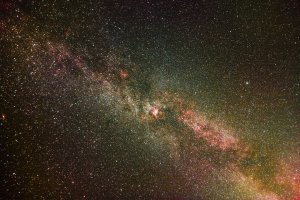
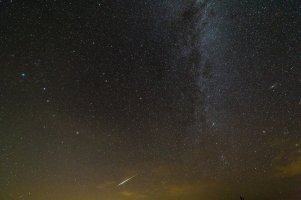
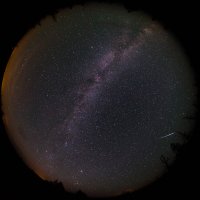
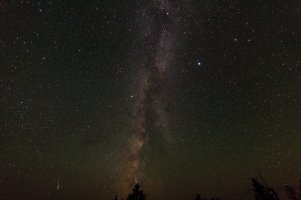
Here are the details:

Photo 1
Zeiss Distagon 15mm f/2.8
Stopped down to f/3.5
Canon 5D3
ISO 4000
60 seconds
unguided equatorial mount

Photo 2
Canon EF 8-15mm f/4.0L
Wide-open at f/4.0
Canon 1D-X
ISO 6400
40 seconds
fixed tripod

Photo 3
Canon EF 14mm f/2.8L
Stopped down to f/4.0
Canon 5D2
ISO 3200
60 seconds
unguided equatorial mount

Photo 4
Canon EF 24mm f/1.4L
Stopped down to f/2.8
Canon 5D3
ISO 2000
62 seconds
unguided equatorial mount

Wade
 
Upvote 0
wearle said:
I'd be willing to spend $4000 on a lens that has excellent stars stopped down to f/2.0 or so, especially if it is 21mm or 24mm focal length. That would be a dream. :)
Wade - have you tried the Samyang/Rokinon/Bower options? For a tenth of the cost, you can live the dream today! 8)

I took the same path as extremeinstability and naively wasted shots on the 24L II. I'm sure Zeiss is nice, but why bother when the Korean lenses are so well-suited to astrophotography. This is one of those rare cases of a true bargain!

BTW, this has a good summary of the coma issue, just to add to the resources already in this thread: http://forums.dpreview.com/forums/post/50949062
 
Upvote 0
dswtan said:
Wade - have you tried the Samyang/Rokinon/Bower options? For a tenth of the cost, you can live the dream today! 8)

I haven't tried them yet. I plan on renting the 14mm and 24mm in the future to see how they compare to the Zeiss. Although the Zeiss 15mm is very expensive, the micro-contrast and look are second to none. :) If I were rich, I would go with the Zeiss 15mm, but since I'm not, I'll likely get the Samyang/Rokinon/Bower lens.

Wade
 
Upvote 0
dswtan said:
wearle said:
I'd be willing to spend $4000 on a lens that has excellent stars stopped down to f/2.0 or so, especially if it is 21mm or 24mm focal length. That would be a dream. :)
Wade - have you tried the Samyang/Rokinon/Bower options? For a tenth of the cost, you can live the dream today! 8)

I took the same path as extremeinstability and naively wasted shots on the 24L II. I'm sure Zeiss is nice, but why bother when the Korean lenses are so well-suited to astrophotography. This is one of those rare cases of a true bargain!

BTW, this has a good summary of the coma issue, just to add to the resources already in this thread: http://forums.dpreview.com/forums/post/50949062

Yep I got the Samyang 14mm 2.8 and really love it. Got the correction profile for lightroom too.
 
Upvote 0
TBiRD said:
dswtan said:
wearle said:
I'd be willing to spend $4000 on a lens that has excellent stars stopped down to f/2.0 or so, especially if it is 21mm or 24mm focal length. That would be a dream. :)
Wade - have you tried the Samyang/Rokinon/Bower options? For a tenth of the cost, you can live the dream today! 8)

I took the same path as extremeinstability and naively wasted shots on the 24L II. I'm sure Zeiss is nice, but why bother when the Korean lenses are so well-suited to astrophotography. This is one of those rare cases of a true bargain!

BTW, this has a good summary of the coma issue, just to add to the resources already in this thread: http://forums.dpreview.com/forums/post/50949062

Yep I got the Samyang 14mm 2.8 and really love it. Got the correction profile for lightroom too.

@ TBIRD I've been thinking about the Samyang 14 for a while, but haven't pulled the trigger because of a lack of a Lightroom lens correction profile... Where did you get your LR correction profile for the Samy-14? Is it Mac or PC (does it matter)?
 
Upvote 0
To all,

I just rented and star tested the Rokinon 14mm T/3.1. I'm very impressed. It can be used wide-open on FF with little, if any, aberrations in the corners. It is a little bit difficult to focus; otherwise, it is a stellar performer in the world of astrophotography. I immediately purchased it from LensRentals.com. This way I know I have an excellent copy since I already tested it. :)

Although the Zeiss 15mm shows better micro-contrast, it is not as well corrected and for 8X the cost, probably not worth it if only used for taking nighttime photos.

Wade
 
Upvote 0
A few things.

First, if you're not viewing at full size or anything close, problems with coma, chromatic aberration, and astigmatism are less important. Resized to average web viewing can cover a lot of sins.

Second, as Nubu said, you can use tracking mounts with reduced speed if you're shooting foreground/horizon too. I've never used the 1/2x speed on my iOptron SkyTracker, but others have with good results (within reason of course, especially at reduced size).

Third, the Samyang/Rokinon f/2.8 is a wonderful lens for daytime and night ultra wide angle work. You can't get front-mounted filters for it, but I was wondering what kind you meant? If astro filters, the slot-in type (for crop sensor) are good (this is why I use it on the 50D). Other wide angle lenses may take rear-mounted gel filters.

One thing not widely discussed is ability to focus. I would use the 24-105 f/4 for astro work, but it is too dark and the magnification too low (even at Live View x10) to get accurate focus on stars at 24mm, so has never worked for me. You can try different manual focus points through trial and error - I found the Samyang's less loose focus ring easier for this. But with a wider aperture lens, the brighter image can help with focus.

Stopping down isn't always worth the effort. I have experimented with the 85 f/1.2 II at various apertures, and I'm not sure the benefits of less vignetting and distortion at narrower apertures exceeds the loss of light. Do look into flat frames, which are master images taken that can be used to cancel out most of the colour and vignetting problems (but not coma etc; NB it can be hard getting flat frames at the shortest focal lengths).

One last thing. It may be cheaper and easier, depending on where you live, and if you drive, to go to darker locations. Most of what I do in astro work is fighting light pollution. If you can go somewhere dark, any camera will take good wide angle astro images. Good luck in any case!

Below: Milky Way from suburbia, Samyang 14mm (70mins stacked + tracked, no darks/flats).
 

Attachments

  • 10563291156_cc135ef975_b.jpg
    10563291156_cc135ef975_b.jpg
    745.5 KB · Views: 332
Upvote 0