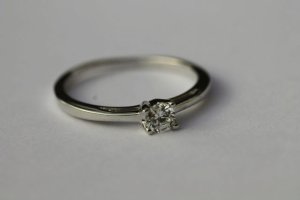
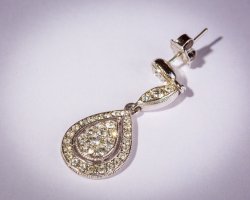
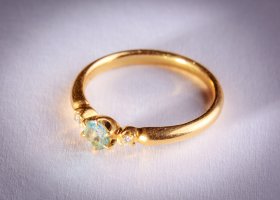
Yikes
Yikes; you've got a lot of questions and, obviously, very little knowledge about lighting and image making.
There is no "magic bullet" available to transform you into someone who can take excellent jewelry pictures, unless and until you take a lot of time, and invest some more money, in order to gain the experience and make the mistakes necessary to learn the craft of photography. Your gear is minimally adequate already. It's you that need s to learn. The suggestion to buy a book on lighting is excellent. Also, you may want to attend a workshop or take a class if either is available to you. In the alternative, there are a few concepts to understand which may help you to develop a better skill set through practice.
It is always helpful, when shooting any shiny reflective object - and jewelry is certainly one of these - to understand that such objects are exactly like mirrors; they reflect whatever is in their environment, according to a well understood principle of optical physics, the "law of reflection," that when a light ray strikes a reflective (flat) surface, then the angle of incidence is equal to the angle of reflection. Think of a perfectly constructed pool table: when you strike a billiard ball with your cue stick, rolling it towards a rail on the table, then, at whichever angle off the perpendicular that the ball travels to the rail, after striking the rail, it will bounce and then roll onwards at exactly that same angle, but in the inverse direction from the perpendicular. Hard to describe in words, but you get the picture. Similarly, your camera lens, at whatever angle it lies to the "flat" surface portion of your jewelry that you are trying to light, is literally viewing a "picture" of whatever lighting device, reflector or any other surface area, is reflected in that "flat" surface portion of the jewelry from the equal but inverse angle of the lens to jewelry surface angle. Since almost no jewelry is truly flat, and most reflect light from either a full 180 degrees of view or close to it, you must take into consideration a very wide range of area to control the lighting.
Small, directional and "contrasty" lighting sources created with open face, spot and "pin" spot type fixtures, coming from several different directions, sometimes works best on multifaceted stones, where many small "hard" highlights better define their surface texture and dimensionality. Diffuse lighting spread out onto a very large surfaces placed relatively close to the jewelry produces larger "soft" highlights which best define flatter surfaces, such as watch faces and metal bands. Carefully combining both techniques when necessary yields a very good look, but great care must be taken to separate the different lighting schemes' effects in order to maximize the quality.
Care must be taken to control color, not only matching the proper white point for the light sources, but also the color of any reflecting or light diffusing surfaces, whether intended or accidental. One can also use "improper" color sometimes, as in reflecting gold surfaces onto gold jewelry show the jewelry color more effectively without also adversely affecting the background.
Last tilt-shifting lenses can be used to better control focus, to either appear to increase or decrease effective focus depth, and the somewhat onerous technique of focus stacking can be used as well. But, keep in mind that a narrow focus, limited depth-of-field look, when the focus itself is placed strategically, can sometimes be just as, or even more, effective than having everything all in focus all the time.
Regards,
David