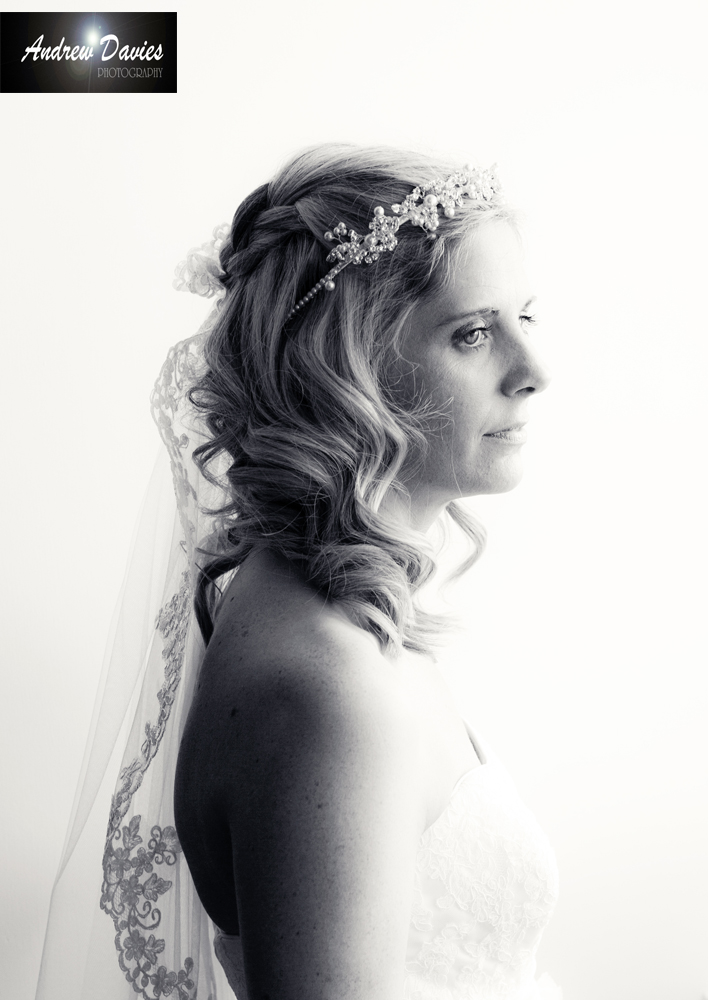
New 50mm Sigma ? There are other options !

For info for those interested DXO mark one of the most trusted resources online scores ( in brakcets ) the following lenses based on metrics of sharpness distortion etc

Canon 35mm 1.4L (27)
Canon 35mm F2 IS (29)
Canon 24-70 2.8II L (26)
Sigma 35 1.4 Art (30)

on those specs it would follow that the Sigma will edge the market but whether it is going to be a realistic price is more the question - for me sub 800 would be its perfect position and then it will tempt a lot of people but from what i have heard there are rumours of well in excess of 1000 ?

North East and Yorkshire wedding photographer www.andrew-davies.com
 
Upvote 0
Andrew Davies Photography said:
For info for those interested DXO mark one of the most trusted resources online scores ( in brakcets ) the following lenses based on metrics of sharpness distortion etc

Canon 35mm 1.4L (27)
Canon 35mm F2 IS (29)
Canon 24-70 2.8II L (26)
Sigma 35 1.4 Art (30)

Sorry, but no. First off, DxOMark is far from 'one of the most trusted online resources' when it comes to lens scores. For example, DxOMark data show that the 17-40L is nearly as sharp in the corners as the center at f/4, and that the corners at f/4 are sharper than the 16-35/2.8L II's corners at f/8. Anyone who's shot with both lenses knows that's BS. They also said that the 70-200/2.8L IS II was not quite as good as the MkI version of that lens, also complete BS (although they say differently now - when called on their error, they at first defended their conclusions, then over a year later silently updated their data to show that the MkII is much better, a fact well known to everyone else).

Second, their Lens Score is based primarily on 'performance in 150 lux illumination', and only secondarily on the relevant optical measures like sharpness, distortion, etc.
 
Upvote 0
Andrew Davies Photography said:
" Canon 35mm F2 IS and oh my god what a lens. "

Poster (?) is correct it is a fantastic lens. Best Bokah amongst all the 35mm Sigma or L's

Gives hope that the new 35 L (II) (IS) probably (II) will be an awesome monster (dont hold your breathe though, you will suffocate... so slowww)

answering the rest of the post...

Nice pic, you can take that pic with a 24 70 though. and unless you are the little invisible picture guy who darts around weddings like a Grey Man... its nice to have zoom and not have to get in everyone elses way to get a pic... *professionalism almost surely calls for the flexibility of a zoom"
 
Upvote 0
TeT said:
*professionalism almost surely calls for the flexibility of a zoom"

agreed. our lead shooter will pull out the primes (14/50/100 MacroL) for the "creative shot" if the other shooter(s) have the important shots. The usual scenario is one shooter on a 24-70 (I or II), another shooter on 70-200 (I or II). We can get more than adequate shallow DOF with a 70-200 2.8. in a wedding, speed/efficiency is key. primes just don't offer that flexibility.

That said, there are occasions when I shoot when I'd like to have the option to use a 50mm at f/1.4-2. I'm seriously considering one of these Sigma Art 50mm lenses after I purchase a 16-35 f/2.8L II and a 100mm Macro L.
 
Upvote 0
Andrew Davies Photography said:
For info for those interested DXO mark one of the most trusted resources online scores ( in brakcets ) the following lenses based on metrics of sharpness distortion etc

If you look at DxO's lens ratings, the highest rated Canon-made lens (after the 35/2 IS) is the 100/2. The 100/2 is a fine lens and a bargain, but is/was it the best among ALL other Canon lenses (before the 35/2 IS existed)? ALL of them — really? I don't think so. Somehow, despite being around since 1991, it didn't win the love and praise of photographers as the BEST Canon lens. Check user ratings on fredmiranda, bhphoto and other sites that have user ratings. If DxO were a reliable match for real world experience, photographers would have crowned the 100/2 as the "King" of all Canon lenses a long time ago.

For a good perspective on the trustworthiness of MTF testing, check out this article: http://toothwalker.org/optics/lenstest.html . The author writes:

"A low-cost lens MTF test has emerged by means of target reproduction photography and dedicated image analysis software. The method is valuable in that it yields measurements of system MTF. One can only admire the efforts that testers put in, because this illustrates how difficult it is to get the most out of your equipment also in everyday photography. Unfortunately the methodology also has serious disadvantages. Since system MTF is measured and not lens MTF, the results are difficult to interpret. Moreover, the method yields lens ratings for reproduction photography, which for many lenses is not the intended application."

I don't know about DxO, but some web sites test lenses as if they were "reproduction lenses" (i.e. for shooting flat subjects at near distances) even though most lenses were not designed as "reproduction lenses" and most photography is not "reproduction photography" (i.e. of documents, flat artwork, etc.).
 
Upvote 0
AudioGlenn said:
TeT said:
*professionalism almost surely calls for the flexibility of a zoom"

agreed. our lead shooter will pull out the primes (14/50/100 MacroL) for the "creative shot" if the other shooter(s) have the important shots. The usual scenario is one shooter on a 24-70 (I or II), another shooter on 70-200 (I or II). We can get more than adequate shallow DOF with a 70-200 2.8. in a wedding, speed/efficiency is key. primes just don't offer that flexibility.

I disagree. I happen to like a mix of primes and zooms, but one can deliver equally professional results using either primes or zooms exclusively. It's more a question of personal style and personal preferences than professionalism.
 
Upvote 0
zlatko said:
AudioGlenn said:
TeT said:
*professionalism almost surely calls for the flexibility of a zoom"

agreed. our lead shooter will pull out the primes (14/50/100 MacroL) for the "creative shot" if the other shooter(s) have the important shots. The usual scenario is one shooter on a 24-70 (I or II), another shooter on 70-200 (I or II). We can get more than adequate shallow DOF with a 70-200 2.8. in a wedding, speed/efficiency is key. primes just don't offer that flexibility.

I disagree. I happen to like a mix of primes and zooms, but one can deliver equally professional results using either primes or zooms exclusively. It's more a question of personal style and personal preferences than professionalism.

Nothing wrong at all with a mix of primes or for that matter using only zooms.

My point is a personal reflection and based on having shot over 200,000 frames with the 24-70 70-200 combo. Eventually it came to a point where i wanted more. 2.8 was just not enough and the distortion and sharpness of the 24-70 is questionable at times. The 70-200 i will still keep in the bag as it still has its place.

However the overly popular duo of 24-70 70-200 which to be honest is the safe choice has now been replaced by a 24 35 85 combo which without question to me is better for low light , sharpness , bokeh and lighter to carry each lens on camera offers the flexibility of the IS on the 24 and 35 also offering better video potential. I do not miss any shots as i plan what i am doing and where and also have the 35 and 85 to hand all the time and to be honest i have not needed to use the 24 anywhere near as much as i thought in most cases just step back with the 35 !

I am Pro Full time wedding photographer and have been for years and the 24-70 has been for many years my go to lens so in no way i am saying its rubbish because its not , but the primes for me deliver more , and the much ado about the Sigma 50mm just goes to show most people are fully aware of how good prime lenses are - it just takes a leap of faith and a bit more thought to use them instead of the safety of the zoom.

It is as has been said personal taste and i personally could not get away with the focal length of the 50mm 1.2L it just did not do it for me or match my style, I was tempted by the Sigma 35 1.4 and I wanted to buy the 35 1.4L canon but it was just so old in the tooth it put me off, so this Canon combo ticked all the boxes.

I have yet to fully get to grips with the 24mm 2.8 IS but it seems very sharp and able to take ridiculous close ups, however it is obvious or seems to be that there is a difference in the glass and the 35mm F2 IS has a better colour to the shots.

Looking forward to seeing the results of the sigma 50mm it will be interesting !

Another example of the 35mm F2 IS

35mm%20f2%20IS%202.jpg


www.andrew-davies.com North East and Yorkshire Wedding Photographer

 
Upvote 0
Andrew Davies Photography said:
Albi86 said:
It is a good lens with IS and at a decent price, but nothing more than that.

It delivers consistently but it has absolutely nothing special about it.

What a load of cobblers, it is a fantastic lens. To answer the other questions and comments it has replaced a 24-70 2.8L v1 , and i dont have any issue changing lenses as i have two bodies one on my belt and one round my neck. Each to their own if you prefer the lower quality but higher convenience of a zoom then fine but don't go attempting to justify your laziness by saying primes are no good as all top photographers will tell you different.
So, you're a pro, and you just figured out that primes are better than zooms..... ok. got it!

I'm a little confused how you're offering a 35mm f2 lens as an alternative to a 50mm f1.4? The whole idea is a little off.
btw, you sound like a total Canon shill.
 
Upvote 0
benherman said:
I have the old sigma 50mm, kicks pants off canon 1.4, especially build quality, but also sharpness. My canon, along with many unfortunate consumers out there, broke from light usage, the focussing mechanisms/moving front element are fragile as. $250 to fix on a $400 lens, no thanks canon especially since the service centre dude said its likely to happen again. Been happy with the sigma for years so any talk about poor quality/qa etc. doesn't exist in my book. I bought the sigma 35 1.4 due to my positive experience with the 50, it is wonderful.
I will look forward to seeing shots from the new sigma 50 and will consider upgrading only if it is phenomenally sharp, my current one is tops.

If you're new to the forum, welcome! As for the attributes of the new "art" 50...I would think the quality of the bokeh should carry more weight than its ultimate sharpness. Who needs an f/1.4 lens if the bokeh is not superb?
 
Upvote 0
In this thread I see 2 photos
The first: f/6.3 and 1/2500
The second: f/4.5 and 1/125
You don’t need a f/1.4 lens for those and you don’t need a stabilized f/2 lens either. Any 24-70 zoom will do just fine.

I think most people buy fast primes because they need fast enough shutter speed in low light conditions and/or want the artistic quality of the out of focus areas wide open. If you want to compare fast primes, compare them where it matters (between f/1.4 and f/2.5 because zooms in this focal length range will do f/2.8.)

The Canon EF 35mm f/2 IS won’t do f/1.4 f/1.6 and f/1.8 so you can’t compare the results to both the Canon 35mm f/1.4L II and the Sigma 35mm f/1.4 Art.
The 35mm f/2 IS might have the nicest bokeh (a subjective quality so others might disagree) @ f/2 but what good is that if you need f/1.4 f/1.6 or f/1.8?

The Canon EF 35mm f/2 IS has stabilization, so you could take handheld shots up to 4 times slower shutter speed.
Up to 1/40 you don’t really need IS with a 35mm lens on full frame for stills. Shutter speeds of 1/40 and below are too slow for most moving subjects anyway, so the IS on a 35mm lens is only useful for static subjects in situation where you can’t use a tripod.

If you don’t shoot below f/2.8 – f/2 there is no reason to buy fast (f/1.4 – f/1.2) primes. They weigh more, they cost more and they don’t perform (much) better above f/2.8.
I don’t doubt the 35mm f/2 IS is a good lens. The stabilization is nice if you like to shoot video, but it’s still a full stop slower than the f/1.4 lenses and that's why it's hard to see a f/2 lens as a real alternative for a f/1.4 lens.
 
Upvote 0
100 said:
Up to 1/40 you don’t really need IS with a 35mm lens on full frame for stills.

The rest of what you have said is perfectly reasonable, but the above statement is at best outdated and at worst inaccurate. You might be able to hand hold some shots at 1/40 with a 35mm focal length, but generally you won't make full use of your 20mp or whatever.

Shake is quite random, but with the resolution of modern digital FF you really need to be in the region of 2x focal length. Even then you can get random shake. For really critical use nothing beats a genuinely stable mounting platform, but IS is a competent substitute up to a point. Personally I find IS very useful for stills when travelling without a tripod. It allows lower ISOs, greater dof, lower shutter speeds etc when hand held.
 
Upvote 0
Sporgon said:
100 said:
Up to 1/40 you don’t really need IS with a 35mm lens on full frame for stills.

The rest of what you have said is perfectly reasonable, but the above statement is at best outdated and at worst inaccurate. You might be able to hand hold some shots at 1/40 with a 35mm focal length, but generally you won't make full use of your 20mp or whatever.

Shake is quite random, but with the resolution of modern digital FF you really need to be in the region of 2x focal length. Even then you can get random shake. For really critical use nothing beats a genuinely stable mounting platform, but IS is a competent substitute up to a point. Personally I find IS very useful for stills when travelling without a tripod. It allows lower ISOs, greater dof, lower shutter speeds etc when hand held.

I have to say I disagree. With a bit of practice, you can easily have no shake at 1/30 up to 1/20 with a 35mm. At least, that's my situation.
 
Upvote 0
Shake is quite random, but with the resolution of modern digital FF you really need to be in the region of 2x focal length.

my experience falls in line with this statement. slight motion blur/camera shake can be much more evident at 1:1 (focal length:shutterspeed) than it was with film. can you get a crisp shot at 1:1 situations? yes...but its quite frustrating when you don't and happens more often than i prefer.

im not in the camp that is insistent on canon including IS on every lens they produce, regardless of focal length, but i do know if i want to maximize my results for crisp images i need to follow the 2x shutterspeed:focal length rule.
 
Upvote 0
One other thing not mentioned yet is the Canon 35 F/2 has an actual t-stop of 2. The 35L has a T-stop of t/1.6. So it's not really a full stop advantage when shooting in low light. That would be about a half a stop advantage??
So in a low light situation, camera 1 with the 35L would shoot at f/1.4, 1/60, iso 800. Camera 2 with the 35 IS would shoot f/2, 1/60, Not iso 1600, but 1200. Sure theres half a stop more noise but you gain significantly more depth of field which is a huge plus with certain situations.
 
Upvote 0
Sporgon said:
100 said:
Up to 1/40 you don’t really need IS with a 35mm lens on full frame for stills.

The rest of what you have said is perfectly reasonable, but the above statement is at best outdated and at worst inaccurate. You might be able to hand hold some shots at 1/40 with a 35mm focal length, but generally you won't make full use of your 20mp or whatever.

Shake is quite random, but with the resolution of modern digital FF you really need to be in the region of 2x focal length. Even then you can get random shake. For really critical use nothing beats a genuinely stable mounting platform, but IS is a competent substitute up to a point. Personally I find IS very useful for stills when travelling without a tripod. It allows lower ISOs, greater dof, lower shutter speeds etc when hand held.

At pixel level with smaller pixels you might see a small difference.
The pixel pitch of my 5D mark III (22mp) is 36mm / 5760 pixels = 0.000625mm
The original 5D (12mp) has a pixel pitch of 36mm / 4368 = 0.000824mm
So the pixel pitch of a 22mp FF camera is just 132% of that of a 12mp FF camera.
If we apply the “old” rule of thumb 1/focal length we get 1/35 second for handheld shots. Multiply that by 1.32 and you get 1/46 of a second which is pretty close to the 1/40 I assumed in my previous post.

It’s just a rule of thumb and it depends on the photographers skill and the situation they are in how well this rule applies, but I see no technical reason to multiply it by 2 when using a 20mp camera.
The 2 times focal length rule might apply if you use the Sony/Nikon 36mp FF sensor or a future 40mp+ megapixel camera.

By the way, if we compare it to the analogue days: 36 mm x 24 mm film is estimated between 4 and 16 million pixels depending on the type of film used. Source: http://en.wikipedia.org/wiki/Digital_versus_film_photography
At the top end of the estimate, the difference is even smaller.
 
Upvote 0
bmwzimmer said:
One other thing not mentioned yet is the Canon 35 F/2 has an actual t-stop of 2. The 35L has a T-stop of t/1.6. So it's not really a full stop advantage when shooting in low light. That would be about a half a stop advantage??
So in a low light situation, camera 1 with the 35L would shoot at f/1.4, 1/60, iso 800. Camera 2 with the 35 IS would shoot f/2, 1/60, Not iso 1600, but 1200. Sure theres half a stop more noise but you gain significantly more depth of field which is a huge plus with certain situations.

1.6 is not 1/2 stop above 1.4 but 1/3 stop
The Sigma 35mm Art has a T-stop of 1.5, so that's only about 1/6 of a stop above 1.4
 
Upvote 0
bmwzimmer said:
One other thing not mentioned yet is the Canon 35 F/2 has an actual t-stop of 2. The 35L has a T-stop of t/1.6. So it's not really a full stop advantage when shooting in low light. That would be about a half a stop advantage??

I got this part, although its actually 2/3 stop.

bmwzimmer said:
So in a low light situation, camera 1 with the 35L would shoot at f/1.4, 1/60, iso 800. Camera 2 with the 35 IS would shoot f/2, 1/60, Not iso 1600, but 1200. Sure theres half a stop more noise but you gain significantly more depth of field which is a huge plus with certain situations.

This is where you lost me. Are you saying camera 1 with the 35L cannot simply select f/2, 1/60 and ISO 1600 to gain the deeper field of focus?
By the way, while the transmittance of the 35L might not be as higher than the 35IS as advertized, the big DoF advantage (shallowness, when THAT situation arises) still remains unaffected.
 
Upvote 0