Night Pollution Filter

nubu said:
I think you mean Light Pollution Filters? The later are interference filters and quite costly in bigger sizes, so typically a good one for 2" is 200US$! For this very reason Astronomik is producing clip in filters for Canon FF and APS-C bodies: http://www.astronomik.com/en/photographic-filters/cls-ccd-filter.html They work very well and I use them a lot for all my primes from 14 to 500mm ...

Just a note, when using the LP clip filter, you do need a longer exposure to get excellent results, and their not compatible with EF-S lenses.
 
Upvote 0
It is true that clip in filters cannot be used with EF-s lenses because of their prodruding lens elements entering deeper into the body!

"you do need a longer exposure to get excellent results" I dont understand. That may be true for any filter you put in front or behind your lens and is NOT specific for clip in filters.The clip in filters have exactly the same effect of filters you would screw into your telescope...

One thing to note is for ALL interference filters is that their effect is light angle depending (because of the many layers they consist of and which have the wrong separation when looked at in a tilted manner)!. A consequence of this is their possible unevenness for wideangles when using them in front of the lens and for low focal ratio lenses when used behind the lens. Especially narrow band filters for e.g. Halpha should be bought somewhat broader when used in fast systems! The manufacturers state such limitation in their description!
 
Upvote 0
If you really want an 82 mm light pollution filter, Hutech offers one. Here's the link http://www.sciencecenter.net/hutech/prices/filters.htm .

I have a 72mm version of this filter - purchased a couple of years before clip in filters became available. While the Hutech is probably the best on the market, I'll second the suggestion for the far more versatile (and much less expensive) Astronomic clip-in offerings.

A word of caution - it's wise to manage your expectations. These filters cannot suppress all the light pollution in an environment. If there is light in the bands of interest, it will leak through. Similarly, if you use an objective filter on a wide angle lens, light pollution will leak through for off axis targets while the bands of interest will be suppressed.
 
Upvote 0
I have the astronomik clip filters. They can be affected by very fast lenses, but I've used them with f/2 without problem. You will likely need to do some work on restoring white balance at the end though, and for very short focal length lenses you will get a noticeable shift in the focus range. My Samyang 8mm fisheye can't infinity focus with it in place.

They will cut out some of the wanted light, but of course that is outweighed by cutting out much more of the unwanted light. It is very effective on sodium lighting. I can point my camera at a street lamp outside my house and it is reduced to a faint glow of part of the internal mechanism (keeping the rest of the scene at reasonable exposure).
 
Upvote 0
Hi all. Long time lurker posting for the first time. I've used a bunch of lp filters for astrophotography and must say that the astronomik clip filters are very very good at blocking light pollution, particularly sodium and mercury frequencies. In my experience they even beat the Hutech IDAS filters, which were the best up to a few years ago.

You do need to increase your exposure times, but with a small tracking mount (like an Astrotrac) it's simple to get long exposures (5-10 minutes) and still have pinpoint stars at fairly long focal lengths, e.g. 200mm.

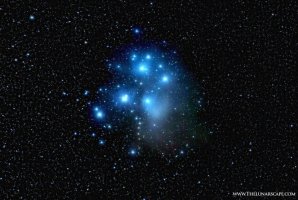
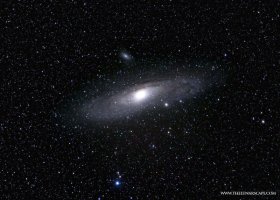
These were taken with a 70-200mm F4 L and an old 30D body at around 170mm if I remember correctly. Both taken from a very light polluted resort in the West of Ireland (Salthill, Galway, Ireland), with a NELM of around 3.5.

Seriously thinking about getting one Astronomik's new full frame clips for the 5D Mk III.


D
 

Attachments

  • m45_-_The_Pleiades__or_Seven_Sisters_437331240755680638.jpg
    m45_-_The_Pleiades__or_Seven_Sisters_437331240755680638.jpg
    145.5 KB · Views: 540
  • M31_Andromeda_Galaxy2044019122643165727.jpg
    M31_Andromeda_Galaxy2044019122643165727.jpg
    149.7 KB · Views: 542
Upvote 0
nubu said:
It is true that clip in filters cannot be used with EF-s lenses because of their prodruding lens elements entering deeper into the body!

"you do need a longer exposure to get excellent results" I dont understand. That may be true for any filter you put in front or behind your lens and is NOT specific for clip in filters.The clip in filters have exactly the same effect of filters you would screw into your telescope...

One thing to note is for ALL interference filters is that their effect is light angle depending (because of the many layers they consist of and which have the wrong separation when looked at in a tilted manner)!. A consequence of this is their possible unevenness for wideangles when using them in front of the lens and for low focal ratio lenses when used behind the lens. Especially narrow band filters for e.g. Halpha should be bought somewhat broader when used in fast systems! The manufacturers state such limitation in their description!

Sorry about that, should of mentioned that. :-[
 
Upvote 0