Opinion: Love it or Hate it, Digital Correction is here to Stay

Lens corrections are great! It's a transparent tool that just makes lenses lighter and less distorted, but:

So, in Canon’s defense, this allows them to produce lenses that are smaller, lighter, and at times, less expensive than if they didn’t take that compromise.

"Less expensive" is the key.

It sure doesn't feel like RF is less expensive than EF glass, expecially in the budget range. For example, Canon sells the 24-50 kit lens for $350. I got it for $89 used... and even at that price I'm feeling some buyers remorse :/

Or look at the EF 100-400L vs the RF 100-400. The RF is much lighter, yes, but the EF is sharper and cheaper. And that's considered one of the best value RF lenses around.

Or, heaven forbid, look at uncorrected third party RF, like the Yongnuo 23/35/56 1.4. $220 each, and very sharp. Or the 85mm 1.8 for $320, or the Venus Optics ultrawides, or the Argus 0.95s, all of which have to get by without in-body corrections because Canon won't open their mount like almost almost every other manufacturer.

Note I'm not blaming the engineers here; they can't do anything about Canon's margin requirements.
 
Last edited:
  • Like
Reactions: 1 users
Upvote 0
You missed the point that optical correction of distortion is not free - it also introduces aberations and losses in quality.
I make this point frequently in these discussions, but I guess some people’s views on the matter are too distorted to accept that fact.

There was an interview with Sigma engineers who said that in many cases correcting distortion and vignetting digitally results in better sharpness than doing it optically.
Would be an interesting read, if you have a link to it.
 
Upvote 0
Or look at the EF 100-400L vs the RF 100-400. The RF is much lighter, yes, but the EF is sharper and cheaper. And that's considered one of the best value RF lenses around.
The current EF 100-400mm ii L costs new here £2599 and the RF £749. The original EF 100-400mm was discontinued in 2014 and was well into a 4-figure price. My RF 100-400mm is not as sharp as my EF 100-400mm iis were but is sharper than my original EF.
 
  • Like
Reactions: 1 users
Upvote 0
If the corners are software re-generated using AI
Im fine with digital corrections as long as large portions of the image are not replaced by AI generated data.
I have no idea where these suggestions that the digitally corrected corners are filled with AI-generated image data come from, but I wish they would stop. That’s not how it’s done. No manufacturers that design lenses with an image circle smaller than the sensor do that, or have ever done that.

It’s the sort of thing that some influencer pushing an agenda would make up and promote as factual. And some people believe it, and repeat it. The whole idea is so silly that it gives me a headache. I’d take some Tylenol, except I heard that causes autism. :rolleyes:


Edit: I found at least one place such drivel is coming from or at least being parroted locally…
DXO's AI corner filling isn't adding true detail it's generating / guessing what might have been there. AI is capitalising on the fact that the lens is designed a bit wider angle of view so there is room to software correct and still make the stated focal length.
 
Last edited:
  • Like
  • Haha
Reactions: 5 users
Upvote 0
The Digital corner profiling discussion is as complex as the use multitude of case scenarios from the users who shoot with these lenses.
If the corners are software re-generated using AI then there is no loss of detail or Dynamic range. You should be able to push the exposures and oggle the fine detail in the corners and be happy with the results. HOWEVER.....Canon doesn't employ AI software based corner regeneration, what they do is stretch the corners and use the raw file's DR to bump the corner exposure to that of a perfect lens. This is fine if you don't mind loosing a little bit of resolution, maybe even a bit of focal length and a lot of corner DR.
Most Canon UWA lenses already give us a slightly wider angle of view to their acclaimed wide focal length marking. So a RF 14-35 F4L lens is closer to 13.5mm when uncorrected, the focal value of the lens corresponds to the corrected focal length. Another example of this is the sublime RF10-20mm f4L, it's notably wider when uncorrected. So if you take the uncorrected RAW image and run it though software that can AI regenerate the corners, you get an even wider angle of view than the stock lens with Canon correction applied.
Sounds like you skipped half of Richard’s piece.

Also, there can never be AI generated corners in a camera, as there’s people shooting facts. Manufacturers are adding C2PA to their cameras to ensure the photographs are authentic.

Also, people really seem to forget how much EF lenses vignette. This thread is not about vignetting, it’s about distortion.
 
Last edited:
Upvote 0
Lens corrections are great! It's a transparent tool that just makes lenses lighter and less distorted, but:


"Less expensive" is the key.

It sure doesn't feel like RF is less expensive than EF glass, expecially in the budget range. For example, Canon sells the 24-50 kit lens for $350. I got it for $89 used... and even at that price I'm feeling some buyers remorse :/

Or look at the EF 100-400L vs the RF 100-400. The RF is much lighter, yes, but the EF is sharper and cheaper. And that's considered one of the best value RF lenses around.

Or, heaven forbid, look at uncorrected third party RF, like the Yongnuo 23/35/56 1.4. $220 each, and very sharp. Or the 85mm 1.8 for $320, or the Venus Optics ultrawides, or the Argus 0.95s, all of which have to get by without in-body corrections because Canon won't open their mount like almost almost every other manufacturer.

Note I'm not blaming the engineers here; they can't do anything about Canon's margin requirements.

with 100-400 - that's just engineering, there's no digital correction happening there or shouldn't be. The projection of the image circle is large enough that you'd never have to worry - I'd say anything over 50mm we shouldn't see it, but Canon may surprise me.

the lenses are more expensive, but in alot of cases, they are putting in more esoteric elements, coatings, auto focus motors, etc than we had with EF. Also the entire lens has to run much faster than the EF lenses had to, from auto focus operations to even the physical apertures.

then there's inflation, and then there's the T word.

I'm confused about the RF 100-400 being more expensive than the EF 100-400. are we talking the same lens here? because the RF 100-400 went way down in price as it was re-hashed into a consumer lens. or do you mean the RF 100-500?

The chinese manufacturers are a whole other conversation. I think i've talked about that before. Though with what DJI and Xiamoi and Insta360 (who for some reason I always thought was an american brand) are doing, maybe another post about it all is due.
 
  • Like
Reactions: 1 user
Upvote 0
But a simple mathmatical corner stretch and then applying 4.5 stop white circle overlay over the far corners is only going to add 4.5 stops of noise in the corners to your raw file.
No, it doesn’t do anything to the RAW file. Do you not understand the point of a RAW file? The RAW file is uncorrected. You can choose how much correction you apply it it.

Shoot your Raw landscape at say 400 iso, your corners are already profiled at 6400+ iso before you even start your post prod on the image. There's no magic bullet with camera generated lens profiles.
Do you shoot your landscapes wide open? Stopping down significantly reduces vignetting.

But fine, call them starscapes and so you are shooting wide open. If you’re using the ‘optically corrected’ EF 11-24/4L or EF 24/1.4L II to shoot them, then you’ve still got >4 stops of corner vignetting to correct (or not, because…RAW). The point is that this issue is neither new nor unique to lenses with image circles smaller than the sensor.
 
  • Like
Reactions: 1 users
Upvote 0
The Digital corner profiling discussion is as complex as the use multitude of case scenarios from the users who shoot with these lenses.
If the corners are software re-generated using AI then there is no loss of detail or Dynamic range. You should be able to push the exposures and oggle the fine detail in the corners and be happy with the results. HOWEVER.....Canon doesn't employ AI software based corner regeneration, what they do is stretch the corners and use the raw file's DR to bump the corner exposure to that of a perfect lens. This is fine if you don't mind loosing a little bit of resolution, maybe even a bit of focal length and a lot of corner DR.

I'm confused by this.

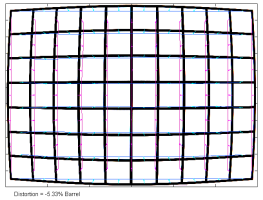
usually what happens is that the image is straightened which by nature of the process would push the corners "out" to cover the full image circle.
1771510978050.png

To correct this distortion, the corners are pulled out until the distortion equals effectively 0, which would then fill the frame.
If it were pincushion distortion, I think you'd have more of a point, but usually, then it's just effectively cropped.

there's no AI and no additional information, but when the image is stretched you take for instance say, 3500 lines that are over, say, 22mm, and stretch those 3500 lines to 24mm.

thus you lose lp/mm or resolution by spreading it out.

Vignetting is another topic. That's not entirely dependant on the lens.

or am I missing your point?

As far as AI - DLO isn't AI, it doesn't invent image data - but what is does do is mathematically take the lens profile and the sensor / camera profile and deconvolute aberrations. No AI is required though.
 
  • Like
Reactions: 6 users
Upvote 0
"Less expensive" is the key.

It sure doesn't feel like RF is less expensive than EF glass, expecially in the budget range.
Not in the budget range, but compare the EF 11-24/4 to the RF 10-20/4.

Or look at the EF 100-400L vs the RF 100-400. The RF is much lighter, yes, but the EF is sharper and cheaper. And that's considered one of the best value RF lenses around.
You’re apparently confusing the RF 100-400 with the RF 100-500L. The former is considered a great value and it’s far cheaper the EF 100-400L (even used, low quality copies of the MkI sell for more than the $500 that I paid for my RF 100-400). The EF L lens is sharper, sure. It’s also 4-5x the cost and a stop faster.

The rational comparison is EF 100-400L II vs RF 100-500L. Image quality is the same, the RF lens is lighter and 100mm longer, and it’s $200 more expensive ($2700 vs $2900, a 7.5% difference).

You might want to go back to the drawing board on your line of reasoning here.
 
  • Like
Reactions: 2 users
Upvote 0
I'm confused by this.
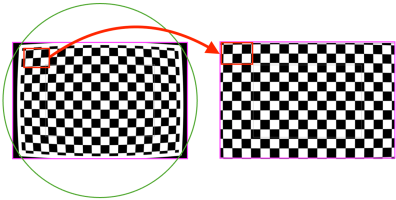
You're not the one who's confused. I had a similar exchange with @GMCPhotographics, where I posted a graphic making the same point as yours.
Screenshot 2026-02-19 at 9.38.44 AM.png

He's still clearly confused about some things, even though the way I read his post he has seemingly (reluctantly) accepted that Canon is not using AI to create the corners (but it sounds like he's saying that would be better?). Either way, he's wrong about many things.
 
  • Like
Reactions: 1 user
Upvote 0
Thank you Richard, for this very interesting analysis and conclusion. I am with you, I think when Canon went mirrorless, it was logical to implement a more heavy-handed digital correction with such extremely demanding lens designs like the RF 14mm or with lenses that should be lighter, more compact and more affordable for what they offer to a photographer. With the EF lenses, the limitation to digital correction was not only caused by the optical viewfinders, Canon engineers had also to keep in mind that there are still some film shooters out there who wanted high quality optical corrected lenses. That was a minority, of course.

But now, with the RF mount, that's over, and Canon can look into the future without the need to make such compromises. We all use smartphones which tiny cameras only are useable because of a massively algorithm driven processing of the images. So it is logical to take some of these advantages to bigger digital cameras. In future, a camera-lens combo will be much more consequently treated as a complete system than it was, I guess.
 
  • Like
Reactions: 2 users
Upvote 0
Thank you Richard, for this very interesting analysis and conclusion. I am with you, I think when Canon went mirrorless, it was logical to implement a more heavy-handed digital correction with such extremely demanding lens designs like the RF 14mm or with lenses that should be lighter, more compact and more affordable for what they offer to a photographer. With the EF lenses, the limitation to digital correction was not only caused by the optical viewfinders, Canon engineers had also to keep in mind that there are still some film shooters out there who wanted high quality optical corrected lenses. That was a minority, of course.

But now, with the RF mount, that's over, and Canon can look into the future without the need to make such compromises. We all use smartphones which tiny cameras only are useable because of a massively algorithm driven processing of the images. So it is logical to take some of these advantages to bigger digital cameras. In future, a camera-lens combo will be much more consequently treated as a complete system than it was, I guess.

good point on film! and thank you.
 
  • Like
Reactions: 1 user
Upvote 0
What some are missing is that the 14-35L is an absolutely phenomenal lens. It is the best UW zoom I've ever owned/tried (I'm not including UUW lenses like the 11-24/10-24, which I have never used), and it's better than the 15-35L, which I also owned. As others have mentioned, the uncorrected lens is wider than 14mm (it may be closer to 13mm than to the 13.5mm already mentioned), so I struggle to find problems with the corners that are "cutoff" with correction (I'm also not a landscape purist and rarely shoot landscapes faster than f8). When I look at the OL results, I see amazing sharpness that doesn't fall off much until the far corners. By contrast my 15-35L falls off much quicker. To me, I easily prefer images from my 14-35 to my 15-35. The only reason I still own the faster lens is procrastination. When I do get in the mood to sale unused gear, the 15-35L will be the first to go.
 
  • Like
Reactions: 3 users
Upvote 0
You’re apparently confusing the RF 100-400 with the RF 100-500L. The former is considered a great value and it’s far cheaper the EF 100-400L (even used, low quality copies of the MkI sell for more than the $500 that I paid for my RF 100-400). The EF L lens is sharper, sure. It’s also 4-5x the cost and a stop faster.

The rational comparison is EF 100-400L II vs RF 100-500L. Image quality is the same, the RF lens is lighter and 100mm longer, and it’s $200 more expensive ($2700 vs $2900, a 7.5% difference).

You might want to go back to the drawing board on your line of reasoning here.
I think he is genuinely comparing RF 100-400 with the EF 100-400 and got the pricing wrong. He describes the RF 100-400mm as being considered as one of the best value lenses for money, which it is, and as much as I love the RF 100-500 no way would I describe it as that!
 
Upvote 0
I would prefer options.
1→ compact, high aperture with correction-dependency: PASS
2→ larger, medium wide aperture with corr.-dep.: NO PASS
3→ cheap with correction: PASS
4→ expensive (excl. 1) with correction: NO PASS

I love e.g. the LAOWA 180 4.5 for very high correction & compactness & 1.5 max reprod. ratio & well implemented (while still limited) AF as a whole package.
If Canon would sell a 150 2.0 with medium need for correction at twice the price it would be similarly acceptable.

Background: I use ~24 MPix - with 50+ MPix correction would be more acceptable for me
 
Upvote 0