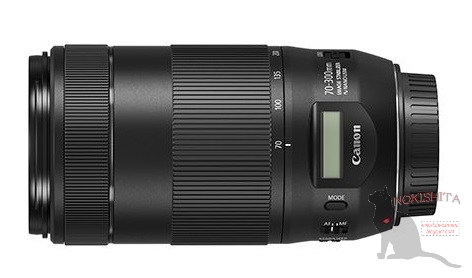
Patent: What the Digital Display on the Upcoming EF 70-300 f/4-5.6 IS II Might Look Like

This is a relatively interesting development.

I find the focus view window relatively helpful in some situations on USM / HSM type lenses.

For the vast majority of my photos, I don't use the focus view window, but for some (e.g. night landscapes) I find it can be useful.

There are a number of my friends who mark / place (an) indicator for infinity focus in the focus window (which isn't always at the infinity sign btw, and may vary at focal length).

However if there is a digital display on the lens with regard to focus, I would welcome one that:
1) can toggle between focus distance and focal distance
2) can easily light up for night time (with minimal battery drain)
3) may display aspects like IS, or other features (aperture) and
4) is clear to read (without being obtrusive).

Cheers all... let's see how this develops. At this stage I'm not planning to buy any new 70-300mm non-L, my 70-300mm L serves me very well. 8)

Paul
 
Upvote 0
ScottyP said:
This feature and a couple of toaster slots would be equally critical, ergo adding toasting capability as well as a video display would add twice the utility. So where are the toaster slots, Canon?

ROFL!!! +100 ;D


PS: "So where are the toaster slots, INNOVATIVE Canon"? :D
 
Upvote 0
AvTvM said:
I don't want it. Just another electronic, hardware, firmware, settings thingie that can and will eventually fail. And where in the olden day the glass of that lens window broke, you will now have to replace an entire LCD + electronic compound ... will make repairs even more costly and difficult or even impossible. And it will suck precious battery power all the time.

Wait... I thought you'd spent the last few thousand posts telling us how you want everything to be electronic? How electronic tech is superior to mechanical, because of reasons.

I happen to agree in this instance that adding complexity means more can go wrong, *but* simple LCD screens are pretty reliable and long-lived. We've all got an old calculator lurking in a drawer somewhere that still works after twenty or thirty years...
 
Upvote 0
scyrene said:
AvTvM said:
I don't want it. Just another electronic, hardware, firmware, settings thingie that can and will eventually fail. And where in the olden day the glass of that lens window broke, you will now have to replace an entire LCD + electronic compound ... will make repairs even more costly and difficult or even impossible. And it will suck precious battery power all the time.

Wait... I thought you'd spent the last few thousand posts telling us how you want everything to be electronic? How electronic tech is superior to mechanical, because of reasons.

I happen to agree in this instance that adding complexity means more can go wrong, *but* simple LCD screens are pretty reliable and long-lived. We've all got an old calculator lurking in a drawer somewhere that still works after twenty or thirty years...

I think you did not properly read my previous 1000 posts, so I'll summarize it for you one more time ... :)
I would like Canon to produce a series of native, mirrorless EF-M lenses for a Sony RX1R II shaped and sized "EOS M Ultra" body, that are
* closed, hi-grade plastic cylinder, fully IP67 weathersealed, no mechanics except USM or STM AF drive
* AF-only, no focus ring, no focus gear, no distance window - neither mechanical nor electronic/LCD/OLED
* no zoom ring on zooms, but zoom control lever around shutter button, of course in hi-end tactile feedback and stepless, playless, smooth zoom action.
* no mechanical iris, but electronically transmissive/non-transmissive screen with circular, variable sized aperture hole. Yes, that would eat a bit of battery, but for a worthy cause. LCD distance window is an unworthy cause at least for for me.
* optically as good as 22/2 and 11-22,
* at even lower prices due to savings from omitted no mechanics = 100% robot production line = reduced labor cost
 
Upvote 0
AvTvM said:
scyrene said:
AvTvM said:
I don't want it. Just another electronic, hardware, firmware, settings thingie that can and will eventually fail. And where in the olden day the glass of that lens window broke, you will now have to replace an entire LCD + electronic compound ... will make repairs even more costly and difficult or even impossible. And it will suck precious battery power all the time.

Wait... I thought you'd spent the last few thousand posts telling us how you want everything to be electronic? How electronic tech is superior to mechanical, because of reasons.

I happen to agree in this instance that adding complexity means more can go wrong, *but* simple LCD screens are pretty reliable and long-lived. We've all got an old calculator lurking in a drawer somewhere that still works after twenty or thirty years...

I think you did not properly read my previous 1000 posts, so I'll summarize it for you one more time ... :)
I would like Canon to produce a series of native, mirrorless EF-M lenses for a Sony RX1R II shaped and sized "EOS M Ultra" body, that are
* closed, hi-grade plastic cylinder, fully IP67 weathersealed, no mechanics except USM or STM AF drive
* AF-only, no focus ring, no focus gear, no distance window - neither mechanical nor electronic/LCD/OLED
* no zoom ring on zooms, but zoom control lever around shutter button, of course in hi-end tactile feedback and stepless, playless, smooth zoom action.
* no mechanical iris, but electronically transmissive/non-transmissive screen with circular, variable sized aperture hole. Yes, that would eat a bit of battery, but for a worthy cause. LCD distance window is an unworthy cause at least for for me.
* optically as good as 22/2 and 11-22,
* at even lower prices due to savings from omitted no mechanics = 100% robot production line = reduced labor cost

Well you'll be disappointed of course but one thing - "* at even lower prices due to savings from omitted no mechanics = 100% robot production line = reduced labor cost" - how do you know this would be cheaper? Mechanics can be cheaper than electronics. And robots can be more expensive than humans.
 
Upvote 0
well it looks like this:

canon_67.jpg
 
Upvote 0
AvTvM said:

Useless, if the camera isn't also. Also, the front lens itself (and its coating) should be able to withstand the mechanical/chemical action of being put into water and whatever the water contains. How many really have such requirement? Ok, phones are being made IP67 - usually when you don't know what to add to a device you make it waterproof...

AvTvM said:
* AF-only, no focus ring, no focus gear, no distance window - neither mechanical nor electronic/LCD/OLED

As long as you have to move lenses around, you'll still need mechanics to move them and ensure they keep the required relative position within tolerances. Achieving precision with electronics only can make them still expensive, especially if each lens need its own electronics.

AvTvM said:
* no zoom ring on zooms, but zoom control lever around shutter button, of course in hi-end tactile feedback and stepless, playless, smooth zoom action.

You'll get the issue of zooming speed(s), and zooming precision, especially with small controls as one around a shutter button. Still, you need mechanics to zoom, even if controlled by electronics, unless, again, you manage each lens separately.

AvTvM said:
* optically as good as 22/2 and 11-22,

Machining lenses is still expensive, and electronics usually doesn't help physics much. Heavier lenses needs proper housing and movement, though.

AvTvM said:
* at even lower prices due to savings from omitted no mechanics = 100% robot production line = reduced labor cost

Even if you put more electronics into lenses it doesn't mean it could be a fully robotic line - look at smartphones, there's still manual work in assembling them. Today mechanics is not so expensive (and "robots" make these parts as well), while achieving the same level of precision and tolerance using only electronics components may not be cheap enough, and robots able to assemble relatively small but complex items would be very expensive themselves.
 
Upvote 0
pokerz said:
rrcphoto said:
well it looks like this:

canon_67.jpg
LCD looks like Zeiss Batis

Different display tech. Batis is OLED, with light characters on a dark field. This new Canon lens looks more like the vanilla/simple top LCD seen on bodies.

Upsides: lower power consumption, no chance for light leaks on long exposures

Downsides: Unless it's backlit, good luck seeing that in the dark.

Unknowns: I'm curious what kind of detailed information can be displayed on such simple display tech.

- A
 
Upvote 0
while lens' exterior looks like a nice update to the previous 70-300, the LCD looks very poorly done. as if canon had just stuck a 1970 seiko watch onto the lens .. looks ugly, outdated and cheapo even before launch.

by comparison Zeiss Batis OLED solution and the integration into lens barrel (curved display!) looks superbly advanced - both technically and aesthetically.

tyüical case of Canon "me too" cheap afterthought consumer gagdet that would never have been needed to start with.
 
Upvote 0
AvTvM said:
while lens' exterior looks like a nice update to the previous 70-300, the LCD looks very poorly done. as if canon had just stuck a 1970 seiko watch onto the lens .. looks ugly, outdated and cheapo even before launch.

by comparison Zeiss Batis OLED solution and the integration into lens barrel (curved display!) looks superbly advanced - both technically and aesthetically.

tyüical case of Canon "me too" cheap afterthought consumer gagdet that would never have been needed to start with.

So to be clear, the cheap looking display on the Canon lens is an unneeded afterthought, while the (I'm assuming) similarly functioning OLED display on the Zeiss lenses is what...useful? Necessary? Desirable?
 
Upvote 0