privatebydesign said:
9VIII said:
privatebydesign said:
9VIII said:
StudentOfLight said:
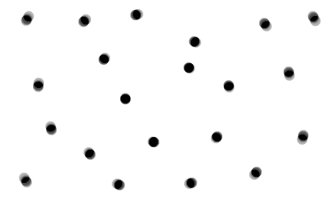
The camera shake in the X-axis and Y-axis planes is the same between the 5Ds and 7D-II however the blur due to pivoting about the Z-axis is different. You have a longer radius with the larger full-frame sensor so you can have more rotational blur in the corners. Good hand-holding technique and faster shutter-speeds can obviously minimize the effect.
Winner!
Basically, shoot it like a crop camera.
I actually hadn't thought about the rotation issue, nice touch.
Only if you enlarge it like a crop camera, this seems to be a point missed too often. For a same sized reproduction the crop camera is enlarged 1.6 times as much, actually it is 1.6 x 1.6, or 2.56 the size by area. Therefore any movement or blur in a crop camera shot is much more noticeable.
You're saying we should downsize resolution in print to avoid blurr?
In a pinch, ok, if you're just snapping pictures of your dog, then whatever. But I seriously hope you're not suggesting that people intentionally downsize images to avoid the per-pixel impact of using a 50MP sensor.
That's like stacking bricks in your Ferrari to stop it from going so fast.
No that isn't what I am saying at all. What I am saying is if you print both images to 20"x30", or even 20'x30', then the crop camera image, and its associated blur, is enlarged 2.56 times as much by area.
Or you can say, if you print the 5DSR image to 36"x24" then it will exhibit the same blur as the 7D MkII image enlarged to 22.5"x15", in other words, you can't just look at a 7D MkII image to see what blur results you will get in any same sized reproduction.
However, as 1982chris911 points out, the 100% view can give you some indication of potential assuming you also allow for the radial increase in rotational movement as pointed out and demoed very nicely by StudentOfLight.
The issue is that you made the qualifying statement: "Only if you enlarge it like a crop camera". Which is not true.
What you're actually telling people is that if I'm going to print a 50MP full frame image to the same size as a 20MP crop image then I don't need to take the same precautions with the full frame camera because the focal length is effectively shorter.
It's not the same as what I thought you were saying at first, but it's not a whole lot different in practice.
Yes, you're right that when printing a 20MP crop image to the same size as a 50MP full frame image (using the same lens on both cameras) the same amount of pixel level blur is going to be more visible on the 20MP crop image than the 50MP full frame image.
But what that means for the 50MP image is that you're accepting a higher level of per-pixel motion blur, and still effectvely throwing away the extra resolution of the 50MP image. It's not much different from telling someone to downsample.
Unless you're downsampling, the 5Ds always needs to be used with settings adjusted according to a focal length multiplier (the same as the 7D2).
We may also be hitting one of these newfangled generation gaps in that I like to say that having a 515DPI cellphone screen is a highly valuable and effective use of resources, and a lot (like,
a lot) of people in a wide variety of established industries don't like me saying that looking at something with that level of visual density ten inches in front of my face could possibly be of any practical value.
If you're printing 5Ds images to a 1" sticker, then maybe you can back off on the technique a bit, otherwise there is no circumstance where any pixel is any less important.
Welcome to 21st century photography, where postcards contain the same amount of visual information as an 8x10 medium format image.