You might do HDR if you are capturing landscape as well - your mileage will vary. Actually its more of a Photoshop composite or maybe ND Grads
But back to filters - OPTCorp in Oceanside CA may be able to ship raw 250mm x 250mm sq sheets of Baader Astro at this late date - but its really late. Truth is, the primary vendors have been slammed since April. If you dont have the supplies now, its going to be tough unless you catch a break.
But if you do have film, there are plenty of instructions out there on how to make foam-core based cap filters. I took an actually easier approach and built a LEE Filter form factor frame out of 1/32" model airplane plywood material with the film held with double stick inside. I thought I needed some glue as well, but the double stick holds well enough for the purpose, and if I need to change out the film (its fragile!) I can just open it up and replace. The LEE filter holds that assemble well, and I have at least 1/32" inch of wiggle room in the slot.
Circular ND's may work. I got a 10-stop ND 3.0 B+W I may try for a second camera. But any turning could throw your focus or composition off (and once that type of filter is on, you can
not see through it). And ND is not good enough for direct viewing - it does not block IR and UV. The Baader and other films are at the ND 5 level (100,000 times if my math is right) and do block IR and UV, but you cannot see through them with a naked eye. In fact Baader is somewhat reflective. Makes a great mirror!
Also if you have dont have the software, get The Photographer's Ephermeris. It free on PC (and likely Mac), with a small charge for iPhone and Android. The software tells you all the geometry of the sun and moon over time and location. Its required reference for anyone shooting sun and moon critical photos.
Use caution and common sense. I'll be out in the southwest somewhere
Oh yeah, you'll have about 3.5 - 4 minutes to figure it all out. Its kinda like shooting at Upper Antelope Canyon where I'll be on Friday.



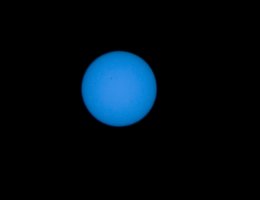
 )
) but I'll try anyway.


