
You are using an out of date browser. It may not display this or other websites correctly.
You should upgrade or use an alternative browser.
You should upgrade or use an alternative browser.
The budget photographer's 400mm dilemma
- Thread starter MJ
- Start date
JumboShrimp said:My budget solution is to get the excellent EF-S 55-250/4-5.6 IS STM and mount it on an SL1 (or 70D). This combo has been my go-to solution for the 100-400 range. Quality is surprisingly good.
250mm on APS-C is too short for bird photography - at least 400mm is required for what I do.
Upvote
0
My view is very simple. If you need the close focus and weather sealing then buy the Canon 100-400 ii. If you need to shoot on the long end most of the time and need the use of all focus points then the Sigma 150-600 C is the best way to go. I have this lens and think it performs amazingly well for the money. I had the Tamron for 1 year prior to that and the Sigma is better in many ways. First and foremost it is sharper. I don't care about weather sealing so lugging around the much heavier but optically not better Sigma S is a waste of money for me. Also I personally have not seen too many images with the Canon 100-400 ii plus 1.4x that I could not get with my Sigma (hope I don't get lynched too badly for saying that) when stopped down to f8. So for me I use the Sigma and could not be happier.
Upvote
0

AlanF said:JumboShrimp said:My budget solution is to get the excellent EF-S 55-250/4-5.6 IS STM and mount it on an SL1 (or 70D). This combo has been my go-to solution for the 100-400 range. Quality is surprisingly good.
250mm on APS-C is too short for bird photography - at least 400mm is required for what I do.
Much of the time 600mm on a crop camera is too short......
Upvote
0

tomscott
Photographer & Graphic Designer
Isaac Grant said:My view is very simple. If you need the close focus and weather sealing then buy the Canon 100-400 ii. If you need to shoot on the long end most of the time and need the use of all focus points then the Sigma 150-600 C is the best way to go. I have this lens and think it performs amazingly well for the money. I had the Tamron for 1 year prior to that and the Sigma is better in many ways. First and foremost it is sharper. I don't care about weather sealing so lugging around the much heavier but optically not better Sigma S is a waste of money for me. Also I personally have not seen too many images with the Canon 100-400 ii plus 1.4x that I could not get with my Sigma (hope I don't get lynched too badly for saying that) when stopped down to f8. So for me I use the Sigma and could not be happier.
In Dustin Abbots review he found focus inconsistencies and hunting with the 150-600mm C, how have you found it? I know your still bird images are really fantastic but whats it like with moving subjects like BIF. The problem with these big lenses at 600mm is that the minimum aperture is outside 5.6, therefore AF expansion isn't very accurate and with the smaller batteries the 5DMKIII 7DMKII don't drive the lenses as fast as the bigger bodies like the 1DX, 1D4 etc But even with those cameras the hit rate isn't much better (I've only seen an example with a Nikon D3S but its hit rate was terrible with a dog running toward it) I found the Tamron to be fast at 400mm F5.6 with nearly 80% of frames in focus but 60% at best on the hit rate at 600mm and thats if your lucky with still subjects it wasn't a problem at all.
So Im sending it back and buying a 7DMKII and a 100-400mm I think... but I keep going back and forward. Keeping the Tamron and buying a 7DMKII to use with my 70-300mm and the tammy on the 5DMKIII but it just adds weight and cross over zoom ranges. If you've read my thread above then you'll know I'm backpacking across Africa so the big game doesn't move so quickly so it will probably be adequate but its a trip of a lifetime so adequate just won't cut it. The 100-400mm seems the best overall and I really love my 70-300mm so with its longer length amazing minimal focal distance I don't think you can go wrong apart from cost.
Don Haines said:AlanF said:JumboShrimp said:My budget solution is to get the excellent EF-S 55-250/4-5.6 IS STM and mount it on an SL1 (or 70D). This combo has been my go-to solution for the 100-400 range. Quality is surprisingly good.
250mm on APS-C is too short for bird photography - at least 400mm is required for what I do.
Much of the time 600mm on a crop camera is too short......
+1 I agree which is why I was looking for 600mm + on a budget.
Upvote
0
I have the Tamron 150-600. When it came out, it was a no-brainer..... as the only lens in it's class, it was the best in it's class. Since then the Sigma has come out and by all accounts is a bit sharper.... Then the 100-400 came out and is CONSIDERABLY sharper at the long end than it's predecessor, so much so that I have reports that at 400mm it resolves the same or slightly better than the Sigma or the Tamron do at 600mm.tomscott said:Isaac Grant said:My view is very simple. If you need the close focus and weather sealing then buy the Canon 100-400 ii. If you need to shoot on the long end most of the time and need the use of all focus points then the Sigma 150-600 C is the best way to go. I have this lens and think it performs amazingly well for the money. I had the Tamron for 1 year prior to that and the Sigma is better in many ways. First and foremost it is sharper. I don't care about weather sealing so lugging around the much heavier but optically not better Sigma S is a waste of money for me. Also I personally have not seen too many images with the Canon 100-400 ii plus 1.4x that I could not get with my Sigma (hope I don't get lynched too badly for saying that) when stopped down to f8. So for me I use the Sigma and could not be happier.
In Dustin Abbots review he found focus inconsistencies and hunting with the 150-600mm C, how have you found it? I know your still bird images are really fantastic but whats it like with moving subjects like BIF. The problem with these big lenses at 600mm is that the minimum aperture is outside 5.6, therefore AF expansion isn't very accurate and with the smaller batteries the 5DMKIII 7DMKII don't drive the lenses as fast as the bigger bodies like the 1DX, 1D4 etc But even with those cameras the hit rate isn't much better (I've only seen an example with a Nikon D3S but its hit rate was terrible with a dog running toward it) I found the Tamron to be fast at 400mm F5.6 with nearly 80% of frames in focus but 60% at best on the hit rate at 600mm and thats if your lucky with still subjects it wasn't a problem at all.
So Im sending it back and buying a 7DMKII and a 100-400mm I think... but I keep going back and forward. Keeping the Tamron and buying a 7DMKII to use with my 70-300mm and the tammy on the 5DMKIII but it just adds weight and cross over zoom ranges. If you've read my thread above then you'll know I'm backpacking across Africa so the big game doesn't move so quickly so it will probably be adequate but its a trip of a lifetime so adequate just won't cut it. The 100-400mm seems the best overall and I really love my 70-300mm so with its longer length amazing minimal focal distance I don't think you can go wrong apart from cost.
Don Haines said:AlanF said:JumboShrimp said:My budget solution is to get the excellent EF-S 55-250/4-5.6 IS STM and mount it on an SL1 (or 70D). This combo has been my go-to solution for the 100-400 range. Quality is surprisingly good.
250mm on APS-C is too short for bird photography - at least 400mm is required for what I do.
Much of the time 600mm on a crop camera is too short......
+1 I agree which is why I was looking for 600mm + on a budget.
For AF, the Tammy is not as consistent as my Canon lenses.
If I were to buy today I would get the 100-400 version 2 plus a teleconverter.... but I am happy (sort of) with what I have now and will wait a year or two to see what shakes out of the trees.... there is a rumour of an affordable long telephoto coming out soon... a 500F5.6 would be an instant sale, a 600F5.6 might take some starring at the wallet to make up my mind...
Upvote
0
tomscott said:Isaac Grant said:My view is very simple. If you need the close focus and weather sealing then buy the Canon 100-400 ii. If you need to shoot on the long end most of the time and need the use of all focus points then the Sigma 150-600 C is the best way to go. I have this lens and think it performs amazingly well for the money. I had the Tamron for 1 year prior to that and the Sigma is better in many ways. First and foremost it is sharper. I don't care about weather sealing so lugging around the much heavier but optically not better Sigma S is a waste of money for me. Also I personally have not seen too many images with the Canon 100-400 ii plus 1.4x that I could not get with my Sigma (hope I don't get lynched too badly for saying that) when stopped down to f8. So for me I use the Sigma and could not be happier.
In Dustin Abbots review he found focus inconsistencies and hunting with the 150-600mm C, how have you found it? I know your still bird images are really fantastic but whats it like with moving subjects like BIF. The problem with these big lenses at 600mm is that the minimum aperture is outside 5.6, therefore AF expansion isn't very accurate and with the smaller batteries the 5DMKIII 7DMKII don't drive the lenses as fast as the bigger bodies like the 1DX, 1D4 etc But even with those cameras the hit rate isn't much better (I've only seen an example with a Nikon D3S but its hit rate was terrible with a dog running toward it) I found the Tamron to be fast at 400mm F5.6 with nearly 80% of frames in focus but 60% at best on the hit rate at 600mm and thats if your lucky with still subjects it wasn't a problem at all.
So Im sending it back and buying a 7DMKII and a 100-400mm I think... but I keep going back and forward. Keeping the Tamron and buying a 7DMKII to use with my 70-300mm and the tammy on the 5DMKIII but it just adds weight and cross over zoom ranges. If you've read my thread above then you'll know I'm backpacking across Africa so the big game doesn't move so quickly so it will probably be adequate but its a trip of a lifetime so adequate just won't cut it. The 100-400mm seems the best overall and I really love my 70-300mm so with its longer length amazing minimal focal distance I don't think you can go wrong apart from cost.
Don Haines said:AlanF said:JumboShrimp said:My budget solution is to get the excellent EF-S 55-250/4-5.6 IS STM and mount it on an SL1 (or 70D). This combo has been my go-to solution for the 100-400 range. Quality is surprisingly good.
250mm on APS-C is too short for bird photography - at least 400mm is required for what I do.
Much of the time 600mm on a crop camera is too short......
+1 I agree which is why I was looking for 600mm + on a budget.
The Sigma performs flawlessly for BIF. In fact I think that is one of the major advantages of this lens. Combined with my 7d2 I have a great autofocus system and the lens keeps up as well. In addition I really like the ability to pick my focal length, or acquire the bird in frame and then zoom in on it. Any shots that are missed are my fault as I was too slow in my panning abilities or I shook too much or did not hold the camera steady enough. I don't find that it hunts any more than my Canon 400 5.6 prime either. Also I should add that I very rarely do BIF shots at 500-600mm. I just find it too difficult to keep fast moving birds in the center of the frame at such high magnification while hand holding. Again, that is my fault, not the lens. Here are 3 examples of BIF shots I have gotten with the Sigma C. Now I am not saying that the Canon 100-400 ii could not get these shots, only that the ability to use for static subjects at 600mm and have all focal points and the ability to get these shots is all I need.
 Purple Martin by Isaac Grant, on Flickr
 Purple Martin by Isaac Grant, on Flickr
 Purple Martin by Isaac Grant, on Flickr
Upvote
0

For the price (i.e. budget) I am more than happy with the range of opportunities the Sigma 150-600 C gives me on my 70D. I am sure tracking would be better on a more capable camera, but its good enough most of the time on my 70D.
You may need to spend some time doing MAF however as I did need to do that (and I used the USB dock and made adjustments at numerous distances and focal length settings which the Sigmas enable). It does need to be spot on to get the best results.
Great for BIF

70D-3415 by lozwilkes, on Flickr
and PIF

70D-8967 by lozwilkes, on Flickr
and SIF

70D-6995 by lozwilkes, on Flickr
and AIF

Virgin G-VAST by lozwilkes, on Flickr
Wildlife

70D-3001 by lozwilkes, on Flickr

70D-1922 by lozwilkes, on Flickr

70D-8067 by lozwilkes, on Flickr
You may need to spend some time doing MAF however as I did need to do that (and I used the USB dock and made adjustments at numerous distances and focal length settings which the Sigmas enable). It does need to be spot on to get the best results.
Great for BIF
70D-3415 by lozwilkes, on Flickr
and PIF
70D-8967 by lozwilkes, on Flickr
and SIF
70D-6995 by lozwilkes, on Flickr
and AIF
Virgin G-VAST by lozwilkes, on Flickr
Wildlife
70D-3001 by lozwilkes, on Flickr
70D-1922 by lozwilkes, on Flickr
70D-8067 by lozwilkes, on Flickr
Upvote
0
tomscott
Photographer & Graphic Designer
Isaac Grant said:tomscott said:Isaac Grant said:My view is very simple. If you need the close focus and weather sealing then buy the Canon 100-400 ii. If you need to shoot on the long end most of the time and need the use of all focus points then the Sigma 150-600 C is the best way to go. I have this lens and think it performs amazingly well for the money. I had the Tamron for 1 year prior to that and the Sigma is better in many ways. First and foremost it is sharper. I don't care about weather sealing so lugging around the much heavier but optically not better Sigma S is a waste of money for me. Also I personally have not seen too many images with the Canon 100-400 ii plus 1.4x that I could not get with my Sigma (hope I don't get lynched too badly for saying that) when stopped down to f8. So for me I use the Sigma and could not be happier.
In Dustin Abbots review he found focus inconsistencies and hunting with the 150-600mm C, how have you found it? I know your still bird images are really fantastic but whats it like with moving subjects like BIF. The problem with these big lenses at 600mm is that the minimum aperture is outside 5.6, therefore AF expansion isn't very accurate and with the smaller batteries the 5DMKIII 7DMKII don't drive the lenses as fast as the bigger bodies like the 1DX, 1D4 etc But even with those cameras the hit rate isn't much better (I've only seen an example with a Nikon D3S but its hit rate was terrible with a dog running toward it) I found the Tamron to be fast at 400mm F5.6 with nearly 80% of frames in focus but 60% at best on the hit rate at 600mm and thats if your lucky with still subjects it wasn't a problem at all.
So Im sending it back and buying a 7DMKII and a 100-400mm I think... but I keep going back and forward. Keeping the Tamron and buying a 7DMKII to use with my 70-300mm and the tammy on the 5DMKIII but it just adds weight and cross over zoom ranges. If you've read my thread above then you'll know I'm backpacking across Africa so the big game doesn't move so quickly so it will probably be adequate but its a trip of a lifetime so adequate just won't cut it. The 100-400mm seems the best overall and I really love my 70-300mm so with its longer length amazing minimal focal distance I don't think you can go wrong apart from cost.
Don Haines said:AlanF said:JumboShrimp said:My budget solution is to get the excellent EF-S 55-250/4-5.6 IS STM and mount it on an SL1 (or 70D). This combo has been my go-to solution for the 100-400 range. Quality is surprisingly good.
250mm on APS-C is too short for bird photography - at least 400mm is required for what I do.
Much of the time 600mm on a crop camera is too short......
+1 I agree which is why I was looking for 600mm + on a budget.
The Sigma performs flawlessly for BIF. In fact I think that is one of the major advantages of this lens. Combined with my 7d2 I have a great autofocus system and the lens keeps up as well. In addition I really like the ability to pick my focal length, or acquire the bird in frame and then zoom in on it. Any shots that are missed are my fault as I was too slow in my panning abilities or I shook too much or did not hold the camera steady enough. I don't find that it hunts any more than my Canon 400 5.6 prime either. Also I should add that I very rarely do BIF shots at 500-600mm. I just find it too difficult to keep fast moving birds in the center of the frame at such high magnification while hand holding. Again, that is my fault, not the lens. Here are 3 examples of BIF shots I have gotten with the Sigma C. Now I am not saying that the Canon 100-400 ii could not get these shots, only that the ability to use for static subjects at 600mm and have all focal points and the ability to get these shots is all I need.
Thanks for the images and the explanation. Your images are really fantastic and your most certainly a better birder than I am especially with getting close but I do hope to improve. That being said I haven't really tested the lens lower in the focal length only 400-600 for BIF. At 400 it seems fine but I know the temptation will be there as it has 600mm and at 600mm it doesn't perform too well with moving subjects. All of my opinion comes from using it with a 5DMKIII.
These were just test images not something I would usually put out but demonstrates the lens, so do excuse the backgrounds etc.
This is one image in a 17 image track where it only dropped 2 frames got 88% of shot in focus at 400mm
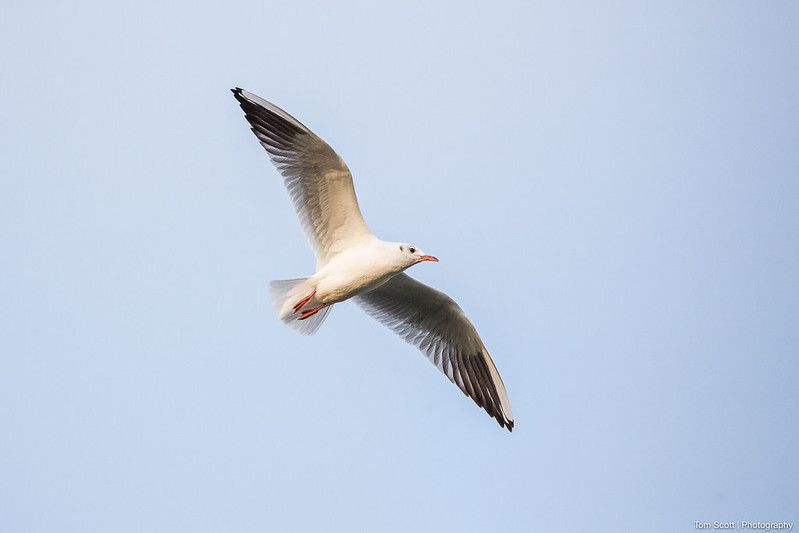 Tamron 150-600mm 400mm Tracking by Tom Scott, on Flickr
Here is one in in a 12 image track where it got 50% of shots in focus dropping 6 frames at 600mm
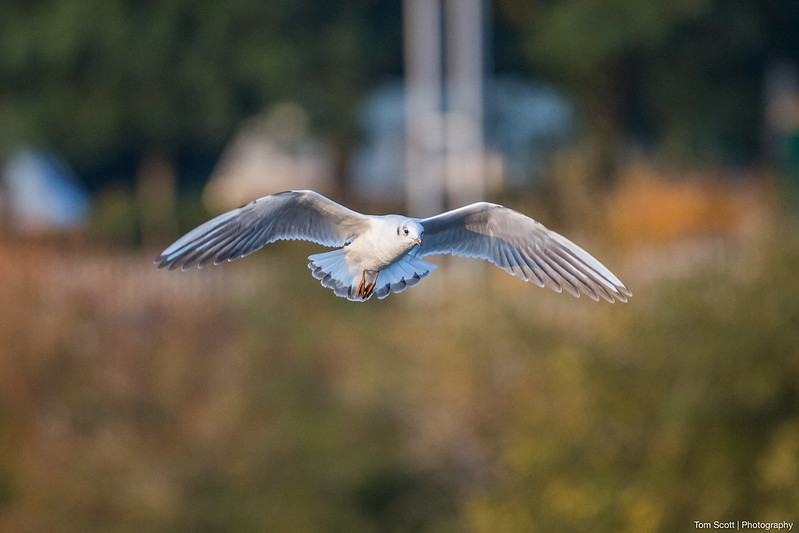 Tamron 150-600mm 600mm Tracking by Tom Scott, on Flickr
This one was probably the best but I think this is my fault the bird put on the anchors and slowed quickly and the AF has locked onto the feet.
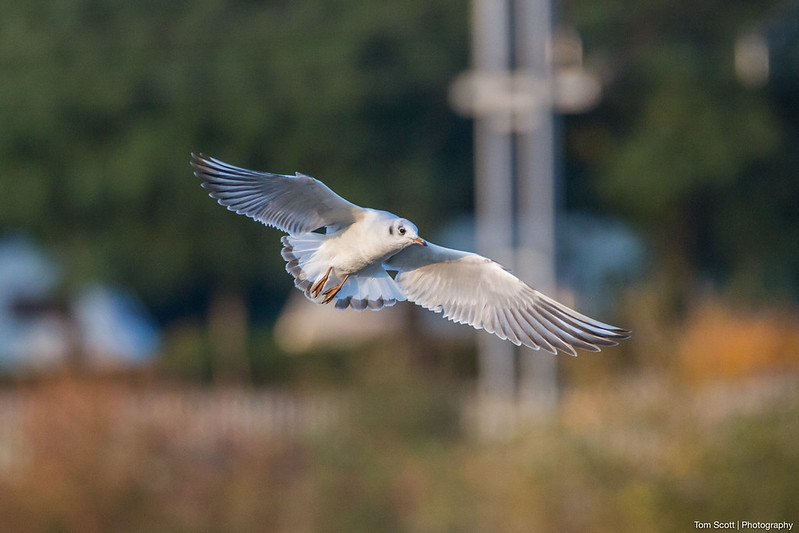 Tamron 150-600mm 600mm Tracking by Tom Scott, on Flickr
As you can see from this image its not tack, looks ok until you zoom in. It seems to have focused but its not critically sharp, it seems like its about an inch out which is what I have found with shooting this lens at 600mm with moving subjects. its not a DOF problem either as it was shot at F8. Its just a tad slow, at 400mm I think it rivals what canon offers, there or there abouts, but its obviously quite a bit heavier than the 400 and 100-400mm to use at 400mm. 600mm is useful for still subjects (see below) but if the 100-400mm is sharper at 500 and 600mm, smaller lighter and has better AF and IS, can only use 400mm for birding then its a better choice imo.
There is also a caveat here you can lock the zoom at 400mm but there is play up to 428mm which is like a 2mm of movement in the barrel but equates to 28mm, very easy to jump from 400mm F5.6 to 428 F6.3 and the lens is therefore as reliable at 428 as 600mm because its minimum aperture is F6.3 and reduces accuracy. Even if you try to reduce the variables and shoot at the sharper faster focal length and lock it in it doesn't mean you can just shoot you have to hold the zoom against the lock to ensure it stays there. I find you can't simply pick it up and use it without thinking its an effort to use and you have to be on the ball.
The whole situation has put me off 3rd party lenses, I swore I wouldn't buy 3rd party again years ago but this new crop of lenses was far too tempting. The Tamron has had 3 firmware updates in 18 months and each time you have to send the lens to be updated which is annoying, it should just work. I live in the very north of England, in the middle of the countryside for example my nearest airport is 2 hours away by car. My nearest Tamron centre is 400 miles away in London, which means a week without it, if you could do it yourself it would be so much easier.
I bought my lens in Sept 2015 and a firmware update was released May 2015 so i felt I had given enough time for these lenses to get into circulation. Mine turned out to be quite an old one, but there is nowhere to tell what firmware its running only that the serial is before the date of the 3rd firmware release. The firmware which in this case fixes an issue when the IS is engaged when tracking a subject the images are more likely to be soft and blurry as the IS fights the AF. It basically gives you the option of version 2 IS system which auto detects and switches accordingly. So I have been shooting everything with it off. I rang my supplier and they admitted problems with tamron and in their inventory only had one lens with the firmware. They are also cleaning the lenses every time they go in because they suck up dust like no tomorrow mines a month old only used outside and has quite a few specs.
The sigma gives me the same feeling although it maybe sharper, the dock doesn't appeal to me it should just work. But at the same time you get what you pay for and if you are willing to make the extra effort to fine-tune then they work well, I did AFMA my lens and found it -10 on the long and -5 on the wide.
If you aren't used to the fast L lenses for AF I think these lenses will blow you away and to start with it did if you can fill the frame at 600mm its really good even with 100% crops, gives you so much room.
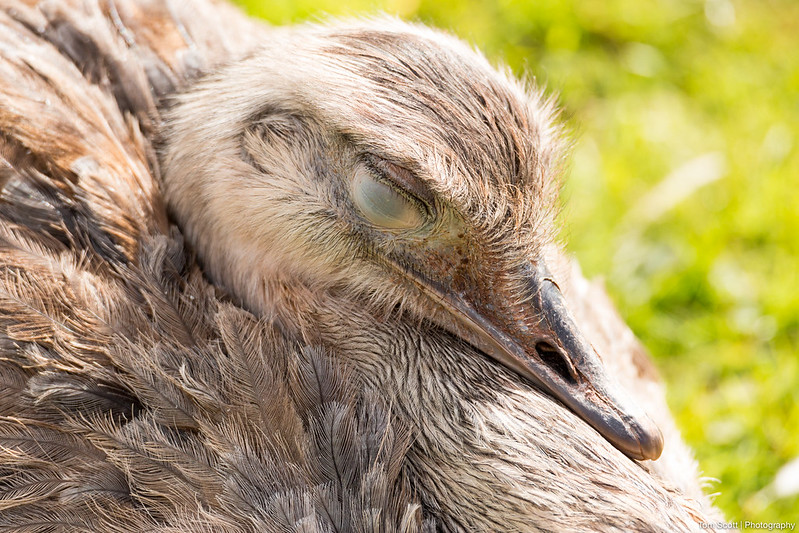 Rhea, South Lakes Safari Zoo, Tamron 150-600mm by Tom Scott, on Flickr
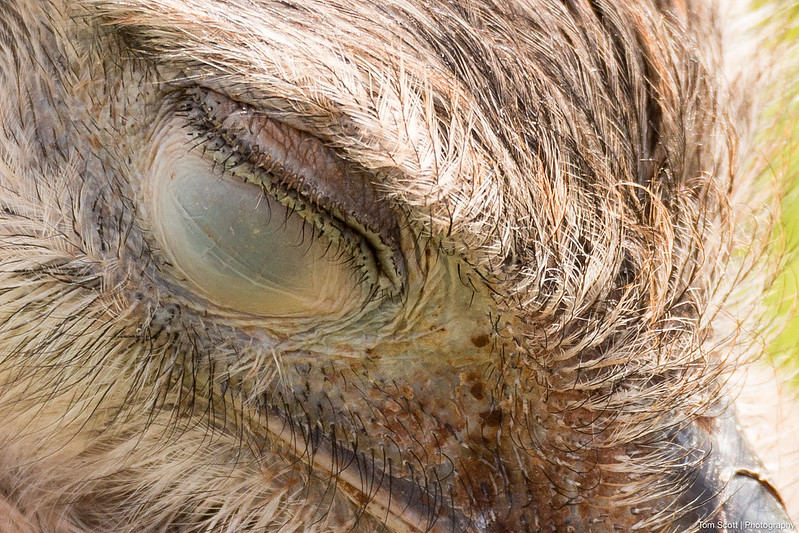 Rhea, 100% Crop, South Lakes Safari Zoo, Tamron 150-600mm by Tom Scott, on Flickr
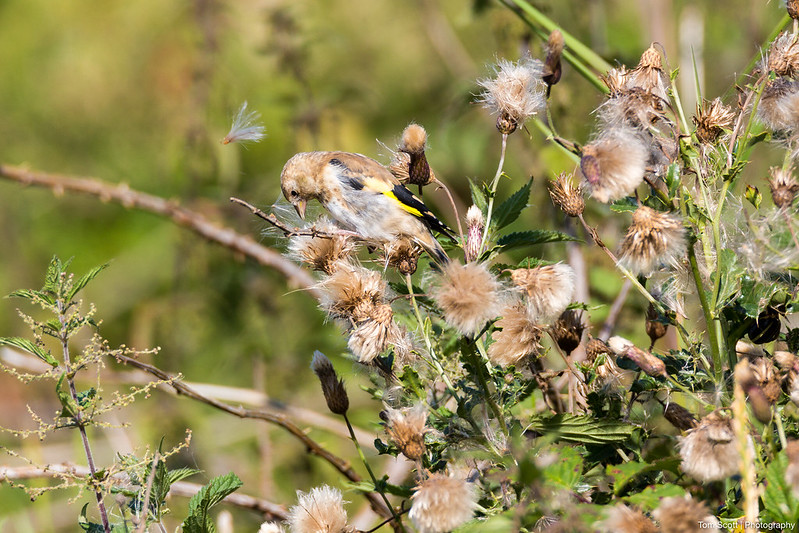 Goldfinch picking Milkseeds, Thacka Beck by Tom Scott, on Flickr
So in my experience its been a bit of a mixed bag. your milage may vary depending on your experience with lenses. If your upgrading from a 70-300mm non L this will blow your socks off but if you have a 70-300mm L, 70-200mm F2.8 even with a 2x this will feel a bit of a side step than an upgrade and certainly from 401-600mm not that impressive. I think they should have left it at 500mm and made it a little sharper.
Hope that helps others looking at the Tammy.
Upvote
0

MJ said:LOL!
And neat pictures too
Thanks.
I surprised myself I was able to catch the ISS flying over our house as clearly as that.
Just handheld as well (it moves to fast to follow it on a tripod, and ideally you want it directly overhead to be at its closest, which is awkward on a tripod)
Upvote
0
Well its clear that MJ has made his decision and bought himself a very good lens. Congrats and I look forward to some results. Also am still hoping that I am wrong and the the 100-400ii is in fact better than my Sigma so that I can switch. I'm always happy to buy new gear. ;D
Tom, I think you are slightly confused. It is not the lens that is not sharp at 500-600 for BIF, it is your (and by that I mean all of us that are not freakishly strong and steady) ability to hand hold the lens steady enough. It is extremely difficult to pan and keep pace with fast flying birds in general. When you introduce human error, shaking or not panning at the perfect speed to keep up with your bird then things get even harder. That issue is compounded greatly by the extra magnification. In addition you are shooting with no IS as well at 600mm. Unless you have a very high shutter speed and perfect technique your results will not be tack sharp. So I think that considering the conditions that you did very well. Working out more is funny enough a great way to improve your BIF shots with large and awkward lenses that are fully extended. Now I am not calling you weak so please take no offense. It is just that the Tamron is a large and heavy lens. When fully extended it is far from easy to hold steady. If you add fast moving birds and any degree of wind then that complicates matters even more. I think these are pros for the Canon by the way. A bit lighter and shorter of a lens, better IS for BIF and weight is distributed better so easier to hold steady while panning.
Tom, I think you are slightly confused. It is not the lens that is not sharp at 500-600 for BIF, it is your (and by that I mean all of us that are not freakishly strong and steady) ability to hand hold the lens steady enough. It is extremely difficult to pan and keep pace with fast flying birds in general. When you introduce human error, shaking or not panning at the perfect speed to keep up with your bird then things get even harder. That issue is compounded greatly by the extra magnification. In addition you are shooting with no IS as well at 600mm. Unless you have a very high shutter speed and perfect technique your results will not be tack sharp. So I think that considering the conditions that you did very well. Working out more is funny enough a great way to improve your BIF shots with large and awkward lenses that are fully extended. Now I am not calling you weak so please take no offense. It is just that the Tamron is a large and heavy lens. When fully extended it is far from easy to hold steady. If you add fast moving birds and any degree of wind then that complicates matters even more. I think these are pros for the Canon by the way. A bit lighter and shorter of a lens, better IS for BIF and weight is distributed better so easier to hold steady while panning.
Upvote
0
Isaac Grant said:Well its clear that MJ has made his decision and bought himself a very good lens. Congrats and I look forward to some results. Also am still hoping that I am wrong and the the 100-400ii is in fact better than my Sigma so that I can switch. I'm always happy to buy new gear. ;D
Tom, I think you are slightly confused. It is not the lens that is not sharp at 500-600 for BIF, it is your (and by that I mean all of us that are not freakishly strong and steady) ability to hand hold the lens steady enough. It is extremely difficult to pan and keep pace with fast flying birds in general. When you introduce human error, shaking or not panning at the perfect speed to keep up with your bird then things get even harder. That issue is compounded greatly by the extra magnification. In addition you are shooting with no IS as well at 600mm. Unless you have a very high shutter speed and perfect technique your results will not be tack sharp. So I think that considering the conditions that you did very well. Working out more is funny enough a great way to improve your BIF shots with large and awkward lenses that are fully extended. Now I am not calling you weak so please take no offense. It is just that the Tamron is a large and heavy lens. When fully extended it is far from easy to hold steady. If you add fast moving birds and any degree of wind then that complicates matters even more. I think these are pros for the Canon by the way. A bit lighter and shorter of a lens, better IS for BIF and weight is distributed better so easier to hold steady while panning.
I've said this before elsewhere, but is it really a matter of strength? I am decidedly weak, especially my hands and wrists, but I use my 500L handheld all the time. Birds in flight, not all that much, but I have done plenty over the years. Maybe it's a matter of developing a technique that works for you - though I've no doubt building muscle strength would help. Just my experience.
(The biggest problem I have with BIF is finding/keeping the bird in the frame, especially smaller ones with unpredictable flight paths).
Upvote
0
tomscott
Photographer & Graphic Designer
No problem no offence taken at all, strength and technique is often something thats overlooked and is obviously the lenses fault…
That being said I'm 27 and a bit of a fitness freak and have no problem carrying the lens or holding it for long periods of time, neither do I find it particularly heavy. I shoot weddings as my main income and I usually have my 5DMKIII and a 24-70 strapped to me with another body and the 70-200mm MKII on another arm and the 70-200mm is similar in weight.
I'm shooting in the 1600 to 2500th range so IS will have minimal effect and those gulls don't move particularly quickly and really quite predictable when they glide. I also shot my tests coming toward and panning horizontally, horizontally the lens did much better as its a similar plane of focus, coming toward the keeper rate was under 50%, multiple 10s of runs. The images themselves don't have motion blur its just not acquiring tack focus. You can see in the pics the bird is in the frame but the focus is just a touch off you have to zoom in quite far to see it but to me if its not in its not in.
Ive been shooting my 70-200mm F2.8 with 2x tele on crop bodies for about 7 years which is a focal length of 640mm and not really had much problem. I shoot a lot of puffins and arctic terns which are twice the speed half the size and no where near as predictable, so its not like the focal length is alien to me.
I agree its hard work to pan and keep the bird in focus and 600mm makes it more difficult with wind and vibration being an even bigger problem. It definitely takes some skill to do so but in this case its not the first time I've been using this focal length and the F6.3 aperture past 400mm makes a really noticeable difference. All those shots you have posted are under 400mm except one so you will have a much higher keeper rate with the lens natively focusing up to F5.6 with most of the points, at 6.3 its basically like only having the centre point and is outside the perimeters of the AF system.
Getting closer is key and you seem like a master! I need more practice and learn more behaviour!
That being said I'm 27 and a bit of a fitness freak and have no problem carrying the lens or holding it for long periods of time, neither do I find it particularly heavy. I shoot weddings as my main income and I usually have my 5DMKIII and a 24-70 strapped to me with another body and the 70-200mm MKII on another arm and the 70-200mm is similar in weight.
I'm shooting in the 1600 to 2500th range so IS will have minimal effect and those gulls don't move particularly quickly and really quite predictable when they glide. I also shot my tests coming toward and panning horizontally, horizontally the lens did much better as its a similar plane of focus, coming toward the keeper rate was under 50%, multiple 10s of runs. The images themselves don't have motion blur its just not acquiring tack focus. You can see in the pics the bird is in the frame but the focus is just a touch off you have to zoom in quite far to see it but to me if its not in its not in.
Ive been shooting my 70-200mm F2.8 with 2x tele on crop bodies for about 7 years which is a focal length of 640mm and not really had much problem. I shoot a lot of puffins and arctic terns which are twice the speed half the size and no where near as predictable, so its not like the focal length is alien to me.
I agree its hard work to pan and keep the bird in focus and 600mm makes it more difficult with wind and vibration being an even bigger problem. It definitely takes some skill to do so but in this case its not the first time I've been using this focal length and the F6.3 aperture past 400mm makes a really noticeable difference. All those shots you have posted are under 400mm except one so you will have a much higher keeper rate with the lens natively focusing up to F5.6 with most of the points, at 6.3 its basically like only having the centre point and is outside the perimeters of the AF system.
Getting closer is key and you seem like a master! I need more practice and learn more behaviour!
Upvote
0
scyrene said:Isaac Grant said:Well its clear that MJ has made his decision and bought himself a very good lens. Congrats and I look forward to some results. Also am still hoping that I am wrong and the the 100-400ii is in fact better than my Sigma so that I can switch. I'm always happy to buy new gear. ;D
Tom, I think you are slightly confused. It is not the lens that is not sharp at 500-600 for BIF, it is your (and by that I mean all of us that are not freakishly strong and steady) ability to hand hold the lens steady enough. It is extremely difficult to pan and keep pace with fast flying birds in general. When you introduce human error, shaking or not panning at the perfect speed to keep up with your bird then things get even harder. That issue is compounded greatly by the extra magnification. In addition you are shooting with no IS as well at 600mm. Unless you have a very high shutter speed and perfect technique your results will not be tack sharp. So I think that considering the conditions that you did very well. Working out more is funny enough a great way to improve your BIF shots with large and awkward lenses that are fully extended. Now I am not calling you weak so please take no offense. It is just that the Tamron is a large and heavy lens. When fully extended it is far from easy to hold steady. If you add fast moving birds and any degree of wind then that complicates matters even more. I think these are pros for the Canon by the way. A bit lighter and shorter of a lens, better IS for BIF and weight is distributed better so easier to hold steady while panning.
I've said this before elsewhere, but is it really a matter of strength? I am decidedly weak, especially my hands and wrists, but I use my 500L handheld all the time. Birds in flight, not all that much, but I have done plenty over the years. Maybe it's a matter of developing a technique that works for you - though I've no doubt building muscle strength would help. Just my experience.
(The biggest problem I have with BIF is finding/keeping the bird in the frame, especially smaller ones with unpredictable flight paths).
I can say that when I was shooting with my 400 5.6 L that it felt like there was nothing attached to the camera. Very light and easy to carry and use. My Tamron and now Sigma are much heavier, and longer. When fully extended they are very top heavy. Any wind in the area will catch hold of the lens hood and push it around like a sail. I know that I get tired holding this thing up for long periods of time and I am quite fit. 43, 5'10" and 165 pounds. I have tried a friends 500 L ii and it is balanced much better than the long zooms so it is therefore easier to hand hold despite the added weight. I know that for me, I suffer from some fatigue after long periods of time of hand holding and any extra strength helps with keeping things steady while panning or hold still while photographing a bird coming straight at me. That combined with proper technique is the key.
Upvote
0
For what it is worth my shots are taken on a 7d2 so when you consider the crop factor, they are much longer than that. I totally agree with you that getting closer is the key. When shooting birds like swallows and Martins they are so fast and so erratic in their flight patterns that it is extremely difficult to keep thing centered in the frame at longer focal lengths if you are in close to the birds. That is why I take a long time to set my self up to be in position that I can use a shorter focal length that will be sharper and less prone to motion blur. Being able to use less magnification helps quite a bit. Good field craft and knowing where to go to get close to these guys is the key. I like the close up shots with clear backgrounds, but that may not appeal to all. These shots were taken from 2 separate colonies that I know of. Shooting in good light and close subjects will go a long way towards closing the distance between a very good lens and a great lens.tomscott said:No problem no offence taken at all, strength and technique is often something thats overlooked and is obviously the lenses fault…
That being said I'm 27 and a bit of a fitness freak and have no problem carrying the lens or holding it for long periods of time, neither do I find it particularly heavy. I shoot weddings as my main income and I usually have my 5DMKIII and a 24-70 strapped to me with another body and the 70-200mm MKII on another arm and the 70-200mm is similar in weight.
I'm shooting in the 1600 to 2500th range so IS will have minimal effect and those gulls don't move particularly quickly and really quite predictable when they glide. I also shot my tests coming toward and panning horizontally, horizontally the lens did much better as its a similar plane of focus, coming toward the keeper rate was under 50%, multiple 10s of runs. The images themselves don't have motion blur its just not acquiring tack focus. You can see in the pics the bird is in the frame but the focus is just a touch off you have to zoom in quite far to see it but to me if its not in its not in.
Ive been shooting my 70-200mm F2.8 with 2x tele on crop bodies for about 7 years which is a focal length of 640mm and not really had much problem. I shoot a lot of puffins and arctic terns which are twice the speed half the size and no where near as predictable, so its not like the focal length is alien to me.
I agree its hard work to pan and keep the bird in focus and 600mm makes it more difficult with wind and vibration being an even bigger problem. It definitely takes some skill to do so but in this case its not the first time I've been using this focal length and the F6.3 aperture past 400mm makes a really noticeable difference. All those shots you have posted are under 400mm except one so you will have a much higher keeper rate with the lens natively focusing up to F5.6 with most of the points, at 6.3 its basically like only having the centre point and is outside the perimeters of the AF system.
Getting closer is key and you seem like a master! I need more practice and learn more behaviour!
Also and keep in mind that I have no experience with the 5d3, but how you have your camera set up will have a big impact on these shots as well. I had a much greater percent of keepers when I set the custom settings on my 7d2 so my AF-ON button is set for ai servo, case 2 and 15 focus points. I use this for all small BIF shots. For larger BIF shots I have my * button set to ai servo, case 2 but center point and surrounding 4 points. This way I can aim the focus to where I want it to be. Don't want the camera deciding to focus on the closest part of the wing and not on the eye. Too many times if using many focus points on a larger bird I missed the shot because I had the front wing in focus but not enough of the rest of the bird, despite that fact that I was shooting at f8.
Here are 2 at a bit longer than 400mm to show what you can get with the Sigma on a crop body. Again most of my shots I do not need more reach as I was in close enough to be able to take advantage of close range shooting.
At 421mm (so = 673 on FF)
 Purple Martin by Isaac Grant, on Flickr
At 435mm (so = 696 on FF)
 Purple Martin by Isaac Grant, on Flickr
Upvote
0
Isaac Grant said:scyrene said:Isaac Grant said:Well its clear that MJ has made his decision and bought himself a very good lens. Congrats and I look forward to some results. Also am still hoping that I am wrong and the the 100-400ii is in fact better than my Sigma so that I can switch. I'm always happy to buy new gear. ;D
Tom, I think you are slightly confused. It is not the lens that is not sharp at 500-600 for BIF, it is your (and by that I mean all of us that are not freakishly strong and steady) ability to hand hold the lens steady enough. It is extremely difficult to pan and keep pace with fast flying birds in general. When you introduce human error, shaking or not panning at the perfect speed to keep up with your bird then things get even harder. That issue is compounded greatly by the extra magnification. In addition you are shooting with no IS as well at 600mm. Unless you have a very high shutter speed and perfect technique your results will not be tack sharp. So I think that considering the conditions that you did very well. Working out more is funny enough a great way to improve your BIF shots with large and awkward lenses that are fully extended. Now I am not calling you weak so please take no offense. It is just that the Tamron is a large and heavy lens. When fully extended it is far from easy to hold steady. If you add fast moving birds and any degree of wind then that complicates matters even more. I think these are pros for the Canon by the way. A bit lighter and shorter of a lens, better IS for BIF and weight is distributed better so easier to hold steady while panning.
I've said this before elsewhere, but is it really a matter of strength? I am decidedly weak, especially my hands and wrists, but I use my 500L handheld all the time. Birds in flight, not all that much, but I have done plenty over the years. Maybe it's a matter of developing a technique that works for you - though I've no doubt building muscle strength would help. Just my experience.
(The biggest problem I have with BIF is finding/keeping the bird in the frame, especially smaller ones with unpredictable flight paths).
I can say that when I was shooting with my 400 5.6 L that it felt like there was nothing attached to the camera. Very light and easy to carry and use. My Tamron and now Sigma are much heavier, and longer. When fully extended they are very top heavy. Any wind in the area will catch hold of the lens hood and push it around like a sail. I know that I get tired holding this thing up for long periods of time and I am quite fit. 43, 5'10" and 165 pounds. I have tried a friends 500 L ii and it is balanced much better than the long zooms so it is therefore easier to hand hold despite the added weight. I know that for me, I suffer from some fatigue after long periods of time of hand holding and any extra strength helps with keeping things steady while panning or hold still while photographing a bird coming straight at me. That combined with proper technique is the key.
Ah, I see. Yeah, where in the lens the weight is must make a difference. I know a lot of people criticised the 200 1.8L for being front heavy. And the main weight saving from the mark I to the mark II superteles was made by removing the front protective (non-optical) element, so that probably pushed the centre of gravity back towards the camera.
Incidentally, the swallows in flight shots are excellent - those are some of the hardest birds to photograph!
Upvote
0
Similar threads

- Replies
- 30
- Views
- 3K

- Replies
- 10
- Views
- 1K

- Replies
- 5
- Views
- 966

