What's Next from Canon?

scyrene said:
Sella174 said:
Regarding the 60D ... I found that I (me, personally; not you, them and others) derive absolutely almost zero benefit from the increase in megapixels, for the simple fact that, as an example, my 24mm lens cannot handle that resolution. So, whether I take a picture with my 24mm on the 30D (8MP) or the 60D (18MP), the result is very much the same due to the "lack of resolving power" by the lens ... and sometimes it's worse. This means an "upgrade" in camera also means an immediate "upgrade" in lenses as well.

I thought it was the case that the same lens will resolve more detail on a sensor with more megapixels, even if it isn't capable of resolving to the theoretical maximum of the better sensor? Isn't that in that hugely long equivalence article people link to occasionally? So the same lens cannot produce <i>worse</i> results on a better sensor (although a better lens may be required to get the best out of the higher resolution sensor)?

Output resolution is approximately the RMS of the input resolutions. That means that the lowest resolution component becomes the highest theoretically possible for output resolution. If you have a sensor capable of resolving 50lp/mm, then no matter how good the lens, your output resolution will never top 49.9999999...lp/mm. If your sensor is 100lp/mm, and your lens is really cheap and can only produce 80lp/mm, then upgrading to a newer lens would indeed help. Once you start approaching the limit of the lowest common denominator, it begins to take considerably more resolution in the other components to produce measurable increases in output resolution.

So, if you have a 100lp/mm sensor, and a 100lp/mm lens, and you get a lens capable of 200lp/mm, you will see an improvement. Use a 300lp/mm lens, and you'll still see an improvement, however it won't be as significant as moving from a 100lp/mm to 200lp/mm lens. Use a 400lp/mm lens (only possible at really fast apertures, like f/1.7), and you'll see a small improvement, but not nearly as significant as the others...and no matter what you do, your maximum output resolution will be limited to the sensors 100lp/mm.

You eventually get diminishing returns when using components with greater and greater resolving power unless you improve both. So, by the time you get up to wanting 200-300lp/mm (which can only be attained at faster apertures, like f/2.8 and wider), you should really pair it with a much better sensor.

But you are correct, at the resolutions of todays sensors, you can pretty much always see an improvement by using a higher resolution lens. And, conversely, moving to a higher resolution sensor will allow that lens to perform even better.

scyrene said:
Sella174 said:
Regarding the 60D and the 6D ... I agree that both cameras offer spectacular improvements in high-ISO performance over my ancient 30D's and 5D. Only, I (me, personally; not you, them and others) don't photograph in the dark woods on a moonless night and, as stated previous, basically live at ISO200 most of the time. So what benefit do I (me, personally; not you, them and others) derive from "clean" ISO12800, huh? And only if the camera has a shutterspeed to match, which I (me, personally; not you, them and others) don't necessarily and artistically desire. But I've had this discussion before ...

For what it's worth, you don't need to be in comically extreme circumstances to need such high ISOs. Not that it makes a difference - you can work at 200, and so high ISO performance isn't important to you, as you say. But in overcast conditions around sunset, a bird - especially under trees, but even in the open - can easily need ISO 6400-12800+ - shooting at, say, 1/250sec and f/10. My point being, it's a fairly regular real world situation for some of us. Nighttime forests would require a whole lot more sensitivity (and I appreciate it was probably hyperbole, but I think a lot of people really do find it odd anyone would want clean high ISO).

Totally agree. It really doesn't take much to require high ISO settings. Especially when you need high shutter speeds like 1/1000s or 1/2500s, in order to freeze the motion of your subject (and flash isn't an option.)
 
Upvote 0
Sella174 said:
Lee Jay said:
This also causes a drastic loss of battery life ...

Which is solved by bigger batteries ... which is why I keep shouting for people to stop harping on "the small size of mirrorless" as a feature. Make a mirrorless camera as big as 5DIII and cram the sucker full of batteries.

Lee Jay said:
... and the resulting information overload is distracting. I turn it all of in my EVF cameras ...

For some. But isn't it great that you can actually turn it off, huh? ;)

Lee Jay said:
... the EVF is lousy in every way compared to an OVF.

Depends. Definitely so in 2012; it became better in 2013; and next year it'll be even better. For comparison, I remember a time when we all felt that film was still soooo much superior to digital and "pros" wouldn't touch it for serious work. But look at where we are today. So please don't judge EVF's on how they are now, as the technology is constantly being improved. :)

I keep saying similar things (IE use an slr body type, with an EF mount - so no one has to use silly lens adaptors or wait while each and every lens ever made gets resigned to fit the current mirrorless mold). But, this is where mirrorless has its downfall, it seems like the biggest proponents for mirrorless want their cake and want to eat it too. All the bells and whistles of an slr, in a package smaller than the A7, but smaller with smaller lenses and of course, a magical battery compartment that can fit 2 1dx batteries...

when it comes down to it...it really is about form factor. there was another post somewhere here showing the first digital camera's, goofy looking things, the first idea was that cause it's new it should look radically different...high tech...result, they looked like a joke and weren't taken seriously until digital camera's started to look like regular cameras.

which is why i feel that mirrorless may just be a cool for now, trendy product.
 
Upvote 0
Chuck Alaimo said:
Sella174 said:
Lee Jay said:
This also causes a drastic loss of battery life ...

Which is solved by bigger batteries ... which is why I keep shouting for people to stop harping on "the small size of mirrorless" as a feature. Make a mirrorless camera as big as 5DIII and cram the sucker full of batteries.

Lee Jay said:
... and the resulting information overload is distracting. I turn it all of in my EVF cameras ...

For some. But isn't it great that you can actually turn it off, huh? ;)

Lee Jay said:
... the EVF is lousy in every way compared to an OVF.

Depends. Definitely so in 2012; it became better in 2013; and next year it'll be even better. For comparison, I remember a time when we all felt that film was still soooo much superior to digital and "pros" wouldn't touch it for serious work. But look at where we are today. So please don't judge EVF's on how they are now, as the technology is constantly being improved. :)

I keep saying similar things (IE use an slr body type, with an EF mount - so no one has to use silly lens adaptors or wait while each and every lens ever made gets resigned to fit the current mirrorless mold). But, this is where mirrorless has its downfall, it seems like the biggest proponents for mirrorless want their cake and want to eat it too. All the bells and whistles of an slr, in a package smaller than the A7, but smaller with smaller lenses and of course, a magical battery compartment that can fit 2 1dx batteries...

when it comes down to it...it really is about form factor. there was another post somewhere here showing the first digital camera's, goofy looking things, the first idea was that cause it's new it should look radically different...high tech...result, they looked like a joke and weren't taken seriously until digital camera's started to look like regular cameras.

which is why i feel that mirrorless may just be a cool for now, trendy product.

Aye. Totally agree. I think once mirrorless cameras start coming in DSLR packages, then they will really take off.
 
Upvote 0
Woody said:
Zv said:
The EOS M isn't that popular in Japan either, but at $300 it is at least affordable.

That is entirely FALSE.

After its price cut, the EOS-M is the SECOND most popular mirrorless camera in Japan in 2013 (see http://bcnranking.jp/news/1312/131227_27056.html) and this enabled Canon to capture 9.3% of the mirrorless camera market share (see http://bcnranking.jp/news/1401/140110_27101.html). In contrast, Panasonic and Nikon with their MULTIPLE camera models only managed to capture 14.2 and 9.2% market shares.

Please get your facts straight before you post rubbish on the web.
+1

BTW Do you happened to have any other similar statistics for US EU and world wide? :-)
 
Upvote 0
jrista said:
Output resolution is approximately the RMS of the input resolutions. That means that the lowest resolution component becomes the highest theoretically possible for output resolution. If you have a sensor capable of resolving 50lp/mm, then no matter how good the lens, your output resolution will never top 49.9999999...lp/mm. If your sensor is 100lp/mm, and your lens is really cheap and can only produce 80lp/mm, then upgrading to a newer lens would indeed help. Once you start approaching the limit of the lowest common denominator, it begins to take considerably more resolution in the other components to produce measurable increases in output resolution.

So, if you have a 100lp/mm sensor, and a 100lp/mm lens, and you get a lens capable of 200lp/mm, you will see an improvement. Use a 300lp/mm lens, and you'll still see an improvement, however it won't be as significant as moving from a 100lp/mm to 200lp/mm lens. Use a 400lp/mm lens (only possible at really fast apertures, like f/1.7), and you'll see a small improvement, but not nearly as significant as the others...and no matter what you do, your maximum output resolution will be limited to the sensors 100lp/mm.

You eventually get diminishing returns when using components with greater and greater resolving power unless you improve both. So, by the time you get up to wanting 200-300lp/mm (which can only be attained at faster apertures, like f/2.8 and wider), you should really pair it with a much better sensor.

But you are correct, at the resolutions of todays sensors, you can pretty much always see an improvement by using a higher resolution lens. And, conversely, moving to a higher resolution sensor will allow that lens to perform even better.

Out of interest, given a lens has a continuous surface (so analogue?) while a sensor is divided into pixels (digital), do lp measurements mean the same for each?
 
Upvote 0
jrista said:
I'll defer to Neuro for references. Sounds like he has better ones than I do. Once I have the dough (I just bought an Orion Atlas EQ-G equatorial mount for my astronomy/astrophotography, so no cash at the moment), I'll buy that book. Sounds pretty awesome.

You can also just use a basic little experiment. Find a landscape with huge DR. One with backlit clouds and deeper shadows under the trees. Even a 14-stop D800 can't capture the full dynamic range. Look at the scene with your own eyes, and you'll see detail in those backlit clouds as well as detail in the shadows under the trees. I photographed a scene like this at the end of summer last year, over Long Lake up in the Indian Peaks region of the Colorado Front Range. My camera couldn't handle it, the clouds were way too bright. But I could see people moving about the opposite shore under the trees (which were buried in shadow noise in my photos, unrecoverable), and still see plenty of whispy detail in the bright clouds.

I measure each landscape scene I photograph with the cameras meter. I lock down ISO to 100, choose my aperture, and let the camera choose the shutter speed for me. I compute the dynamic range by calculating the difference in shutter speeds between the brightest (non-sun) area and the deepest shadows. There were about 18 stops of DR in that scene. Even with GND filters, I couldn't really get it all (and I stacked my 0.3, 0.9 and 1.2). That is the ONE reason where I fundamentally need as much DR as I can get in a camera...my landscapes. Even though I can use GND filters, when you stack that many, you end up with a rather noticeable gradient along the upper peaks of the mountains. You can mix and match hard and soft grads, but you can never really get that key horizon looking good.

Anyway...I know how much DR is in many of the landscape scenes I've photographed. My eyes can take in the whole thing quite frequently, even when it is many stops more than my camera can handle. So when you read things talking about how the dynamic range of human vision is somewhere between 20 and 24 stops, I really do believe it.

As for the Cambridge in Color stuff. They are pretty careful about disclaiming their claims. Pretty much anyone who claims to know anything about the science off the human eye is pretty quick to post a disclaimer. It's a rather ephemeral science of a highly subjective thing. Dynamic range is hard to actually "measure" with the human eye, especially as human perception differs from person to person. Some people are simply not in tune with what they bodies are capable of. Me, on the other hand, I have had hypersensitivity issues since I was a kid. I can hear and see things that some people don't notice until I tell them HOW to notice it. Then, suddenly, they can see the same things I do, until their attention drifts to something else. (If it wasn't for that, I'd think I was unique.) Sound is one of my biggest problems. I hear everything, and I apparently have no filter. It isn't like autism...if I concentrate I can kind of block some sounds, others, if they bug me (like an unknown vibration or the rumble of an engine) I often HAVE to find the source of the sound, if at the very least just to know that I'm not hearing things, that the sound actually does exist, and, if I have the power to, control it (i.e. make it stop! As you can imagine...I have MASSIVE problems sleeping...I've been a raging insomniac for nearly eight years now, and I always had sleep problems since I was a kid...it's really a curse, but I'm still amazed at what my brain can sense and process.) Again, most people don't hear the things I hear, at first...but when I point it out, most people will eventually hear it, so I know it isn't just that I have better senses than other people. Somewhere along the line I became too attuned to the minutia of sensory input that you really shouldn't be attuned to. Our bodies sensory organs are pretty freakin amazing, they have incredible range, yet exceptionally fine discernment.

Anyway...subjective...but, if you find the time, tune in...your senses are far better than they are often given credit for. You can smell better, hear better, see better than you are normally aware of...sometimes all it takes is a little practice and concentration, and you can hone your senses, maximize their potential (just don't take it too far, or you might end up cursed like me... :-\)

I wholeheartedly agree that most people don't give half as much credit to their own senses as they should, my argument with the viewfinder is I just don't see the information collected through it as essential. People have, can and do process all the same information in many other ways, some better, no different or worse. It's all just tools in the box.

Continuing on the rabbit trail:
Sounds like you're a normal person who has learned to pay attention, a dying art. Maybe learning to relax is next on the agenda? (I'm guessing that may have something to do with your interest in photography).
From what I can see most of the difference between the "elite" and "normal" people in this world is attitude. Of course everyone is different, but many of those who are commonly known for greatness accomplished those extraordinary things despite their natural shortcomings.
My favourite quote from Einstein:

"I am not more gifted than the average human being. If you know anything about history, you would know that is so--what hard times I had in studying and the fact that I do not have a memory like some other people do… I am just more curious than the average person and I will not give up on a problem until I have found the proper solution."
 
Upvote 0
Chuck Alaimo said:
I keep saying similar things (IE use an slr body type, with an EF mount - so no one has to use silly lens adaptors or wait while each and every lens ever made gets resigned to fit the current mirrorless mold). But, this is where mirrorless has its downfall, it seems like the biggest proponents for mirrorless want their cake and want to eat it too. All the bells and whistles of an slr, in a package smaller than the A7, but smaller with smaller lenses and of course, a magical battery compartment that can fit 2 1dx batteries...

when it comes down to it...it really is about form factor. there was another post somewhere here showing the first digital camera's, goofy looking things, the first idea was that cause it's new it should look radically different...high tech...result, they looked like a joke and weren't taken seriously until digital camera's started to look like regular cameras.

which is why i feel that mirrorless may just be a cool for now, trendy product.
+1
You can't ignore ergonomics.... Why was 35mm so popular back in the days of film???? We had a lot of standard film sizes to choose between. Myself, I seem to have used from tiny scraps of film in instamatics to a friend's 8x10....

35mm was the sweet spot.... it was the combination of ergonomics that made it a good size to hold, yet allowed a range of lens sizes with reasonable image quality... yes, you could go bigger (I did hump around an 8x10 :) ) but by going bigger you needed insanely large lenses to get a decent field of view with animals, birds, and other distant objects.... There is a very good reason why Ansel Adams shot landscapes and not BIF :) 35 mm was a good general purpose balance point.

So now we have gone digital. People are still the same, so the ergonomics remain the same... the laws of optics are the same, so other than better materials and more precise manufacturing, lens are essentially the same.... The sweet spot for size remains the same...

Put a 50 year old SLR and a brand new DSLR on the table. It is obvious that they are both cameras, and with the exception of a preview screen on the back and the relocation of a few controls, they are not really that much different..... ergonomics strikes again!
 
Upvote 0
Sella174 said:
Lee Jay said:
The EVFs are showing what is in essence the out-of-camera JPEG, with about 1 stop clipped from each end. And as we all know, the out-of-camera JPEG contains several stops less DR than is available in the raw data.

Interesting. So the camera is essentially generating 60 or more JPEG images per second, plus adding overlay data to it. Amazing.

Not even close, at least on Canon P&S cameras.

For live view (either on the LCD, or EVF), the sensor image is converted to an 8 bit, 4:1:1 YUV image.
This has a luminance (Y) resolution of 720 x 240 pixels on most Canon cameras; but only 180 x 240 resolution for each of the chrominance channels (U & V).

Some cameras, such as the G12 & G1X, double the vertical resolution to 480 lines.

My understanding is this is done using a special read-out mode on the sensor; but I may be wrong there.

The live view is normally done at 30 frames per second, except in low light when the camera will lower the refresh rate to capture more light per frame.

There is no JPEG processing being done.

Phil.
 
Upvote 0
philmoz said:
Sella174 said:
Lee Jay said:
The EVFs are showing what is in essence the out-of-camera JPEG, with about 1 stop clipped from each end. And as we all know, the out-of-camera JPEG contains several stops less DR than is available in the raw data.

Interesting. So the camera is essentially generating 60 or more JPEG images per second, plus adding overlay data to it. Amazing.

Not even close, at least on Canon P&S cameras.

For live view (either on the LCD, or EVF), the sensor image is converted to an 8 bit, 4:1:1 YUV image.
This has a luminance (Y) resolution of 720 x 240 pixels on most Canon cameras; but only 180 x 240 resolution for each of the chrominance channels (U & V).

Some cameras, such as the G12 & G1X, double the vertical resolution to 480 lines.

My understanding is this is done using a special read-out mode on the sensor; but I may be wrong there.

The live view is normally done at 30 frames per second, except in low light when the camera will lower the refresh rate to capture more light per frame.

There is no JPEG processing being done.

Phil.

As far as I know, Phil, you are correct. I believe that Canon cameras use sRAW readout (when available) or something very similar. The sRAW format is a YCbCr format, full resolution luminance, half resolution color channels (red-magenta and blue-yellow). Fundamentally, sRAW and it's variants are technically the same kind of format as JPEG, however JPEG is 8-bit, where as sRAW & variants are 12- or 14-bit. Since it is a sensor pulldown (basically a real-time stream off the sensor), things aren't really compressed much (outside of lowering the resolution of Cr and Cb channels.) The thing about this kind of pulldown is you are affected by rolling shutter...as that's basically what's going on. Again, not particularly ideal, however you are indeed limited initially by sensor DR (rather than 8-bit JPEG DR, which tops out at 8 stops at best).
 
Upvote 0
jrista said:
... (rather than 8-bit JPEG DR, which tops out at 8 stops at best).

Straying a bit off topic here; but I thought the DR of a JPEG image was a function of the tone curve / colour space of the image file.
I thought the JPEG format was quite capable of recording 12 or more stops - the main problem with having 8 bits per channel is banding (and compression artefacts of course).

Phil.
 
Upvote 0
Don Haines said:
Chuck Alaimo said:
I keep saying similar things (IE use an slr body type, with an EF mount - so no one has to use silly lens adaptors or wait while each and every lens ever made gets resigned to fit the current mirrorless mold). But, this is where mirrorless has its downfall, it seems like the biggest proponents for mirrorless want their cake and want to eat it too. All the bells and whistles of an slr, in a package smaller than the A7, but smaller with smaller lenses and of course, a magical battery compartment that can fit 2 1dx batteries...

when it comes down to it...it really is about form factor. there was another post somewhere here showing the first digital camera's, goofy looking things, the first idea was that cause it's new it should look radically different...high tech...result, they looked like a joke and weren't taken seriously until digital camera's started to look like regular cameras.

which is why i feel that mirrorless may just be a cool for now, trendy product.
+1
You can't ignore ergonomics.... Why was 35mm so popular back in the days of film???? We had a lot of standard film sizes to choose between. Myself, I seem to have used from tiny scraps of film in instamatics to a friend's 8x10....

35mm was the sweet spot.... it was the combination of ergonomics that made it a good size to hold, yet allowed a range of lens sizes with reasonable image quality... yes, you could go bigger (I did hump around an 8x10 :) ) but by going bigger you needed insanely large lenses to get a decent field of view with animals, birds, and other distant objects.... There is a very good reason why Ansel Adams shot landscapes and not BIF :) 35 mm was a good general purpose balance point.

So now we have gone digital. People are still the same, so the ergonomics remain the same... the laws of optics are the same, so other than better materials and more precise manufacturing, lens are essentially the same.... The sweet spot for size remains the same...

Put a 50 year old SLR and a brand new DSLR on the table. It is obvious that they are both cameras, and with the exception of a preview screen on the back and the relocation of a few controls, they are not really that much different..... ergonomics strikes again!
Total agree. However, I would like to add "Form (size, weight)", "Function" and "Econonics (price)" also play a very important part. In the film days, 35mm full frame SLR is not the most propular camera. Small view finder 35 mm camera was the most popular camera. That is due to lower price and easier to carry ( small size and light weight) even with limited functioality. There is no doubt that the Leica M series is the best 35mm film camera. But for functionality, It cannot complete with SLR unless expensive and clumsy attachments are used. Therefore it became a limited production camera for certain user. Rolleiflex is an excellent camera. With waist level finder and shutter release at the front of the camera to give the photographer the perfect angle for full length body shot. Due to higher price and fixed lens it just cannot survive. Hasselblad is a 6X6 SLR. Again, high price and heavy weight limits it to become a specialty camera. The examples can keep on going. So I will stop here
 
Upvote 0
philmoz said:
jrista said:
... (rather than 8-bit JPEG DR, which tops out at 8 stops at best).

Straying a bit off topic here; but I thought the DR of a JPEG image was a function of the tone curve / colour space of the image file.

It is.

I thought the JPEG format was quite capable of recording 12 or more stops - the main problem with having 8 bits per channel is banding (and compression artefacts of course).

Phil.

Correct, but most out-of-camera JPEGs are 8 stop or less because camera makers like them to "pop" which means high global contrast and thus lots of crushed blacks and clipped highlights.

You can put 30 stops into a JPEG, and I've seen it done. But camera makers don't do that.
 
Upvote 0
philmoz said:
The live view is normally done at 30 frames per second, except in low light when the camera will lower the refresh rate to capture more light per frame.

I was wondering about that.
As much as I love high refresh rates, if you can't see anything there's not much point. Hopefully future cameras let the framerate go really low, a half second exposure lets you see a lot in the dark.


Lee Jay said:
philmoz said:
jrista said:
... (rather than 8-bit JPEG DR, which tops out at 8 stops at best).

Straying a bit off topic here; but I thought the DR of a JPEG image was a function of the tone curve / colour space of the image file.

It is.

I thought the JPEG format was quite capable of recording 12 or more stops - the main problem with having 8 bits per channel is banding (and compression artefacts of course).

Phil.

Correct, but most out-of-camera JPEGs are 8 stop or less because camera makers like them to "pop" which means high global contrast and thus lots of crushed blacks and clipped highlights.

You can put 30 stops into a JPEG, and I've seen it done. But camera makers don't do that.

I think most of the problem is that computer monitors don't have that much range. I'm assuming that professional printing services use RAW?

Now I'm wondering if there isn't some substance to all the hype about Fuji JPEGs.
 
Upvote 0
Chuck Alaimo said:
9VIII said:
neuroanatomist said:
9VIII said:
Go to your live view settings, you get to chose between exposure simulation and stills display, in exposure simulation it will only show you what the exposure will look like, in stills display it adjusts for lighting just like your eyes do.

I know, but which setting increases the DR of the sensor to the ~20 stops my eye can see through an OVF? ::)

You only see 10-14 stops at any given time. That 20 stops of dynamic range is a post processed HDR image combining multiple exposures.

Even if this were to be true (which, in a way it is, the only reason I am saying it like this is because there is clean, natural HDR and then there is the what the hell happened HDR)....which is the better, faster processing engine...your brain or the camera? And, which one will produce a natural image, your brain or the camera?

I'm not actually sure that your eyes are going to adjust as fast as the camera, I certainly can't say that they're in different leagues.
Most of my point is the information you see through the viewfinder has no affect on the final image. I'm sure your brain is far superior, but it won't matter until you get an SD card slot installed.
 
Upvote 0
9VIII said:
Chuck Alaimo said:
9VIII said:
neuroanatomist said:
9VIII said:
Go to your live view settings, you get to chose between exposure simulation and stills display, in exposure simulation it will only show you what the exposure will look like, in stills display it adjusts for lighting just like your eyes do.

I know, but which setting increases the DR of the sensor to the ~20 stops my eye can see through an OVF? ::)

You only see 10-14 stops at any given time. That 20 stops of dynamic range is a post processed HDR image combining multiple exposures.

Even if this were to be true (which, in a way it is, the only reason I am saying it like this is because there is clean, natural HDR and then there is the what the hell happened HDR)....which is the better, faster processing engine...your brain or the camera? And, which one will produce a natural image, your brain or the camera?

I'm not actually sure that your eyes are going to adjust as fast as the camera, I certainly can't say that they're in different leagues.
Most of my point is the information you see through the viewfinder has no affect on the final image. I'm sure your brain is far superior, but it won't matter until you get an SD card slot installed.
SD is passé... go for cFast or a real wireless link.
 
Upvote 0
Don Haines said:
9VIII said:
Chuck Alaimo said:
9VIII said:
neuroanatomist said:
9VIII said:
Go to your live view settings, you get to chose between exposure simulation and stills display, in exposure simulation it will only show you what the exposure will look like, in stills display it adjusts for lighting just like your eyes do.

I know, but which setting increases the DR of the sensor to the ~20 stops my eye can see through an OVF? ::)

You only see 10-14 stops at any given time. That 20 stops of dynamic range is a post processed HDR image combining multiple exposures.

Even if this were to be true (which, in a way it is, the only reason I am saying it like this is because there is clean, natural HDR and then there is the what the hell happened HDR)....which is the better, faster processing engine...your brain or the camera? And, which one will produce a natural image, your brain or the camera?

I'm not actually sure that your eyes are going to adjust as fast as the camera, I certainly can't say that they're in different leagues.
Most of my point is the information you see through the viewfinder has no affect on the final image. I'm sure your brain is far superior, but it won't matter until you get an SD card slot installed.
SD is passé... go for cFast or a real wireless link.
I don't think there is yet a brain interface controller for either card ... ;D
 
Upvote 0
philmoz said:
jrista said:
... (rather than 8-bit JPEG DR, which tops out at 8 stops at best).

Straying a bit off topic here; but I thought the DR of a JPEG image was a function of the tone curve / colour space of the image file.
I thought the JPEG format was quite capable of recording 12 or more stops - the main problem with having 8 bits per channel is banding (and compression artefacts of course).

Phil.

I get what your saying, but technically speaking, reality would be a bit different. The raw data before being saved to JPEG can have a tone curve applied. That tone curve, if designed correctly, could compress the real dynamic range of the camera (say 12- to 14- stops) into the 8-stop dynamic range allowed by 8-bit data. But you don't still have 12 or 14 stops of DR. You compressed the original dynamic range into a smaller space, meaning you discarded some of that original information.

With an actual RAW, you can push the exposure around in a tool like lightroom and recover information that doesn't fit within the dynamic range of your computer screen (which is also likely 8 bits). When you first load up a raw, it might appear that the highlights are blown and the blacks are crushed...even if you apply say the Canon Neutral camera profile (the initial tone curve), that is still likely to be the case in a high DR photo. You can recover those highlights and shadows, though, because the underlying RAW has enough bit depth to preserve all that information.

With a JPEG, the tone curves applied by the camera are usually more likely to clip highlights and crush blacks. The most preservative "Picture Style" in Canon cameras is neutral or standard, however neither are actually capable of preserving the full original 14 stops of dynamic range. All those tone curves are doing is shifting a greater precision of information into a space capable of less precision. No matter how you slice it, your loosing some information. When the JPEG is saved, you have 8 stops of dynamic range. Clipped highlights are clipped, permamently, there is no recovery. Crushed blacks are black, there is no lifting them. Furthermore, because JPEG is a lossy compression format, you lose EVEN MORE information.

While the camera, if it's using a standard picture style rather than say landscape or faithful or something like that, can indeed preserve some of the original dynamic range, it's still doing so by discarding some of the information that already fit in that 8 bits of data anyway (i.e. the high shadows, midtones and lower highlights). You don't have 12 or 14 stops of editing latitude...you have at most 8 stops of editing latitude (however, because the 8 bit pixel information already fits within the confines of your 8 bit computer screen, there really isn't any NEED for that editing latitude.)

Bits and stops, in a digital image signal, are synonymous in many ways. Both are base 2/power of 2, in that for every additional bit, you double the digital number space for storing light level information. That corresponds directly with every additional stop. If you have one bit, you can store one stops of luminance information. If you have two bits, you can store two stops of luminance information. Since stops are power of two, moving up to two stops means you are sensitive to four times the range of light. That too, corresponds to having two bits...00, 01, 10, 11. Bit depth implicitly limits the dynamic range of the information stored in the file. Even if you are using a tone curve to compress a larger dynamic range into that smaller bit depth, the dynamic range of a JPEG once saved is 8 stops, your editing latitude is limited to 8 stops, and any information you discarded in order to pack the additional stops into that 8-stop range is lost forever, it is not recoverable.
 
Upvote 0
tron said:
Don Haines said:
9VIII said:
I'm not actually sure that your eyes are going to adjust as fast as the camera, I certainly can't say that they're in different leagues.
Most of my point is the information you see through the viewfinder has no affect on the final image. I'm sure your brain is far superior, but it won't matter until you get an SD card slot installed.
SD is passé... go for cFast or a real wireless link.
I don't think there is yet a brain interface controller for either card ... ;D
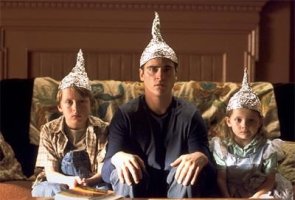
That's what they want you to think.... It's time to break out the aluminum foil and make hats :)
 
Upvote 0
Sella174 said:
jrista said:
Sella174 said:
Actually, there's a very simple solution for this problem as stated by you ... only I don't work for Canon (or Nikon), so they can go figure it out for themselves ... 8)
??
No dice. It's my idea and Canon (or Nikon) ain't gettin' it for free. :-X

One of the lamest cop outs I have ever read on the internet. Wow. Just Wow. Sounds like something one expects to hear from a 5 year old kid.
 
Upvote 0
Don Haines said:
tron said:
Don Haines said:
9VIII said:
I'm not actually sure that your eyes are going to adjust as fast as the camera, I certainly can't say that they're in different leagues.
Most of my point is the information you see through the viewfinder has no affect on the final image. I'm sure your brain is far superior, but it won't matter until you get an SD card slot installed.
SD is passé... go for cFast or a real wireless link.
I don't think there is yet a brain interface controller for either card ... ;D
That's what they want you to think.... It's time to break out the aluminum foil and make hats :)

Here you go!
 

Attachments

  • image.jpg
    image.jpg
    38.2 KB · Views: 573
Upvote 0