Wide Canon L choice: 14L II 2.8 or 16-35 II 2.8

  • Thread starter Thread starter AndreiD
  • Start date Start date
Status
Not open for further replies.
AndreiD said:
Wow i looked at different reviews and photos taken with the Canon 14mm and the Zeiss 15mm.

I was very impressed with the lack of distortion of the Zeiss UWF http://www.kenrockwell.com/zeiss/slr/15mm-f28.htm

as opposed to some pictures, including the ones posted here, of the 14 mm Canon prime where you can clearly see a LOT of distortion.

Uh oh, we got another Ken Rockwell post on our hands... That Dbag aside, the zeiss 15mm is an amazing piece of glass, but for me it has a few drawbacks that make it a deal breaker. 1) manual focus. This isn't a big deal especially in an ultra wide stopped down, because everything is almost always in focus, but with a fast lens (it is 2.8) it can sometimes be a little more tricky than you think. There is nothing worse than thinking you nailed a once in a lifetime shot, only to later realize that you focus was off by a fraction and it ruins the shot. I wouldn't say that alone would be a deal breaker in this case, but it can be very frustrating (especially since mkiii doesn't accept focus screens). 2) price, that bitch is damned expensive (I say that and I bought the 14L II which is crazy expensive on it's own). 3) heft. It is huge, heavy and bulky. 4) distortions and vignette. while they are slightly more controlled than the 14mm, its really not by much, and the vignette isn't even close the 14mm wins hands down. "What?" you say, "but mr ken dbag said different". He didn't have the shiny new 5d mkiii like you which not only corrects for distortions of the canon glass, but also the vignette AND the chromatic aberrations. You will get none of those amazing benefits from the zeiss glass, without manually correcting for all those problems in post (a bitch). 5) filters. "what?" you say, "but mr knowitall K dbag says that the zeiss is superior because it takes filters and the 14 mm does not". While it does take screw on filters, this is not what you want with an ultra wide, you want sliding plate filters for landscapes, not vignette inducing, non-horizon-shifting screwons. in order to get these plate filters you need a lee, or cokin, or lucroit (I just ordered the lucroit holder with the adapter for the 14mm, and a reverse grad ND and 10 stop ND, anxiously awaiting arrival) system to attach the plate holder to the lens, and you need a nice tight couple to the glass, which seems like it would be impossible with the zeiss because of the huge protruding petals on the front element. So, while this seems to be an advantage for the zeiss on the surface I think it might actually be a bit of hinderance in the end. 6) reach. The difference between 14mm and 15mm seems negligible, right? Wrong, in the ultra wides every mm of difference can equate up to 10% more coverage (and thats about the difference between these two lenes). anyone who shoot UW can tell you, you always want that extra coverage, it can really make or break a shot, especially indoors.

Alright, enough from me. Buy whatever the hell you want (I kid).
 
Upvote 0
@!ex said:
I find that a lot of photographers try to get zooms that seamlessly cover a really wide range of focal lengths, in fact I did the same exact thing after I got my first DSLR... in fact this setup lead to much less creativity and fewer impactful, signature shots. There are a few reasons for this.
1) I find that even if I have a full range of focal lengths I am only really be able to "think" and see in subsets of these ranges, and I find that if given the chance to zoom in or out I would often take the safest, most simple composition, which is often boring and usually not that creative.
2) Zoom Lenses are a hell of a lot heavier and bulkier (compare the 16-35 with the 14 L II) which makes them a hell of a lot more of a pain in the ass to carry around multiple lenses, so you often only end up taking a single lens which limits you as well.
3) Optically they are alway going to be inferior to prime lenses, both in sharpness, color, and speed. Not only that, but I find that in order to get images that stand out from the crowd, using extreme unique glass helps quite a bit, as it gives you a different perspective than is possible with standard zooms, due to the speed and focal length of the lens...

I want images that are as unique as I can get, they are just more interesting to me, and that is much easier to obtain using unique tools.

When I switched to Canon... I decided to take a new approach to glass. I was just going to buy my favorite prime lenses as fast as possible and stay away from zooms for the most part.

This.

When moving to the full frame 5D MkIII, I had a similar revelation. The need to capture every image has been replaced with a desire to capture images that show a specific and unique point of view.
 
Upvote 0
I can't believe that everyone is so "spec-oriented" on this thread. You're assuming that the 16-35L II doesn't take good pictures. For everyday photography, the 16-35L II takes just as good of pictures as the 24 or 17L's. Gosh this is amazing. The guy just wants it for landscape shots and you're suggesting super-expensive lenses that he doesn't need. He either needs the 16-35L or 17-40L and the flexibility over IQ issues that nobody cares about or can notice.
 
Upvote 0
bdunbar79 said:
I can't believe that everyone is so "spec-oriented" on this thread. You're assuming that the 16-35L II doesn't take good pictures. For everyday photography, the 16-35L II takes just as good of pictures as the 24 or 17L's. Gosh this is amazing. The guy just wants it for landscape shots and you're suggesting super-expensive lenses that he doesn't need. He either needs the 16-35L or 17-40L and the flexibility over IQ issues that nobody cares about or can notice.

I get sharp pictures from the 17-40 - there may not be the optical perfection, but to the eye they are pretty d good when printed up to A3 /16x12.
 
Upvote 0
AndreiD said:
Wow i looked at different reviews and photos taken with the Canon 14mm and the Zeiss 15mm.

I was very impressed with the lack of distortion of the Zeiss UWF http://www.kenrockwell.com/zeiss/slr/15mm-f28.htm

as opposed to some pictures, including the ones posted here, of the 14 mm Canon prime where you can clearly see a LOT of distortion.

14mm is insanely wide, some distortion is to be expected. But I agree, the Zeiss 15mm is amazing and I'd love to have one, but can't bring myself to pay $3k for a UWA lens.
 
Upvote 0
tron said:
@!ex said:
He didn't have the shiny new 5d mkiii like you which not only corrects for distortions of the canon glass
I know that 5D III corrects the vignette and the chromatic aberrations. But 5D mkIII corrects the distortions too? Really?

Digital Photo Professional, Photoshop (and other programs I'm sure) all have distortion correction in them. DPP does it based on lens data, but I don't think it does it in-camera.
 
Upvote 0
@!ex said:
5) filters. "what?" you say, "but mr knowitall K dbag says that the zeiss is superior because it takes filters and the 14 mm does not". While it does take screw on filters, this is not what you want with an ultra wide, you want sliding plate filters for landscapes, not vignette inducing, non-horizon-shifting screwons. in order to get these plate filters you need a lee, or cokin, or lucroit (I just ordered the lucroit holder with the adapter for the 14mm, and a reverse grad ND and 10 stop ND, anxiously awaiting arrival) system to attach the plate holder to the lens, and you need a nice tight couple to the glass, which seems like it would be impossible with the zeiss because of the huge protruding petals on the front element.

Not to mention the Zeiss takes 95mm filters. I thought 82mm were expensive, who knows how much 95's are. So do you have the filter adapter for the 14mm? I know they have that little spot for them on the back of the lens, but I don't even know where to get those type of filters.
 
Upvote 0
I have tried the Zeiss 21mm on my colleague's 5D3 and was quite impressed. However, it won't be that much wider than the 24mm you currently got. The 16-35 II is good but definitely not as good/sharp as the Zeiss 21mm and Zeiss 15mm which got much less distortion as well. Cannot comment on the 14L but what I read about it so far was all extremely positive.
 
Upvote 0
Axilrod said:
@!ex said:
5) filters. "what?" you say, "but mr knowitall K dbag says that the zeiss is superior because it takes filters and the 14 mm does not". While it does take screw on filters, this is not what you want with an ultra wide, you want sliding plate filters for landscapes, not vignette inducing, non-horizon-shifting screwons. in order to get these plate filters you need a lee, or cokin, or lucroit (I just ordered the lucroit holder with the adapter for the 14mm, and a reverse grad ND and 10 stop ND, anxiously awaiting arrival) system to attach the plate holder to the lens, and you need a nice tight couple to the glass, which seems like it would be impossible with the zeiss because of the huge protruding petals on the front element.

Not to mention the Zeiss takes 95mm filters. I thought 82mm were expensive, who knows how much 95's are. So do you have the filter adapter for the 14mm? I know they have that little spot for them on the back of the lens, but I don't even know where to get those type of filters.

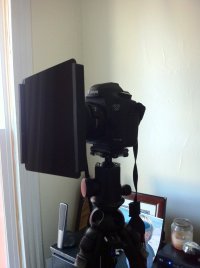
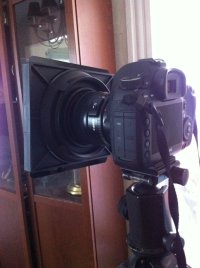
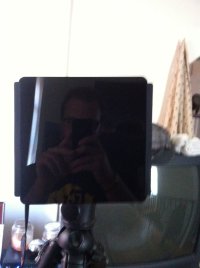
Ya the back gels don't have much flexibility, so I go the Lucroit system. An engineer in spain came up with a filter holder that goes beyond anything Lee or cokin has, in that it is for mono block UWA lenses that are too wide for any conventional filter holder system (adaptors are available for the nikon 14-24, canon 14, and a bunch of the samyang and sigma UWA and fisheyes) . I just got it in the mail yesterday along with a cool new piece of black glass (10 stop ND) . All the filters for this system are 165mm and made by HiTech. I'm going to get a reverse ND grad next. I just unboxed it and put it on, now I'm off to go play, just need to find some water to shoot...
 

Attachments

  • photo 1.JPG
    photo 1.JPG
    194.5 KB · Views: 1,472
  • photo 2.JPG
    photo 2.JPG
    225.5 KB · Views: 1,464
  • photo 3.JPG
    photo 3.JPG
    156.7 KB · Views: 1,445
Upvote 0
I had this same exact question a few months back and lik you I do not make money doing this. The recommendation that I got was overwhelmingly to get 16-35. And they were right. For the money and its versatility I have been extremely happy with the choice. The fact is i rented first before I bought!
 
Upvote 0
@!ex said:
I find that even if I have a full range of focal lengths I am only really be able to "think" and see in subsets of these ranges, and I find that if given the chance to zoom in or out I would often take the safest, most simple composition, which is often boring and usually not that creative.
I agree with that. However you can use zoom and limit yourself by choosing only 3 focal lengths for example (16mm, 24mm and 35mm in this case). Framing using zoom ring gives really bad results for me, because you stop using compression creatively, you just moving your ring.

I'm using this approach, because I have only a zoom lens that covers wide angle, however I'm planning to buy 14mm when I have budget :)

Here's one zoom-lens shot for now:

x4cEnV-A-8I.jpg
 
Upvote 0
Hello guys,

I decided after all to go with the 16-35 despite the x2 price. I'm not sure now the cost is justifiable but i plan to keep those lenses for a very long long time, so i consider it a long term investment. Moreover, another user helped a lot by pointing out that the bigger aperture can be helpful in lower light conditions such as indoor real estate photography which i can use.

Thank you all for the kind replies
 
Upvote 0
AndreiD said:
I decided after all to go with the 16-35 despite the x2 price. I'm not sure now the cost is justifiable but i plan to keep those lenses for a very long long time, so i consider it a long term investment.

You won't be disappointed. I originally had the 17-40, sold it when the 16-35 II came out. Much better results, especially indoors.

I have sold the 16-35 recently for the 24 f 1.4L II (change in image philosophy).
 
Upvote 0
Status
Not open for further replies.