Zeiss 50mm Makro – Milvus vs. Makro-planar

Zeidora said:
As far as I understand, nothing different except for sealing and cosmetics. Never had a problem with any of my classic lenses re environmental sealing, including the 100 mm MP.

Thank you, Zeidora, I was hoping you would have a response. However, the significant weight difference (530 to 730 g) and change in dimensions must be more than sealing and cosmetics.
 
Upvote 0
I tried to find the data sheet for the classic 50, but no luck. I found the distortion graphic here
http://diglloyd.com/articles/ZeissZ/ZeissZ-50f2.html
compare this to the distortion of the Milvus version and they look identical:
http://www.zeiss.com/content/dam/Photography/new/pdf/en/downloadcenter/datasheets_milvus/milvus250m.pdf

Number of lenses, grouping, filter thread, etc are all identical. Notice that there is a significant weight difference between ZE and ZF.2 version as well, so I would not be that surprised by weight difference between classic and Milvus.

The other question, though, is, why the 50 and not the 100? My very first macro was a Zuiko 50 on a OM4Ti, but after getting the Zuiko 90, I never got a 50 again. Had the Pentax 100M for underwater, a short-lived 105 Micronikkor on a F3HP, and then the Zeiss 100 CY, and now the Zeiss 100 ZE classic.
It is so much easier to get light onto the subject with the 100. I still don't understand why they do a 1:2 "macro" instead of a 1:1 macro like the CY version. F/2 vs. F/2.8 is no issue in macro. And for portraits you'd use a 85/1.2-1.4. I'll have to chat with the Zeiss reps at the LA photo expo later this month.
 
Upvote 0
Hi Zeidora. I chatted about the differences with Joey at LensRentals and they find the optics to be identical. He believes that the weight is in the barrel and longer hood, and that Zeiss has improved the build for the Milvus line. He also mentioned an improvement in the focus ring.

Thanks very much for the link to the Zeiss download.

Why 50mm? I want to get a feel for that length and I have never owned a 50mm lens. My favorite subject is wildflowers and I prefer the entire blossom to be in focus, as opposed to those who want just part of the blossom in focus. At MFD, the Zeiss has 3X the DOF of a 1:1 lens (if I did my research correctly). Also, I like a long throw like on my Sigma 180 2.8. So the Zeiss seemed to be the right choice to rent.

I have a Canon 100L 2.8, so I already have a feel for that length. But the Milvus 100 is intriguing. Thanks for sharing your experience with regard to focal length.
 
Upvote 0
Re DOF, that is only dependent upon magnification. Notice that focal length is not in the formula to calculate DOF, but only magnification, f-stop, and circle of confusion. Notice that focus distance is different at same magnification for different focal lengths.

Re Canon macro, I've never used the Canon 100 Macro, but the Canon 180 macro has distinct lateral color, which is completely absent in the Zeiss 100 M. Accordingly, don't dismiss the Zeiss 100 M because you have the Canon 100M, rather consider replacing the Canon with the Zeiss.

I also do a lot of wildflowers, and there in particular, you want to have more freedom with getting light onto the flower, and not to have unwanted shadows from head, camera body, or hood. The increased working distance with the 100 is critical.

Re 50, I was in the same boat, but rather got the Otus 55 for that focal length. Very happy with that decision.
 
Upvote 0
Ha - clearly you make money off your photography, it is work-related (you are a professor of biology?) or wealthy. I am just an enthusiast and impose budget restrictions on myself.

And I was aware that DOF is independent of focal length. So you don't miss the 50mm angle of view? Or do you use the Otus 55 for that kind of wildflower shots?
 
Upvote 0
I sell a few here and there (and make some available for non-profits), but tax-wise it is "hobby income", so I spend more each year than I make. I used to teach Bio 101 and Popgen & Evolution, but have moved on to be a museum curator. Much more fun. I also run our scanning electron microscopy facility; so I guess I am an academic imaging pro.

Re angle of view, for plant pictures, I rarely use the 55. If I want a tight portrait, it's the 100M. For macro, the angle of view is not important, but working distance that gives you more options for lighting is critical. For very small flowers >1:1 it's the MP-E 65.

For environmental portrait (plant habit/flower in foreground, habitat in background) I mostly use the 21, next the 25/2, and once in a while the 15 or the 55.

The 55 is mainly used for studio (kitchen counter with black velvet; nothin' fancy) images of 1-3 foot orchid plants.
 
Upvote 0
Thanks very much for the information. To simulate 56mm focal length, I attached my Sigma 35mm to my 80D. I used it to capture a 3” wide wild rose. I haven’t downloaded the photo’s yet, but they look pretty good on camera. And I was more comfortable with that combo than I was with Sigma 35mm + 6D.

I changed my rental to a Milvus 100mm Makro. Then I found a review on The Digital Picture, a site I visit rarely. I haven’t had time to read the review thoroughly, but it appears that this lens extends. Have you had any problems with dust accumulating?

Thanks again,
John
 
Upvote 0
Never had any problems with dust. Ever. I shoot a fair bit outside in Southern California chaparral and desert. I don't think I baby my gear. I put it down in the dirt, use unused lenses as support, etc. I only had two lens repairs in 30 years or so. One was the Otus 55 on which the front ring got loose, the second was a Pentax 24 mm, that a "friend" dropped. I've never done a CLA on any lens. Had one Pentax 100 macro get flooded in an underwater housing, my own stupidity, and a complete loss, along with an LX body.

My gear has been around the planet from temperate (Scotland, Switzerland) to tropical climates (Papua New Guinea, French Polynesia, Fiji, ...) and everywhere in between. Don't like cold, so don't do any snow. It is cosmetically not nice, has scrapes all over, but works fine. I would not worry about dust. Worst case scenario, send it in for CLA.
 
Upvote 0
Hi Zeidora. After a week of shooting wildflowers, I returned the Zeiss 100mm Milvus Makro. What a nice lens in all regards that I expected! Focusing was a delight; the long throw made it easy. The DOF available was a pleasure. I returned it because it had 5 weeks of unknown use, and I can purchase a new one for less than buying that one.

Many thanks for sharing your knowledge!

John
 

Attachments

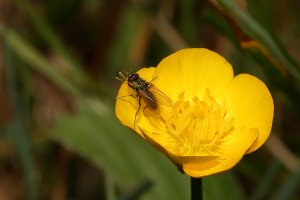
  • Pollinator, Bayard Knob area.JPG
    Pollinator, Bayard Knob area.JPG
    1.5 MB · Views: 288
Upvote 0
Nice fly in a butter cup! Glad you liked the lens. Didn't quite understand "I returned it because it had 5 weeks of unknown use, and I can purchase a new one for less than buying that one.". At any rate, now you know what this lens is about, and if if you want that sort of performance, you know where to get it.
 
Upvote 0
Zeidora said:
Nice fly in a butter cup! Glad you liked the lens. Didn't quite understand "I returned it because it had 5 weeks of unknown use, and I can purchase a new one for less than buying that one.". At any rate, now you know what this lens is about, and if if you want that sort of performance, you know where to get it.

Well, as a rental, I have no idea how it was treated in the previous 5 weeks of use. The price to keep/buy it was higher than a new one. It performed very well, but I am not experienced enough to know whether it was damaged in some way no visible.

It is likely that I will purchase one. Even if my 180mm Sigma is as sharp, I think I see what is meant by 'Zeiss micro-contrast'. And my hikes were typically 6-9 miles, in rain. The Sigma is nice, but not weather-sealed, and what a brick!
 
Upvote 0
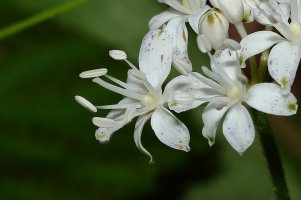
Thanks for the clarifications. Re Sigma vs Zeiss, I don't have experience with the Sigma 180, but have the Canon 180M, and they are considered very close in terms of image quality, as far as I've seen reviews. The Canon has distinct lateral color. Shoot the lily with both lenses, and look at the edge between white tepals and the black background. Check for blue/yellow fringes at high mag on the screen. The Canon has those even quite in the center of the image, while the Zeiss has zero. I understand the difference in focal length. At any rate, hope a brand new Milvus will be making an appearance in your bag shortly!
 
Upvote 0
As far as 50 over 100 the big issue for me is that the lens does double duty(actually more like 2/3rds of its use) shooting regular landscapes and the focal length is simply more useful in my experience.

f5o77al.jpg


QuP2TfX.jpg
 
Upvote 0
moreorless said:
As far as 50 over 100 the big issue for me is that the lens does double duty(actually more like 2/3rds of its use) shooting regular landscapes and the focal length is simply more useful in my experience.

100M doubles as moderate tele. I use 100M by far the most, next is possibly the MPE65, then 21, then on assorted occasions the rest. The 'nifty-fifty', or rather 55, is not amongst my more heavily used lenses. The greater versatility for macro of the 100 trumps any other issue.
I started out with a 50 macro some 30 years ago (OM Zuiko), but ever since have only had 90-105Ms.
 
Upvote 0
Thanks for your input, moreorless. I usually have my Sigma 35mm with me when I need wider than 100mm, and wide open, the 50mm Makro only impresses me with its center performance.

And thanks to you Zeidora, your input is very appreciated.

I will shortly order the 100mm Milvus. I see what is meant by 'Zeiss micro-contrast' and that is primarily guided by decision. How does Zeiss achieve this? Very precise grinding? Proprietary glass formulation? Relatively few elements? The makro-planar design? All of these?

John
 
Upvote 0