Zeiss Otus Initial Impressions

Eldar said:
Price is price and I agree that you should really want it to buy it. I also agree on the bokeh issue. But there is something I don´t really understand about boked. Because it varies, depending on light source.

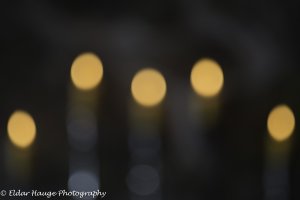
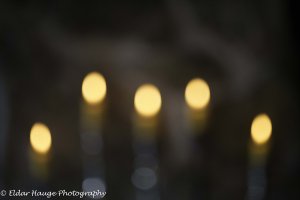
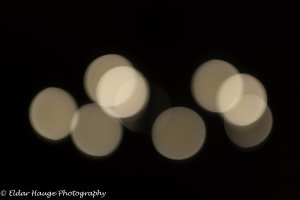
I have attached two examples. The first is of five candle lights and the second is a chandelier with electric light. The bokeh from the electric light has a clear onion bokeh, whereas the candle lights are clean. If someone could explain why this happens, it would be most appreciated.

Eldar said:
Shooting conditions were same same, f-stop, shutter speed and ISO.
+

StudentOfLight said:
The only thing I can thing is that there is motion blur with the candle shot.

Motion blur would also be my guess.

Not just the camera, but the candle flames are moving. In comparison, the electric light source is steady.
 
Upvote 0
This is not motion blur and it is not candle light movement. This attached shot is 1/4000s(!!), f1.4, ISO2000. It is later in the day, so lighting conditions are different.

It is consistent that non-electric light does not have onion blur and I do not understand why.
 

Attachments

  • _D7T5205.jpg
    _D7T5205.jpg
    1.9 MB · Views: 794
Upvote 0
Eldar said:
This is not motion blur and it is not candle light movement. This attached shot is 1/4000s(!!), f1.4, ISO2000. It is later in the day, so lighting conditions are different.

It is consistent that non-electric light does not have onion blur and I do not understand why.

That's a strange one; with the candles there is lower intensity of light, different colour temperature and smoke particles being produced, but I wouldn't have a clue if this would have any impact. Maybe the smoke makes the light more diffused. ???
 
Upvote 0
My wife has now ruled me out as a complete nut case, running around shooting out of focus images and posting them on the internet ... ::)

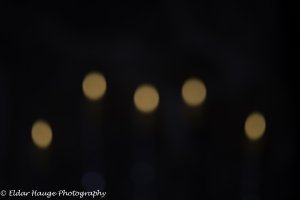
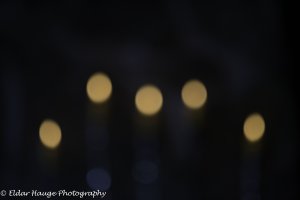
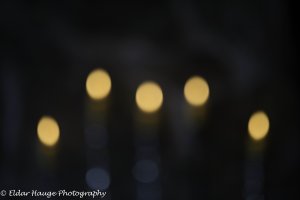
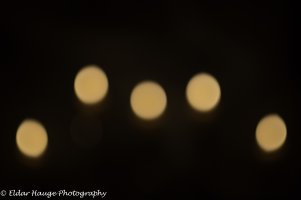
Now I have changed lens. These two are of the same light sources, shot with the Sigma 35 f1.4 Art. As you can see, exactly the same happens. At one stage I thought it had to do with AC and net frequency, alternatively some switch mode power supply noise, but I have used all kinds of shutter speeds and it does not affect the result.

Someone should know/understand how this happens.
 

Attachments

  • _B3A5569.jpg
    _B3A5569.jpg
    904.9 KB · Views: 607
  • _B3A5571.jpg
    _B3A5571.jpg
    812 KB · Views: 651
Upvote 0
Eldar said:
My wife has now ruled me out as a complete nut case, running around shooting out of focus images and posting them on the internet ... ::)

Now I have changed lens. These two are of the same light sources, shot with the Sigma 35 f1.4 Art. As you can see, exactly the same happens. At one stage I thought it had to do with AC and net frequency, alternatively some switch mode power supply noise, but I have used all kinds of shutter speeds and it does not affect the result.

Someone should know/understand how this happens.

Have you tried photographing incandescent DC powered light sources?
 
Upvote 0
Eldar said:
My wife has now ruled me out as a complete nut case, running around shooting out of focus images and posting them on the internet ... ::)

That is really very funny, your wife, if she's anything like mine, does at times perhaps have a point.

I just finished putting together a Holiday schedule for the last 6 months of this Year, Greenland, Tibet, Namibia, Turkey, Morocco.

My wife looked at the schedule in complete Horror and asked just exactly what these places had for her, after some thought I added Japan, which seemed to make her Happy (Tokyo, Gucci, Hermes etc), I kept to myself the fact that I added Japan so I could Photograph the Snow Monkeys with no snow.
 
Upvote 0
ahab1372 said:
eml58 said:
My wife looked at the schedule in complete Horror and asked just exactly what these places had for her, after some thought I added Japan, which seemed to make her Happy (Tokyo, Gucci, Hermes etc),
I know Tokyo, but I've never heard of the other two places. Sure they are in Japan?
;)

Unfortunately they are, when you come out of the Ground Floor Mandarin Oriental Tokyo turn right & they are the first two Shops you come to, I always try to turn left.
 
Upvote 0
These are the two DC lightbulbs I have available where I am. As you can see, no onion rings there. It seems to me that this phenomena has an explanation outside the lens and it seems to be related to AC, since candle light and DC light are free from it.

I also tried this with some other lenses (85 1.2L, 24-70 2.8L II and I get the same result. The sharper the lens, the more visible it gets. I really think we should get to the bottom of this.
 

Attachments

Upvote 0
eml58 said:
Eldar said:
My wife has now ruled me out as a complete nut case, running around shooting out of focus images and posting them on the internet ... ::)

That is really very funny, your wife, if she's anything like mine, does at times perhaps have a point.

I just finished putting together a Holiday schedule for the last 6 months of this Year, Greenland, Tibet, Namibia, Turkey, Morocco.

My wife looked at the schedule in complete Horror and asked just exactly what these places had for her, after some thought I added Japan, which seemed to make her Happy (Tokyo, Gucci, Hermes etc), I kept to myself the fact that I added Japan so I could Photograph the Snow Monkeys with no snow.
He he If I had as much time to travel (off work) with my wife as you do, I would have a challenge or two as well. It would probably turn into a meet-between-destinations kind of marriage ;)
 
Upvote 0
StudentOfLight said:
I think it might be a lens effect which is due to the heat from the candle distorting the air around it. This is what causes heat haze over a hot road.
I doubt that. The AC light sources (25W) are higher powered than the DC light source (7W). Wheras the candle light (I assume) is higher powered than the AC light bulbs
 
Upvote 0
Someone needs to go out and take some pictures of mossy stumps and cattails. We need to determine if he who shall not be named had talent, or if it really IS the lens! :P

(Sorry, just trying to spice up this thread again with some beautiful nature photography.)
 
Upvote 0
jrista said:
Someone needs to go out and take some pictures of mossy stumps and cattails. We need to determine if he who shall not be named had talent, or if it really IS the lens! :P

(Sorry, just trying to spice up this thread again with some beautiful nature photography.)
Sorry jrista, for getting lost in bokeh. It is quite puzzling though. But I have now moved that issue to a separate thread. :P

I don´t believe I have any f1.4 mossy stumps or cattails to offer, but I´ll see if I can get some images out instead :)
 
Upvote 0
Eldar said:
StudentOfLight said:
There are only two things I don't like about the Otus 1.4/55:
1) The price... because I would have to sacrifice too much other stuff to buy it :'(
2) The onion bokeh... but this is only really noticeable with specular highlights that are OOF. In normal shots its not really noticeable.
Price is price and I agree that you should really want it to buy it. I also agree on the bokeh issue. But there is something I don´t really understand about boked. Because it varies, depending on light source.

I have attached two examples. The first is of five candle lights and the second is a chandelier with electric light. The bokeh from the electric light has a clear onion bokeh, whereas the candle lights are clean. If someone could explain why this happens, it would be most appreciated.

This is due to the nature of light wavefronts and diffraction. Diffraction is an INTRINSIC property of light. It exists within the wavefront itself, to be 100% accurate...it is not actually due to light bending around obstructions or anything like that. Light diffracts around obstacles and through openings intrinsically, the effect of which appears to be the "bending" of light (hence the colloquial descriptive terms most often used). The difference between the two sample photos you took is that one is a "naked" light source...the flames of candles; the other is an enclosed light source...either light emitting diodes or tungsten filaments, encased within a class or plastic bulb.

Because of imperfections and impurities in the bulb of your lights, the light coming from them is not a pure, uninterrupted wavefront. Therefor, the effects of diffraction, which occurs when the wavefront from the enclosed light source encounters imperfections and impurities (i.e. a microscopic opaque granule in the glass or plastic of the bulb), show up in your boke blur circles.

There is nothing wrong with your lens. The difference in the two images is due to the difference in the nature of the wavefronts coming from them. Flame is THE actual light source, and so long as there is no other obstruction between you and the flame, a pure, unadulterated wavefront enters your lens. The electric lights are a light source enclosed within a bulb, and an already diffracted wavefront is what enters your lens.

An excellent (although rather technical) explanation of the true nature of light can be found here:

http://www.telescope-optics.net/wave.htm

In quote:

Diffraction

According to Huygens' principle, every wavefront point is a source of secondary wavelets, through which spreads in the direction of propagation. This constitutes a micro-structure of energy field propagation, with the energy advancing in the direction of the wavefront, but also spreading out in other directions. Principal waves, or wavefronts, form in the direction determined by extending straight lines from the point source. Waves moving in other directions generate phase difference, preventing them from forming another effective wavefront (FIG. 1, top right). However, these diffracted waves do interfere with both, principal waves and among themselves.

As a consequence of the existence of diffracted wave energy, placing obstruction of some form in the light path will result in the "emergence" of this energy in the space behind obstruction. But the obstruction did not change anything in the way the light propagates - it merely took out energy of the blocked out principal waves, with the remaining diffracted field creating some form of intensity distribution in the space behind obstruction - the diffraction pattern.

Similarly, by limiting energy field to an aperture, the portion passing through it is separated from the rest of the field, and its energy - this time consisting from both, aperture-shaped principal waves and diffracted waves within - will create a pattern of energy distribution behind the aperture. Again, there is no actual change in propagation for the light passing the aperture, including those close to the edge of obstruction (light does not "bend around the edge"); whatever the form of energy distribution behind the aperture, it is caused by the interference of primary and diffracted waves inherent to the energy field (FIG. 1, middle and bottom).

 
Upvote 0
Eldar said:
Thanks jrista, that was clarifying. So that means that it has nothing to do with the design of the specific lens, since the diffracted wavefront already exists when hitting the lens. Criticizing a lens for onion-ring bokeh is therefore incorrect. Right?

I would indeed say "right"! There is no way the Otus, touted as such a high quality lens, and clearly seeming to be such a lens, would produce such "onion ringing." Zeiss should be sued if they allowed that...that would mean they used glass of poor quality with impurities, which simply couldn't be the case given how sharp the lens is corner to corner.

For comparison, here is a photo of some christmas lights on a christmas tree that I took years ago. I tweaked the focus of this shot to purposely bring out the effects of diffraction. You can clearly see the primary diffraction pattern, the large circular pattern that dominates the shape of each blur circle, caused by the lens aperture. (NOTE: The blur circles here also exhibit spherical aberration, hence the reason the outer edge is brighter than the center, which is counter to your standard airy pattern, where the center is much brighter than the outer rings).

You can also see the diffraction patterns caused by the obstructions presented by impurities within the glass of each christmas light. They look like rocks in a pond, causing additional waves in response to an incoming mechanical water wavefront.

boke-diffraction.jpg


This is definitely not the lens, it was the EF 100mm f/2.8 macro lens, an otherwise high quality lens (certainly not as good as the Otus, but very good otherwise)...notice that each light exhibits a different pattern of obstructive diffraction, where as the primary circular diffraction wave caused by the aperture exhibits the same in each light. Two causes of diffraction converging in a single image. The "warping" and inconsistent gradient/rainbowing and larger but softer internal rings of each blur circle is also due to the glass of each Christmas light, not the lens. You can tell because those aspects of each blur circle change per light.

If the nature of the wavefront and it's diffraction pattern changes with each light source, then the issue is most likely rooted within the light source, itself. If the nature of the wavefront and it's diffraction pattern remains consistent across light sources, then it is likely due to either an obstruction within the light path between the source and the lens, or the lens itself. Obstructions within the light path will remain consistent themselves, but may change position within the blur circle of each light source. Diffraction effects caused by the lens itself will always be exactly the same for each blur circle in the image...usually, if you have focused right, that will present as a circular waveform that should be pretty uniform and otherwise clean in nature.
 
Upvote 0