When you purchase through links on our site, we may earn an affiliate commission. Here’s how it works.
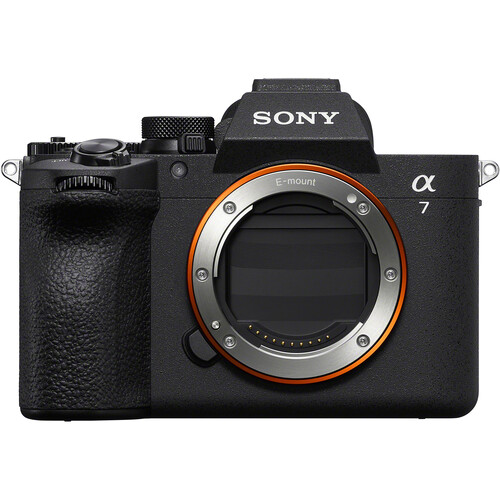
Today, Sony announced the Sony A7 V, the latest in the long line of prosumer full-frame mirrorless cameras from Sony, going back to 2013 with the release of the A7.
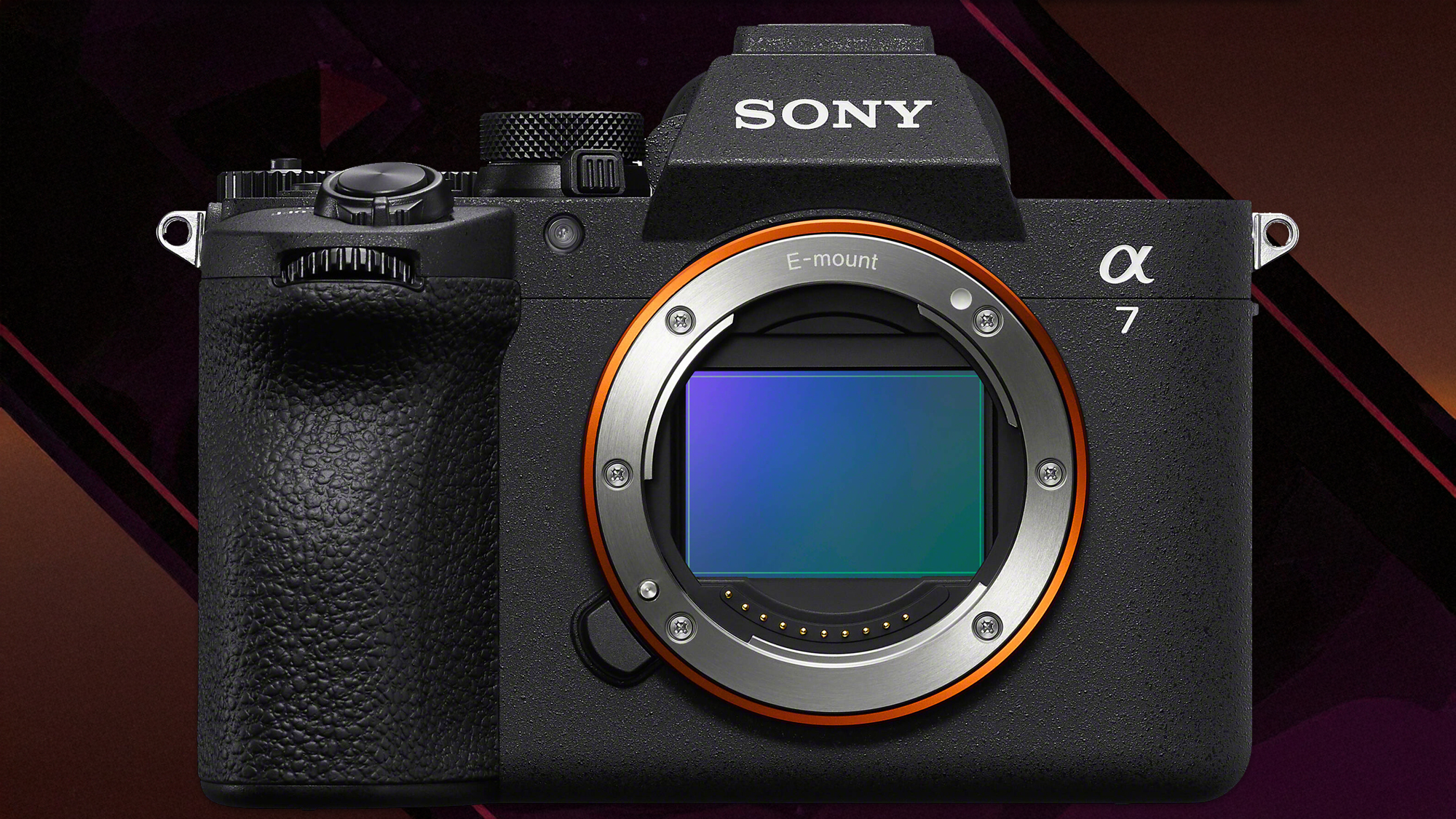
The Sony Alpha A7 V features a new 33 megapixel BSI sensor and a BIONZ XR2 processor. The sensor’s ISO range promises decent ISO noise, with a native ISO of 100–51,200 (expandable to 50–204,800). The sensor’s autofocus is a hybrid phase detection and contrast detection system that features 759 phase-detection points and 425 contrast-detection points. Sony’s real-time subject recognition uses a dedicated AI processing unit and identifies and tracks humans, animals, birds, insects, vehicles, trains, and aircraft. Eye detection is available for humans, animals, and birds. Sensor stabilization seems unchanged from the A7 IV, with the camera’s IBIS (in body image stabilization) delivering up to 7.5 stops of stabilization.
The Sony A7V is fast, and supports continuous shooting up to 30 fps with full autofocus and auto-exposure tracking and no viewfinder blackout. The camera can also record a pre-capture buffer for up to one second of images prior to shutter release.
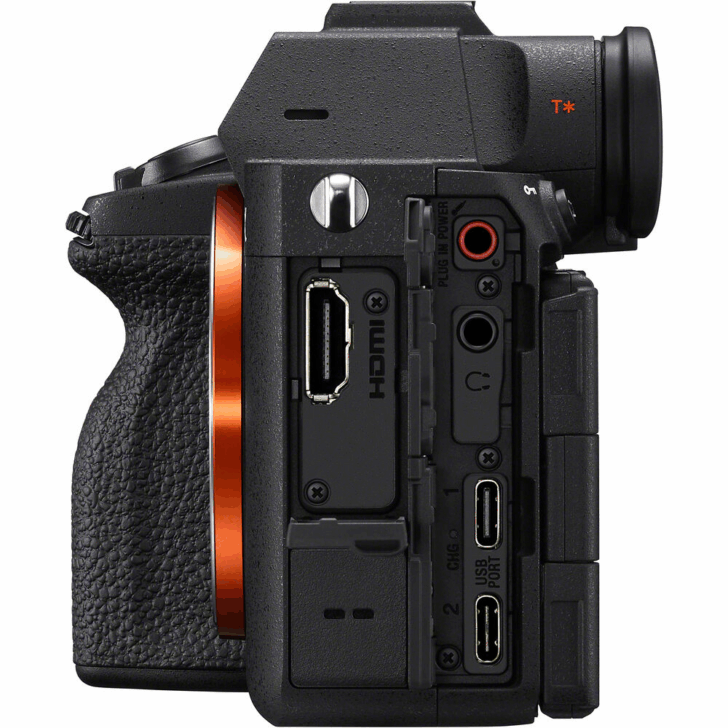
The Sony A7 IV only features 4K 60p recording and 4K 120p in crop mode. The omission of higher resolution video modes from the 33MP sensors seems to be a miss for Sony. Picture profiles include S-Cinetone and S-Log3; real-time LUT preview is also supported. The camera also has a full-sized HDMI port and features two USB-C ports. This allows one USB-C port for data transfer, and the other to charge or supply the camera with power. The Sony A7 V’s connectivity options include Wi-Fi 6, Bluetooth 5.3, and USB 10 Gbps (USB 3.2 Gen 2).
Battery Life and Construction
Battery life seems very impressive, rated at around 630 shots via the EVF or 750 shots on the LCD per charge using its NP-FZ100 battery. Sony also claims you can record video continuously for up to 210 minutes on a single charge. The camera features a weather-sealed magnesium-alloy body weighing 690g (including battery and card).
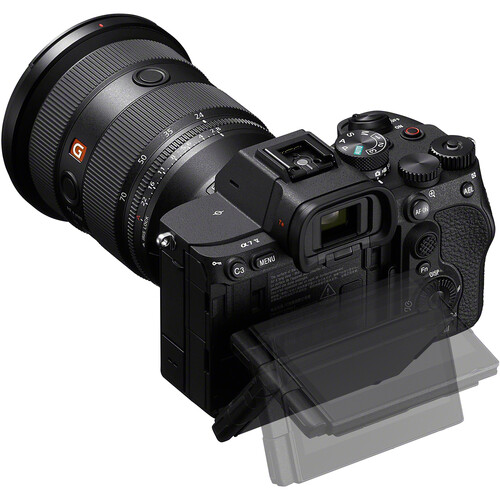
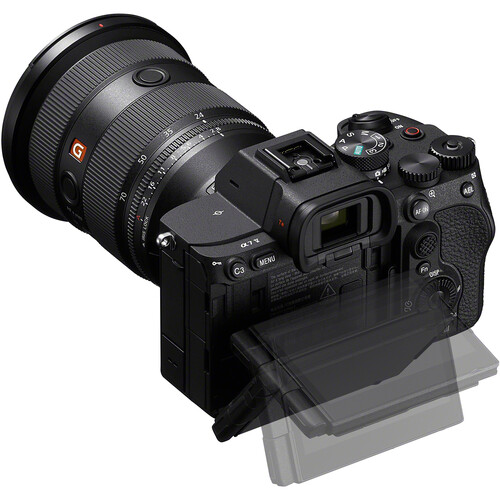
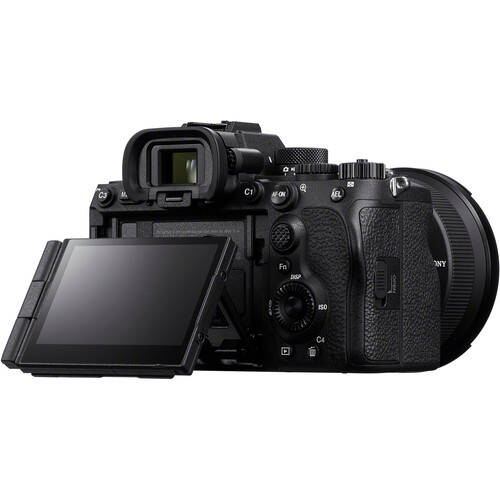
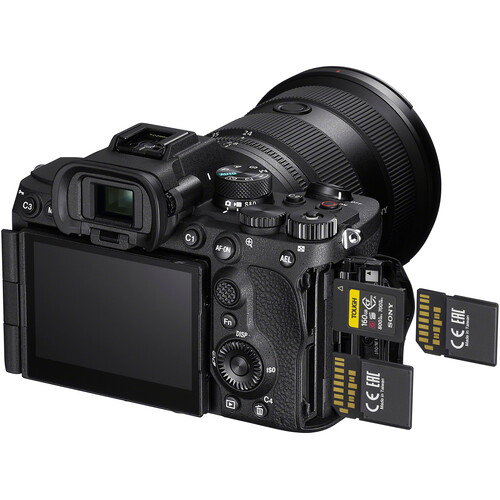
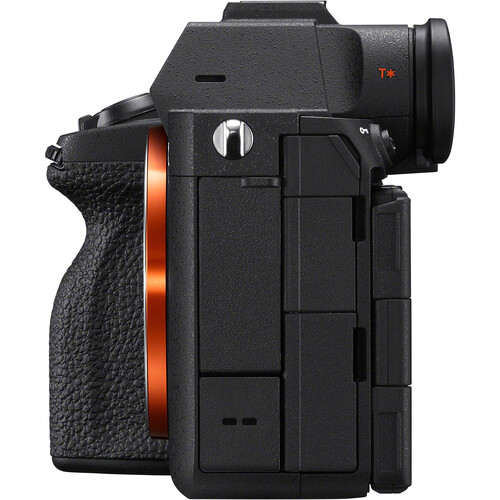
The ergonomic changes from the A7 IV include a deeper handgrip and a four-axis multi-angle 3.2-inch touchscreen LCD, something I wish Canon would make. The EVF is a standard resolution 3.69-million-dot OLED electronic viewfinder, but it also has an excellent 0.79x magnification.
Comparing the older A7 IV to the newly released camera, and it’s not even close. This is a great upgrade for those Sony users who were looking with jealousy at the Canon and Nikon camps the last few years.
Sony a7 V
Sony a7 IV
MSRP (US/UK)
$2899 /
$2699 / £2400
Sensor type
Partially stacked CMOS
BSI CMOS
Resolution
33MP
33MP
Viewfinder res/ magnification/eyepoint
3.69M dot 0.78x 23mm
3.69M dot 0.78x 23mm
Rear screen
3.2″ 2.09M dot Tilt + Fully articulating
3.0″ 1.04M dot Fully articulating
Image stabilization
7.5EV
5.5EV
AF subject detection
Human Animal Bird Insect Car Train Plane Automatic
Sony Electronics Launches Alpha 7 V And FE 28-70mm f/3.5-5.6 OSS II
SAN DIEGO. Dec. 2, 2025 – Sony Electronics introduces the Alpha 7 V (ILCE-7M5), the highly anticipated fifth generation in the popular Alpha 7 Full-frame mirrorless line-up, powered by the newly developed partially stacked Exmor RS™ CMOS image sensor with approximately 33.0 effective megapixels. The new image processing engine BIONZ XR2™1 incorporates the AI processing unit functions of the latest AlphaTM series. Through these innovations, the Alpha 7 V delivers a significant performance boost across every aspect of imaging, from Real-time Recognition2 AF (Auto-Focus) to Real-time Tracking3, speed, stable color accuracy, still capture, and video versatility.
Additionally, Sony launches the FE 28-70mm f/3.5-5.6 OSS II (SEL28702), a Full-frame compatible, compact and lightweight standard zoom lens that supports the Alpha 7 V’s high-speed continuous shooting.
“The Alpha 7 V resets expectations on what an all-around Full-frame camera can achieve,” said Yang Cheng, Vice President of Imaging Solutions, Sony Electronics Inc. “By evolving autofocus intelligence, color science, and system responsiveness, we’re enriching our expanding lineup with a powerful new option that provides creators with an advanced tool capable of keeping up with their creativity and bringing them one step closer to achieving their dreams.”
AI-Powered Performance Boosts
The Alpha 7 V integrates the AI processing unit into the BIONZ XR2 engine, delivering a substantial leap in autofocus speed, accuracy, and reliability. The Alpha 7 V has up to 30% improvement4 in Real-time Recognition AF that instantly recognizes targeted subjects and continues to capture them with high precision. With 759 phase-detection points and up to 94% frame coverage, the camera ensures precise subject tracking across nearly the entire image area, even in challenging low-light conditions down to EV -4.05.
High-resolution RAW processing is now supported through Imaging Edge Desktop application6 for unparalleled post-production flexibility.
No compromise High-speed Continuous Shooting
The combination of a partially stacked Exmor RS™ CMOS image sensor with approximately 4.5 times faster7 readout speed increased and the BIONZ XR2™ processor results in high image quality with minimal distortion.
Additionally, high-precision tracking with up to 60 times AF/AE calculations per second and blackout-free continuous shooting up to 30 fps8 with AF/AE tracking9 ensures no missed opportunities even with fast-moving subjects moving in complex patterns, such as in wildlife and sports photography. Even during 14-bit RAW shooting, it achieves high-speed continuous shooting at up to 30 fps with AF/AE tracking.
The Pre-Capture function10, which can record up to one second before the shutter is pressed, captures decisive moments even with subjects whose movements are difficult to predict, such as pets and sports.
Outstanding Still Image Performance
Engineered for maximum creative control, the Alpha 7 V achieves up to 16 stops of dynamic range11, ensuring remarkable tonal detail across highlights and shadows. Even in scenes with extreme contrast, it expresses natural and smooth gradations from dark to bright areas.
The newly introduced AI-driven Auto White Balance (AWB) leverages advanced scene analysis for consistent color rendering and uses light source estimation through deep learning technology. By automatically identifying the light source in the shooting environment with high precision and adjusting to appropriate color tones, it enables natural and stable color reproduction, resulting in more faithful colors and reducing post-production workload.
Versatile Video Capabilities
Expanding creative possibilities for hybrid creators, the Alpha 7 V introduces additional 4K recording modes, including 7K oversampled 4K 60p recording12 available in full-frame mode and 4K 120p13 recording in APS-C /Super 35mm mode, delivering rich, detailed footage with exceptional flexibility in editing.
Full pixel readout without pixel binning enables highly detailed video recording, down to the finest details.
The image stabilization features Dynamic Active Mode14, enabling smooth and stable video expression even when handheld. Users can enjoy high-quality video recording in a wide range of scenes, from vlogs and creative productions to capturing family memories.
The camera also features an Auto Framing function that automatically maintains optimal composition of subjects during recording through AI-powered subject recognition. This enables stable composition video recording in various scenes.
New in-camera noise reduction and improved internal mic functionality15 ensures high-quality audio recording by reducing steady background noises, minimizing interference, and maintaining natural sound.
Enhanced Operability and Usability
Designed with efficiency in mind, the Alpha 7 V offers Wi-Fi® 6E GHz compatibility16 for high-speed, stable wireless transmission, along with dual USB Type-C® ports for improved workflow and flexibility.
Vertical format support and an adjustable electronic shutter sound make shooting adaptable across diverse environments.
The 4-axis multi-angle monitor combines tilt and vari-angle design, offering unrestricted horizontal and vertical adjustment for greater shooting freedom.
A better finger fit on the grip provides improved comfort, stability, and control during extended sessions.
Built For Reliability
The Alpha 7 V features upgraded power management and enhanced stamina performance, enabling longer shooting sessions without interruption. A new Monitor Low Bright mode extends battery life17 even further, while improved thermal management supports extended18 4K recording with uncompromised quality, approximately 630 shots when using the viewfinder, per CIPA standards.
FE 28-70mm f/3.5-5.6 OSS II – The All-Around Lens
Compact, lightweight, and engineered for speed, the FE 28-70mm f/3.5-5.6 OSS II is designed to fully leverage the continuous shooting19 capabilities of the Alpha 7 V sensor. When combined with compatible cameras, this new lens offers up to 120 fps AF/AE tracking20, continuous shooting, seamless body-lens coordinated image stabilization, AF available even during zooming, and built-in breathing compensation support. From dynamic action shots to fast-paced events or high-quality video capture, this lens delivers smooth, dependable responsiveness and flexibility.
Social Responsibility
Aligned with Sony’s ambitious ‘Road to Zero’ initiative, this product supports the company’s vision for achieving a zero environmental footprint by 2050. The Sony Group’s manufacturing facilities for imaging products, including the Alpha 7 V and FE 28-70mm f/3.5-5.6 OSS II, operate at 100% renewable energy. The packaging uses Sony’s proprietary environmentally friendly Original Blended Material21 instead of plastic22.
Pricing And Availability
The Alpha 7 V body will be available by the end of December 2025 for approximately $2,899 USD and $3,699 CAD. The Alpha 7 V with SEL2870-kit will be available in February 2026 for approximately $3,099 USD and $3,899 CAD.
The FE 28-70mm f/3.5-5.6 OSS II will be available in February 2026 for approximately $449 USD and $599 CAD. They will be sold directly through Sony and at a variety of Sony’s authorized dealers throughout North America.
The Alpha 7 V product video can be viewed here: https://youtu.be/x_hlDW5kmyc
1 Bionz XR Two.
2 Available subject settings are: AUTO, Human, Animal/Bird, Animal, Bird, Insect, Car/Train, and Airplane. Subject types other than the type specified may be erroneously recognized in some cases.
3 [Tracking] in the menu.
4 The 30% improvement is a value from Sony’s internal measurement comparing the eye recognition performance for human eye with the real-time Eye AF of the Alpha 7 IV.
5 AF-S, ISO 100 equivalent, F2.0 lens.
6 The latest version of Imaging Edge Desktop is required. Download Creators’ Cloud Web page. Network services, content, and operating system and software subject to terms and conditions and may be changed, interrupted or discontinued at any time and may require fees, registration and credit card information.
7 Compared to the Alpha 7 IV. Based on Sony measurement conditions.
8 When using the electronic shutter. [Hi+] continuous shooting mode. A software update may be required for some lenses. See Sony’s support web page for information on compatible lenses
9 When using electronic shutter, based on Sony measurement conditions. Continuous shooting speed may decrease depending on shooting conditions. When focus mode is set to AF-C, continuous shooting speed varies depending on the attached lens. For details, please check the lens compatibility information support page.
10 Still image shooting only.
11 Applicable only in mechanical shutter mode.
12 When [4K angle of view Priority] is ON.
13When [4K Angle of View Priority] is ON.
14 Angle of view is reduced more than in Active Mode. Clear Image Zoom is not available when using Dynamic active Mode. Maximum ISO sensitivity is ISO25600.
15 The effectiveness of reducing lens power zoom noise varies depending on the type of lens used. Even with the setting turned on, it may take some time for the noise reduction function to take effect.
16 5 GHz/6 GHz communication may be restricted in some countries and regions. Requires compatible wireless network.
17 Actual performance varies based on settings, environmental conditions, and usage.
18 4K recording time @ 25 deg is approximately 90 min; 4K recording time @40deg is approximately 60 min.
19 Up to 30 fps AE/AF tracking.
20 For compatible cameras, please refer to the support information.
21 Paper material made from bamboo, sugarcane fibers, and post-consumer recycled paper.
22 Excluding materials used in coatings and adhesives.
Richard has been using Canon cameras since the 1990s, with his first being the now legendary EOS-3. Since then, Richard has continued to use Canon cameras and now focuses mostly on the genre of infrared photography.
... Comparing the older A7 IV to the newly released camera, and it’s not even close. This is a great upgrade for those Sony users who were looking with jealousy at the Canon and Nikon camps the last few years.
Welcome competition. Let's hope it will push the others even further - esp. Canon 😉
looks like R63. same stuff, same price. a new comer will likely decide based on lenses.
Lenses definitely matter. There can be 200 lenses available, how many are you actually buying? (some of us crazies around here aside). Some of the unique and niche ones will sway some customers for sure.
We live in a multi-crop video world. The lack of Open Gate will sway some. I wonder if cooling played a factor? Photography wise, I have no idea how anyone uses these things. I know ergonomics are a personal, but at a point... they're just bad.
Lenses definitely matter. There can be 200 lenses available, how many are you actually buying? (some of us crazies around here aside). Some of the unique and niche ones will sway some customers for sure.
We live in a multi-crop video world. The lack of Open Gate will sway some. I wonder if cooling played a factor? Photography wise, I have no idea how anyone uses these things. I know ergonomics are a personal, but at a point... they're just bad.
Ignoring video and appreciating the well balanced photo specs of this A7V, the one major downside left is ergonomics: I tried one out (again) this weekend and I agree with you, I almost cannot use it. It is as if they design the grip without ever mounting a lens on the body... A1II/A9III got that almorst right! What's stopping Sony to bring that shape to the A7 line?
looks like R63. same stuff, same price. a new comer will likely decide based on lenses.
Then I would start with R6III because of the RF 28-70mm f2.8 IS STM. And the RF 16-28mm f2.8 IS STM. And may be add RF 45mm f1.2 STM later.
I own none of these lenses but would start like this. No need for 3rd party.
I will!
(Unfortunately, surgery didn't cost me a cent.)
If only I lived in the USA, I could make a fortune with help by an "ambulance hunter", after having spent it on hospital costs...
Then I would start with R6III because of the RF 28-70mm f2.8 IS STM. And the RF 16-28mm f2.8 IS STM. And may be add RF 45mm f1.2 STM later.
I own none of these lenses but would start like this. No need for 3rd party.
Besides budget there's sheer availability as another reason for 3rd party lenses. Think 35-150mm F/2-2.8, or 200mm F/2.
Besides budget there's sheer availability as another reason for 3rd party lenses. Think 35-150mm F/2-2.8, or 200mm F/2.
Both are big and heavy. I would not start with them and have no use chase for both lenses. I see that they are valuable options but I would not buy them even offered by Canon. I need 24mm 2.8 or better (I use 24 VCM). And 200mm 2.8 is enough for me. I prefer 70-200 zoom lenses for 200mm.
But yes, Sony A7 V is also a good Camera. Especially if you need one ore both lenses.
Then I would start with R6III because of the RF 28-70mm f2.8 IS STM. And the RF 16-28mm f2.8 IS STM. And may be add RF 45mm f1.2 STM later.
I own none of these lenses but would start like this. No need for 3rd party.
my first 2 lens purchases were ef 28-70 f/2.8 and ef 100-400 LIS (mounted to a rebel 2000), I upgraded cameras but stuck with those two lenses for a long time. i think you could make a budget friendly kit in rf now,
That’s what I’ve said: If I would start as new comer and will likely decide based on lenses. I would start with the lenses I mentioned and R6III.
Newcomers would start with R100 and 18-45 probably, or the Sony/Nikon equivalent, and build from that; certainly neither with R6III or A7V which are professional cameras costing two months of salary for the body only, and almost another month of salary for each of the two zoom lenses you suggested to start with.
Newcomers would start with R100 and 18-45 probably, or the Sony/Nikon equivalent, and build from that; certainly neither with R6III or A7V which are professional cameras costing two months of salary for the body only, and almost another month of salary for each of the two zoom lenses you suggested to start with.
They are a month of UK take-home average salary. And pros will get them cheaper because of tax relief.
As someone who is new to Canon (for bird photography), but has spent time using Sony I have to say that IMO they take an extremely cynical approach to their consumer cameras. When I got hold of the A7rV I was in shock at the cheap build, the poor quality feel for the almost $4K price tag. Uncomfortable grip, the chintzy buttons and dials. I tried to ignore it but returned it shortly after. I think the A7rII, which I owned for a time, was better built than the A7rV albeit not by much. Every brand I've owned/demo'd has felt more comfortable in the hand than Sony. I genuinely think they make their cameras as cheap as they can, including smaller size to save a few yen (and sell tons of battery grips). It's evident in the (literal) painful incremental increase in grip size a few mm's every couple of years. It's evident in the adding features to new cheaper models while leaving flagships stranded.
But boy, they got marketing clout to spare, especially the Youtubers.


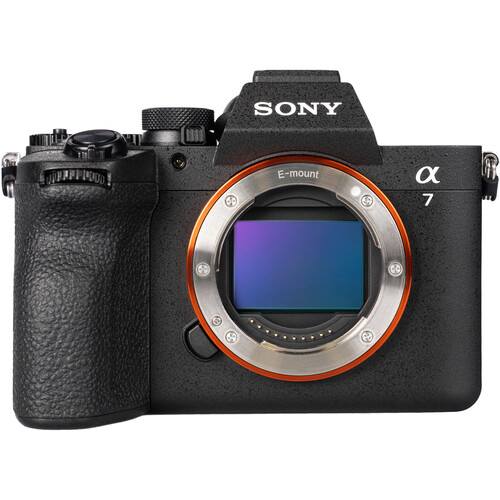
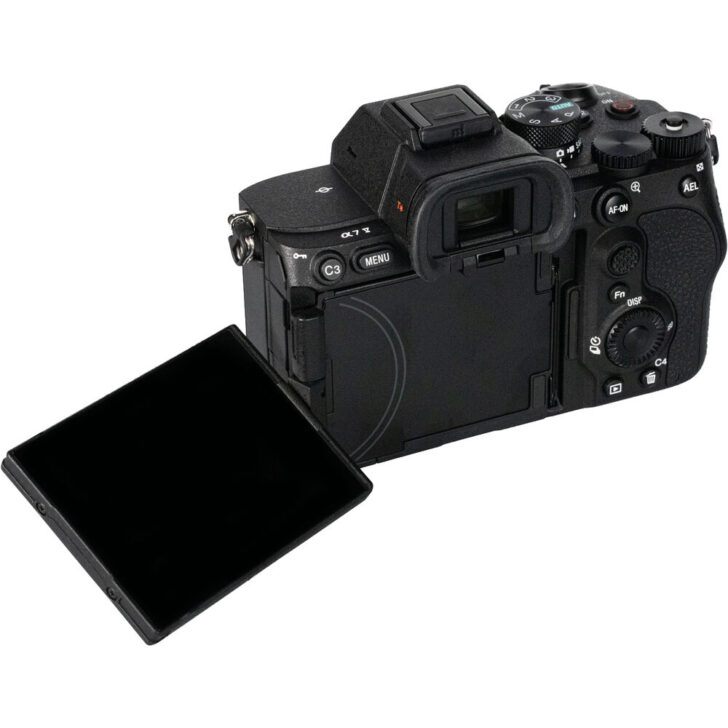
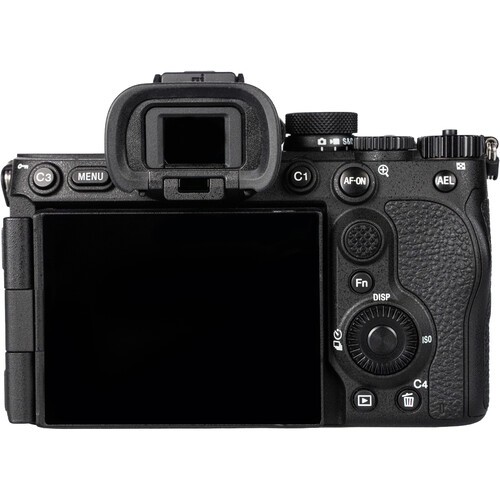
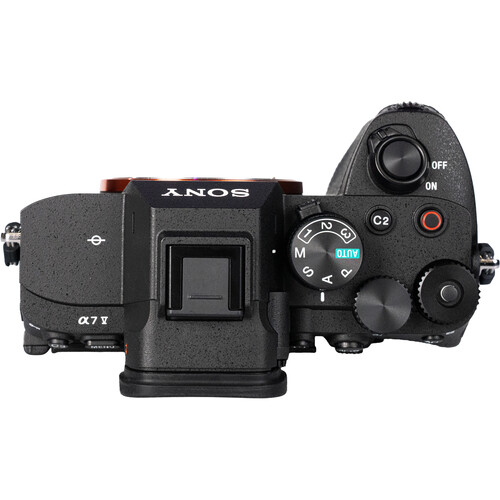
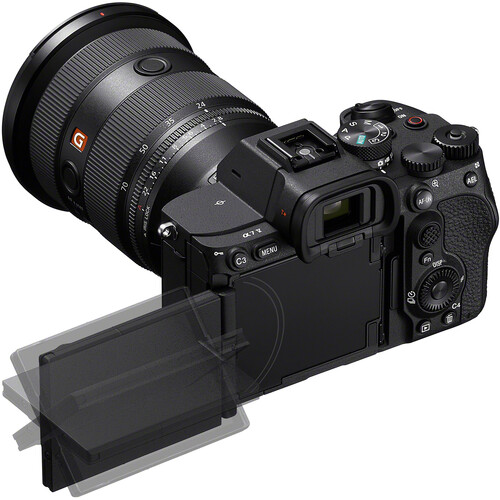
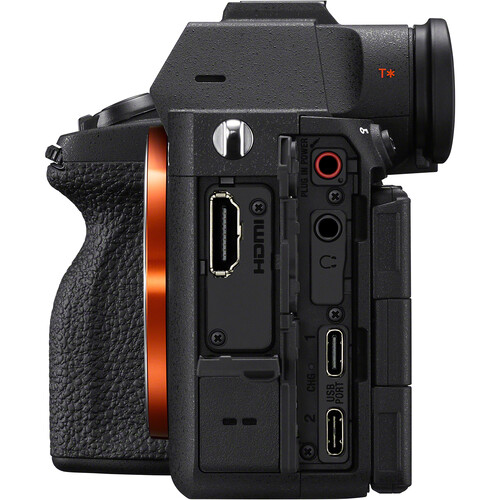
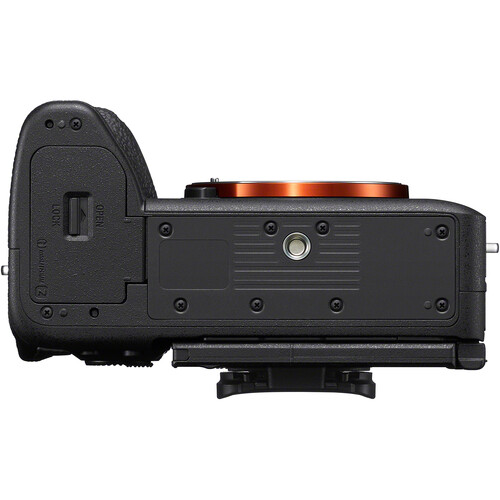
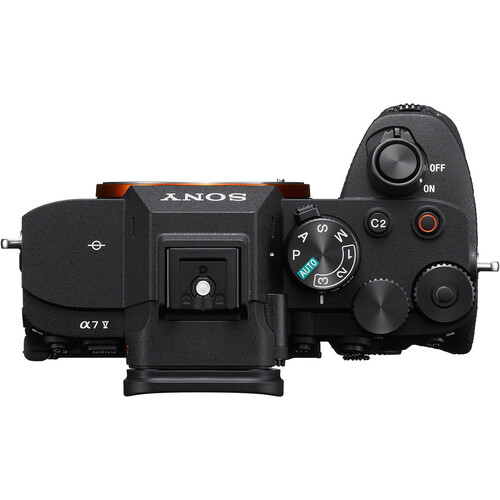
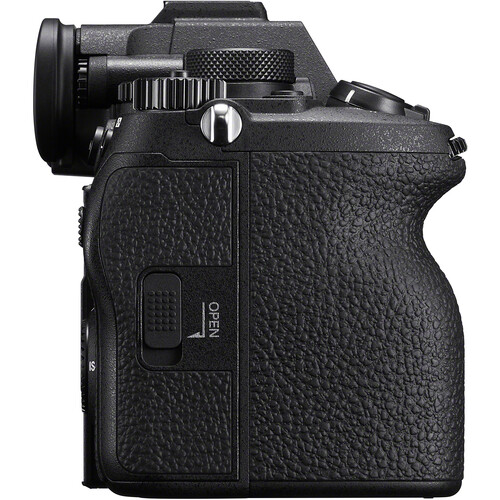





My hands are cramping just looking it at it. 😀
Lenses definitely matter. There can be 200 lenses available, how many are you actually buying? (some of us crazies around here aside). Some of the unique and niche ones will sway some customers for sure.
We live in a multi-crop video world. The lack of Open Gate will sway some. I wonder if cooling played a factor? Photography wise, I have no idea how anyone uses these things. I know ergonomics are a personal, but at a point... they're just bad.
Hopefully the A7IV's will start to flood the used market with some nice low prices
I own none of these lenses but would start like this. No need for 3rd party.
(Unfortunately, surgery didn't cost me a cent.)
If only I lived in the USA, I could make a fortune with help by an "ambulance hunter", after having spent it on hospital costs...
But yes, Sony A7 V is also a good Camera. Especially if you need one ore both lenses.
But boy, they got marketing clout to spare, especially the Youtubers.