

When you purchase through links on our site, we may earn an affiliate commission. Here's how it works. |
Sony will join pretty much every camera manufacturer in announcing new wares for the CP+ show in late February. Both rumored lenses look like they'll be the kind of lenses that will be popular.
Sony FE 16mm f/1.8 G
The new fast wide angle prime will come in at about $1000 USD and is rumored to have terrific image quality. The lens design is quite compact and will likely utilize some software correction.
Sony FE 400-800mm f/6.3-8.0 G
Sony already has the well regarded FE 200-600mm f/5.6-6.3 G OSS in their lineup, but they'll be adding an even longer zoom to the lineup.
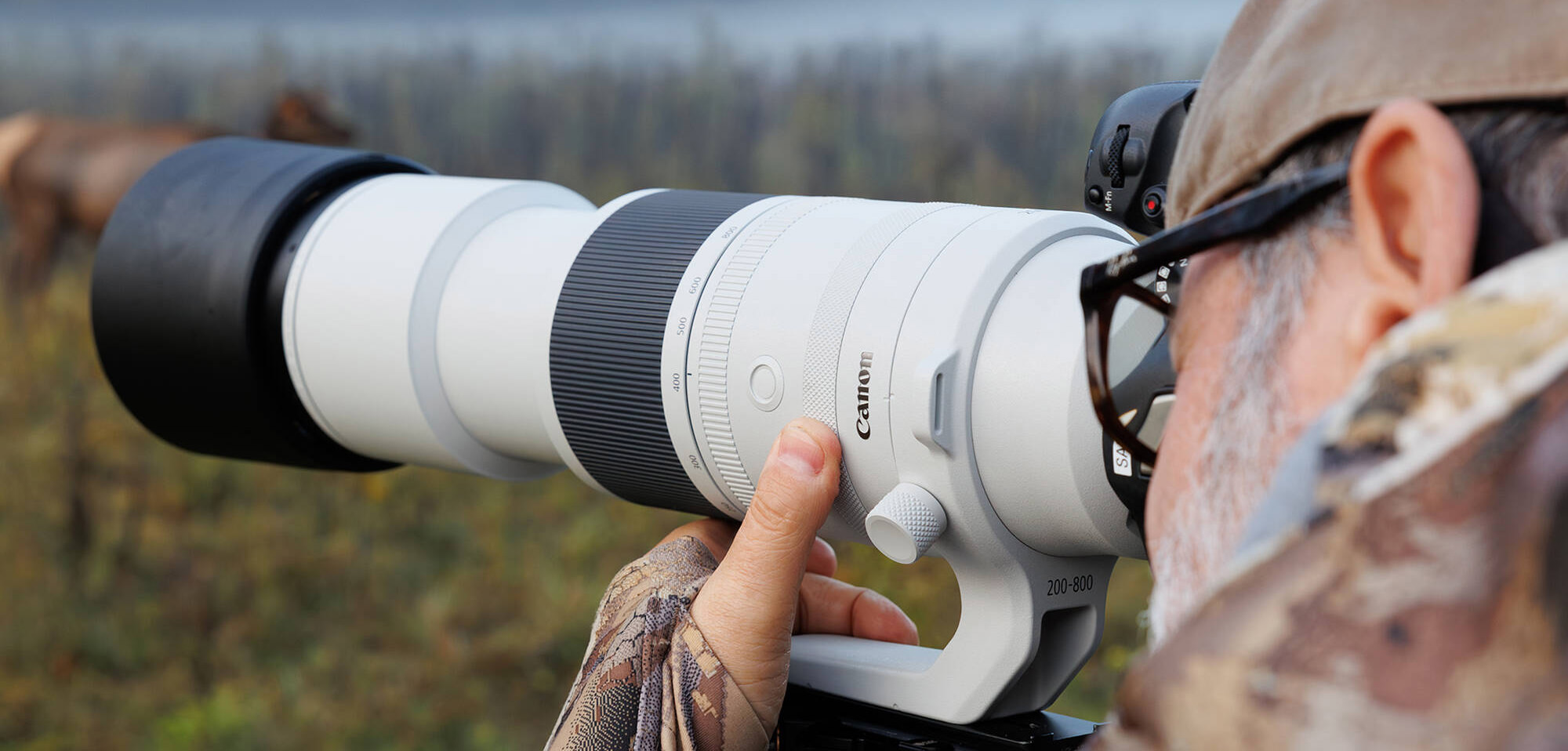
Canon has the hugely popular RF 200-800mm f/6.3-9 IS USM in their lineup and Sony's new FE 400-800mm f/6.3-8.0 G will probably be a somewhat smaller and lighter, even with the slightly increased speed.
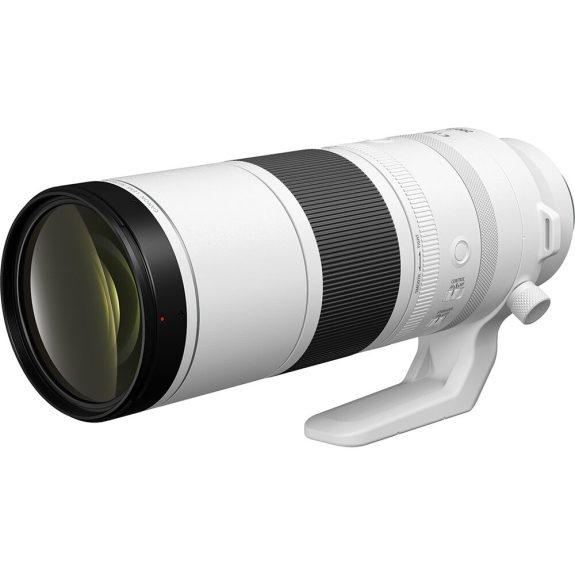
I'd still prefer having the 200mm at the wide end for what I would consider the best use cases for such a lens, but that won't stop the new Sony from being popular.
Source: Sony Alpha Rumors



Edit: I see it's already begun.
If Canon could make a 400-800mm in the style of the RF 100-400mm, I´d grab one. Even it is F11 at the long, I didn't mind that fact with the RF600mm.
A couple of miles should/ could be fine, but we usually walk way longer and our average hikes are usually about 8-10 miles, maybe 12 (although I´d like to go longer). The 200-800mm is very long and doesn't fit in any of my bags unless it is in a very awkward position. I don't like having around my neck/ shoulder or anything, so that's where my opinion came from.
200-267mm = f/6.3
268-454mm = f/7.1
455-636mm = f/8.0
637-800mm = f/9.0
And while f8 to f9 is only 1/3 of a stop, every bit past f8 starts to cause noticeable diffraction issues at these focal lengths. The 200-800 starts to drop off on IQ once it hits f9, and some reviews have noted that it's a bit soft at 800mm.
The Sony "G" lens is likely to be more expensive than the Canon. Probably in the $2300 to $2500 range, slotting in above the existing 200-600G.
2. As the effects of diffraction scale linearly with f-number, even if f/8 were fully diffraction limited for resolution, an increase to f/9 would at the most lower resolution by 12.5%, which would not be very noticeable, if at all.
I posted a thread about diffraction some 6 years ago.
Diffraction, Airy Disks and implications
Well, no matter how you want to slice it, the 200-800's IQ drops off right around where the aperture also drops to f9. Reviews noted that the corners are already showing softness, so perhaps that 12.5% drop was enough to impact the center of the frame instead of only the corners. Regardless, the 200-800 has issues at the long end of the range. I don't think it performs much better (or perhaps no better) than the 180-600 or 200-600 from Nikon/Sony with 1.4x TCs attached.
It will be interesting to see how Sony approaches this, and if the lens retains f6.3 for longer into it's range.
On the other end of the scale, a more affordable first party fast ultra-wide will be very welcome. E mount is spoiled for fast prime choice on the wide end with the Sigma 20/1.4 DG DN, Sony 20/1.8G, Sony 16/1.8G, Sony 14/1.8GM, Sigma 14/1.4 DG DN, and Sigma 15/1.4 DG DN fisheye. And for the very budget conscious, the $580 Viltrox 16/1.8 punches way above its price point.
Summary of my RF 200-800mm testing
Quote: "At 500mm, it is as sharp as the RF100-500mm, and this outstanding sharpness continues through to about 600mm. The resolution of the lens increases until about 650mm, where it levels off at about 1.4x the resolution of the lens at 500mm (or the RF 100-500mm). This means in practice that you won’t resolve any more detail, like patterns of feathers, after zooming in to more than 650mm or so but you will see very small continuous objects, like the numbers in my charts, more clearly with less pixellation. Several reports have the lens somewhat soft at 800mm. This is true in that it is not revealing 800mm’s worth of data and it does need more sharpening. But, to put this in perspective, I find the lens at 800mm slightly sharper than the RF 800mm f/11, which is rated by opticallimits using Imatest as “Very Good” on the R5 and “Excellent” at 30 Mpx."
SAR just posted images of the full Sony 400-800 lens. It's a non-extending lens, looks a bit bigger than the 200-600. Weight as yet unknown but speculated to be around 2.5kg. Personally I'm really curious to find out the apertures at different points in the zoom range.