


When you purchase through links on our site, we may earn an affiliate commission. Here’s how it works. |
We are getting closer to the end of 2025, and I decided to assemble my list of the best and worst in 2025. Initially, I was going to limit it to Canon, but then I thought I should expand it further. Maybe not the worst, though, because that baby is all Canon.
The Best Camera of 2025 – Nikon Z5II
There were 27 cameras announced in 2025, with Canon releasing 4 of them, from the do-it-all EOS R6 Mark III, to the return of the soap bar camera with the EOS R50V. Toss in the crazy, with the Sigma BF, and it’s been an interesting year. Canon has shown that it can look beyond the EVF once again and return to a smaller format that it had with the EOS-M series of cameras.
It seems obvious for CanonRumors and me to give the best camera award in 2025 to the EOS R6 Mark III and call it a day, and while yes, this is Canon’s best mid range 6 series camera – ever, it’s hard to argue that the Z5II does not deliver an excellent camera, at a price far under that of Canon’s EOS R6 Mark III. Sometimes the best camera is not the one with the best features at any price, but with the best bundle of features when you also consider the price.
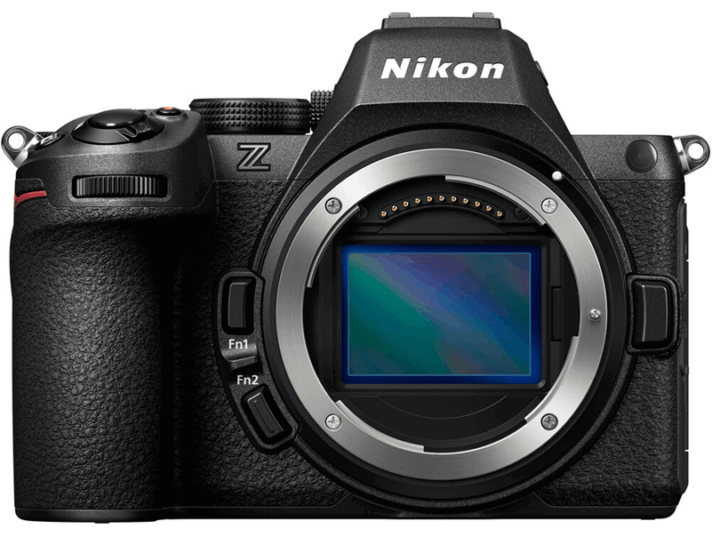
I think that is a good consideration because the Z5 II gives a ton of camera for its under $2000 price point.
The Nikon Z5 II brought advanced features from Nikon’s professional models, Z6 III, to the entry-level. The camera features a 24.5MP BSI CMOS sensor, which, with the EXPEED 7 processor, provides 4K/30p video recording without any cropping (an improvement from the Z5’s significant cropping) and 4K/60p video recording with a 1.5x crop factor and 1080p/120p slow-motion capabilities. The camera offers decent hybrid functionality through its video capabilities while maintaining its excellent still image quality. Because the Z5 II has IBIS, it can also produce 96MP pixel-shift high-resolution images.
The auto focus subject detection system identifies nine different categories, which include people, animals, vehicles, and more. The camera also includes deep-learning AI technology and Pre-Release Capture. The auto focus works down to -10 EV to provide excellent autofocus performance even in very low light.
The Z5 II features a large and bright EVF and a fully articulated touchscreen. The camera also includes a 7.5-stop IBIS system and dual UHS-II SD slots, two things that Canon’s EOS R8 comparable model lacks.
The camera operates at 14fps mechanical shutter and 30fps electronic shutter. The body-only price of this camera is $1,699, which exceeds the discounted Z5 price but is quite close to the non-discounted price of the Canon EOS R8 ($1649), while offering far more features.
The Z5 II stands as my top choice because it delivers an excellent set of features at a more reasonable price point.
- 24.5MP FX-Format CMOS Sensor
- EXPEED 7 Image Processor
- ISO 100-64000, Up to 30 fps Shooting
- UHD 4K and Full HD Video Recording
- 3.6m-Dot OLED Electronic Viewfinder
- 3.2" 2.1m-Dot Vari-Angle Touchscreen LCD
- 9-Type Subject Detection AF
- 5-Axis Sensor-Shift Vibration Reduction
- Built-In Wi-Fi and Bluetooth
- Dual SD UHS-II Card Slots
Runner-Up for Best Camera of 2025 – Canon EOS R6 Mark III
The Canon EOS R6 Mark III became available in November 2025, and it’s the runner-up for me. If I didn’t have the EOS R6 Mark III in here somewhere, I was certainly going to hear about it in the forums. Regardless of that pressure, the Canon EOS R6 Mark III is certainly Canon’s best effort at providing a hybrid camera with a moderate price point. I would be remiss if I didn’t mention that this price has crept up to be nearly the same price that Canon EOS 5D cameras were once released at.
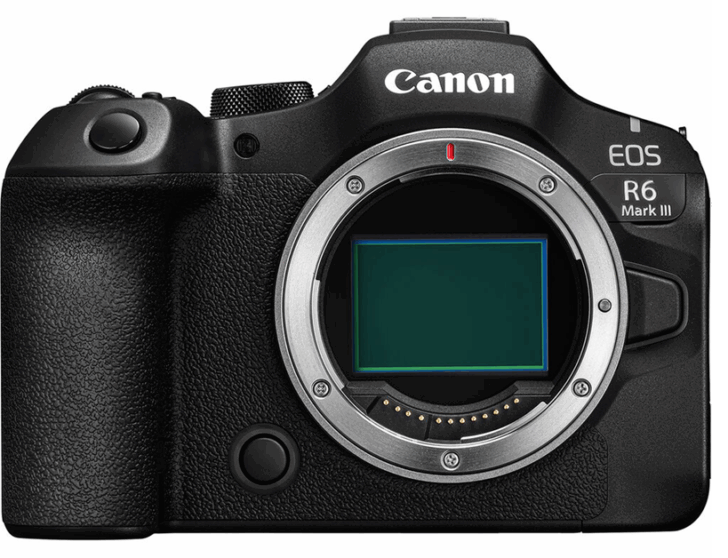
The EOS R6 Mark III delivers excellent hybrid functionality for a full-frame camera at its price point. It’s not going to be as good as the EOS R5 Mark II, but it’s not close to the same price either. The camera uses a new 32.5MP CMOS sensor that provides better detail for printing and cropping than the 24MP sensor in the EOS R6 Mark II. It keeps and improves on the quick read-out rate of its predecessors, even while processing far more data. Its electronic shutter reaches 40fps, and its mechanical shutter maintains its 12fps from the prior EOS R6 Mark II. The Dual Pixel CMOS AF II system with advanced subject detection technology provides excellent performance for sports, wildlife, and fast action photography. The IBIS system is excellent, delivering up to 8.5 stops of image stabilization for handheld shooting.
The R6 Mark III’s video capabilities were dramatically improved over the EOS R6 Mark III, marking a major shift for Canon. The R6 Mark III includes a 7K/60p Cinema Raw recording system, open-gate recording, full-width 4K/120p, Canon Log 2/3 for up to 15+ stops of dynamic range, waveform monitoring, and a full-size HDMI port. For hybrid shooters, it doesn’t get much better than that.
MSRP: $2799 • €2899 • £2799
32.5MP Full-Frame CMOS Sensor
7K 60p 12-Bit Internal RAW Light Video
Open Gate 7K 30p, High-Speed 4K 120p
Dual Pixel CMOS AF II & Movie Servo AF
Up to 40 fps & Pre-Continuous Shoot Mode
Best Compact Camera of 2025 – PowerShot V1
There were a lot of decent compact cameras released in 2025, as the major manufacturers woke up to something I was nagging about for over 2 years (seriously, where is my cheque). While a lot of compacts came out, I thought the Powershot V1 came down to features and also innovation from Canon. While the Sony ZV-1 was first on the market, the Canon PowerShot V1 features active cooling, a larger sensor, and a wider lens in a relatively compact camera. Though to be fair, the V1 does stretch the limit of what I would call compact, coming closer in size to Canon’s EOS-M series of cameras, versus any Powershots preceding it. But since this field also contains the larger GFX100RF and even the Leica Q3, anything goes.
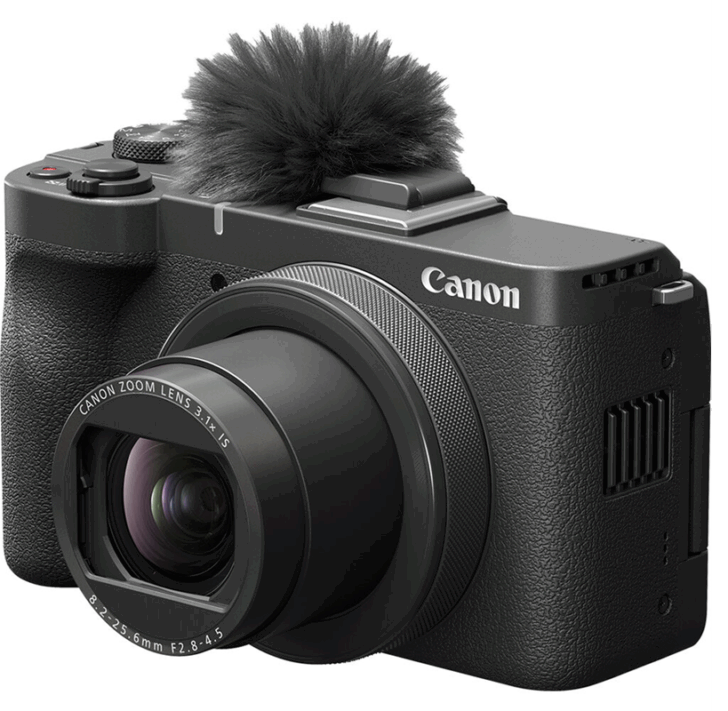
The Canon PowerShot V1 entered the market in April 2025 to bring Canon finally back into the premium compact camera market while offering impressive video-oriented features with excellent photography performance. The camera system uses a 22.3MP 1.4-inch type CMOS sensor, providing better dynamic range, low-light capabilities than the PowerShot G7X Mark III and other competitors with 1-inch sensors. The camera features a fixed 16-50mm equivalent f/2.8-4.5 zoom lens, which includes optical stabilization. The sensor features Dual Pixel CMOS AF II, enabling accurate and fast autofocus as well as excellent subject tracking of people and animals.
The PowerShot V1 camera functions as a high-end compact hybrid camera, weighing a total of 374 grams. The V1 camera features a vari-angle touchscreen display and an integrated cooling fan, enabling users to record 4K video at 60p for extended periods. The camera provides users with Canon Log 3 grading. As well, the camera has a multi-function shoe, an external microphone jack, and built-in live streaming capabilities.

22.3MP 1.4" CMOS Sensor
16-50mm Equivalent f/2.8-4.5 Lens
Full-Width 4K 30p; 4K 60p with 1.4x Crop
Optical Stabilization; 3-Stop ND Filter
10-bit Recording; Canon Log 3
Active Cooling Extends Shooting Times
Runner Up for Best Compact of 2025 – Fujifilm GFX100RF
I included this because if any camera stretches the realm of what a compact camera is, it’s the rangefinder GFX 100 with its medium format 100MP sensor. The Ricoh GR IV would be mentioned here, but I really didn’t like the breathtaking price jump of the newest model.
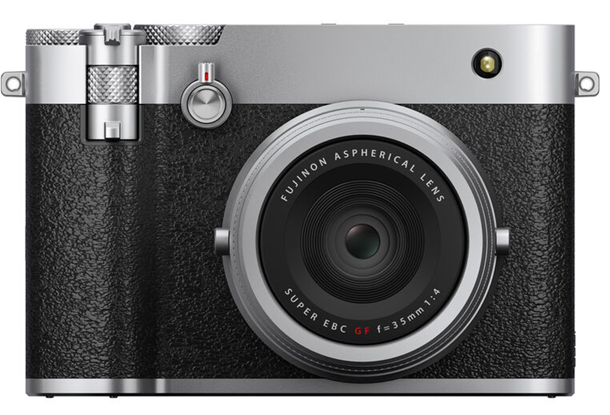
The GFX100RF uses a 102MP medium format CMOS sensor that has no stabilization. The GFX100RF is equipped with a 35mm lens (28mm equivalent) that has an F4 aperture. The GFX100RF provides controls for shutter speed, ISO, aperture, and exposure compensation. The GFX100RF also includes two command dials on the top plate.
The camera features the set of Fujifilm film simulation color modes, and the camera uses AI subject recognition for autofocus. The camera has two SD card slots. The camera has a dial that controls the aspect ratio, something I’m not sure I’d use that much of, but it’s an interesting experiment.
Fujifilm does not call the GFX100RF a hybrid or video camera. Even still, the GFX100RF can shoot up to 4K at 30p in H.264. But you aren’t buying this camera to shoot video. This compact is all about stills photography, and if you don’t mind the size of it, you can’t get much better than this in terms of image quality.
- Smallest, Lightest GFX + Built-In Lens
- 102MP 43.8 x 32.9mm BSI CMOS II Sensor
- FUJINON GF 35mm f/4 Lens (28mm Equiv.)
- Aspect Ratio Dial, Digital Teleconverter
- Internal 4-Stop ND Filter + Leaf Shutter
- 5.76m-Dot OLED EVF
- 3.2" 2.1m-Dot 3-Way Tilting Touchscreen
- DCI 4K30p + External ProRes Recording
- 20 Film Simulation Modes & Q Menu
- Included Lens Hood and Filter Adapter
Best Lens of 2025 – Sony FE 50-150mm f/2 GM
The various lens manufacturers released 50 lenses in 2025, and there are some amazing lenses out there from all manufacturers. And we have seen the start of the rise of Chinese lens manufacturers getting closer to primary lens designers, with Laowa releasing its 200mm f/2
The Sony FE 50-150mm f/2 GM lens became available in April 2025 and created an industry-wide buzz because it introduced the first full-frame telephoto zoom lens, which kept its f/2 aperture throughout its zoom range to a maximum of 150mm.
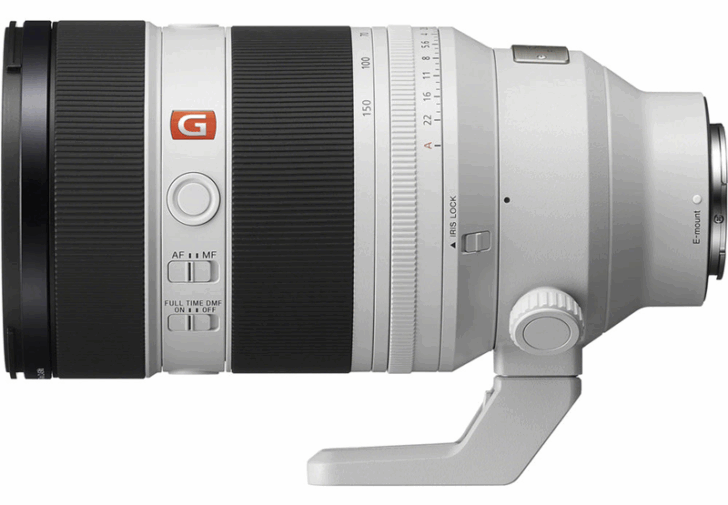
The Sony 50-150mm f/2 GM is a match for Sony’s 28-70mm f/2 GM and adds support for traditional 85mm and 135mm portrait focal lengths. It does so while delivering one stop more light than standard 70-200mm f/2.8 lenses. The reviews showed that this lens delivers excellent optical quality throughout its entire zoom range, and its 11-blade aperture creates excellent bokeh. It’s hard to argue that this isn’t one of the best lenses of the year, if not multiple years.
The lens measures 200mm in length and weighs 1.34kg without the tripod collar, which makes it similar in size to Sony’s 70-200mm f/2.8 GM II. It features internal zooming, and the four XD linear motors achieve fast and quiet autofocus operations. For video shooters, the four motors control the focus groups necessary to maintain low focus breathing.
- Full-Frame | f/2 to f/22
- Ultra-Fast Portrait-Length Zoom
- Four XD Linear AF Motors, Floating Focus
- Aperture De-Click and Lock Switches
- Internal Zoom and Internal Focus Design
- XA, Aspherical, and Super ED Elements
- Nano AR Coating II and Fluorine Coating
- Dust and Moisture-Resistant Construction
- Removable Tripod Foot
- Rounded 11-Blade Diaphragm
Runner Up Best Lens of 2025 – Canon RF 20mm f/1.4L VCM
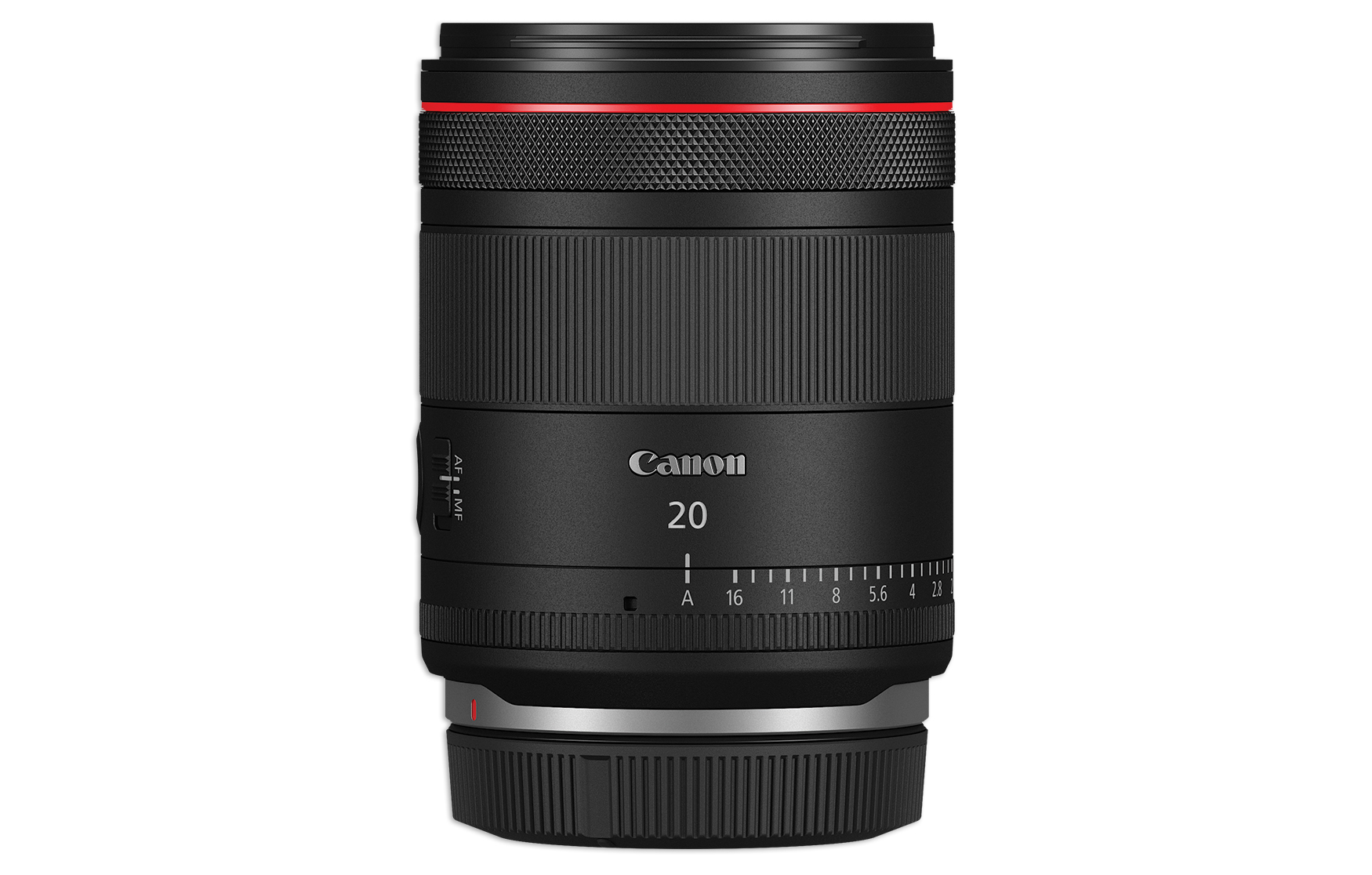
The Canon RF 20mm f/1.4L VCM entered the market in April 2025 to establish itself as a leading ultra-wide prime lens in the f/1.4L hybrid series. The lens provides excellent image clarity throughout its entire frame at f/1.4 while maintaining low coma distortion, and also creates smooth bokeh with its 11-blade aperture.
I would go out on a limb that Canon made a lens that can finally stand toe to toe and exceed the legendary Zeiss 21mm f2.8 Distagon. Yes, this lens is that good.
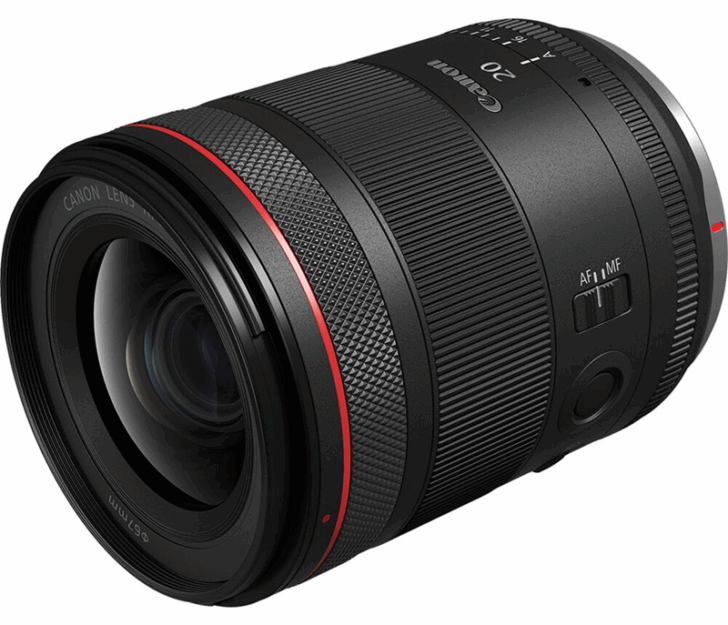
The Blue Refractive optic in this wide-angle lens design assists in controlling chromatic aberrations, while the VCM motor, in conjunction with USM, delivers fast and nearly silent autofocus. The element design features minimal focus breathing, to the benefit of video shooters.
The lens measures 76.2 x 99.1mm in size, while its weight reaches 500 grams; it maintains the same physical structure as the RF 24mm, RF 35mm, and 50mm f/1.4L VCM lenses. This enables gimbal-balanced rigs without needing adjustments while swapping lenses. It’s an excellent lens that Canon has exceeded all expectations on, and if it wasn’t for the Sony 50-150mm f/2 GM, this, in my mind, would have been an easy decision for the top lens of 2025.
The Innovation of 2025 – DGO to the masses
The Sony a7 V introduced Dual Gain Output (DGO) as its main imaging innovation when it launched in early December 2025. The technology, which Alexa first introduced in their cinema line, has evolved into Canon’s Cinema line, Panasonic Lumix S1 II, and now Sony has incorporated it into their 33MP partially stacked full-frame sensor. While the Panasonic Lumix S1 II delivered DGO, they never really stated it, and it remained a hidden aspect of the S1 II until after the Sony A7 V came out.
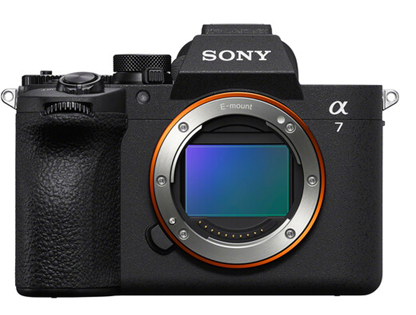
This allowed the Sony A7 V to provide industry-leading dynamic range performance at base ISO using the mechanical shutter. The Sony A7 V DGO sensor achieves its impressive dynamic range as it combines two different gain settings for each pixel to produce a merged result. That merged result delivers less noise and increases the dynamic range. It’s an evolution that is bound to occur for Canon since they are already doing this on their Cinema cameras.
The worst of 2025 – Canon PowerShot ELPH 360 HS A
For once, this isn’t the EOS R100, but Canon decided to hold their beer and deliver something arguably even worse. The Canon PowerShot ELPH 360 HS A is a copy of the 2016 PowerShot ELPH 360 HS. It features a 20.2MP 1/2.3-inch sensor and DIGIC 4+ processor and 12x optical zoom (25-300mm equiv.).
Yes, that’s DIGIC 4+ and not a typo.
The “new” model provides no improvements, unless you think that changing the storage system to use a microSD card slot is an improvement. Canon didn’t stop there, though, since the new system eliminates direct computer transfer and wireless printing capabilities while nerfing Wi-Fi connectivity.
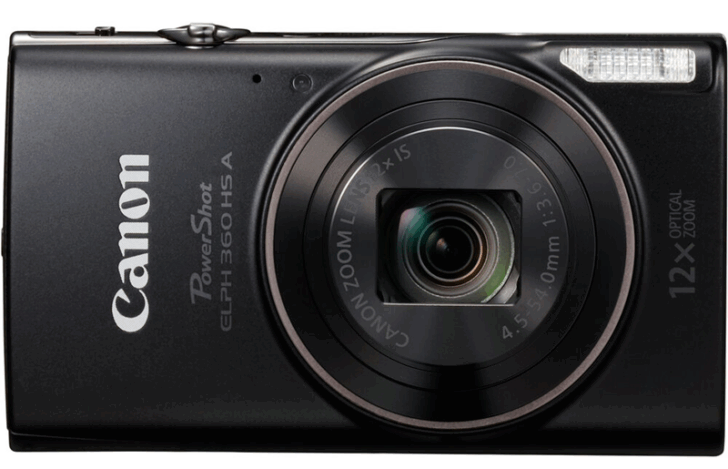
The camera costs $379, which is higher than the initial market price of the 360 HS, and is also much higher than the market price of used 360 HS models, which can be purchased for less than $200.
Canon aims to profit from social media users who want to relive their digital camera experiences from two decades ago and want a brand new camera instead of using a used camera model. The retro point-and-shoot trend gained momentum through celebrity backing of the first model, but this new version appears to be a money grab product without any progress, and Canon hasn’t even spent any effort on this camera. I’m not sure who in Canon thought this was a good idea, but they should be prevented from making any future camera decisions.
The runner-up worst of 2025 – Canon RF 75-300mm f/4-5.6
Canon decided that the PowerShot ELPH 360 HS A wasn’t bad enough and decided that the worst lens in the entire EF Catalog should be moved over to the RF mount. Behold the Canon RF 75-300mm f/4-5.6, a lens with little in the way of redeeming qualities. It uses Canon’s slowest motor, does not have image stabilization, and the bottoms of Coke bottles arguably make better elements.
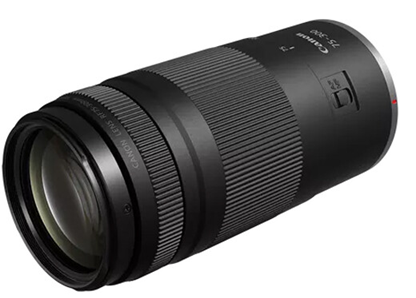
I’m all for bang for the buck, as most of you know, but even though this lens is cheap, it’s a complete waste of the $239 that you’d spend on it. Not even its mother would be happy with those MTF curves.
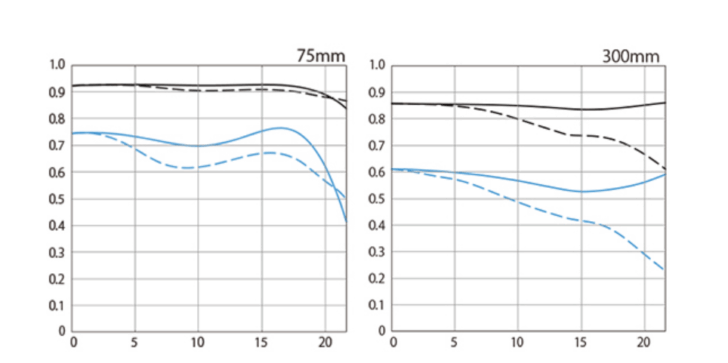
Yes, if all you do is shoot Instagram or social media photos, you can downsize enough that the images may look okay, but it’s still not worth the money, and it would be a lens you will quickly throw away as you improve.
Why isn’t it worth the money? Because you are going to use EF generation lenses, you can find on eBay and other markets used Canon EF 70-200mm F/4L USM telephoto lenses around the same price to a little more than this if you shop smartly. It’s so superior a lens that it shouldn’t even be mentioned in the same context. Yes, you’ll have to find an RF to EF adapter, but you can get third-party adapters very cheaply nowadays for that too.
The 70-200 f/4L is so good that even if you have to crop in tighter, it will still be massively better than the Canon RF 75-300mm. So if you are strapped for funds and just starting, every dollar you spend counts – that I can understand. Wait, and spend a little more and get a zoom lens far superior to this.
Closing Thoughts
I think it was a great year in terms of lenses, as manufacturers stretched what we thought possible and delivered in spades.
We have seen the market start to realize that compact cameras once again are in vogue, and they should do something about it, even though the message is mixed, with on one hand Canon releasing the very interesting PowerShot V1, and then with the other hand coming out with the Canon PowerShot ELPH 360 HS A.
The cameras have been plentiful and diverse, with a varying degree of importance placed on hybrid stills and video functionality, to the more purist stills photography cameras.
It’s been an interesting year, and I’m looking forward to seeing what 2026 brings us.






I bought one and I love it
A few errors jump out in this one...
"There were 27 cameras announced in 2025, with Canon releasing 4 of them, from the do-it-all R6 Mark II"
"it’s hard to argue that the Nikon Z5II delivers an excellent camera"
"Runner-Up for Best Camera of 2025 – Canon EOS R6 Mark II"
The Sigma 200/2 with it's hyper-fast AF, incredible image quality, and excellent stabilization is worth a mention. If only Sony didn't cripple 3rd party glass with that 15fps limit, or if Panasonic had AF that was able to track fast moving subjects. Or if Canon & Nikon weren't terrified of Sigma. This lens deserves better cameras to be mounted on.
Laowa's incredible T/S lenses are another highlight of the year. Superb performance at bargain (for T/S glass!) prices. Being MF only, they are available for RF, too.
After a while it gets so laggy on editing that I miss things when proofing and of course, after staring at the document for 2 days, my eyes glass over.
I'm not a fan of sony cameras, but they really do hit it out of the park for lenses. overall, it was a great year for lenses.
I more or less expected a "Canon über alles", this was fortunately not the case.
As a German saying goes: "Other mothers also have beautiful daughters." 🙂
The 45mm F1.2 brought together two things that I´ve never seen put together: F1.2 and cheap (or at least affordable). That imo is an absolute game-changer and easily the best "value for money" this year concerning lenses.
It was! Sony also brought out the 100/2.8 GM 1.5:1 Macro, which can take TCs. Pretty cool lens, but at a price.
Sigma had an epic year with a TON of great releases. I hope they carry that momentum into 2026.
This year (on the high end of things!) Sigma released the 35/1.2 II ART, 135/1.4 ART, 200/2 SPORTS, 300-600/4 SPORTS for FF lenses, and the 18-40/1.8 ART for APS-C. On the more pedestrian side, the 20-200/3.5-6.3 Contemporary (FF) has also been very well received, and they released a 16-300/3.5-6.7 for APS-C.
If nothing else, 2025 finally brought a few Sigma lenses onto RF-S. Would be lovely to see that extended onto FF RF, but I'm not holding my breath.
I think Sigma had a pretty epic year, and I hope 2026 brings stuff like a 28/1.4 ART, 40/1.4 ART, and maybe a 105/1.2 ART.
I wouldn't award the 20mm f/1.4 VCM. It's probably the best 20mm f/1.4 lens currently in the market, but there's several options already, while the other two Sigma lenses are still high end offerings and truly innovative.
The 45 could almost win simultaneously best and worse lens prizes🤣
Compression is unrelated to aperture, though. A 45mm lens on full-frame is no big deal in terms of background compression, in fact, it's as neutral as it can get, by being the closest to the 43mm diagonal we've ever been on Canon.
EDIT: to be completely accurate, and before someone kills me in the replies, background compression isn't even dependant on focal length, but I mean that the perspective of 45mm is close to the most neutral we can get for a full-frame camera, therefore providing an unaltered view.
meh, sorry, i didn't like the 45mm f1.2 - it's a very specialized lens that you have to like the look out of the lens. if you don't, then it's dead to you. Not everyone wants a lens with that yes, it's a f/1.2, but it's a f/1.2 because they are allowing a literal dump truck of aberrations to exist.
And the Sony 50-150 is a lens that has never been done before, and it's optically, mechanically, everything, excellent.
if the 50-150 didn't make the cut as the best, then there's tons of others I would choose over the 45mm even if I had to take into account "bang for buck" - ie: the Sigma 200/2, or the freakishly incredible Sony 100mm Macro. there's just way too many amazing lenses out there this year, that in my mind would be above the 45mm.
I do like Canon making bang for the buck lenses that will have their followings - much like the EF mount, so it's all a good thing. as long as they fire the dude that decided the 75-300 was a good idea.
I was tempted to put in the Sigma 200/2 - it was close as the runner up.
It's difficult to make a very good ultra-wide, especially one that is considerably faster than 2.8. The 20mm VCM was such a generational leap for Canon; arguably, it's the best f1.4 ultra wide made.
The MTF is exceptional, and it's very well chromatically corrected.
I tested one, and must say it is visibly better than my beloved Zeiss Classic 21mm f/2,8 in EF mount!
Any lens that surpasses the legendary Zeiss 21mm is a total win.