

When you purchase through links on our site, we may earn an affiliate commission. Here’s how it works. |
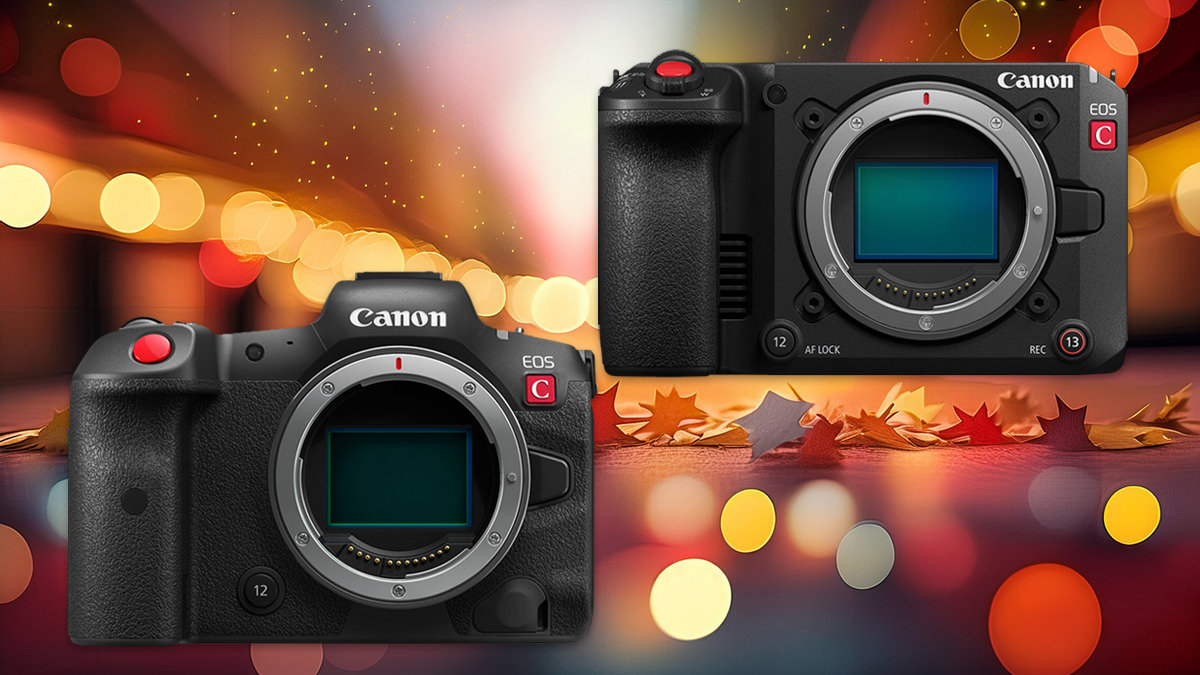
The EOS C50 appears to be Canon’s long-awaited response to the Sony FX3, but its their previous iteration of a hybrid camera that has my eye.
The New Canon: Cinema For All
The EOS C50 and EOS R6 Mark III are here, and it’s a very exciting time for Canon shooters. These cameras have everything: 7K open gate, down-sampled 4K, a gamut of broadcast and cinema codecs, C-Log 2, full sized XLRs, and enough tally lamps one could ask for. Gone are the days of Canon seemingly holding back “professional” features from its sub-$4000 camera ecosystem, in favor of a much-needed about-face towards embracing the indie filmmakers and hybrid-style shooters that one could argue Canon themselves pioneered an avenue for in the late 2000s.
There have been numerous love letters to the 5D Mark II and the DSLR filmmaking era over the years, and while this isn’t going to be another one, I do think it’s important to take a look at the pivot that Canon is making here. The C50 is a natural, albeit delayed, response to Sony’s FX3—a truly filmmaker-first tool that is affordable enough for the indie creator to own while being feature-rich enough to handle anything from social content to shorts and music videos to even a feature film. And frankly, there’s so much of the FX3’s influence on display in the C50 that it’s easy to overlook the other camera that shaped its design. It’s a camera that Canon clearly iterated on here in both form and function, and it’s a camera that traces its lineage back though several generations of both DSLRs and C-Series cameras alike: the R5C.
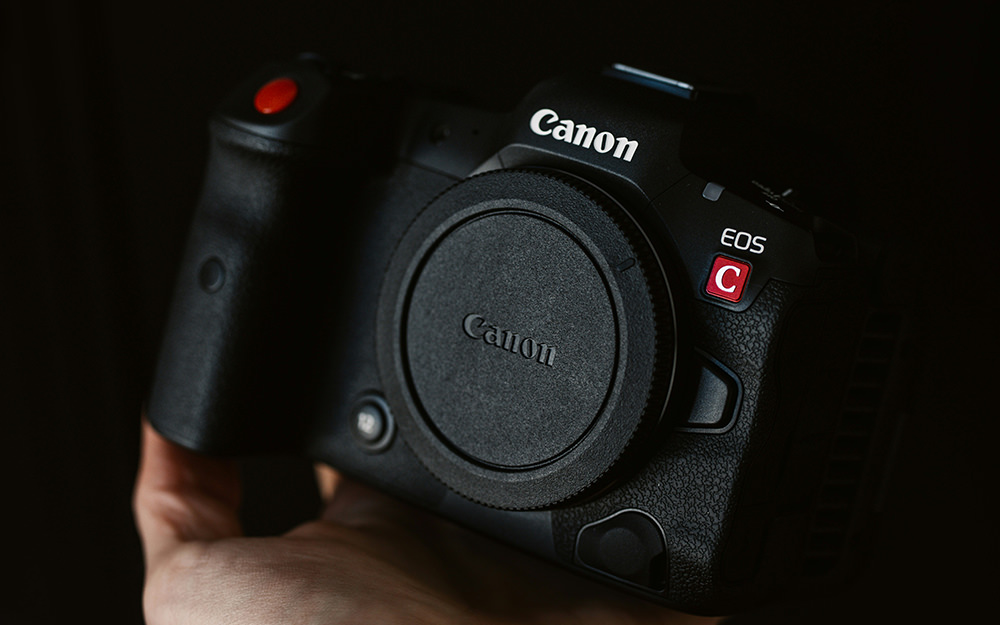
When the R5C was announced, I, like many others, initially saw it as a stop-gap measure to calm the outrage over the R5’s (at the time) overheating issues. However, thanks to years of firmware updates, not only is the R5’s overheating a relative non-issue at this point, but the R5C has grown into its own as well: It’s Netflix-approved, among the smallest 8K-capable bodies out there, will never overheat, and Canon solved whatever power-draw wonkiness was going on under the hood of the Cinema EOS operating system with the latest LP-E6P batteries.
If the C50 is primarily a response to a Sony’s design language, the R5C was Canon’s finally recommitting to its own internal ethos that started with the 5D line: cinema in a Canon camera—that feels like shooting on a Canon camera.
I’m saying it right now: I’m not buying a C50 or R6 Mark III this year. I’m buying an R5C.
[affiliatable id=’309851′] | [affiliatable id=’309850′] |
Form Over Function Is An Important Factor
I’m currently an R5 shooter, and this is the first time I’ve ever felt satisfied with the camera I have instead of wanting one that I don’t. Which, as any longtime Canon shooter like me knows, is a relatively new sensation. My early college films were shot on the original 7D, and through the years I’ve worked with the 5D Mark II, Mark III, C300, C100, 5D Mark IV, and EOS R; as well as every Sony and RED you could think of. All the while during that time, I’ve always felt like I was making the choice to sacrifice specs for useability.
Sony’s were flashy. Canons just work. You can pick it up and shoot with it out of the box. How a camera can disappear into your hands, especially in run & gun indie environments, makes or breaks the user experience for me. It’s something that I’ve always struggled with shooting on the Sony a7S.
Until now. The R5C is the clear camera of choice for someone that’s already shooting video on a Canon R-series camera.
Now before everyone attacks me on Twitter for shaming the good name of Canon’s new direction (@ZackMorrison18, I welcome the discussion), I recognize some of this list is going to be nitpicky situations. Because we can all agree at this point that most cameras can produce a stellar image. However, it’s the actual real-world use cases that interest, and influence, my decision making about what camera to pack into my bag.
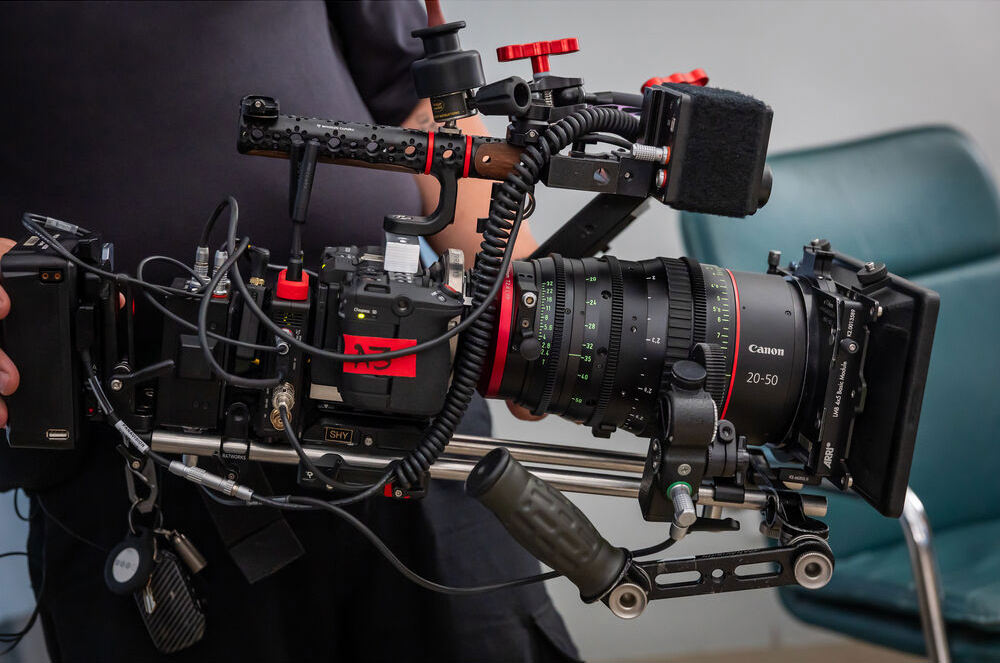
Case in point—my first reason for choosing the R5C over the C50 has nothing to do with specs. It’s the button layout. The R5C has an identical button layout to the R5 and R6. And on jobs where I’m using multiple cameras at once, I’ve always struggled remapping my muscle memory from camera to camera. This is a quirk that I never see YouTubers discuss. When you’re in the field on a shoot, especially in documentary or event-coverage scenarios where every second you’re fiddling with your camera is a shot that you’re missing; having that muscle memory of where the buttons are is incredibly important, especially when there’s two cameras strapped to your hip.
For example, the C50 actually has fewer buttons on the back, moving some controls to slightly different positions along the top. Consistency is key. It’s part of the reason that I sold my original EOS R: I couldn’t use it alongside the R5 on jobs because of how the dials operated differently. It sounds silly, but struggling with exposure because one camera has the back wheel and a top dial that can do ISO and another camera with no back wheel and a top dial that can do ISO only in metering mode was enough to drive me nuts.
The same goes for when you’re switching over into photo mode: the R5C functions identically to the R5. It’s the same camera for all intents and purposes. Even the way the Canon changed the joystick on the R6 Mark II/III, R5 Mark II, and C50 to a convex shape instead of the older concave design on the R5 is frustrating. The R5C maintains the older design. It just works better for what you need it to do. It’s a minor complaint, but one that I think is more important on the day than the resolution of your sensor.
What’s Happening to EVFs?
Another glaring omission in my opinion—which I realize is all this article is—is the lack of an EVF on the C50. The R5C keeps the same fantastic EVF as the R5, which I’d argue is among the best out there. I’m a glasses wearer, so the newer R3-style EVF with eye detection doesn’t work for me anyway. A lot of video work these days is done from a gimbal, so I understand why the C50 followed in the FX3’s footsteps and removed it. But I find there is immense value is situations when you can hold the camera up to your eye and just shoot. The rear screens work well but not so much in direct sunlight, and I love that the R5C at least gives you the option to shoot through the EVF instead of requiring a top-heavy monitor on-top of the C50’s already-not-aerodynamic handle.
This too translates over into photo mode benefits as well. Without a viewfinder, the C50 functionally eliminates its usefulness as a “hybrid” camera save for the occasional snapshot in between takes on set. A professional photographer can use the R5C, unlike the C50 which needs to be held out in front of you. I have plenty of combo photo & video jobs and it’s uniquely positioned to cater to both. The C50, while it can take great photos, would likely need to be paired with the upcoming R6 Mark III to properly work in those environments.

Canon’s Newer Offerings: How Do They Stack Up?
On that note: I bet you’re thinking “Zack, why not use a R5 Mark II, or a R6 Mark II, or even wait for the R6 Mark III?” I’m glad you asked.
Re the R5 Mark II: its sensor is different, but not necessarily better. Just different—there’s plenty of YouTube comparisons that demonstrate that. Sure, C-Log 2 would be nice, but I’ve personally never run into a scenario where I felt limited by the dynamic range of C-Log 3. Every camera reviewer out there loves to have a subject backlit by a window and then try to compensate for the shadows on a face…but in actual filmmaking situations, one would expose for the windows and then simply light the actor. You would never need that extra dynamic range anyway.
Re the R6 Mark II: it’s almost there. I’ve shot with it as a second camera to my R5 many a times. There’s an instant dealbreaker for me though that’s relegated the R6 Mark II from a camera I own to a camera I would rent when I need a great set-it-and-forget-it wide angle: the codecs. There’s no intra-frame shooting modes, and that’s a far more necessary tool for professional video delivery than downsampled slow motion.
What about the EOS R6 Mark III?
As for the R6 Mark III, it looks quite impressive, and could very well blow this whole argument wide open now that Canon have added XF-AVC intraframe codecs to the R6 line. We’ll need to wait and see how thermal performance is handled, however. Without a fan like the Cinema line or passive cooling like the R5 Mark II, one could imagine this camera would get pretty hot pretty quick. The threat of overheating, whether or not it’s actually going to happen, is the exact kind of stress you don’t want on a set or a field shoot.
Plus, in classic Canon fashion, it likely won’t be available for a while anyway.
And none of those cameras allow you to set your shutter as shutter angle instead of shutter speed. I can write a whole rant about that alone. S&F Mode on the R6 Mark III is a step in the right direction, but it’s not perfect. Learning in post that your 60 or 120fps footage is useless because you messed up the shutter speed calculation in the split second you had to switch your camera over into high frame rate is among this world’s chief frustrations (alongside pineapple on pizza and watching the Yankees blow it in the Postseason…). The R5C using shutter angle is one less setting I need to adjust or one less knob I need to turn, and one more reason why it’s the top of my list.

The C50’s Major Upgrade: The XLR Handle
I gotta give Canon some credit though: the C50 does have a key advantage over the R5C. And no, I’m not discussing open gate. I honestly don’t know any reason to use open gate for proper narrative work. Sure, for social media it’s great I guess for being able to better cut between various aspect ratios, but as a narrative director, I’ve never gone to my DP and asked them to shoot open gate because I wasn’t sure how I would crop my framing in post.
No, the key advantage here are the full-sized XLRs in the handle unit. In fact, let’s say the entire handle unit. It’s glorious. This makes the C50 an infinitely more useful cinema tool than all of the resolution and codecs combined. My main disappointment with the R5C is that Canon relied on Tascam’s XLR unit, which was neither usable as a handle nor well-built to begin with.
I would argue that Canon’s implementation of this top handle design, one that sends the audio feed through the multi-interface shoe without the need of dangling cables like the older Cinema line, is brilliant. Ironically though—it’s basically the same kind of top handle that they’ve had on their XA10 camcorder from 2011. What’s old is new again I guess.
Is the C50 Worth It Over The R5C?
At the end of the day though, the C50 and R6 Mark III are fantastic cameras. As is the R5C. Whichever you’re going to prefer comes down to your use-cases—and the price. That’s the other key difference. The C50 is $3900 US. The R5C, at the time of writing this, is $3500 retail, but it’s seen some heavy discounts that dipped below $3000 at times. On the used market, I’ve seen listings in the $2300 range, making it acquirable for both more and less than the R6 Mark III’s $2800 price depending on your source. So now you have to ask yourself—are a couple key features and some novelty differences worth an extra $1000-ish?
I’d argue it’s not. C-Log 2 is very nice, but if C-Log 3 is good enough for Netflix, it’s good enough for me. A full-sized HDMI is also nice, but I’ve personally never had an issue with a cable getting yanked. Canon’s included plastic cable brace works exceptionally well, and, coupled with a short Micro HDMI to full HDMI adapter cable, is good enough as a tension-mitigation solution.
Open gate recording sounds cool, but I personally would hate to be eating through all the media that 7K raw capture would consume for the ease of more convenient cropping in post. And while, yes, on the surface, all these features also come in the R6 Mark III that’s potentially cheaper than the R5C—is the threat of potential overheating worth the extra couple hundred you might save over a R5C?
In Summary
To me, the R5C feels like the perfect companion to my R5—which is already a fantastic camera I have yet to outpace. If I was starting out fresh, or coming from another C-series camera, I understand the appeal of the C50. It’s functionally perfect. However, while the gimble-safe & content creation-ready box camera design is indicative of the new direction Canon is going in for its cinema and video segments (the R50V is another example), I prefer to hold onto, for now anyways, a little bit of the old Canon. Their over-a-decade journey of experimenting with broadcast-ready video in DSLR-style bodies after the happy accident that was the 5D Mark II was fully realized in the R5C. More so than the R5, or the 1DC, or any of the 5D line.
With the C50’s shipping date around the corner, combined with the inevitable holiday discounts, the R5C might just be the best value-per-dollar camera on the market today.
[affiliatable id=’309851′] | [affiliatable id=’309850′] |



I don't think Canon has made any claims about this being a BSI sensor...? It seems to be a resolution-bumped version of the R6 II's 24mp FSI sensor.
From B&H (Canon is notorious for screwing up or omitting things on their own web sites)
The claimed 15-16 stops of DR ..... It's also a completely new sensor.
Not sure I quite buy that. Canon's C400 spec page highlights the BSI sensor, while the C50 page does the usual Canon FSI sensor thing of not saying what the sensor tech is. I've also read all the Japanese promo & spec pages and BSI is not mentioned anywhere. Maybe a teardown will show it one way or another but with Canon not trumpeting BSI, the most likely thing is FSI.
As for the claimed 15-16 stops of DR, I'll wait to see a CineD review to see how that turns out. All manufacturers make unrealistic claims about DR.
You may be right. Newshooter says it isn't, others say it is. This is how Canon confuses people sometimes. I've reached out to someone that would know. I have also contacted B&H directly.
Yes, claimed DR is rarely the case in the real world. However, I can't think of the last camera with Log-2 that wasn't DGO or BSI.
Zack will be reviewing both the C50 and R63. They ship at the same time, so it should be a good comparison. There is no planned "Wow I changed mind!" article, and that will hold true, unless it's legitimate. The R5C is going to be heavily discounted in a couple of weeks in the US refurb sales.
The lack of active cooling in the R63 is an issue from some prospective buyers from what I have read.
I was hoping that it would be BSI, but the reduced native ISO range vs the R6 II (100-51,200 vs 100-102,400) made me think it probably wasn't going to be the case.
I wonder if Canon will ever do an R5C II based on the R5 II. The fast stacked sensor and strong DR performance in the more familiar body shape, with active cooling, would be of interest to quite a few people.
I also wonder what Nikon will do with the 45mp stacked sensor in the Z8/Z9. Can't help but think they will make an 8k cine body with that sensor. They have the potential to be quite disruptive to the industry if they listen to Red and play their cards right.
I don't think so. The R52 has a fan. The C80 sells really well and the C50 will too.
An R6 III with a fast 8k-capable 40mp BSI sensor would be something similar to the Panasonic S1R II, but at a lower price point. That would be very, very close to what the R5 II offers. Not exactly the same - no stacked sensor - but close enough that Canon would probably not be comfortable with it.
That's it, that's why I came to Canon when I went digital and still am overall happy with gear from this brand. It simply works, that's for me more important than having a king of lab based reviews in my hand, but with quirky ergonomics.
R6 mk3 has IBIS, Clog2, open gate etc. It doesn't have a fan I'll give you that, but tests have shown it won't overheat in the most common 30p modes. If you shoot long form 60p content then maybe there is an argument there.
The cine OS in R5C/C50 is definitely nice, especially for shutter angle as you mention but R6 mk3 has custom modes so just set your high frame rate and shutter speed combos in there or use the new S&F function that conforms to slomo directly (much better imo).
I wouldn't underestimate open gate either, if you have never shot it you don't realise what you're missing. Being able to reframe for social in 2025 is a must and personally I love having the full sensor capture for framing and pulling still grabs.
Clog2 is also a much better log profile than Clog3, less contrasty, more filmic and outputs better DR.
Finally low light will be better on the newer lower MP R6mk3 sensor.